

 2:30
2:30Video· Nous Shorts
Ottoman Caliph: What Happened After 1924?
“He embodied all the complexity and contradictions of the late Ottoman experience.”
Cut from our documentaries, explainers and conversations. Each one links back to the full episode it came from.
2:30“He embodied all the complexity and contradictions of the late Ottoman experience.”
 1:47
1:47“I Will Protect Mosque & Temple Both”- MP Imran Masood
 1:04
1:04Aakar Patel examines how public mobilisation can shape government decisions—from the protests against the NRC and farm laws to the question of institutional accountability.
 1:11
1:11Journalist Dayashankar Mishra examines the implications of Umar Khalid’s prolonged incarceration and the Supreme Court’s handling of his bail plea.
 2:20
2:20Saharanpur MP Imran Masood responds to criticism over his handling of recent tensions in Saharanpur following mosque demolition.
 1:44
1:44Muslim societies face an intellectual crisis: Is it a departure from Islam, or a need to reconstruct Islamic thought for modern realities?
 0:49
0:49“There is so much money in skill development.”
 2:01
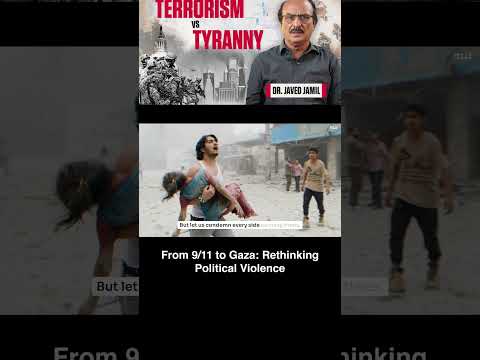
2:01Terrorism isn’t born in a vacuum—it is fueled by injustice, exploitation, and tyranny.
 1:04
1:04“The fight is for the law. We have to fight for the law—and we will win.”
 2:22
2:22Dr Waris Mazhari examines Muhammad Iqbal’s attempt to engage Islamic theology with modern philosophy and science.
 1:43
1:43Aakar Patel discusses India’s global image, secularism and the gap between political rhetoric at home and its projection abroad.
 1:53
1:53“In my view, the biggest question facing the judiciary today is fear.” - Justice Iqbal A Ansari
 2:44
2:44Dr Harish Wankhede from JNU examines how cinema participated in the nation-building project, reflected the Gandhian-Nehruvian consensus, and addressed questions of socialism, secularism, agrarian crisis and social justice.
 2:22
2:22“You can’t remove 25 crore Indians from the country.”
 1:24
1:24MP Ruhullah Mehdi explores justice, peace, promises and constitutional commitments in Islamic thought.
 1:48
1:48Prof Abusaleh Shariff examines the Sachar Committee Report, the power of data, and the political significance of statistics in understanding India’s Muslims.
 2:25
2:25Dr. Harish Wankhede examines Ambedkar, Dalit politics, Buddhism, caste, representation, cinema, and the future of the Dalit movement.
 1:57
1:57“It is a political agenda. There is nothing else.”-Imran Masood
 1:11
1:11Imran Mulla explores a neglected, cosmopolitan history spanning India, Turkey, Jerusalem, France and England—and what it reveals about global Muslim politics.
 1:30
1:30“Police's uniform is not above the Constitution.”
 0:47
0:47“It’s the only country in the world where you actually tax someone on the basis of the family, not the individual.”
 1:23
1:23“We will not find an example that goes against our tradition.”
 3:00
3:00“Terrorism cannot be understood simply at the local level.”
 1:12
1:12“SIR is a wolf in sheep’s clothing.”
 0:43
0:43“They believe that they have no future.”
 2:31
2:31“We had been slapped and beaten for so long. We had to save our lives.”
 1:44
1:44“Ijtihad is not simply limited to whatever has already been said within the four schools of thought.”
1:44“Ijtihad is not simply limited to whatever has already been said within the four schools of thought.”
 1:10
1:10"Elections are not a celebration—they determine who will shape your future for the next five years."
1:10"Elections are not a celebration—they determine who will shape your future for the next five years."
 0:55
0:55“The Indian Muslims had nothing to do with the Muslim rulers.”
0:55“The Indian Muslims had nothing to do with the Muslim rulers.”
 1:28
1:28“The task of thinking alternatively has become all the more challenging.”- Prof Irfan Ahmad
1:28“The task of thinking alternatively has become all the more challenging.”- Prof Irfan Ahmad
 1:20
1:20"The fundamental structure of Islam is completely broken in his interpretation of the Qur’an.”
1:20"The fundamental structure of Islam is completely broken in his interpretation of the Qur’an.”
 0:55
0:55Why are some middle- and upper-middle-class Hindu voters showing signs of political fatigue with the BJP?
0:55Why are some middle- and upper-middle-class Hindu voters showing signs of political fatigue with the BJP?
 1:33
1:33“The big questions were demanding that the tool of Ijtihad should be brought back.”
1:33“The big questions were demanding that the tool of Ijtihad should be brought back.”
 2:21
2:21“Jihad is a dirty word” — a perception shaped by decades of political and media narratives.
2:21“Jihad is a dirty word” — a perception shaped by decades of political and media narratives.
 2:39
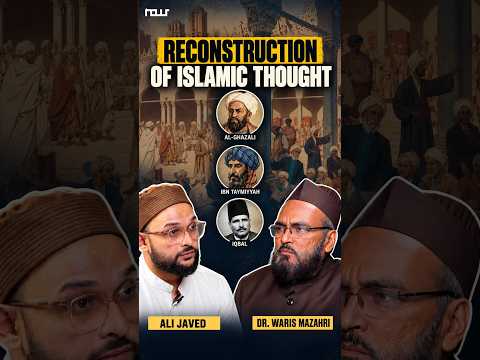
2:39What Does It Mean to Reconstruct Islamic Thought? In a wide-ranging conversation, Dr. Waris Mazhari discusses his new book, Fikr-e-Islami Ki Tajdeed, with Ali Javed, exploring tradition, modernity, ilm al-kalam, madhhabs, Iqbal, Ibn Arabi, and the future of Islamic intellectual thought.
2:39What Does It Mean to Reconstruct Islamic Thought? In a wide-ranging conversation, Dr. Waris Mazhari discusses his new book, Fikr-e-Islami Ki Tajdeed, with Ali Javed, exploring tradition, modernity, ilm al-kalam, madhhabs, Iqbal, Ibn Arabi, and the future of Islamic intellectual thought.
 2:59
2:59Author Imran Mulla explores Global Islam, the Khilafat movement, global news, and how ordinary Muslims connected with the wider world.
2:59Author Imran Mulla explores Global Islam, the Khilafat movement, global news, and how ordinary Muslims connected with the wider world.
 1:50
1:50Dayashankar Mishra examines how the language of Hindutva and debates over Hindu identity have shaped public discourse since 2014.
1:50Dayashankar Mishra examines how the language of Hindutva and debates over Hindu identity have shaped public discourse since 2014.