

 3:00
Video· Nous Shorts
Were Muslim Voters Systematically Targeted?
“95% of the deleted voters under SIR were Muslims.”
Cut from our documentaries, explainers and conversations. Each one links back to the full episode it came from.
3:00“95% of the deleted voters under SIR were Muslims.”
 1:51
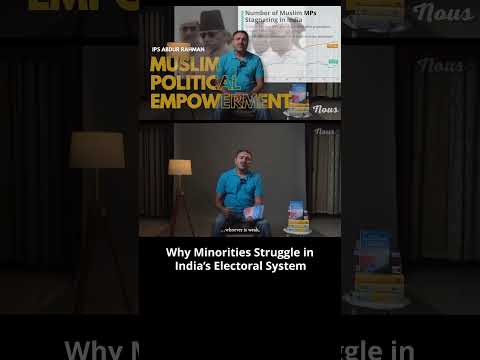
“Muslims are 14.2% of the population—but have just 24 MPs.”
 1:55
“Voter deletion pattern does not emerge from an impartial system.”
 1:05
“A government can be formed with just 26% of the vote—leaving the majority unrepresented.”
 2:32
The debate was never tradition vs modernity — it was how to access the canon.
 2:12
Shah Waliullah sought to revive intellectual and spiritual traditions after a long period of decline.
 1:01
In Karimganj, Assam, Muslims make up around 50% of the population—yet the seat is reserved for SC candidates.
 1:46
“Secularism cannot survive without shared responsibility.”
 2:29
“Muslims form over 30% of the population in 60 districts and in just 40 Lok Sabha seats.”
 2:08
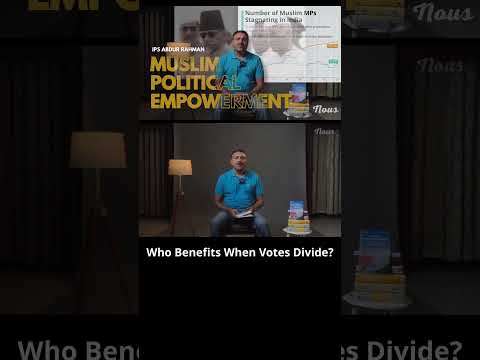
“Vote division & weak leadership are costing Muslims their representation.”
 2:05
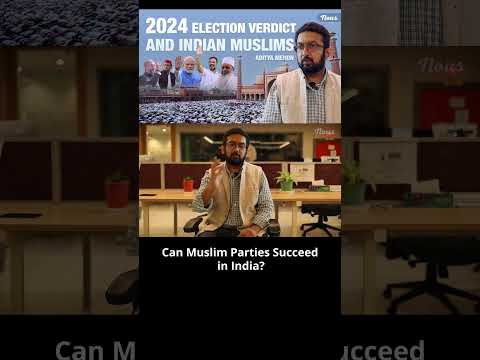
Muslim-oriented parties face structural limits in India’s electoral system.
 2:04
“Voter deletion pattern suggests that it overwhelmingly affects Muslims.”
 2:59
Muslims form over 30–40% of the population in several seat—yet it is reserved for SC/ST.
 2:25
“The accusation of a ‘B-Team’ against Muslim parties is completely wrong.”
 1:33
“First a narrative, then violence- a pattern repeats across decades.”
 1:46
Minority seat reservation was rejected in 1949 & its impact endures.
 1:43
Political empowerment is a prerequisite for social and economic empowerment.
 2:59
“We did not move from empire to freedom—we moved to a more invisible system of power.”
 1:04
"The nation-state and capitalism do not include everyone."
 2:26
“Can delimitation decrease Muslim-dominated areas? The short answer is yes.”
 2:17
“Those excluded can appeal—but are barred from voting for now.”
 1:51
“Why are Muslim-majority districts broken up into constituencies?”
 2:43
“You suffer not because you are not a voter—but for the system’s error.”
 3:00
“Constituencies are reshaped in ways that can reduce the impact of a Muslim's vote.”
 2:28
“It seems Muslims' political absence is shaped not by apathy, but by the system itself”
 1:44
"In some cases, ‘logical discrepancies’ doubled the number of Muslim voters deleted."
 1:00
"Since 1952, the gap between Muslims' population and political representation has persisted."
 2:17
“What if the democracy you trusted suddenly decides you don’t exist?”
 2:20
"Up to 40% of Muslim voters were flagged over ‘logical discrepancies’."
 1:49
Out of 14.2% of the population, there are only 4.4% Muslims in the Parliament.
 2:50
"The Assam model i.e. voter exclusions and detention measures, can be replicated in Bengal also."
 2:16
"We can’t exit to another nation — this land belongs to us."
 2:08
“Information that reaches you first passes through filters of vested interests.”
 2:04
“The work of God and the word of God cannot be at odds".
 1:53
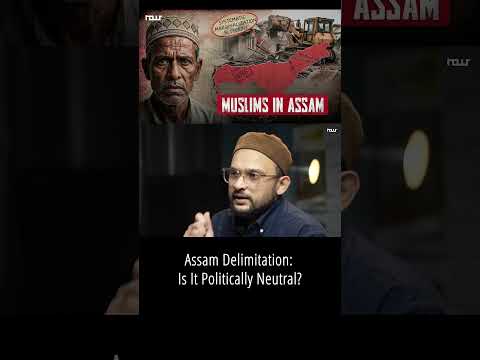
Assam’s 2023 delimitation reduced Muslim-majority seats from 35 to 20.
 1:36
Delimitation diluted Muslim political power in Assam.
 2:32
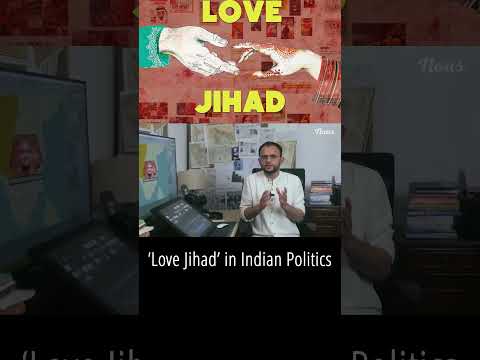
After 2013 Muzaffarnagar riot, "Love Jihad" narrative gained national traction.
 2:59
In 2009, regional reporting and organised campaigns converged to give “love jihad” a new visibility.
 2:23
From a fringe phrase to a national talking point, “love jihad” evolved through organised campaigns.
 2:10
“Poverty among Muslims is not a choice. This is a system’s designed outcome.”
 2:56
“It is a compulsion for Indian elite to talk about Ambedkar.”
 2:12
“When Assam could not deport, it created conditions that forced people to leave.”
 1:50
“No institution in this country has given Dalit icons their due.”
 1:28
"Institutions gave titles to Nehru & Gandhi — but denied Ambedkar's.”
 1:53
Ali Javed speaks to author and Islamic scholar Dr. Javed Jamil on imperialism, colonialism and response from the Muslims.
 1:14
“No institution has ever been truly independent — not even the UGC.”
 1:55
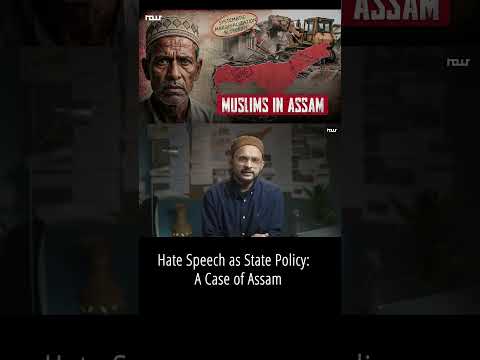
“Zero evidence, yet CM blames entire community.”
 1:47
Vijay Prashad revisits a controversial moment in India’s foreign policy—the 2005 vote against Iran at the International Atomic Energy Agency.