

 2:10
Video· Nous Shorts
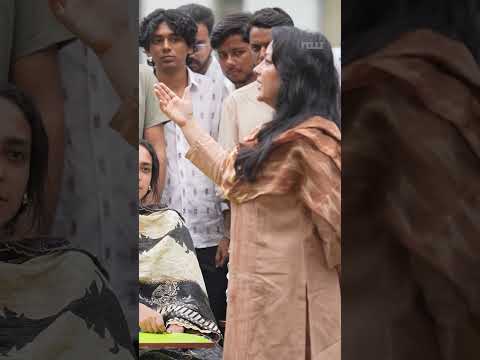
AMU Election: Who Does Student Leadership Represent?
“A leader must speak for the most vulnerable.”
Cut from our documentaries, explainers and conversations. Each one links back to the full episode it came from.
2:10“A leader must speak for the most vulnerable.”
 1:23
“Inside AMU, I have never felt that I belong to a particular community.”
 1:18
“The criminalisation of political dissent is a question we can no longer ignore.”
 0:52
“Everyone should have a place in a democracy.”
 2:17
“Only the student body can save this university.”
 1:44
In this ground report, Bushra Khanum examines the concerns over the Race Course Mosque and the displacement of families.
 1:35
“Eight years without student union elections have cost AMU an entire generation of student leaders.”
 1:53
"Aligarh’s history is scattered across dozens of historical sources." - Atif Syed
 0:44
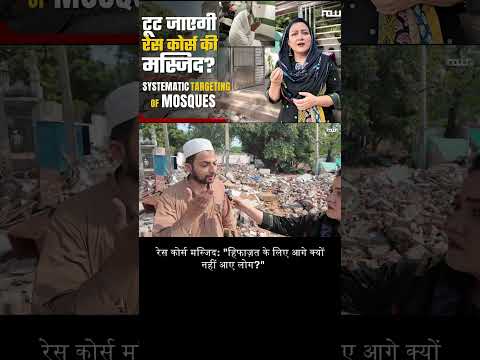
A local resident raises concerns over the future of Delhi’s Race Course Mosque, citing its inclusion in the 1977 Gazette and protections under the Places of Worship Act.
 1:06
“Muslims remain excluded by both the ruling power and the opposition.”
 1:09
“Aligarh was imagined as part of a corridor connecting Pakistan and East Bengal. That vision never became reality.”
 1:26
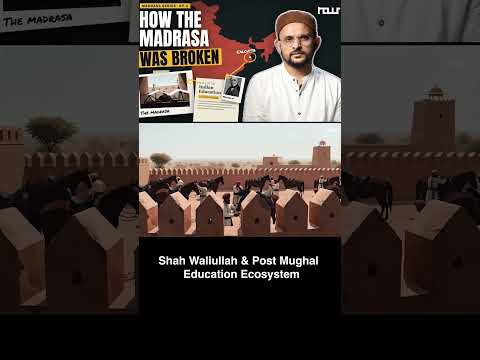
How did the decline of Mughal power reshape Islamic education in North India?
 1:23
“If Muslims are missing from the narrative, they will eventually be missing from leadership.”
 1:44
Dr Waris Mazhari tells how did Iqbal reconcile Islamic faith with modern knowledge, and how did his approach differ from Ibn Taymiyyah and Al-Ghazali?
 1:33
How Shah Waliullah Dehlawi sought to renew Islamic thought during a period of political and intellectual turmoil?
 1:55
“Despite all these legal documents, on what grounds would you demolish this mosque?”
 2:21
Why has Jamia struggled to produce an independent student leadership?
 2:19
“We are students, not puppets. Power will have to be shared.”
 2:19
“One mosque after another is facing the threat of demolition.”
 1:16
Atif Syed traces the evolution of Aligarh from a fort named by Mirza Najaf Khan to the district established under British rule.
 0:25
nous on the Ground examines the growing concerns surrounding the historic Race Course Mosque in Delhi.
 1:15
Raju Parulekar examines police impartiality, constitutional accountability and the failure of political leadership to confront communal prejudice.
 2:34
“People are afraid that this mosque will also be bulldozed.”
 2:09
Why do some deaths dominate the headlines while others are ignored?
 1:02
“India was the epicentre of the Islamic world in quite a lot of ways.”
 2:10
“The question is not what happened in Ayodhya. The question is what is happening after Ayodhya.”
 1:42
Dr Waris Mazhari explores the scope for reinterpretation in Kalam (Islamic theology) and Fiqh (Islamic jurisprudence).
 2:56
Oxford Professor Dr Faisal Devji explores how colonial classification transformed Hindu and Muslim identities in India.
 2:04
In 1835, Macaulay’s Minute on Education helped shape British colonial education policy.
 2:13
“The logic of political confrontations at that time was less Hindu–Muslim and more about Mughal sovereignty.”
 2:11
Dr Mohsin Alam Bhat examines why a new report argues that Tribunals system is unconstitutional.
 0:44
From the demolition of a university in Rampur to concerns about the decline of academic institutions, Dayashankar Mishra questions India’s ability to build universities, IITs and IIMs while existing institutions face disruption.
 0:59
Can the SIR process will ultimately end up with Muslim disenfranchisement?
 2:04
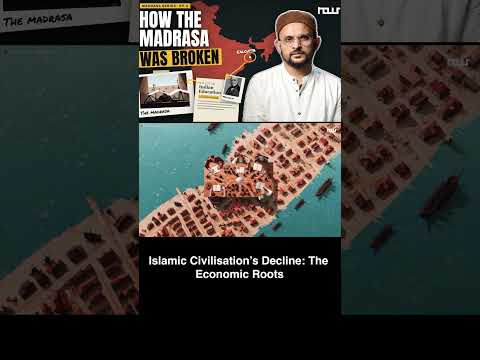
The fall of Granada in 1492 marked the end of Muslim political rule in Spain, but the transformation of Islamic civilisation extended far beyond the battlefield.
 1:38
Video explains that Sambhal, Haldwani and Gyanvapi illustrate different stages in the continuing disputes over Muslim religious sites in India.
 2:23
Legal Scholar Mohsin Alam Bhat examines the 2023 Rafiqul Islam case, the Supreme Court’s 2019 Abdul Quddus judgment, and concerns over the Guwahati High Court’s approach to repeated citizenship proceedings and judicial reasoning.
 2:35
MP Ruhullah Mehdi explores the idea of a universal Muslim identity through the analogy of university alumni, distinguishing solidarity with a people’s struggles from support for a state’s policies.
 1:46
“These are all branches of the same tree—the tree of Shah Waliullah.”
 2:50
“Before Huntington, anthropologists were portraying Islam as a threat to civilisation.”
 1:50
"There were several reasons why Sir Syed chose Aligarh."
 1:52
“The first task is to think about such politics that can defeat polarisation.”
 1:24
“Islamic learning did not end in 1258. It just changed its place.”
 1:36
“The procedure was so compressed that a hearing was impossible.”
 1:51
Ali Javed explores how Muslim scholars studied Greek scientific thought & reproduced during Islamic Golden Age.
 1:12
“There is a need to differentiate between political movements and the state as an entity.”
 2:02
The discussion on Aligarh explores the divisions within Muslim society over the Pakistan movement.
 2:44
Author Imran Mulla traces the transformation of the Ottoman caliphate, from Sultan Abdul Hamid II’s pan-Islamic vision to the Young Turk Revolution of 1908.
 1:00
Atif Syed examines how existing buildings and infrastructure were adapted for the college, alongside the construction of new structures.