

 2:44
2:44Video· Nous Shorts
Gandhi vs Ambedkar: Annihilation of Caste
“If caste is a mentality that survives religion, can it ever truly be annihilated?”
Cut from our documentaries, explainers and conversations. Each one links back to the full episode it came from.
2:44“If caste is a mentality that survives religion, can it ever truly be annihilated?”
2:44“If caste is a mentality that survives religion, can it ever truly be annihilated?”
2:44“If caste is a mentality that survives religion, can it ever truly be annihilated?”
 1:01
1:01“A madrasa is not a single institution—it’s an entire education system.” Ali Javed explains how Islamic education alongside logic, philosophy, language, and modern disciplines were taught through Madrasas.
1:01“A madrasa is not a single institution—it’s an entire education system.” Ali Javed explains how Islamic education alongside logic, philosophy, language, and modern disciplines were taught through Madrasas.
1:01“A madrasa is not a single institution—it’s an entire education system.” Ali Javed explains how Islamic education alongside logic, philosophy, language, and modern disciplines were taught through Madrasas.
 2:55
2:55“Gandhi may not have sought to annihilate caste—but he went straight for its weakest point: untouchability.”
2:55“Gandhi may not have sought to annihilate caste—but he went straight for its weakest point: untouchability.”
2:55“Gandhi may not have sought to annihilate caste—but he went straight for its weakest point: untouchability.”
 1:14
1:14“Most debates about madrasas begin with assumptions—not facts.”
1:14“Most debates about madrasas begin with assumptions—not facts.”
1:14“Most debates about madrasas begin with assumptions—not facts.”
 1:47
1:47“A struggle is only democratic when the public itself becomes powerful—and that requires overcoming fear.”
1:47“A struggle is only democratic when the public itself becomes powerful—and that requires overcoming fear.”
1:47“A struggle is only democratic when the public itself becomes powerful—and that requires overcoming fear.”
 1:51
1:51“Gandhi didn’t reject violence because it was easy—he rejected it because violence had become common sense.”
1:51“Gandhi didn’t reject violence because it was easy—he rejected it because violence had become common sense.”
1:51“Gandhi didn’t reject violence because it was easy—he rejected it because violence had become common sense.”
 2:59
2:59A new report by India Hate Lab documents 1,318 in-person hate speech events in 2025, targeting Muslims and Christians across the country — an average of four incidents every day. The findings show a sharp rise in organised hate, political participation, and social media amplification. From Ram Na…
2:59A new report by India Hate Lab documents 1,318 in-person hate speech events in 2025, targeting Muslims and Christians across the country — an average of four incidents every day. The findings show a sharp rise in organised hate, political participation, and social media amplification. From Ram Na…
2:59A new report by India Hate Lab documents 1,318 in-person hate speech events in 2025, targeting Muslims and Christians across the country — an average of four incidents every day. The findings show a sharp rise in organised hate, political participation, and social media amplification. From Ram Na…
 1:41
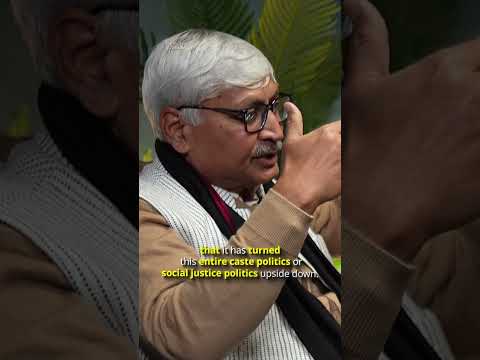
1:41On Gandhi’s death anniversary, Asad Ashraf speaks with Prof. Apoorvanand on Gandhi’s life, politics, and moral economy—ideas that continue to challenge power and our present moment.
1:41On Gandhi’s death anniversary, Asad Ashraf speaks with Prof. Apoorvanand on Gandhi’s life, politics, and moral economy—ideas that continue to challenge power and our present moment.
1:41On Gandhi’s death anniversary, Asad Ashraf speaks with Prof. Apoorvanand on Gandhi’s life, politics, and moral economy—ideas that continue to challenge power and our present moment.
 2:57
2:57Gandhi consistently placed his life at risk in defence of his principles, standing unwaveringly with the oppressed.
2:57Gandhi consistently placed his life at risk in defence of his principles, standing unwaveringly with the oppressed.
2:57Gandhi consistently placed his life at risk in defence of his principles, standing unwaveringly with the oppressed.
 1:51
1:51“If truth is not infused with love, it is not truth at all.”
1:51“If truth is not infused with love, it is not truth at all.”
1:51“If truth is not infused with love, it is not truth at all.”
 2:53
2:53"Gandhi was assassinated not just by bullets, but by the politics of hate he stood against till his last breath."
2:53"Gandhi was assassinated not just by bullets, but by the politics of hate he stood against till his last breath."
2:53"Gandhi was assassinated not just by bullets, but by the politics of hate he stood against till his last breath."
 1:38
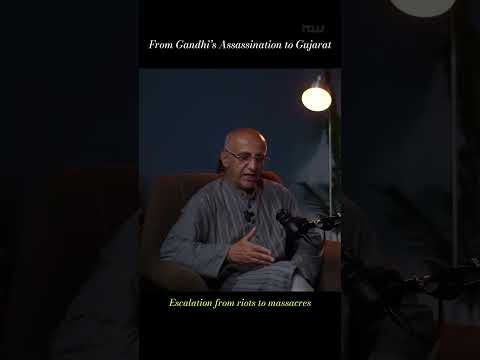
1:38The assassination of Mahatma Gandhi was a turning point in India’s moral and political trajectory.
1:38The assassination of Mahatma Gandhi was a turning point in India’s moral and political trajectory.
1:38The assassination of Mahatma Gandhi was a turning point in India’s moral and political trajectory.
 2:27
2:27Ali Javed examines a rarely discussed crisis in Indian higher education- why Muslim-managed colleges increasingly educate non-Muslim majorities, why Muslim youth remain underrepresented in universities, and how allegations of “minority appeasement” fall apart when confronted with data.
2:27Ali Javed examines a rarely discussed crisis in Indian higher education- why Muslim-managed colleges increasingly educate non-Muslim majorities, why Muslim youth remain underrepresented in universities, and how allegations of “minority appeasement” fall apart when confronted with data.
2:27Ali Javed examines a rarely discussed crisis in Indian higher education- why Muslim-managed colleges increasingly educate non-Muslim majorities, why Muslim youth remain underrepresented in universities, and how allegations of “minority appeasement” fall apart when confronted with data.
 3:00
3:00Despite forming nearly three-quarters of all minority-managed technical institutions, Muslim educational institutions remain few, small, and stalled.
3:00Despite forming nearly three-quarters of all minority-managed technical institutions, Muslim educational institutions remain few, small, and stalled.
3:00Despite forming nearly three-quarters of all minority-managed technical institutions, Muslim educational institutions remain few, small, and stalled.
 2:48
2:48In 2006, Muslims accounted for just 3.6% of students in higher education. Nearly two decades later, the number has barely moved.
2:48In 2006, Muslims accounted for just 3.6% of students in higher education. Nearly two decades later, the number has barely moved.
2:48In 2006, Muslims accounted for just 3.6% of students in higher education. Nearly two decades later, the number has barely moved.
 2:51
2:51After Special Intensive Revision (SIR) introduced, ECI ruled that voter eligibility will be tied to presence in the 2003 electoral roll.
2:51After Special Intensive Revision (SIR) introduced, ECI ruled that voter eligibility will be tied to presence in the 2003 electoral roll.
2:51After Special Intensive Revision (SIR) introduced, ECI ruled that voter eligibility will be tied to presence in the 2003 electoral roll.