[Music] Have you ever wondered what the silence is like that follows the screams [Music]? [Music] When a woman's entire world, her companion, her support, is snatched away before her eyes by a ruthless mob of hate. And we always remember the time that has passed. When I lie down at night, I remember one thing and it lasts the whole night. His entire world crumbles before his eyes. My children get very upset. Now that Eid is coming [nasal sound] I will miss you a lot. Kids who didn't even understand [music] yet, what happened. Their lives change forever at that very moment. And the reason is just one identity being Muslim. February 2020, that dark day in Delhi's history, that horrific scene that changed the picture of Delhi's North East area forever [Music]. 23 February 2020 North East Delhi was engulfed in the fire of communal hatred for three days. 53 lives were lost. 18 mosques were burnt, houses, shops, schools all were reduced to ashes. And trust was broken forever. From the administration, the police, the government, from the neighbours living like family and from our own countrymen living in our own country. Today, after 6 years, I am once again present in these same streets. There is a strange silence in these streets. But this silence cannot hide those screams. This silence cannot cover that ocean of pain. [Music] For Mallika, that night, neighbor Lovz died forever. She says that the main gate of her street was closed by a Hindu neighbour. More than 200 rioters entered their street with weapons. Pointing to the crowd it was said that a Mullah was hiding here. So at 5:00 in the evening when we were getting off from work, everyone started fighting and rioting, the fight was going on, we were staying comfortably in our house, there was a lady named Sapna, she is a Hindu, she was living there on rent, so what did Sapna do, they locked the main gate on the road from inside, there someone had a knife in his hand, someone had a stick and chain, such a long and long turban, so I was standing from the window as if I was sitting in front of you, watching everything from the window, how were they beating, what were they doing, I saw everything with my own eyes, you saw me beating your husband, I saw you with my own eyes, so what did you do after that, so he is saying that he hit him, he killed him with his iron rod, after that my man caught hold of him. Brother, it is not my fault. I am a daily wage earner. I am a daily eater. So leave me alone. I am your brother. So, by the way, a Hindu had abused Mullah. Today you are telling me brother. Today Mullah Bhai is telling. When you hit our man on the head, the entrance is not from the front gate. She took it from the back gate. Holding Jinnah's feet, one by one two [music] two people held his feet, two people held his hands, they took him away while hitting him on the wall, doing this and that, they were coming down from Jinnah, hitting him on the wall and you are watching [music] we have seen Malika's husband Musharrat was first beaten with sticks, then his head was hit on the walls and when he fell on the ground bleeding, he was dragged down the stairs and thrown into the fire alive and then thrown into the drain, what are you saying, the TV went to Javi, GTV went on, at that time there was no one with me, neither was there a child, nor was there anyone, I was alone, the head of the five month old child was cracked, someone's tongue was out, someone's neck was cut, someone's hand was cut, there was no place to keep our man inside, one camphor on top of each other, each one was completely dead, how far was he in front of me, I saw them, I ran out and mustered courage and went inside again, there was one man, he also went away, after going there was a terrible attack on their entire body Mud Muthi Kitchen Mixer [Music] Everything was in order with him, then he said, this is my man, it is God's will, only God supports me, not everyone supports me. That one night took away Mallika's husband, her children their father and an entire family their world. We also held his feet. We said, don't kill our father, leave him. We cried holding his feet. But they kicked us aside and said, you guys move aside otherwise I will kill you too. Now, what can we four or five people do to such a huge crowd of 200-250 people alone? Very heart stopping. My heart breaks a lot. When I pass through these narrow streets, it seems as if time has stopped here. And time has truly stopped for those women whose lives have been ruined forever. In a moment, everything was snatched away from them, even those dreams which will probably never be fulfilled. Nargis was pregnant when the violence of February 2020 took away her husband Mursaleen forever. On February 21, he left for work as usual. But never returned again. Nargis kept waiting. She kept getting startled at every sound at the door. But on returning only the news of his death came. So you came without telling me. Then at 3 o'clock, 3:30, someone from our neighbour told us that there were a lot of riots going on in Delhi. When a fight was going on, I felt worried and called. I looked, I don't know where he went. When I called, the call kept going through to them. Did n't even pick up the phone. The whole night passed like this. He was gone for the whole day, meaning half the day. It's been a whole night. Then we kept trying this for two days. The phone kept going. The switch went off on the third day. No call was made, nothing, the inspector called us, then we went to the police station, from the police station the inspector took us to Zee TV, then when we reached Zee TV, it was only on Zee TV, he was on Zee TV, I mean I could not even see much, I felt dizzy, darkness in front of my eyes and I fainted, I was very tensed to see something, then when I looked, I saw exactly like this, there was a bullet in his womb and a sword in his stomach. He had also bitten his lips. It had been very horrific. He was also very much in his head. There was blood everywhere. Even his face had turned black. But still I followed him because the toe of his right foot was cut. Before this the condition was so bad that it was unbearable. He was beaten so brutally. There was a bullet here and there. From here, from here, with his mouth [music], he had hit the sword. Here the lips were cut with a sword. He had a gun pointed at his head. Everything was in shambles. Meaning, the condition was so bad that it was difficult to recognize you. Yes, but I did recognize something. I recognized it at a glance that yes, this is it. How much has your life changed since then? Everything changed for me. All I have in my life is children. I am alive because of these children. And no, I don't have anything. I can't see anyone from afar. If something had happened, I would have taken it away immediately. [nasal sound] And now, even if something happens, stay lying down. There is no one to ask, no one to take. Nothing. So when you are very upset, your heart gets nervous and you cannot understand anything. Then who do you feel like talking to? Who do you talk to? I become like crazy. I become very crazy for a few hours. When I feel like this, I miss him so much that time doesn't pass, I don't feel like living, the day doesn't seem to pass. There is a lot of restlessness. Even after six years, Nargis's life is stuck there. She is raising three children in the narrow streets of Shivhar. She runs the house by doing odd jobs [music] and wakes up every day with a trauma that never goes away. The deepest pain is in the eyes of their children. Nargis says that her daughter Hija still cries at night remembering her father. Calling out to the father she never knew. [Music] Zahira was once one of those women whose world was small but complete. She had a husband, children and small dreams. And there was a house where there was financial crisis but there was no dearth of love. The Delhi riots did not just snatch away her husband from Zahra. Their children were deprived of their father's shadow, peace of home and faith in life. Right now life is going on in such a way that the elder son is working and we mother and daughters work at home. How many children do you have? There are four children. And how many girls are there? How many boys? There are two sons and two daughters. So how did you know there were riots going on there ? I mean, everyone knew about the riots, probably everyone knew that riots were happening. So then his father, his father, had come here. That means he had come to see my mother only. Then after that, for two-three days, there were riots going on, so I did not go there. Then that evening when there was some peace and tranquility, he left from here. Thinking that everything is fine now. Yes, everything is fine now. So then when he must have reached there, I mean I was also calling him, when he reached there, he kept getting calls but after that his calls stopped coming, then he meant someone from ours was going to Mustafabad, he made a call to him, I, your husband had called him, when he meant we were stuck somewhere, what did he say on the call, he had said on the phone that I am stuck there, whoever told him that I am stuck here. Now just see, whatever it was, we could only talk to each other and after that the call got disconnected. How did you find out about them? So then I called you, but the call did not connect. Then after that the news reached my in-laws as well and in the same way I also received a call from there. I also called those people. It had been three days since we were searching. There was no call [music] or anything. Then later it happened that whatever you are not getting, go and watch it on Zee TV. The injured will be found there and the dead will also be found there. Then when he went to Zee TV and searched, he found his dead body there [music]. So you were searching for three days. Was searching for three days. We were thinking that does it mean that you have hidden somewhere or the police has caught you and taken you away, such thoughts go everywhere and we search for you, we call all the relatives, friends, everybody. Couldn't find it anywhere. [Music] Then when I went there on the third day, what condition was the body in? I mean it was in the maidservant, whoever must have taken it out from there, I mean from the drain, it was as if it was covered with mud, straw, all these things, I mean dirt, it hurts me, I think about it [sangeet], tell me about it, whoever got hit would know how much pain they must have suffered, it may seem so little to me, how much pain I feel, only the one who gets hit or the one who leaves knows how much pain the poor fellow must have suffered, how they must have beaten him for a short time, but the one who has been hit always remembers it, when I lie down at night, when I remember the incident, it goes through the whole night, only companionship, I mean who will give companionship is Allah, the one who gives companionship is Allah, we ask for companionship from Allah only, whatever [sangeet] we ask for, now you know that everyone is with us in happiness, there is no one in sorrow, in sorrow he shakes off his responsibility and goes behind [sangeet], Zaira's tears do not stop. She starts crying bitterly remembering her husband on every other matter. It was as if his life never moved forward from February 2020. The woman who had never stepped out of the house alone. Today she is also guarding the house. She is also earning a living. She is a mother and has also become a father to her children. The walls here are still bearing witness. Burning doors, running footsteps, screaming children, roaring mothers. Even today, you will find a painful story at every step, in every street. When they look at others. Yes. [Music] So when most of the children remember that if our father were alive, he would have loved us like this too. If our father were here, he would have hugged us like this too. So seeing others means that children feel it in their hearts. Children miss me a lot. My children get very upset. Now as Eid is coming. Will miss you very much [music]. What do children think? Children just think that if our father were alive today, this would have happened to us. If our father were alive today, we would have been like this. If our father was here, this would have happened. It is mostly the children who remember their father. When the child's [music] is feeling, these are children, those are the other's children, go, his father comes in front, they run, then father has come, father give me the thing, children, there is a shop in front, have you seen it, and the other child calls his father father, can I give father's love, can I not give, one cannot cry in front of the children [music] because then the children realise that the children's heart hurts, a person cries when he is alone, then sitting at night [nasal sound] how much do you miss your husband? But do you know what such loneliness is ? I am his wife. Yes, I miss it a lot. Some day, some minute. [nasal sound] Not a moment passes for me. Look, it's been so many days but I still haven't spoken. Because I remember everything about them. Your wounds are just like that [music]. It's going to be six years. People feel that maybe those images [of music] are fading from people's minds or maybe people aren't thinking about it as much anymore. But look, people might not be thinking. Hmm. But the one who has experienced it always remembers it. When I lie down at night and remember this, the whole night passes by. A housebound girl after her husband died from a cute financial crisis from They Were They Came Into an Huge I Mean I Would [Music]. So it was a cause of great trouble for them. First of all, to realise that he no longer has the courage. Because in Muslim societies or the societies in which we live, the existence of a woman, the existence of a married woman, is attached to a man. So as soon as there is no man, there is an existential crisis for the woman. To be able to understand and accept this. Secondly, there are many things like children's fees, household expenses, savings etc., the responsibility of managing which will entirely fall on a member of the household who was earlier free from these responsibilities. [Music] So, in her memory, in her collective memory, these dark chapters, the trauma of hate and violence, of seeing her husband's class, that entire trauma is still a lived experience that has become imprinted in her life. I don't think it will end in any way even after 6 years, 6 months or 60 years. The biggest crisis for all these families was acceptance after the death of their husbands. The second was to create a dignified livelihood. Because if you look at all these families, they already belong to a very marginalized section of the society. After her husband left, small expenses like children's school fees, purchasing ration for the house, responsibility for someone who fell sick in the house, these were the small things in which it was a big question for her as to whom should she extend her hands. There were a lot of families. There was not half of all these things. So many families were supported by their own father, mother or brothers. Many were supported by their in-laws. But this support system comes from a community that is itself poor. So their support system is also poor. So no one could support them financially for a very long run. So, after six months or a year, in fact, when the second wave of Covid ended, within three to six months, they realized that they were in a very severe financial crisis. The elephant went to the knot and kept moving. I work from Hathra Hathra. I use the handgun well. Hands get burnt in the fire like there is a furnace in the hands, one has to put the shoulder in the furnace, one has to work by holding the hands in it, hands also get burnt, all the hands are burnt, I work in so much trouble, what can I do with them, working the whole day and earning ₹6000 per month, tell me how will we run the house in ₹6000 and not even a single day off, not even a single day off, yes if there is even a single day off then they will deduct the money, they will deduct the money, after all that deduction, then it is costing ₹30000 per month. If you don't take leave today, you will get a full ₹000 and you will get sick. Disease also occurs. The health deteriorates. Have you filed a case in court? When the lawyer came, he filed the case in the court. So the case was going on anyway. He used to call me on dates every time. They used to ask who was your enemy? When we did not even know who the enemy was, if we had known the enemy, we would have written it before the name, when we did not know anything, who killed them, who was our enemy, who made them suffer so brutally, I do not know anything, they used to call us on the date, every time the date of my father-in-law was fixed, then my father-in-law passed away, then my children were small, it would take from morning till evening to go to the court, so I had already told you that day that when nothing was happening with you, I am fighting the case for not coming on the date. We have filed a case. We were testified twice. Not just money, I had taken money from three or four people. And got it locked up in the court. I will cut it. So those three-four guys are in jail right now. Yes, we got it closed. I don't know if he is in jail right now. After that we did not receive any call. Whenever there has been testimony. Once I received a call regarding my child's testimony. So when Delhi Police itself is engaged as a party in this entire case, then how can you expect that Delhi Police will conduct such an investigation in which it will punish people. So Delhi Police itself was involved in creating and instigating the riots. I am not saying anything secretly or under any pressure. So you will see that the entire focus of Delhi Police is on those who have been falsely implicated. There are many cases which will become examples in themselves in this matter. It is not just about FIR 59. There are many other cases which they do not want to let out. But no one is ready to talk about the actual proprietors and who killed them. So there is no investigation by Delhi Police. The only false story is in 59 and other cases. Delhi Police itself was involved in the riots. When we go to the colonies where the riots took place in 1984 and talk to the people there, they seem to be very organised. He has every single thing, every single paperwork, photographs, all the things. But when we go to the Delhi riots and talk to the victims or meet them, I don't find those things to be that organised. It definitely seems like someone is not interested in the case or I think their economic background is that kind of thing or they don't have any political agency due to which this happens. So this difference that is visible is that even after so many years, you know they still have the political agency. People still go and talk about him. It is still from them. But we do not see the same thing there. Look, one difference is that as I said, in 90% of these cases, the victims were below the poverty line. Obviously, if you are below the poverty line, you will be uneducated. So both things were there. Then, in the political environment that has been built up, they feel that whatever is left of theirs may also slip out of their hands in this entire fight and it is obvious that in this entire setup, when you see so much violence, the Sikh community has not seen any violence after 1984. But each and every day we are facing day to day as an APCR where we are working. So there we are seeing around 2700 cases which is more than our capacity. But cases are increasing every day. So it is obvious that the level of attack, the level of organised systematic attack is on Indian Muslims. Muslims do not have the status of a response mechanism at that level. This is a very serious matter and you are obviously saying that it is not a simple matter. My question is then how will these people get justice? Because you say that the government has given ₹1 lakh to some people as compensation or there are some NGOs who are helping them. But perhaps their hearts [music] will find solace only when they see with their own eyes the same thing happening to those people as happened to them. Let's talk about this fight for justice. A typical lower middle class man fighting for justice. All people are like that. You have covered more than me. You have a better idea. They are all lower middle class. You expect him not to go to office that day and come to the court and sit there the whole day. Wait for your date and the date where nothing is happening. So justice was not done to us. Dishonesty is happening. Allah will not forgive. I have given up hope of justice, that only Allah will do justice because see, when no one was our enemy, no one was ours, we do not know anyone, we do not know that I have killed them, then I cannot trap anyone like this, nor [sangeet] I cannot take anyone's name, neither was there any such enemy in our family, nor was there any relative, nor was there anyone from the neighbourhood, I cannot take anyone's name, now I have left it to Allah that only Allah will do justice to the person whom I killed. Those who killed my father should also be punished. I want to meet you so that justice is done to me. If they cannot do justice then they should kill us also. I want it so much. Or do justice. If you cannot do justice then kill us also. Who had no fault. We are knocking door to door and eating. Shaking hands in front of others. Those who killed are roaming freely like this. Living a life of luxury. It was not our fault at all. Neither do we consider ourselves Hindus nor Muslims, we consider everyone the same. So humans today in front of the camera [music] we were able to tell you the painful story of these three women. Because he agreed to come in front of the camera. But it's not just three gloves. This is a mirror of the unjust [music] system which has not been able to deliver justice even after 6 years. There are 18 more videos here. 18 more names, 18 more lives, 18 more ruined homes stuck on February 23, 2020, with countless questions, waiting for justice [music]. Om


 11:27
11:27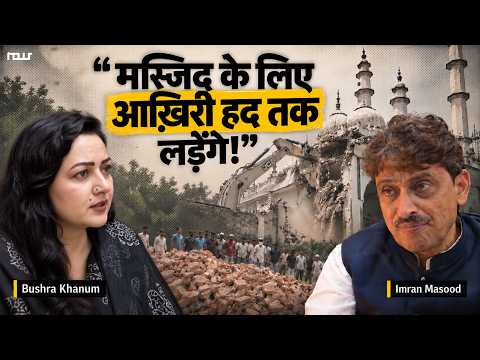
Discussion
0Readers only · Comments are reviewed by the desk before they appear
The journalism is free for everyone — create a free account to join the discussion.