

 2:23
2:23Video· Nous Shorts
Why Muslim Education Is Falling Behind I Part 2
This Short is part of our full video.
A leaked NEET paper triggered nationwide student protests. But is India's education crisis only about exam leaks? This explainer argues that the struggle begins much earlier—at unequal access to schools, scholarships, colleges, and opportunity itself. Using evidence from the Sachar Committee, gov…
For weeks this July, students had camped For weeks this July, students had camped in the center of Delhi at Jantaar in the center of Delhi at Jantaar in the center of Delhi at Jantaar Mantar. >> And when their march turned toward >> And when their march turned toward parliament on the 20th, [music] the parliament on the 20th, [music] the parliament on the 20th, [music] the state answered tear gas, baton charges. state answered tear gas, baton charges. state answered tear gas, baton charges. The internet cut off street by street. The internet cut off street by street. The internet cut off street by street. The movement has an odd name, the The movement has an odd name, the The movement has an odd name, the cockroach jenta party. It began as a cockroach jenta party. It began as a cockroach jenta party. It began as a meme, a jib thrown from a courtroom that meme, a jib thrown from a courtroom that meme, a jib thrown from a courtroom that the young picked up and wore. What [0:33] the young picked up and wore. What the young picked up and wore. What turned a meme into a movement was who turned a meme into a movement was who turned a meme into a movement was who joined it. Students, aspirants, the joined it. Students, aspirants, the joined it. Students, aspirants, the generation that did everything it was generation that did everything it was generation that did everything it was told to do. And what they seized on was told to do. And what they seized on was told to do. And what they seized on was education. What set them off was a education. What set them off was a education. What set them off was a leaked exam paper, the National Medical leaked exam paper, the National Medical leaked exam paper, the National Medical Entrance need compromised again in 2026. Entrance need compromised again in 2026. Entrance need compromised again in 2026. The exam was scrapped and held a second The exam was scrapped and held a second The exam was scrapped and held a second time, throwing an entire year's medical time, throwing an entire year's medical time, throwing an entire year's medical admission into chaos. In the coverage, [1:04] admission into chaos. In the coverage, admission into chaos. In the coverage, someone counted the students who [music] someone counted the students who [music] someone counted the students who [music] had taken their own lives after the last had taken their own lives after the last had taken their own lives after the last leak. The number was more than 20. leak. The number was more than 20. leak. The number was more than 20. And this week, the protest claimed its And this week, the protest claimed its And this week, the protest claimed its [music] biggest scalp. On the 25th of [music] biggest scalp. On the 25th of [music] biggest scalp. On the 25th of July, the education minister Dhandra July, the education minister Dhandra July, the education minister Dhandra Pradhan resigned saying students futures Pradhan resigned saying students futures Pradhan resigned saying students futures must not become victims of a political must not become victims of a political must not become victims of a political battle. A movement that began as a meme battle. A movement that began as a meme battle. A movement that began as a meme had brought down a minister. [music] had brought down a minister. [music] had brought down a minister. [music] It is a real victory. But hold that [1:34] It is a real victory. But hold that It is a real victory. But hold that thought because a resignation is a win thought because a resignation is a win thought because a resignation is a win at the finish [music] line. And there is at the finish [music] line. And there is at the finish [music] line. And there is one question upstream of all of it that one question upstream of all of it that one question upstream of all of it that no minister's resignation can touch. no minister's resignation can touch. no minister's resignation can touch. Their charge was simple. The race is Their charge was simple. The race is Their charge was simple. The race is rigged [music] rigged [music] rigged [music] and on the evidence they were right. and on the evidence they were right. and on the evidence they were right. Right enough that within weeks the Right enough that within weeks the Right enough that within weeks the education [music] minister himself education [music] minister himself education [music] minister himself resigned and the crowds began to thin. resigned and the crowds began to thin. resigned and the crowds began to thin. But there is one question this movement But there is one question this movement But there is one question this movement never asked [music] and it is the most [2:05] never asked [music] and it is the most never asked [music] and it is the most uncomfortable one of all. Here is the uncomfortable one of all. Here is the uncomfortable one of all. Here is the question. A race can be rigged in two question. A race can be rigged in two question. A race can be rigged in two ways. You can fix [music] it at the ways. You can fix [music] it at the ways. You can fix [music] it at the finish. A leaked paper, a bot seat, a finish. A leaked paper, a bot seat, a finish. A leaked paper, a bot seat, a rigged interview. That is what the rigged interview. That is what the rigged interview. That is what the protest is about and it matters. Or you protest is about and it matters. Or you protest is about and it matters. Or you can rig it before it begins by declining can rig it before it begins by declining can rig it before it begins by declining who is even allowed to reach the who is even allowed to reach the who is even allowed to reach the starting [music] line. For one of the starting [music] line. For one of the starting [music] line. For one of the largest communities in this country, the largest communities in this country, the largest communities in this country, the rigging happens there at the start. rigging happens there at the start. rigging happens there at the start. Muslims are about 14% of India. They're [2:35] Muslims are about 14% of India. They're Muslims are about 14% of India. They're under 5% of everyone enrolled in higher under 5% of everyone enrolled in higher under 5% of everyone enrolled in higher education, a smaller share than Dalits. education, a smaller share than Dalits. education, a smaller share than Dalits. And over the last few years, government And over the last few years, government And over the last few years, government policy has been quietly [music] walking policy has been quietly [music] walking policy has been quietly [music] walking that starting line further back. I want that starting line further back. I want that starting line further back. I want to be careful here. This is not a rival to be careful here. This is not a rival to be careful here. This is not a rival grievance [music] competing with the grievance [music] competing with the grievance [music] competing with the students at Janta Mantra for attention. students at Janta Mantra for attention. students at Janta Mantra for attention. It is the same fight followed one step It is the same fight followed one step It is the same fight followed one step upstream to the place where opportunity upstream to the place where opportunity upstream to the place where opportunity is actually [music] decided because a is actually [music] decided because a is actually [music] decided because a movement that wins a fairer exam but movement that wins a fairer exam but movement that wins a fairer exam but never asks who was kept out [music] of [3:06] never asks who was kept out [music] of never asks who was kept out [music] of the classroom will simply hand a cleaner the classroom will simply hand a cleaner the classroom will simply hand a cleaner race to the people who were already race to the people who were already race to the people who were already [music] at the line. So let's slow down [music] at the line. So let's slow down [music] at the line. So let's slow down and separate two things we usually blur and separate two things we usually blur and separate two things we usually blur together. There is competition the exam together. There is competition the exam together. There is competition the exam the cutoff the interview and before it the cutoff the interview and before it the cutoff the interview and before it there is access. Whether you ever got there is access. Whether you ever got there is access. Whether you ever got the schooling, the coaching, the support the schooling, the coaching, the support the schooling, the coaching, the support to compete at all. Every demand at to compete at all. Every demand at to compete at all. Every demand at Jantra Mantr is about competition. Jantra Mantr is about competition. Jantra Mantr is about competition. [music] Make the exam fair. But [music] Make the exam fair. But [music] Make the exam fair. But competition can only be fair between [3:36] competition can only be fair between competition can only be fair between people who started from the same place. people who started from the same place. people who started from the same place. Give two runners an honest referee, but Give two runners an honest referee, but Give two runners an honest referee, but move one of them 10 m back before the move one of them 10 m back before the move one of them 10 m back before the gun and the honest referee just gun and the honest referee just gun and the honest referee just certifies an unfair result. To be certifies an unfair result. To be certifies an unfair result. To be [music] clear, the point is not that [music] clear, the point is not that [music] clear, the point is not that anyone deserves a head start. The point anyone deserves a head start. The point anyone deserves a head start. The point is the opposite. It's that some people is the opposite. It's that some people is the opposite. It's that some people are being denied a fair start. [music] are being denied a fair start. [music] are being denied a fair start. [music] And a fair start is the one thing the And a fair start is the one thing the And a fair start is the one thing the constitution actually promises. Now, constitution actually promises. Now, constitution actually promises. Now, there's an old explanation for why there's an old explanation for why there's an old explanation for why Muslims sit so low on these [music] [4:07] Muslims sit so low on these [music] Muslims sit so low on these [music] numbers. You've heard it. They don't numbers. You've heard it. They don't numbers. You've heard it. They don't value education. They prefer madrasa. value education. They prefer madrasa. value education. They prefer madrasa. It's a cultural choice. So, we went and It's a cultural choice. So, we went and It's a cultural choice. So, we went and looked house by house. In Jamyanagar, a looked house by house. In Jamyanagar, a looked house by house. In Jamyanagar, a Muslim majority part of Delhi, not too Muslim majority part of Delhi, not too Muslim majority part of Delhi, not too far away from Janta Mantra. We surveyed far away from Janta Mantra. We surveyed far away from Janta Mantra. We surveyed 2,700 households, nearly [music] 4,000 2,700 households, nearly [music] 4,000 2,700 households, nearly [music] 4,000 children. 94% of those children are children. 94% of those children are children. 94% of those children are enrolled in school. More than 97% say enrolled in school. More than 97% say enrolled in school. More than 97% say [music] they want to go to college. [music] they want to go to college. [music] they want to go to college. Mothers are only schooling is a small Mothers are only schooling is a small Mothers are only schooling is a small minority. The aspiration is not missing. [4:38] minority. The aspiration is not missing. minority. The aspiration is not missing. It is overwhelming. So where does it It is overwhelming. So where does it It is overwhelming. So where does it break? Not at wanting at the system break? Not at wanting at the system break? Not at wanting at the system around the child. [music] In Shaheenbag, around the child. [music] In Shaheenbag, around the child. [music] In Shaheenbag, one of the most densely packed one of the most densely packed one of the most densely packed neighborhoods in the city, there is not neighborhoods in the city, there is not neighborhoods in the city, there is not a single government school, so families a single government school, so families a single government school, so families [music] pay. 57% of the children are [music] pay. 57% of the children are [music] pay. 57% of the children are pushed into private schools their pushed into private schools their pushed into private schools their parents can barely afford and then into parents can barely afford and then into parents can barely afford and then into coaching on top because the school coaching on top because the school coaching on top because the school itself doesn't finish the job. And here itself doesn't finish the job. And here itself doesn't finish the job. And here is the quiet tragedy. [music] [5:10] In class three, fewer than four in 100 children can read at their own grade level. In English, sentence reading is almost non-existent. The child is enrolled. The child is aspiring. The child is even paying. And this child is not learning. That is not a culture that rejects education. That is a system failing a community that is straining every muscle to get in. Step back and the scale becomes clear. In 2006, the Satcher Committee, the government's own inquiry into Muslim conditions, found Muslims at the bottom of almost every indicator and recommended real affirmative action. Back then, Muslims were about 3 and a half% of students in a higher education. In the years since, that number has barely moved to under 5%. 4.9 in the government's most recent survey and one point in a decade and a half. Over the very same period, scheduleled casts and schedule tribes who also started low climbed steeply, several times faster. The gap didn't close. For everyone else, [6:12] it narrowed. For Muslims, it held. And in the most recent official survey, while Dalith, Adivasi, and OBC enrollment all rose, Muslim enrollment actually fell by more than 8% in a single year. They are the only large group whose literacy still sits below the national average. This is not slow progress. In the last few years, it has started to run backward and part of the reason is bricks and motor. The satcher committee found something basic. The state had built fewer schools in Muslim areas to begin with. Our own Jamyaga data shows the same. Now, as tens of thousands of government schools are shut or merged across the country, the neighborhoods that started with the fewest have the least left to lose. So why now? Why is a gap that was closing everywhere else running backward here? Part of the answer is that the ladders are being pulled up one by one. Start with one scholar's story. [7:13] She's doing a PhD. Her family earns almost nothing. The one thing that made her degree possible was a fellowship, the Molana Azad National Fellowship. And this wasn't charity. It was affirmative action recommended by the government's own such a committee run through the Ministry of Minority Affairs precisely because the Muslims had fallen so far behind. In December 2022 in Parliament, the government announced it was ending that fellowship. The reason given was overlap. But a scholar can hold only one fellowship at a time on a single national portal. The overlap in practice doesn't exist. And even if there were some irregularity, you fix it. You don't demolish the whole ladder because a rung was loose. Hold on to that logic. Fix it. Don't demolish it. We'll come back to it. And it wasn't only that fellowship. pre-matrix scholarship which used to cover classes 1 to 10 was cut back to [8:15] just 9 and 10. The scheme that helped minority students afford study abroad discontinued. A whole row of schemes for skilling for girls for school dropouts scrapped or quietly dropped between 2022 and 2025. And in February 2024, the Molana Azad Education Foundation, which had worked for minority education since 1989, was ordered shut 35 years. The order gave no reason at all. You might expect the budget to make up for it. It doesn't. This year, the entire Ministry of Minority Affairs gets about 600ths of the 1% of the union budget for nearly 1 in five Indians. And even that is often announced. revised down midyear and left unspent. This is the additional layer, a second crisis stacked on the one every young Indian faces. Built recently out of the very machinery meant to help. Now [9:16] if the state steps back, can the community build its own way in? Barely. Institutions run by Muslims make up just 2.1% of universities and 2.6% of colleges. Most are tiny. Over 60% enroll fewer than 500 students and the building has all but stopped. The rate of new colleges already slow flattened almost completely after 2014. And the spaces that do exist are under pressure. Muhammad Ali Johawar University in [9:46] Rampur. This very month 38 of its buildings sit under demolition orders. A functioning university dragged through the courts and toward the bulldozer. Now remember what we just said about the fellowship. When something is disputed, you fix it. You don't demolish it. Here the answer to a land dispute is to raise a university. And it isn't one campus. Madrasa surveyed and struck off across UP. An entire state Madrasa board abolished in Uttakhan. Bulldozers [10:17] arriving at the edges of the community institutions. The supply is squeezed from both ends. too few built and some of what stands under threat and here's the fact that should end one particular argument for good in these Muslim run colleges most of the students 55% are Hindu the institutions built by communities serve the whole country whatever these closures are they are not the ending of some appeasement there was never any appeasement to begin with now let me put the strongest [10:49] arguments against everything I have just said because they deserve a real answer. The first that singling out Muslim fractures a united movement that this is really about class and governance and everyone is suffering and that's partly true. The crisis is shared but naming a steeper slope isn't dividing the hill. Saying we all start unequally isn't identity politics, it's just accuracy. A single remedy applied to unequal starting [11:19] lines doesn't produce equality. It freezes the gap in place. Second, that these schemes were cut for honest reasons. Overlap, waste, poor delivery. Here, I'll concede something real. Some of these schemes were badly run. Money went unspent. And yes, part of the community's own leadership underinvested in its students. Failure is real and it should sting. But be clear about where [11:49] the duty sits. Under the constitution, educating the weakest is the state's obligation, not a favor it can withdraw because a community fell short of helping itself. A parents failures don't cancel a state's duty. An underspending is a reason to deliver better, not to shut the thing down. You don't close the hospital because the queue was long. Third, the oldest one that this is culture, not system. We already answered that with our own doorstep data. 94% enrolled, 97% [12:21] aspiring. The wanting is not the problem. I'm not claiming I can read intentions. I can't prove that every one of these decisions was designed to exclude. But you don't need to prove intent to see a pattern. And the pattern, scholarships gone, foundation shut, budget hollowed, a university facing the bulldozer, all falls in one direction on the group already standing furthest from the line. So let me bring this back to those students. [12:51] They were fighting over the exam hall who got the leaked paper who took the seat unfairly and they were right to and they should. Graduate unemployment in this country is around 13%, four times the overall rate. A third of our young graduates can't find work. The fight over those few honest seeds is real. But here is the deeper injustice. The protest is about who cheated their way [13:21] into the hall. The question underneath it is about who never reached the hall at all. Employment doesn't begin at the interview. It begins at the school you could or couldn't reach, the fellowship you did or didn't lose, the college that was or wasn't built. Employment justice is downstream of the access justice. Fix the exam and you've still only fixed the last few meters of a race that was decided at the start. And here I have to widen the frame [13:53] because this was never only a Muslim story. The starting line is moved back for almost everyone. The system was built to keep out. Think of Rohit Vula, a Dalith research scholar in Hyderabad whose fellowship 25,000 rupees a month was stopped, who was suspended, pushed out of his hostel and who died by suicide in 2016. His offense was organizing against cast. The same machinery we've been tracing. The scholarship withdrawn, the door quietly closed. Think of Najib Ahmed, a [14:24] Muslim student at JNU who vanished after a hostile clash in 2016 and was never found. The state searched then closed the file. A young man can disappear and the system simply moves on. A Dalith scholar and a Muslim student, two names, one pattern and around them the same story repeats. The poor, the first in their family to reach a classroom. Adiasi students hundreds of kilometers from any college. Girls put out the moment the money runs short. [14:56] This is the architecture of unequal system of wealth, of cast, of gender. And Muslims sit at one of its sharpest edges, but never alone. So when the students at Janta Mantr say the race is rigged, they are more right than they know. It is rigged not only at the exam hall but at the schoolhouse, the hostel, the fellowship office against everyone who was never meant to arrive. And this is where the constitution stops being decoration. [15:26] Doesn't just promise equality on paper. Article 14. It promises equal opportunity in employment. Article 16. It tells the state in article 46 to actively promote the education of the weakest. And in article 29 and 30, it gives minorities the right to build and run their own institutions. Equal opportunity was never meant to be just a fair finish. It was meant to be a fair [15:57] start for the Dalith and the Adiasi for the daughter of a daily wage worker and yes for the Muslim child in Jamyanagar who is enrolled, aspiring, paying and still not learning. So I will end not with a slogan but with a standard. The students at Janta Mantra were right that the system is rigged. They won a resignation. They may still win a fairer exam. But a resignation builds no school, restores no fellowship, reopens no foundation. So I only want to hold their [16:28] own logic to its full length. This week they won a resignation. Tomorrow they may win a fairer exam, but neither builds the school in Shaheenbach, nor restores the fellowship, nor reopens the foundation.
Companion article
For weeks this July, students camped at Delhi's Jantar Mantar under a banner that began, oddly, as a courtroom insult: the Cockroach Janta Party. What turned the meme into a movement was who joined it — aspirants and students who had done everything they were told to do, only to watch a leaked exam paper compromise the National Eligibility cum Entrance Test, NEET, for the second time in 2026. The exam was scrapped and re-held, throwing a year of medical admissions into chaos, on top of a wave of student suicides that had followed the previous leak. When the protest march turned toward Parliament on the 20th, the state answered with tear gas, baton charges and street-by-street internet shutdowns. Five days later, on July 25, education minister Dharmendra Pradhan resigned, saying students' futures must not become the casualty of a political battle.
That resignation is a real victory, the episode argues, but a win at the finish line — and there is a harder question upstream of it that no minister's departure can touch. A race, it notes, can be rigged in two ways: fixed at the finish, through a leaked paper or a bought seat, or rigged earlier, by deciding who is even allowed to reach the starting line. For one of India's largest communities, the analysis argues, the rigging happens at the start.
Muslims make up roughly 14 percent of India's population but under 5 percent of everyone enrolled in higher education — a smaller share than Dalits. The episode sets aside the familiar explanation that Muslims simply undervalue formal schooling in favour of madrasas, citing its own household survey of 2,700 families and nearly 4,000 children in Jamia Nagar, a Muslim-majority part of Delhi: 94 percent of those children are enrolled in school, and more than 97 percent say they want to go on to college. The aspiration, the analysis concludes, is not missing — it is overwhelming.
The gap instead opens in the system around the child. In Shaheen Bagh, one of the area's most densely populated neighbourhoods, there is not a single government school, pushing 57 percent of children into private schools their families can barely afford, plus coaching on top because the schooling itself falls short. The result, per the episode's data, is a quiet tragedy: in class three, fewer than four children in a hundred can read at their own grade level, with sentence-level reading in English almost non-existent — children who are enrolled, aspiring and paying, yet still not learning.
The government's own 2006 Sachar Committee inquiry found Muslims at the bottom of almost every social indicator and recommended real affirmative action; at the time, Muslims made up about 3.5 percent of higher-education students. Fifteen years on, that figure has crept up only to 4.9 percent, even as Scheduled Caste and Scheduled Tribe enrollment, starting from a similarly low base, climbed several times faster over the same period. In the most recent official survey cited in the episode, while Dalit, Adivasi and OBC enrollment all rose, Muslim enrollment actually fell by more than 8 percent in a single year — the only large group whose literacy still sits below the national average, and a decline the episode attributes partly to the state having built fewer schools in Muslim areas to begin with, now compounded as thousands of government schools are shut or merged nationwide.
The episode traces a string of policy withdrawals since 2022: the Maulana Azad National Fellowship, which funded doctoral research for Muslim students from poor families, was ended in December 2022 on the stated grounds of overlap with other schemes — a justification the episode disputes, since a scholar can hold only one such fellowship at a time on a single national portal. Pre-matric scholarships were cut back from covering classes one through ten to just classes nine and ten; a scheme funding minority students' study abroad was discontinued; and in February 2024, the Maulana Azad Education Foundation, which had worked on minority education since 1989, was ordered shut without any reason given. The entire Ministry of Minority Affairs, the episode notes, receives roughly six-hundredths of one percent of the union budget to serve a population share of nearly one in five Indians — funding that is itself often revised downward mid-year and left unspent.
Institutions run by Muslims make up just 2.1 percent of India's universities and 2.6 percent of its colleges, most of them small — over 60 percent enroll fewer than 500 students — with new construction essentially flat since 2014. Meanwhile, existing institutions face new pressure: Muhammad Ali Jauhar University in Rampur has had 38 of its buildings placed under demolition orders, madrasas have been surveyed and struck off across Uttar Pradesh, and Uttarakhand has abolished its state madrasa board outright. The episode adds a detail meant to unsettle the framing of these institutions as sectarian: at Muslim-run colleges, it says, 55 percent of enrolled students are Hindu.
The analysis engages three counterarguments directly. To the claim that singling out Muslims fractures a shared grievance about class and governance, it concedes the crisis is broadly shared but argues that naming a steeper slope for one group is not identity politics — it is simply accuracy, since a single remedy applied to unequal starting points does not produce equality. To the claim that the cuts reflect honest administrative concerns like waste or duplication, it concedes some schemes were indeed poorly run, but insists a state's constitutional duty to educate its weakest citizens cannot be withdrawn because of underspending any more than a hospital should close because its queue grew long. And to the oldest claim — that this is culture, not system — it points back to its own survey data on enrollment and aspiration.
The episode widens its frame in closing, invoking Rohith Vemula, the Dalit research scholar in Hyderabad whose fellowship was withdrawn before he died by suicide in 2016, and Najeeb Ahmed, the Muslim student who vanished from JNU after a hostel altercation the same year and was never found. Read together, the analysis argues, the two cases trace one shared machinery bearing down on India's most marginal students — a pattern the Constitution was written to prevent through Articles 14 and 16's promise of equal opportunity, Article 46's direction to the state to actively promote education for the weakest, and Articles 29 and 30's guarantee that minorities may build and run institutions of their own. A fairer exam, the episode concludes, fixes only the last few metres of a race whose outcome was substantially decided long before anyone sat down to take it.
2:23This Short is part of our full video.
 1:32
1:32This Short is part of our full video.
 1:11
1:11This Short is part of our full video.
 0:58
0:58This Short is part of our full video.
 1:27
1:27This Short is part of our full video.
 1:54
1:54This Short is part of our full video.
 2:13
2:13This Short is part of our full video.
 1:35
1:35This Short is part of our full video.
 0:50
0:50This Short is part of our full video. Watch the complete video: https://www.youtube.com/watch?v=xfwLbrr7L44
0:50This Short is part of our full video. Watch the complete video: https://www.youtube.com/watch?v=xfwLbrr7L44
 0:44
0:44This Short is part of our full video. Watch the complete video: https://www.youtube.com/watch?v=xfwLbrr7L44
0:44This Short is part of our full video. Watch the complete video: https://www.youtube.com/watch?v=xfwLbrr7L44
 11:27
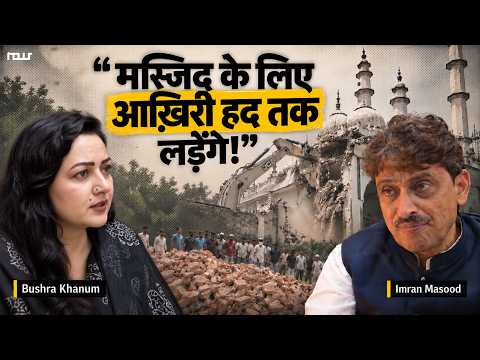
11:27Following the demolition of the mosque inside the Saharanpur Collectorate, Saharanpur MP Imran Masood discusses the legal battle surrounding the site, the documents cited by the mosque committee, and the questions being raised over the demolition process.
11:27Following the demolition of the mosque inside the Saharanpur Collectorate, Saharanpur MP Imran Masood discusses the legal battle surrounding the site, the documents cited by the mosque committee, and the questions being raised over the demolition process.
 22:41
22:41In an exclusive interview with senior journalist Bushra Khanum, Saharanpur MP Imran Masood discusses the demolition of a mosque inside the Saharanpur Collectorate and the questions it has raised over law, equality and religious sites. Masood argues that the issue should be viewed through the lens…
Discussion
0Readers only · Comments are reviewed by the desk before they appear
The journalism is free for everyone — create a free account to join the discussion.