

 2:08
2:08Video· Nous Shorts
Muslim Perspective on India's Development | Dr. Javed Jamil Explained
What does a peaceful, prosperous, and inclusive India look like from a Muslim perspective?
India's progress depends on the participation and empowerment of all its citizens. In this video, we present our perspective on the Muslim Vision for a Peaceful, Prosperous, and Inclusive India, based on the ideas of Dr. Javed Jamil. We discuss the demographic significance of Indian Muslims, the …
It was in 2012 that my document, titled "Muslim Vision of Secular India: Destination Road Map," was released at the Islamic Culture Centre in Delhi in the presence of the then Minority Minister, Mr. Salman Khurshid, the then Deputy Chairman of the Rajya Sabha, Mr. K. Rahman, and other prominent figures. This document had already generated considerable interest across the country. It received widespread attention from public figures across the country who were concerned about the issues of Muslims in India. Later, it was published as a book in 2016. It would be appropriate here to briefly introduce this document, which consists of over 450 pages. Let us first briefly understand what the Muslim Vision is. That is, what do Muslims think about this country and their community? We are not what others think we are. People often view us through the colored glasses of their own beliefs, ideological conceptions, and interests. But now, we Muslims need to start seeing ourselves through our own lens, with our own vision. The only condition is that this vision corrects both our near and far vision. We should not only see the near and not consider the far. Because whenever we have to create a program, it is essential to balance both the short and long term. The problem with Muslims has been that for a long time they have been judging themselves by the standards of others. That is, what do others think of us? We use that as our standard to judge ourselves. And we have been determining our priorities and values—what should our goals be? What should our preferences be—based on the decisions of others. We have forgotten that our strengths and weaknesses differ from those of others. We have our own perspectives, our own goals, and our own ways of reaching them. We have our own unique vision of the world, which we have unfortunately given up on publicizing and implementing. The result is that certain internal and external forces continually try to instill in Muslims a sense of inferiority, an inferiority complex. We are repeatedly instilled in us the idea that we are a so-called lost community, a defeated nation with no purpose of its own, no significant strength. And until then, our future is in the dark. That is, until we choose a specific path, and this specific path, of course , is one that others choose. We must completely dismantle this deception-based attitude. However, this doesn't mean we should completely ignore the opinions of others. Criticism often provides an opportunity to evaluate the impact of our own actions. Even if the criticism is unfounded, it can instill renewed enthusiasm within us. We must analyze what others say and face issues without succumbing to anger or apologizing. This means that a completely apolitical environment has developed within us, making us easily apologetic. Therefore, we must overcome this apologetic attitude. Let us now understand some realities of our status within the Indian population. By the beginning of 2026, India will become the world's most populous country, with a population estimated to be between 1.43 and 1.48 billion, representing approximately 18%of the global population. According to 2019 estimates , with approximately 204 million Muslims, India has the third-largest Muslim population in the world and also the world's largest Muslim minority population. This means that among all such countries, India is the country where Muslims, despite being in the minority, have the highest percentage. This means that compared to the rest of the world where Muslims are in the minority, approximately 10.9%of the world's Muslims live in India. By 2030, the number of Muslims in India is expected to reach 232.2 million. This proportion of Muslims is expected to increase from 14.6%in 2010 to 15.9%in 2030. Thus, India's Muslim population is larger than any other Muslim country except Indonesia and Pakistan. This status demands that Muslims be able to exert a visible influence on national and international policies, particularly in programs related to social and economic development. Muslims should strive to make positive contributions to programs related to social and economic issues. Similarly, they should receive a share in the country's resources commensurate with their population. They should participate in and benefit from the country's successes. However, the reality is that this is not happening, and in the current circumstances, the prospects for this future career appear very limited. This is the situation that urgently needs to change. Muslims are citizens of a country that is the world's largest democracy and most populous. India is also an emerging power in the global arena and has significant strategic potential. Muslims are a religious community because most Muslims in India, whether Hindu, Muslim, or from other communities, are religious believers. Unlike Western countries, where a significant number have become atheists , meaning they don't adhere to any religion. They are considered Christians, but they don't even believe in Christianity. Muslims are a religious community with a strong belief in their religion and are not satisfied with the so-called developmental activities that are underway, because the demands of development are closer to Islam. However, today's economic forces present them differently because they only care about their own interests. For them, alcohol is a wonderful thing. For them, illicit relationships are also a wonderful thing. And gambling is a great thing. They take advantage of it. But this is obviously against the religious teachings of Islam. Muslims often feel that the majority of Muslims do not respect their religious sentiments. This applies to India as well as the entire world. Their young population is disproportionately large. The number of working people and the poor is constantly increasing, which necessitates a dire need for education and social planning. But where did the mistake go? What was lacking? Why have Muslims lagged behind in various areas of progress? Who is responsible for this? Let's try to understand the reasons behind it. Some parties are openly considered anti-Muslim. But the reality is that no political party has ever considered the true needs of Muslims. What about Muslims? Even these general political parties pay very little attention to the interests of the general public. They focus primarily on their own political interests. Secular groups have used Muslims as a vote bank, while other groups seek to limit their rights. Muslim representation has been low, both in political parties and in other institutions, such as Parliament and the Legislative Assemblies. And even those representatives who do come are often subservient to their party's policies, rather than truly interpreting their community's issues. The few individuals within the BJP, of course, do not express their interests or demands within their own party, but instead try to explain their party's perspectives to Muslims. Similar is the situation with other parties. Furthermore, the Ulama focused mostly on religious matters and neglected the social and economic progress that was their duty, leading to a growing gap between the public and the Ulama. This means that while the gap may not be religious, the kind of communication that should have taken place in worldly matters, where the Ulama would have fully represented and guided them, did not occur to the extent it should have. Most scholars, i.e., intellectuals and educated people, limited themselves to criticism rather than practical work, failing to develop a wise, practical model. The issue of minority and majority should not be based solely on religion. The majority of India, i.e., the entire majority of India, is poor, and Muslims are also falling victim to the same issues. Therefore, they can lead that large majority. Among Muslims , there are rich, wealthy, and poor classes, and of course, the poor and the wealthy are much more numerous, facing problems and difficulties similar to those of other communities. Basic amenities like roads, water, electricity, health, banking, inflation , and high prices affect all urban residents. Similarly, issues like crime , corruption, drugs, and prostitution affect the entire society. Muslims should play a leading role in all these matters, taking the lead against these issues and trying to offer solutions based on their Islamic perspectives. India's economy has been growing at a rate of approximately 8%, but the economic progress of Muslims is considered much lower than that. How should Muslims plan for their own global progress? We need to consider this. They must unite on a national level and formulate a solid plan, which is essential for each sector. This means they must be fully organized. They must have multiple organs, and there must be coordination among them. This is crucial. No aspect should be left out, and there must be coordination among all the different groups working in different fields. Now let's examine Muslims 'vision for India . Number one: a secular India where religion is respected. No religion or its sacred figures are insulted, and everyone works together to build a better country. Number two: an India with high moral values. Where family and social values are fully protected, and strong action must be taken against evils such as drugs, gambling, prostitution, etc. Number three: a true equality in India, meaning there should be equality within society, where income inequality, or gross inequality, is minimal and should be continuously reduced. Number four: a secure India, meaning a safe and secure India, where crime, violence, corruption, and crimes against women are strictly controlled. Number five: a deep India of peace, meaning an India that becomes an example of peace for the entire world. An India that stands against the oppression of global powers and helps the weak. Number six: a prosperous India, meaning a country that is prosperous in every way, where everyone has equal access to the opportunities for progress. The economic role of Muslims is also very important. Muslims should participate in this progress and have the freedom to live their lives according to their religious and cultural principles. In short, the India of our dreams is a country that prioritizes peace, morality, and humanity over power and becomes a leader in the prosperity of all humanity. Thank you very much. Om Om
Companion article
Dr. Javed Jamil begins with the origin of his argument. In 2012, he recalls, his document "Muslim Vision of Secular India: Destination Road Map" was released at the Islamic Culture Centre in Delhi in the presence of Salman Khurshid, then the Minority Affairs Minister, K. Rahman, then Deputy Chairman of the Rajya Sabha, and other prominent figures. It drew wide attention from public figures concerned with the problems of Muslims in India, and was published as a book in 2016. The document runs to more than 450 pages, and this talk is his short introduction to its ideas.
His starting premise is that Muslims have too often been viewed through the "coloured glasses" of others' beliefs and interests. The remedy, Jamil says, is for Muslims to look at themselves through their own lens, one that corrects both near and far vision and balances short-term needs against long-term goals.
The habit Jamil most wants to break is judging the community by what others think of it. Muslims, he says, have let outsiders set their priorities and values, forgetting that their strengths, weaknesses and goals differ from those of others. Internal and external forces have, in his account, instilled a sense of inferiority, the idea of a "lost community" with no purpose or strength of its own, whose future depends on following paths that others choose.
He is careful to say this does not mean ignoring criticism. Criticism, even when unfounded, can be a prompt to assess one's own actions, and Muslims should weigh what is said about them without responding in anger or with apology. But he sees a broader apolitical, apologetic mood in the community that he argues must be overcome.
Jamil grounds the argument in demography. He says India is expected to be the world's most populous country by the beginning of 2026, with 1.43 to 1.48 billion people, roughly 18 per cent of the global total. Using 2019 estimates, he puts India's Muslim population at about 204 million, the third largest in the world and the largest Muslim minority anywhere. He says about 10.9 per cent of the world's Muslims live in India, projects 232.2 million by 2030, and cites a rise in their share of the national population from 14.6 per cent in 2010 to 15.9 per cent in 2030. Only Indonesia and Pakistan, he notes, have larger Muslim populations.
A community of that size, he argues, should exert a visible influence on national and international policy, particularly in social and economic development, and should receive a share of resources commensurate with its numbers. In his assessment that is not happening, and prospects under current conditions look very limited.
Jamil's diagnosis is blunt and spreads responsibility widely. No political party, he says, has ever considered the true needs of Muslims. Some are openly regarded as anti-Muslim, but even the general parties focus mainly on their own political interests. Secular groups have used Muslims as a vote bank, he says, while others seek to limit their rights. Muslim representation in Parliament and the assemblies is low, and those who do get elected often follow the party line rather than voicing community concerns. Within the BJP, he says, the few Muslim members explain the party's views to Muslims rather than pressing community demands inside the party.
He also faults the community's own institutions. The ulama, in his telling, concentrated on religious matters and neglected the social and economic progress that was part of their duty, widening the gap between them and the public. Intellectuals mostly criticised rather than building a practical model.
Jamil argues that the minority and majority divide should not be drawn on religion alone. The great majority of Indians, he says, are poor, and Muslims face the same problems as everyone else: roads, water, electricity, health, banking and inflation, along with crime, corruption, drugs and prostitution. Muslims, he suggests, can lead on these issues and offer solutions from an Islamic perspective. He notes that India's economy has been growing at about 8 per cent, while Muslims' economic progress is considered much lower, and calls for national unity, a solid plan for every sector and coordination among the many groups working in different fields.
The talk closes with what Jamil calls the Muslim vision for India, in six points:
First, a secular India in which religion is respected, no faith or its sacred figures are insulted, and everyone works together. Second, an India with high moral values, where family and social values are protected and strong action is taken against drugs, gambling and prostitution. Third, real equality, with gross income inequality minimal and continually reduced. Fourth, a secure India, with crime, violence, corruption and crimes against women strictly controlled. Fifth, an India of peace, an example to the world that stands against the oppression of global powers and helps the weak. Sixth, a prosperous India in which everyone has equal access to opportunity, and Muslims can take part in progress while living according to their religious and cultural principles.
In short, he says, the India he hopes for puts peace, morality and humanity ahead of power and leads in the prosperity of all humanity.
This piece reports Dr. Jamil's arguments and figures as he presented them in the video; the population estimates and projections are his and have not been independently checked here.
2:08What does a peaceful, prosperous, and inclusive India look like from a Muslim perspective?
 2:04
2:04A strong India is built when every community has the opportunity to contribute and thrive. We share our perspective on the Muslim Vision for a peaceful, prosperous, and inclusive India, based on the ideas of prominent thinker and Islamic scholar @drjavedjamil
 11:27
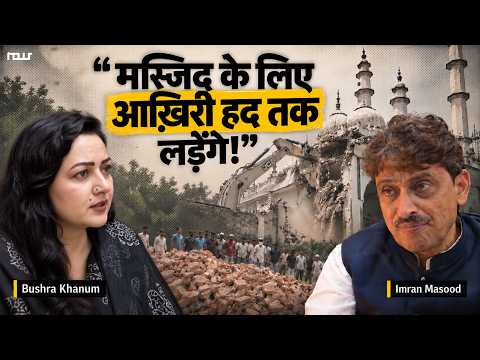
11:27Following the demolition of the mosque inside the Saharanpur Collectorate, Saharanpur MP Imran Masood discusses the legal battle surrounding the site, the documents cited by the mosque committee, and the questions being raised over the demolition process.
11:27Following the demolition of the mosque inside the Saharanpur Collectorate, Saharanpur MP Imran Masood discusses the legal battle surrounding the site, the documents cited by the mosque committee, and the questions being raised over the demolition process.
 22:41
22:41In an exclusive interview with senior journalist Bushra Khanum, Saharanpur MP Imran Masood discusses the demolition of a mosque inside the Saharanpur Collectorate and the questions it has raised over law, equality and religious sites. Masood argues that the issue should be viewed through the lens…
Discussion
0Readers only · Comments are reviewed by the desk before they appear
The journalism is free for everyone — create a free account to join the discussion.