When you're walking on the road, there could be a case of lynching, God forbid. If you're traveling by train, you could be shot down. Unprecedented in the history, not just of independent India, but anywhere around the world, where somebody's private premises are demolished by the local administration to the accompaniment of music. A Muslim is not welcome inside parliament. His dignity is not safe inside parliament.
allowed to contest elections, and if he is able to contest elections, the effort is to make sure that he doesn't. If the top court of the country doesn't fail his bail application even once in a year, how much faith can a Muslim have in the judiciary at such a time? When was the last time you saw any English channel or Hindi channel have a dispassionate debate about, say, Sharjah Liman?
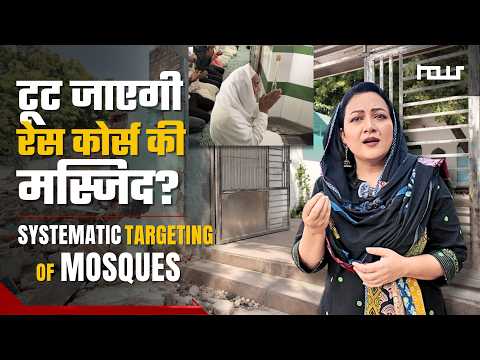
It's for the majority community to rise from its slumber. Hello everyone. Salaam Alaikum. This is Yusra and I welcome you to Now's Interviews. Today we have a very important voice with us. It is the voice of an Indian Muslim. Mr. Ziaus Salaam is a veteran journalist, author and critic. He has decades worth of a career in print media and today we are here at his office at The Hindu to speak to him about his latest book
titled, Being Muslim in Hindu India. Now these are trying times. The month of January was marked by the consecration of the Ram Mandir in Ayodhya. It is also the month in which we celebrate our Republic Day. A republic that stands on trial today. On the day of the consecration of the temple, the founding editor of Maktoub posted on his Instagram story that he was getting calls from across the country about a little skirmish there, a little gunda gardi here.
A shop burned down, a vehicle overturned, slogans being chanted outside of mosques. Humiliation, indignity, mockery. And so my first question for you, Mr. Salaam, is this. What does it mean to be Muslim in India today? And if today is difficult, was there ever a time when it was not difficult? How is today different from earlier times? To be a Muslim in India today,
is to be out on your own. There is no support system and no political party is ready to speak up for us and obviously the judiciary has its own ways of functioning. Often there is a big lacuna between what our judges say in seminars and ultimately what their verdicts or their judgments tell us later on. Similarly, when you step out today as a Muslim in India,
Your life is in danger. When you're walking on the road, there could be a case of lynching, God forbid. If you're traveling by train, you could be shot down. We've had those cases. And even if you're sleeping in the privacy of your bedroom, you are not safe, as we discovered in the case of Akhla. Our mosques are not safe. Our madrasas are not safe. Our places of learning, places of worship.
both of them are targeted by hindutva mob usually the police looks on doesn't do much to basically protect these places you had repeat instances on the doorstep of delhi in gurugram where muslims were prevented from offering friday prayers despite having all the valid permissions from the local administration you had cases where muslims were offering isha prayers
near Gurugram and the prayer was disrupted. We had cases in Noida where Fajr and Isha prayers have been disrupted by Jayashree Ram shouting Hindutva Maa. They just go and plant themselves outside the masjid while any prayer is on. The idea is to provoke Muslims and if a Muslim gets provoked and retaliates we saw what happened on Meera road and also if I'll ask you to go back a little bit in time
Soon after Shaheen Bagh movement started, which is entirely peaceful, and it was a movement for equality. It was a movement based on the Constitution of India. In retaliation, what did the UP government do? It named those people who were protesters at the clock tower there in Lucknow as terrorists, put up their names on hoardings until the court intervened and asked them to take it out. Afterwards,
they started bulldozing Muslims premises. They started with Allahabad and then went on to other places. The worst case we saw was in Madhya Pradesh, twice over. First time around in Kargaon, a Muslim man was accused of being a stone pelter and he was accused of having pelted stones at police and at a Hindu procession in the township. The reality was the gentleman had no arms. Both his arms ended.
just around the elbow level. He could not lift a glass of water and he was accused of being a stone pelter simply because his name was Rasim. In another case, a teenage Muslim boy was accused of spitting at a Hindu procession and then not only was he arrested but also his three-storied house was bulldozed to the accompaniment of music. It is unprecedented in the history not just of an independent India.
but anywhere around the world where somebody's private premises are demolished by the local administration to the accompaniment of music. If this is not validation of hatred, then nothing is. And you ask me, has it always been like that? No. The answer is a firm no. We have had cases where there have been inter-colonial clashes in the past occasionally.
But there have also been long stretches and shining examples of communal harmony in our country, where people across religious divide have stood up for each other, stood up for the cause and justice. Today, when a Hindutva mob latches onto an innocent dairy farmer who is a Muslim, nobody comes to his rescue. Gone are those days when people would stand up and risk their own lives to protect the innocent.
In your book, you use the term that the idea is to make the Muslim invisible. What do you mean by that? Sorry, that's not my idea. That's the idea of the government. That is why you don't see any Muslim minister for the first time ever since 1947 in the centre. The Narendra Modi government has no Muslim minister for the last couple of years. There is no Muslim MP in the central governing party.
That is the BJP. It has not a single Muslim MP anywhere from anywhere. We have no Muslim chief minister in the country. That is a political part. The second part is you don't want Muslims to enter parliament or even the Vidhan Sabha. Political parties, not just BJP, have cut down on giving tickets to Muslims in a big manner. At the same time, there's a delimitation process going on in the constituencies.
Thereby, the Muslim vote is thought to be made almost superfluous to the outcome. We saw it in the latest exercise in Assam. Until the de-limitation exercise last year, there were 29 constituencies in the state where Muslim vote was crucial to the outcome. The de-limitation exercise reduced that number to 22. So on the one side, you won't give tickets to Muslims. On the other side,
You don't want Muslims to contest from a place where they have a reasonable chance of winning. Then the third thing, when a Muslim comes to Parliament, you heckle him, you harass him for his faith. We know what happened in 2019 when Muslim MPs went to take their oath as a member of Parliament. They were heckled with cries of Jai Shri Ram. More recently, we know what happened in the case of Kumar Dhanush Ali.
The kind of language which was used by the BJP MP. He called him terrorist and much worse. So a Muslim is not welcome inside parliament. His dignity is not safe inside parliament. He is not allowed to contest elections. And if he is able to contest elections, the effort is to make sure that he doesn't. This is political invisibilization of Indian Muslims at the social level.
We don't want Muslim women wearing hijab to go to school or college. We saw what happened in Karnataka and we are seeing similar noises being made in Rajasthan. They don't want a Muslim to be educated. They don't want a Muslim to earn a decent living. That is why during Navratra for 18 days in places like Delhi, UP, Madhya Pradesh, Haryana, Rajasthan.
Jharkhand, Uttarakhand, Uttarakhand, they don't allow meat shops to be opened. What kind of a democracy is that when the sentiments of one community are regarded paramount over another? Why is a non-vegetarian deprived of the opportunity to eat what he wants to eat during those 18 days? And last year, the month Ashravan, according to the Hindu calendar, was of 59 days.
So for 59 days, a meat merchant could not open his shop, could not sell his stuff and others could not buy his stuff. So effectively for about 80 days, a Muslim in UP was left jobless. You want to make them jobless. You want to make them invisible in society. You are attacking their mosque. You are attacking their madrasa, the places of learning. Where will a Muslim end up? This book.
is about the cry of an anguished muslim a muslim who has become the new orphan of modern india speaking specifically about economic persecution especially in context of the boycotts of you know economic the calls for boycott of muslims economically is there a precedence to this or is this a new phenomenon it's absolutely new because see again in the past no matter if they were communal rights or whatever the economic life after that would go on as usual people
would be landowners and they will have their workers. Landowners could be Hindus and their workers could be Muslim. Some businessman could be Muslim. His staff could be Hindu. It continued without any problem irrespective of whatever happened at different times in the country. It didn't change with emergency. It didn't change in 1984. Bhagalpur, Malayana, Meerut, Moradabad, Gujarat. It never changed. People continued to have
that inter-community economic relationship. It's for the first time that there are calls for economic boycott of Muslims. It's not just sundry fringe leaders making those calls. It's the BJP MPs making those calls. And there is the BJP chief ministers carrying it out without putting it in so many words. When you don't allow a Muslim to open a shop, when you don't allow meat merchants to work, when you don't allow leather industry to flourish, what is the message you're trying to send?
sent to the largest society. And especially just want to sort of focus on the gravity of the situation considering and I have some statistics here that according to government data Muslims are the most the poorest religious community in India and 30% of the community is living below poverty line and it's also the least upwardly mobile group in the country. So just in context of this if you could just talk about the gravity of what it means you know for economic calls for economic boycott.
It's the same thing what we've already discussed about. See, the common Muslim who is not educated, who is illiterate, who probably has a small shop by the roadside, who is a porter somewhere, or who flies a rickshaw, he is affected. What these people do, Hindutva people, they go and plant a saffron flag at shops, at fruit carts, at vegetable carts. The idea is to distinguish them from Muslims.
It's not in words, but it is through action that othering of Muslims takes place. And then people are obviously encouraged accordingly that you have to buy from your poor religionists, not from others. And we see the Prime Minister of India keeping quiet. We see all the courts keeping quiet about it. If it is not a step towards genocide, not just othering of Muslims, then what is it?
And when we specifically talk about political marginalization or invisibilization, if the BJP has shown that they can run the parliament without a Muslim minister in place, and if we have, you know, Hemant Biswa, a chief minister, no less, of a state saying that we don't need Muslim votes, then can we say that, and you talked about delimitation, can we then say that there is something intrinsically flawed about our electoral system here? You first passed the question. That is wrong.
Because even if you get 37% of the vote, you can have a huge majority in parliament. You can have 300 plus MPs with 37% of the vote. Obviously, there's something wrong with that kind of system. But more importantly for me as an Indian today and as an Indian Muslim is the complete silence of the judiciary on these incidents where the life of an Indian citizen.
We have even had cases where some social activists have been arrested and are in jail for a number of years without even the case being heard by the Supreme Court. One supreme example was that of Umar Khalil.
Throughout 2023, Supreme Court kept giving new dates, didn't hear his bail application. If the top court of the country doesn't hear his bail application even once in a year, what is the, how much faith can a Muslim have in the judiciary at such a time? More so when you have cases of Pinky Chaudhary who gave the slogan of
being given bail within a month or so of his arrest. Yeti in Narsingh Island also coming out within weeks of his arrest after giving those genocidal calls in Delhi and Dharm Sansad in Haridwar. So it seems that there are different justice for different people. The judiciary, all the honourable judges, they say the best things in seminars, in public talks. It has to be led with action. The common Indian Muslim.
looked towards the judiciary for relief. That is what Shaheen Bal was all about. When the CAA was passed by the government, people resorted to Gandhian way of protest, completely peaceful protest. At the same time, they knocked at the door of the Supreme Court. This reminds me, only this week, Sharjeel completes four years in prison. Yes.
So, just coming back to political invisibilization, another question for you is that you speak about in your book that even the opposition parties are not offering a solid alternative. So, what should opposition parties be doing differently? And do you have something of what that looks like? The opposition parties have to go by the constitution of India. It's not very difficult.
If the Shaheen Bagh women, who were not exactly the best educated women in town, many of them were probably unlettered also, if they could fight for their rights under Article 14 of the Constitution and remind the government of our Constitution, why can't the opposition parties do the same thing? The fact is, we are living in mortal fear of the BJP. So instead of following hard Hindutva, we are following soft Hindutva, which is a suicidal case.
Because if a voter is inclined towards Hindutva, gets hard Hindutva, he will vote for hard Hindutva rather than soft Hindutva. If the voter is anti-Hindutva, he will still not vote for soft Hindutva. You fall in between the two stools. And the Congress refuses to learn any lesson from you. They failed miserably in 2014. They failed miserably in 2019. And they have failed in many state elections since then.
Yet, that great fascination for soft and dhutva continues. The Congress party seems to have forgotten the path of Pandit Jawaharlal Nehru. They are trying to walk in the footsteps of Narendra Modi, even if they are walking a few steps behind. So then what do we do with an electoral system that can afford to ignore the biggest religious minority of the country? It's not just the biggest religious minority, it's all minorities. Tell me, where was the last sign?
We had Christmas, which was incidentally, when no church was attacked, no prayer was disrupted. Even in Delhi, every year you have those news items of prayer being disrupted on Christmas. And even in schools, they don't allow Christmas to be celebrated in many places, in Chhattisgarh, in Jharkhand and other places. It's not just the Muslims or even the Christians, and to a lesser extent, even the Sikhs who are in danger.
Because the ruling party is following the mantra of M.S. Golwalkar, that India belongs to those whose Pitr Bhoomi and Punni Bhoomi lies within the geographical confines of our country. Those who are born here, whose Pitr Bhoomi is here, but whose Punni Bhoomi or sacred land lies abroad, they can only live here at the sufferance of the majority community. And that is what is happening at the moment.
Should we then be, and my last political question, should we then be seriously talking about electoral reform? Should we then be seriously considering proportional representation that is often being pushed as an alternative? That's an alternative. That's an alternative worth considering. Because by the population numbers, Muslims should have 73 or 74 MPs in Roksana. And since 1947, we have never reached that number.
The maximum was in 1980 when 49 Muslim candidates were chosen. Muslims have not had due representation in parliament all along. Now it is worse. Coming to the media space, so this year the World Economic Forum has ranked India as number one at the risk of misinformation. We are Vishwaguru. We are Vishwaguru. And a lot of misinformation that comes out of India is anti-Muslim rhetoric.
Right. So you as a journalist, I want to ask you, do you see any hope or any light outside of this institutional degradation that media as a space and as an industry is facing right now? See, the media has given up its responsibility of looking for truth, of pursuing truth and dishing out truth to the common man. Media has become a handmaiden of the ruling party. When was the last time?
You saw any English channel or Hindi channel have a dispassionate debate about, say, Sharjah Liman, about Umar Khalid, or forget about that, even about CAA. It's always rhetoric. It's always with the idea of furthering the agenda of the BJP. We do not have any unbiased...
transparent media house today as far as electronic media is concerned completely is acutely disappointing and along with the trolls this also leads to the spread of fake news and the common man who is either uneducated or only partially educated and often nurses anti-muslim sentiments on his own is is a very willing consumer
of such videos and such information and then they pass on. I heard cases where one of my senior colleagues who had retired from journalism two three years after journalism after he retired every morning he started sending me whatsapp messages out with fake videos and fake news items initially I thought okay he was much older to me and all that maybe technically he was not so well off so he was not able to understand.
And one day I had to tell him, look, you have been a news editor for a number of years and you should be able to tell the difference. Even as a news editor, you would have asked reporters to file the counterpoint of any particular story. You should not be forwarding it without any cross chat. Then it was only then when he opened up that I understood that he was among the peddlers of fake news.
And in 2022, when the Yogi government won, just three, four days before that, he called me up and he was not in a happy state at the moment. His son was out of job and he was retired. His son was not getting a job. He was well educated. So because of the employment scene being more it is in our country. And then four days later, he was celebrating the victory of Yogi. And I was saying, why?
You don't even live in UP. He lives in Jharkhand. He said, I voted, if I were there in UP, I would have voted for Yogi simply because these parties allow namaz on the road. And this from a person who is actively involved with Durga Puja, with the idol making and all the celebrations that are here for 10 days. He was concerned about 10 minutes of namaz on the road.
and not bothered about 10 days on Durga Feijai. He was a working journalist for 35 years. That is the level to which fake news has seeped into our society. Even the educated people are very happy perverse of fake news. Coming to your experience as a practicing Muslim journalist in mainstream media, what impact did your presence in the newsroom have?
on the coverage and framing or reporting of muslims at the hindu see i work for the hindu hindu has by the grace of god never succumbed to this temptation of fake news or right-wing rhetoric so my religious identity has not been questioned at any time okay i've had my days good days bad days but they are like any professional my religion has not come into play at all at any time i've been here for 24 years and
I go for namaz every day from my office. Never once have I been questioned about it. My office has a pooja every day in the afternoon. Nobody minds it. Some people attend it. Some people don't attend it. It's all very fine. In fact, there was only one occasion when somebody wrote against my practice of going to masjid for namaz. And unfortunately, that lady was a Muslim.
and she was told by the director at that time that prayer is a personal matter we can't interfere we do have puja in our office so never once have I encountered that kind of discrimination nor does the paper have that kind of discrimination if you read the Hindi you'll understand there will be days you'll agree with a certain editorial there will be days when you will not agree but that is not because somebody is
succumbing to the ruling dispensation and just looking at from like a diversity perspective my question was more so about has your presence like the fact that okay there is a diversity available in the hindu newsroom has that impacted editorial policy in a good way i think these things are probably just understood rather than spoken about okay the good thing is if you have people from different cultural
parts of the country and different religious communities, you are able to put forward the point of view of that particular section better. You are better informed. Like in the case of instant triple talaq case. What happened was most of the media people were not aware. And they were just going to town about triple talaq being invalidated. Whereas the reality was triple talaq was not invalidated by Supreme Court. It was instant triple talaq.
so i was there and i knew the difference between the two so one could talk about that like as a muslim one also knows the procedure given by the quran about talaq and also the women's right to divorce through qula so one is able to talk of those things so to that extent it's a very positive contribution one makes when one comes from a different community from the majority community
And this can be outside of work also. Can you share with us any anecdote of say an instance of discrimination maybe with you or somebody who's close to you that left a lasting impact on you? Plenty. We feel it around us all the time. You would have felt it too. You are covering your head in everything. The way somebody will look at you will be different in comparison to a girl who just walks normally and all that without any hijab or burqa or inside. It's the same thing.
I had a much longer beard till over 3-4 months ago. So I used to face that more often. And I'll tell you one instance, I had gone to the bank to withdraw my money some 4 years ago. And whatever happened was in the age of 18, one doesn't normally go to the bank. On that day, I just went to withdraw some cash from there and the guy looked at my long beard and in a conspiratorial tone, he asked his colleague,
Wow! Until then I was speaking to him in Hindi Urdu, the common man's language and he was probably mistaking me to be his stereotypical Maulana. The moment he said yes with the word to English and he was speaking about then Maulana said he knows English. I said I'm not going away from here. How can you say that? You have to apologize and he did apologize. But how many people have?
that cushion of being a journalist and being able to stand their ground. Yes, so many cases I think all of us will face in recent times but not in the past. Okay, so you use a term orphan in your book and I just... I think I've elaborated about being an orphan. But I wanted to ask a question about do you not think that's an infantilizing term to use? Like what is a Muslim community leadership doing? See,
In the past, as I said in the book, we all looked up to Mahatma Gandhi. He's the father of the nation. And we are happy to work behind him. And then later on, Pandit Jawaharlal Nehru came and Muslims were reassured by him and his policies. All the time when the Congress was there, the opposition parties came and drew. And Muslims never felt left out of the national mainstream, left out of the progress.
The odds against our progress were much mostly partly because of the reality of partition. But despite those handicaps, the Muslims felt that they were part of the nation and they were not stigmatized because of their faith. It's only now, when your religious identity has become paramount, so much so, it also keeps political leaders of all communities away from you in society.
And away from using the word Muslim in political discourse. Tell me, is it not the fate of an infant when nobody calls him beta? Nobody calls him his son. Nobody calls him his brother. That is what Muslims of India are facing today. But then what about our leadership? What do you think Muslims should be doing right now? But why is that the case?
See, it's practically impossible to form a Muslim political party. Not just now in 2024, but even before 2014 and whatever. Simply because Muslims are spread across the country. It's not that we are concentrated in certain pockets of the country and then we can win those seats. If there are a handful of seats, your Muslim vote is still important and you can win those seats. Otherwise, we are spread far and wide. We can impact
a particular constituency is reserved if we all vote together and that also is not a given. A Muslim in Tamil Nadu will have more in common with the Hindu of Tamil Nadu than with a Muslim of Bihar except religion. All the cultural elements of the social traditions will be very similar to those around him rather than somebody from North India say Bihar or UP or even Delhi. It's like that.
the political party part doesn't work. But when we speak about Muslim civil society, especially in the larger public discourse, what do you think Muslims in civil society should be doing? Or do they have no agency left whatsoever? Because a lot of people make the argument that today the onus is on the majority community to make sure that the political and social degradation that we are facing today is halted or brought to account. To large extent, yes. And also,
It's for the majority community to rise from its slumber. See, what is happening in our country is people are being sold religion as opium. You see, the majority community, particularly in pockets of North India in January this year, you'd heard many people saying when Shankaracharyas, all four Shankaracharyas, objected to the inauguration of Ram Temple in Ayodhya,
because the temple is not complete yet and not likely to be completed anytime soon. And they quoted from the scriptures and the way a particular idol is installed in which part and why the temple has to be completed. People started saying Shankaracharyas were politicking. When common Hindu accuses Shankaracharya of politicking and takes Narendra Modi to be a religious and spiritual leader,
There has to be something wrong and it calls for introspection within the community. It cannot be imposed by anybody else from outside. And when it comes to Muslim thing, the same introspection is necessary. Which brings me to my last question, which is this. A lot of degradation that we're seeing around us is state sanctioned. A lot of hatred is state sanctioned. But it is also socially sanctioned.
It becomes socialist sanction because you know that there is a sanction from the top. Downward filtration theory. Right now, a lot of scholars are making the argument that this hatred is functioning because there is state sanction, but there is also social sanction that's coming from the ground. So if you as a Muslim who's living in a society that is...
at times even celebrating the violence against Muslims, does that make you despondent? I refuse to be despondent. I am concerned, yes. But I refuse to be despondent. My faith doesn't allow me to give up hope. I'll continue the fight for truth, for justice. Knowing fully well Allah Ta'ala is Aadhan, He gives justice and He likes those who fight for justice. The Quran very clearly says, even if
your witness goes against your own people your family your brother you still give the right witness account and not other people so i'm sure justice will be done it's a question of time we have to bear with it we have to be patient thank you so much for your time
Share
Discussion
0
Readers only · Comments are reviewed by the desk before they appear


 1:19:41

Discussion
0Readers only · Comments are reviewed by the desk before they appear
The journalism is free for everyone — create a free account to join the discussion.