A Question Older Than the Paperwork
This episode of Nous Explainers is built around a conversation about why the “Muslim question” keeps resurfacing in Indian politics under different administrative guises — the National Register of Citizens, the Citizenship Amendment Act, and the periodic waves of document-checking that have followed both. The material supplied for this piece does not name either participant: this article refers to them as the host, who frames the discussion with pointed prompts, and the guest, who supplies the analysis. Early on, the guest cautions against telling the story as though Muslims were the only community whose belonging in India has ever been questioned.
The Sikh Precedent
The guest recalls that Sikhs were, at an earlier point in Indian history, “seen as suspect community,” particularly during the years of insurgency in Punjab. The guest says he personally observed this while travelling by train, where Sikh passengers’ luggage was searched while “others would be spared.” The memory grounds an important qualification: state suspicion directed at a community is not new to India, and Muslims are not the first to have lived under it.
Two Projects, Not One
What distinguishes the Muslim case today, the guest argues, is that citizenship anxiety is compounded by something categorically different: what the guest calls “the project of denationalization.” A citizenship dispute is, in principle, a legal and administrative matter, resolvable through documents, birth records and residency proof. Denationalization operates on a different register altogether — it attacks the underlying claim to India as a homeland in the first place. That combination, the guest says, “adds to the specificity of the Muslim case,” making it, in the guest’s phrase, “potentially more dangerous” than the citizenship disputes other communities have faced.
A Claim That Can Never Be Made Loudly Enough
The guest’s sharpest point concerns the futility of trying to answer denationalization on its own terms. Because the challenge targets the legitimacy of the claim to nationhood itself, no display of loyalty can fully discharge it. “You cannot make equal claim,” the guest says of the attempt. As an example, the guest points to the parliamentarian Asaduddin Owaisi’s effort to appear “aggressively anti-Pakistan” and even “a step ahead” of Hindutva nationalists in his own professed nationalism. That posture, the guest argues, “doesn’t make any difference as such,” because suspicion of Muslims runs “so deep in the Indian subconscious” that any patriotic gesture from a Muslim politician is read as calculated performance rather than sincere conviction.
From Suspicion to Violence
The stakes of this argument, in the guest’s account, extend beyond rhetoric and bureaucracy. The convergence of citizenship erosion and denationalization, the guest says, pushes public discourse toward “questioning the loyalty” of Muslims and toward “unwarranted violence.” The guest cites the now-familiar pattern of lynchings on trains, in marketplaces, and exclusion in schools as instances of a violence that is “being normalized now.”
Why the Dalit Comparison Falls Short
The host raises an obvious comparison: Dalits, too, have faced entrenched violence and exclusion since the founding of the Indian republic. The guest agrees this is a serious and structurally distinct grievance, rooted in caste-based social oppression carried out by dominant groups. But the guest draws a sharp line between the two experiences: the Dalit grievance, unlike the Muslim one, has never been folded into a question of national belonging. “No one is questioning the nationality” of Dalits, the guest says. Even Hindutva-aligned political currents, whatever their private prejudices, do not build their public campaigns or statements around casting Dalits as anti-national outsiders.
An Other That Hindutva Cannot Do Without
The guest goes further, arguing that Hindutva politics has actively worked to absorb Dalits into its own project — elevating Dalit figures within its ranks, with even the prime minister asserting an OBC background, in what the guest describes as an accommodation of “marginalized identity politics.” Muslims, in the guest’s telling, are offered no equivalent path inward. “It is important for them to remain as the other,” the guest says, adding that the exclusion is structural rather than incidental — Hindutva itself, in the guest’s words, “will not survive” without it.
What the Conversation Leaves Unresolved
The exchange stops short of prescribing a remedy. Its value lies instead in separating two problems that public debate tends to fuse into one. A citizenship dispute, however unjust, is at least theoretically resolvable through paperwork, courts and legislative reform. A denationalization project, as the guest describes it, cannot be resolved by any individual act of loyalty, because the doubt it manufactures regenerates with every attempt to answer it. That distinction, more than any single policy fight over the NRC or the CAA, is what this episode holds up as the real subject of the citizenship question now facing Indian Muslims.


 11:27
11:27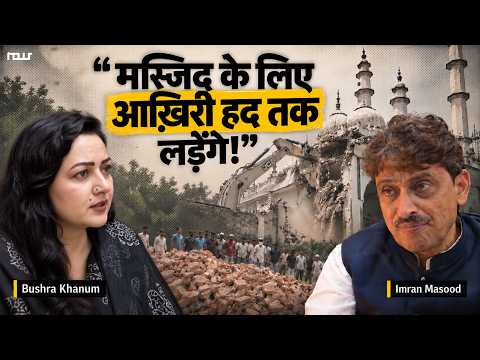
Discussion
0Readers only · Comments are reviewed by the desk before they appear
The journalism is free for everyone — create a free account to join the discussion.