

 1:51
Video· Nous Shorts
Gandhi's Strategy of Non-Violence
“Gandhi didn’t reject violence because it was easy—he rejected it because violence had become common sense.”
1:51“Gandhi didn’t reject violence because it was easy—he rejected it because violence had become common sense.”
 2:59
A new report by India Hate Lab documents 1,318 in-person hate speech events in 2025, targeting Muslims and Christians across the country — an average of four incidents every day. The findings show a sharp rise in organised hate, political participation, and social media amplification. From Ram Na…
 1:41
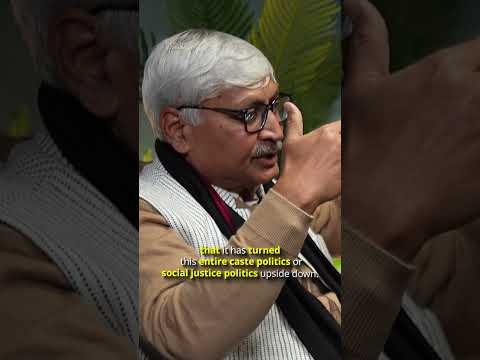
On Gandhi’s death anniversary, Asad Ashraf speaks with Prof. Apoorvanand on Gandhi’s life, politics, and moral economy—ideas that continue to challenge power and our present moment.
 2:57
Gandhi consistently placed his life at risk in defence of his principles, standing unwaveringly with the oppressed.
 1:51
“If truth is not infused with love, it is not truth at all.”
 2:53
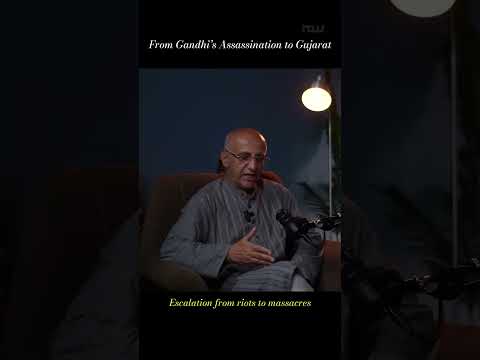
"Gandhi was assassinated not just by bullets, but by the politics of hate he stood against till his last breath."
 1:38
The assassination of Mahatma Gandhi was a turning point in India’s moral and political trajectory.
 2:27
Ali Javed examines a rarely discussed crisis in Indian higher education- why Muslim-managed colleges increasingly educate non-Muslim majorities, why Muslim youth remain underrepresented in universities, and how allegations of “minority appeasement” fall apart when confronted with data.
 3:00
Despite forming nearly three-quarters of all minority-managed technical institutions, Muslim educational institutions remain few, small, and stalled.
 2:48
In 2006, Muslims accounted for just 3.6% of students in higher education. Nearly two decades later, the number has barely moved.
 2:51
After Special Intensive Revision (SIR) introduced, ECI ruled that voter eligibility will be tied to presence in the 2003 electoral roll.
 0:49
"Partition cost nearly 3.5 million lives lost, close to 68% were Muslims. In Bengal, Muslim death rates were 4.5 times higher than Hindus. Along the western Punjab border, Muslims were killed at 1.5 times the rate of Non-Muslims."
 2:42
With the introduction of Special Intensive Revision (SIR), the burden of voter registration has shifted from the state to the citizen.
 2:27
"India is one of the fastest-growing economies in the world, yet nearly half the population lacks access to basic necessities."
 2:55
India’s Draft Constitution once guaranteed political reservations for Muslims—but Partition changed everything.
 2:53
India’s Constitution once imagined political safeguards for Muslims—alongside Dalits and Adivasis—as part of a broader minority question.
 1:39
Personal law does not override the Constitution, says Maulana Khalid Saifullah Rahmani, president of AIMPLB.
 2:59
Nearly 14.5 million people crossed new borders, and over 3.4 million never survived the journey after Partition in 1947.
 2:43
Is Islam about equality—or about justice?
 2:22
Ladakh sits at the heart of India’s national security—but peace cannot rest on security alone.
 2:59
As protests erupt across Iran, the deeper issue may not just be dissent—but austerity. This conversation unpacks how economic pain, lack of political honesty, and shrinking choices create fertile ground for authoritarian “strongman” politics.
 1:10
Postcolonial India saw the rise of a narrative in which Hindutva ideologues rejected the Aryan migration theory and promoted the “Out of India” thesis.
 2:42
Ladakh has long been seen as peaceful, patriotic, and deeply committed to India. But beneath that image is a growing sense of unease.
 1:27
On 3 January 2026, the US kidnapped Venezuelan President Maduro under charges of narco-terrorism. A blatant violation of the “rules-based order” it claims to defend. In conversation with @vijayprashad, @_ali_javed_ unpacks what this act reveals about US imperial power today.
 2:14
After the Soviet Union fell, defiance was no longer tolerated. States resisting U.S. power were labelled “rogue”—from North Korea and Syria to Cuba, Iran, and Venezuela. — Vijay Prashad
 1:46
"Casteism and the Hindu religion exist simultaneously-M. S. Golwalkar".
 1:29
“The petrodollar market gave Western banks enormous power over global capital.” In this clip, Vijay Prashad explains how oil wealth from Saudi Arabia and the Gulf was steered into Western banks—stabilising a petrodollar system that reshaped global finance, entrenched inequality, and concentrated …
 2:16
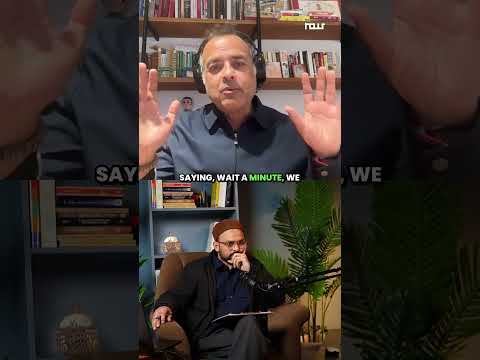
While analysing American military aggression over Venezuela, Dr Prashad explains why Venezuela became a target after Hugo Chávez rejected the post–Cold War order—challenging oil conglomerates, asserting control over hydrocarbons, and redirecting wealth toward social programs at home and solidarit…
 1:07
Sharia is all about general justice—and its principles shaped modern law beyond Muslims. Says Maulana Khalid Saifullah Rahmani in his recent podcast with Nous. He argues that key reforms in family law—especially protections for women—were not exclusive to one community, but drew from shared ethic…
 2:19
In this conversation, AIMPLB president explains Board's structure, its core objectives, and how reform is understood and pursued within Muslim Personal Law in India.. The discussion clarifies why the Board defends religious legal identity while also working to correct harmful social practices—esp…
 2:19
“Kings never spread religion. They spread power. Hatred grows when people are taught to fear communities, not to question power.” Dr Ram Puniyani on history, propaganda, and how dehumanisation enables violence.
 1:14
Maulana Khalid Saifullah Rahmani, president of AIMPLB, traces the origins of the All India Muslim Personal Law Board, situating its formation in the early 1970s amid anxieties over legal identity and state intervention.
 2:23
In his podcast with Nous, noted Author Dr. Ram Puniyani challenges the common narrative around medieval temple destruction, arguing that political power and economic motives shaped many such events.
 1:29
Political power is not just about ideology—it’s about numbers.
 2:53
A personal encounter of a young researcher Vijay Prashad with Arun Jaitley reveals an intriguing warning—it alludes the desperation of a political entity to be taken seriously.
 2:59
India’s welfare story is often told as a sharp break between UPA and NDA. But the numbers suggest continuity, not rupture.
 2:11
India’s welfare debate is often framed as old versus new—but that misses the real question. Rights-based schemes like MGNREGA and the Mid-Day Meal deliver recurring support, year after year, while newer welfare programmes rely on one-time or saturating benefits.
 2:55
Across tribal regions, land is being quietly transferred in the name of development. From Assam’s Karbi Anglong to Chhattisgarh and Odisha, large-scale projects—solar, biogas, palm oil—are advancing through administrative loopholes and compromised consent.
 2:02
In 2014, rights-based welfare schemes like MGNREGA were politically targeted as outdated or inefficient. A decade later, they remain indispensable.
 3:00
The NRC–CAA debate isn’t just about documentation or refugees—it’s about how the Indian state creates exceptions. What began in Assam now signals a national template, where citizenship is filtered through religion and suspicion.
 2:25
The economic crisis post 1960s derailed India’s planning, brought in the IMF and paved the way for the consumer market. See Prof. Arun Kumar’s insightful interview on NOUS Network hosted by Ali Javed.
 2:22
Sonam Wangchuk Controversy: Allegations Without Evidence
 1:26
For a brief moment, a movement broke open India’s political imagination. New voices emerged—young, articulate, educated, and visibly capable of leadership. Faces that had long been erased from public life became impossible to ignore.
 3:00
Demolitions in India are often framed as routine governance—redevelopment, beautification, or the removal of “illegal” structures. But what do the patterns actually reveal? From large-scale evictions ahead of global events like the Commonwealth Games and the G20, to targeted demolitions affecting…
 1:36
Shaheen Bagh is widely remembered as a women–led protest. While women were undeniably at its forefront, this discussion answers a deeper question: why did the narrative settle there?
 2:57
Why do armed groups in Syria struggle to convert military control into political legitimacy? Saurabh Kumar Shahi looks beyond battlefield narratives to examine how sanctions, economic collapse, and everyday survival shaped public discontent in Syria—and why that discontent did not translate into …
 1:16
'Post-CAA and Shaheen Bagh, Muslim political expression has become more assertive, with less willingness to compromise on identity and dignity,' says @bushrakhanum86 , Consulting Editor, DB Live.
 2:51
The recent American military aggression against Venezuela did not surprise many. After 9/11, wars were launched in Afghanistan and Iraq also in the name of security, civilisation, and justice. Millions were displaced, and hundreds of thousands—by some estimates over a million—lost their lives, mo…