

 11:21
11:21Video· Nous Clips
Golden Age of Indian Cinema Ignored Dalits i nous Clips
This is an excerpt from a longer conversation. Full Video: https://www.youtube.com/watch?v=Q0JvD9BCn4M
In this conversation, Dr. Harish S. Wankhede joins Ali Javed to examine the political and cultural legacy of Dr. B.R. Ambedkar and the evolution of the Dalit movement. They discuss how Ambedkar imagined Dalits as political subjects at a time when they were denied even basic human dignity, and how…
And the because of their social and deeper precarious economic condition they were not even treated human. And Ambidkar was the person who was imagining at that part of time that such precarious people can become part of the political process. Uh this was unimaginable just before Ambitkar's time. >> He's the personality who is talking about these liberal values and yet invoking a millennia old idea of egalitarianism. Swamitkar thought that this identity of the Buddhist identity will help them to examine their presence in the past that they have this kind of a legacy in which they have challenged the Brahmanical forces and created an alternative world view. >> You know for example for Muslims the Hindus would say so for the res. So it becomes the you know blame on the dalis themselves appropriation >> uh that is the new >> there's ambitkar everywhere and there's no ambate right thinking >> right ambitkar without his radical thought >> so what is it in terms of the socopolitical thought of the movement that happened in the following two three decades that led to the potential of this kind of cinema to appear >> but you'll find that continuously no film The social background of the protagonist was shown as lower class and we also noticed that the Bombay was already witnessing the arrival of the cast politics because of fully earlier and later on >> of course we know that you know there is the otherization of Muslims there's a political economy to it so what is the Dalith angle to it >> right man is one exception where there is a kind of a D protagonist which emerge heroic on screen but Otherwise you'll continuously find that cinema is not thinking about Dalith as a hero. >> So Bandit Queen is a kind of an exceptional because it created what I call a Dalith hero >> that she is not there as a victim. >> Uh that there is no what you call apata savior of >> what is happening now in the Dalith movement? What is the future? What do you see in it that I don't see now? Independent think tank media platform minority or human rights issues research or evidence-based conversations amplify Professor Harish S1lracting Believe in Muslim. from the perspective of Islamic theology. Religious community for the last few hundred years. difference. For exampics, experience compare hierarchy universal indignity as a living human being. Social deprivation important to understand a perspective of a certain community, right? new so-called identity structural friendly movement. structured or systematic study. One of the areas that you have expertise in. Of course you write in many areas but the film or Bollywood or representation or performative political representation through media especially film media >> rightity especially negative form Identity roots. They can be a universal man. culture right very deep question that you are asking uh the uh start of such debate should also uh should start with something called uh the location of Daliths in the larger Hindu society right >> uh we already know that the cast structure is such that creates these deep hierarchies and incurities and Dalits are the worst of social groups within that Right. So we already have this particular idea that they were always what they call the prec most precarious social law lot amongst the Hindus or for that matter Indian population. Right? >> Uh but for a very long time they were not even part of the discussion. >> They were always outsiders. They were almost like beggars for that matter. those who hard any sense of history >> or even for that matter the sense of human rights that they were also outside the idea of human entitlements right >> so such community which was never even the gaze of the larger public or political discourse they started emerging as a part of the political discourse in last probably 100 years >> even right to human this is that community we're talking about untouchable For such community which was not even considered that they should become part of the discourse. >> Uh that community emerged as a part of the political life in last 150 years. Right? uh before that there were concerns that uh the like like the larger idea of human treatment for all >> that all are sons of god on earth >> the larger egalitarian call that Buddha prescribed in his teaching. Uh so from there of course we understand that there are challenges viz with this divisions and this particular construction of human life that human life will be compartmentalized. It will be hierarchical it will be unequal and there will be no sense of human equality within that kind of a structure. >> These are given >> these are given right this is the is sanctioned by the religious order. these will be sanctioned by what they call the divine texts. Uh and Buddha of course refused it refused that and suggested that no everybody should be treated as equal. They should be part of part and parcel of each and every aspect of social, cultural and religious and even spiritual life and the arrival of the Dales into the what what they call larger idea of religious dict Buddha invited even the untouchables to become part of the of the religion and spiritual life. Mh. So there was a kind of a that kind of a larger egalitarian spiritual universal value where it was suggested that everybody should be treated equally and this idea that everybody should be treated equal >> is a kind of a challenge with the what they call Hindu social philosophy >> where the sense of equality is always absent. the the sense of humanity is absent where the hierarchies and inequalities are preserved as the as the religious right so somewhere that kind of a challenge one can witness one can witness that challenge even in Nanak one can witness that challenge in Rayas's work in chokam's work the what what we call the the bhakti saints of the earlier times uh but if you see and of course like uh uh I suggested one or two other names like Shia Maharaja's name or jot where where those are the actors or great minds who thought that untangibility is a terrible aspect of human life. >> Yes. And there should be reform. So this idea of reform was very very crucial in the in Indian union Indian history that somewhere the idea of human treatment of all should be given and somewhere untouchables are the worst sufferers of that and therefore there should be elevation of their social life towards humanity. So those concerns were were developed but it is only with the arrival of another very great figure >> Dr. Dr. Babasab Ambedgar that untouchability and their conditions or their concerns or their uh social problems become uh widely known to the world for that matter. Not just to during the national independence movement that the Congress acknowledged the presence of such a problematic community within India but it was also a kind of a larger agenda where the idea of human rights >> should be the human right the the idea of human rights for the untouchable should not become just a political concern within India but it should become a global discourse right why because at that at that part of time post first world war the idea of human rights human rights, human rights become universal, right? And Amitkar was somewhere pitching that kind of value that throughout the globe. Uh there are now new evocations, new enlightenments. Uh there is a possibility to create a liberal world, a democratic world where the participation of each should be should be assured. >> And the because of their social and deeper precarious economic condition, they were not even treated human. And Ambedkar was a person who was imagining at that part of time that such precarious people can become part of the political process and this was something which is very radical. Uh he was of course thinking about their human rights and their uh their social and other economic condition but suggesting that such terribly located dehumanized people can also become what they call political bargainers >> can also become part of the larger democratic discourse. Uh they can discuss and deliberate upon who can govern us. That was something extraordinarily feat when you are thinking about some community's participation in political processes. Uh this was unimaginable just before Ambedkar's time. Why? Because the concern were mainly to promote them some kind of a kindness or support. But Ambedkar thought that kindness and support is fine. But what he was expecting that these people should be treated as a political beings >> those who can discuss and deliberate upon their own future and the past right. >> Kindness. Yes. So like for that when Gandhi's example is such like that that Gandhi thought that through some kind of a hard change of the social elites there can be some respectable space for the untouchables in the future life of Hindus right. So Ambitkar thought that that is a kind of a nominal prescription for the change of the social life. >> I want to go a little deep here. Uh, professor uh you talked about Buddha >> right >> and Buddha is a few millennia old figure >> where they deeply egalitarian value structure even you know apart from Buddha there have been historical prophetic claims of certain kinds of egalitarianisms >> right >> and yet uh in a space and state like India uh this idea could not be normalized it was still at in the state of exception. Even though when they are you know conceiving these kinds of movement in terms of social enterprising it's still spiritually exceptional not translating into a systemic worldview wherein political order economic order social life all of these things con you know converge together >> right >> you know implicitly this is a time of you know en enlightenment and empowerment philosophies throughout the world. But yet he's the personality who is talking about these liberal values and yet invoking a millennia old idea of egalitarianism. >> Absolutely. >> Contradiction, deep continuity. And why is it that it is at this point of time a universal construction of identity of subjugated casts within India was possible? >> Absolutely. Now this is very very important. Why? Because at one level Ambedkar is seen as a liberal democrat >> who is kind of uh impressed by the western world and its developmental policies >> and uh his kind of hope that the constitution modern constitution will provide some kind of a equal and special rights to the marginalized social groups. So when he was kind of conceiving such kind of a liberal constitutional democracy of India, why he will look back into the past and think that Buddhism will also help this kind of people to change their future. Right? Uh so this kind of a duality that we can see that he is at one time looking towards the future where modernity, constitution and capitalism will help the people to escape their social life and become something new. that possibility he was evoking and also he was thinking that Buddhism will also help this particular group in a significant way. There is a reason for that why Ambedkar thought this is crucial because he understood that probably the social life the embeddedness of people uh is very important for any kind of an arrival in the modern life. Right? Modern life requires some kind of a sense of dignity. uh modern life requires some kind of robust sense of fulfilling or selfidentity for that matter that people should believe that they have something to achieve in the future right the aspiration part for that matter and if you see the untouchable's identity that was extremely degraded >> uh that was an identity which hardly had any sense of good life or any aspirational value >> and capitalism or democracy requires that. So Ambedkar thought that with such kind of a very precarious and terrible identity when they are entering to democracy they will be always be seen as ability they will be seen as ability itself. They will not be respected with what you call a new normal human being. Right? And therefore Ambedkar thought that these kind of people require a robust identity from the past >> and therefore he he somewhere discovered continuity in the Indian subculture. India that untouchables were what do you call the old Buddhist. >> They had a contestation with the Brahmans >> and in that kind of a battle the the Brahins defeated the Buddhist and make them untouchables. >> Right? So he thought that somewhere Buddhism was also the force and power that that changed or challenged the Brahminical value system and created an alternative model at at in the past. Right? So Ambedkar thought that if you entering into the new future which is liberal and democratic, you need to have that sense of history with you >> that you are the the the followers or you have that legacy in which you are challenging a a political and social system. It is extremely unethical and and problematic, >> right? And he thought that the the Dalis have that kind of a capacity >> and therefore the Buddhist identity will surely help them to imagine their present in the future in a newer way rather than being calling themselves untouchables or harijen or any other nomature which which was given to them. Swamitkar thought that this identity of the Buddhist identity will help them to examine their presence in the past >> that they were what you call the inheritors of the great past >> that they have this kind of a legacy in which they have challenged the Brahmanical forces and created an alternative worldview >> and through that legacy when they will enter into democracy they will have some sense of a robust sense that they are good people they are they have legacies and they have great paths and they are not only untouchables. >> So Ambedkar was somewhere making this kind of an arrangement >> that democracy requires a dignified presence of the people. >> Do you think in that sense Ambitkar uh is more a pragmatist thinker? >> Absolutely. Absolutely. >> For example uh when I am looking in this manner uh uh the Ambitkarite project there are two things that come up. One is Buddhism. Buddha himself being an upperccast who left uh the upper cast privilege >> right >> and then trying to change the social hierarchy >> right >> it is something very similar that happened with Islam prophet Muhammad Kuresh >> and then he somebody who challenges this Qur hierarchy being from that tradition he gets the privilege of saying that and then until and unless that becomes in some form law and order uh so that happened Right. >> But also when you said capitalism, when you said democracy, when you said you know Buddhism, so if I see from a philosophical perspective, there are some tensions, >> right? >> You know, there's neoliberalism the way that subjugates and alienates these subidentities. >> So in that sense, is the ambitkar ambitkarite project philosophically speaking >> an incomplete project, a transition, >> right? Is it moving towards you know certain other ways which are more metaphysically robust >> right not exactly metaphysical but the hope from the modernity >> that ambitkar was deeply embedded in that hope >> that modernity will surely bring something extraordinary to the untouchable life >> uh that modernity through technological innovations urbanization development modern institutions uh will be a plural and a respectable society uh for the untouchables. Uh that hope was there for sure in Ambedkar's life and therefore uh the belief that uh we are creating institutions which will be representative enough that there will be representation of the marginalized social group >> and that representation will create some kind of a voice for the marginalized social groups and they will create some kind of a deliberation about their their conditions. So somewhere Ambedkar envisaged that modern institutions particularly parliament legislative bodies and along with that the state laden capitalist development. >> So Ambedkar thought that these are the very very radical and powerful forces >> and there is a need that untouchables exantual should participate in this modern development. >> Right? >> I will come to that question again. I'll give you a parting question before we move back to cinema. Do you think in hindsight uh Dr. Betkar's belief in modernity as a project uh after 100 and 200 300 years of modernity and its limitations being visible >> right >> so do you think that even that revisit yes >> needs to happen >> right that's a that's where probably the Buddhism will help us to make sense of this >> that though that that great hope was there in Amitkar's mind that dem democracy and and political institution modern political institutions and capitalism might bring new change but he understood that this society is not ready for that. The social sphere, mainly the Hindu social sphere is antithetical to this modern development. Right? And therefore he thought that probably Buddhism might help these people to make sense of the civil life that social life is a like this last speech in constant assembly that he suggested that we are entering into a very empowering space political and economic but our social life is completely degraded. So unless and until you also create a emancipatory revolutionary value within the social space this kind of political development will have no no use >> and therefore you need to have a social revolution. >> Modernity invited people to understand that there will be there will be revolutionary change in political and economic sphere but Ambedkar thought that that is not necessarily entering into the social sphere. Interestingly uh Ambedkrite pragmatism in a sense realized the value of spirituality and materialism and uh maybe the fall of >> you can't say fall in a sense but the limits of modernity has visibilized not just in India globally where you know the Hindu superructures in terms of cast hierarchies are not as much present and yet modernity fails to achieve the golden you know values that it prescribed. So you have something to fall back to in terms of the spiritual uh you know spiritual necessities of human beings while grounding themselves into equality. >> Right? >> Probably not spiritual in a real sense. uh it was uh what they call the idea of civility in general >> that there is an absence of civility in the social Hindu life >> and modernity requires that civility for that matter the idea of liberty if you fatality these grand values >> these are absent in the social sphere >> and ambitkar thought that the value of Buddhism can somewhere ingrain it somewhere reproduce it >> uh which is not possible by the current Hindu social life >> and therefore he's looking back to the task is based on the idea of civility that social life should be based on civic engagement of people rather than >> do you think then that uh is not in a way depend so the the historicity becomes an anchor and modernity is trying to be ahistoric in the sense that it can depart from a certain way that life has been conceived. one one angle is that as I said that there he was uh kind of making a bridge between the past and the future future >> right uh uh past and not in the future in the sense that of course he had hope about the political institution modern institutions and also understood that the limitation of the social >> right and therefore social should also be revitalized should be radicalized and only Buddhism can do that that was the larger project >> so coming back to cinema uh that you argue that uh these ideas in terms of who represents universality of claim in terms of humanity. So that has a very different take when it comes to an upper cast performing in the cinema and a story which is bounded to a so-called lower cast you know character. >> What is your claim? One is that uh I regard cinema as a instrument of the powerful elites that it was never a an instrument for the larger empowerment of the marginalized social groups. Right? >> Uh it is of course from the very beginning it is seen as a modern capitalist enterprise >> uh that it requires huge capitalist incentives and investments. uh and only the what they call educated urban elites can utilize that particular instrument to make an art >> uh and that art form will not be just a kind of a philosophical art form but a commercial art form. >> Right? So cinema from the very beginning uh uh rooted in the industrial value of of art that art will be produced for consumption. uh art will be also produced for political use art like for that matter when you watch films silent film of uh brother Fal for that matter >> you'll find that he is not only producing films for commercial purposes >> but he's also producing films for what they call the project of cultural nationalism at that point >> so his major cinema is about Hindu mythologies >> uh all his silent films are about uh Ramayan or Mahabharat Puranas and he also makes sense that suggested that somewhere the this nent stage of cultural nationalism cultural nationalism require an instrument of popularity. So this sense of popularism which cinema can create cinema can uh uh cinema can will make it make it rich to the normal masses. Right? So somewhere this instrumentalization of cinema to to make people aware about their their social and cultural path. So cinema started with this kind of a motive >> that cinema will have a political responsibility. >> Cinema will not be just for the sake of entertainment at all. >> Cinema will have a responsibility to reinvent the cultural life of the Hindus mainly micrological cinema and it will be introduced to the masses which will be somewhere uh uh influenced by the western culture. So he pal somewhere thought that cinema will have a deep political uh uh responsibility rather than the commercial responsibility >> something like anan and wand absolutely from a literature perspective when translated. So it has a uh you know immediate past in which politics and Hindu mythologies and past is being used to sensationalize nationalism. social and also what he he the term that he often used in his work education >> that the masses are educated about their past >> and cinema has a greater responsibility now >> uh so more than as I said that more than the social life or social ills of the society >> uh he decided that he will invited people to the theater to watch uh the great myths right uh so that was the the the background on which Indian cinema basically started pushing up. Uh and then of course there is a commercial angle. The early makers of the cinemas were of course the social elites, Muslim elites, the passi elites or the Hindu elites or the Bengali elites. Uh they dominated the the early frame of the of the cinema. Uh and even in that frame you'll find that somewhere the idea that uh the social life of the elite should be represented on screen. M >> so early Muslim cinema is again on the similar frame that they were mainly interested in showcasing what they call the Mughal empire >> the the what we call the Muslim social life >> or the glorious the glorious past of the Muslims >> or the Hindus were also kind of you know were interested in that kind of a larger making of what they call the Hindu social. So the early cinema was basically around that kind of a corridor. We also understand that by 1950s Ambitkar was also very very popular and a big figure figure within the political establishment. >> Uh he was uh one of the key figure of the national nation building exercise. >> Uh even before becoming the national figure, he was very crucial actor in the political sphere in Mumbai region. >> Mumbai is the space where the cinema was cinema industry was taking shape. uh you will also find that from 1920s to 1940s Mumbai was the space where ambitka started most of his political organizations uh most of the mobilization of the list took place in Bombay under Ambitka's leadership in that particular city >> you'll also find that his newspapers were published from that city >> so all his political social and cultural activism is taking shape in that particular big city called Bombay even in the the the the development of that city you'll find Delics have a very crucial role to play. >> Uh they were part of the industrial sector, the textile mill industry, the dockyard, uh the informal labor industry. They a large section of that particular population were balance and they have their own uh trade unions at that part of time. Uh they were mobilizing for their independent concerns in Bombay. So the cast and Dalit question and because of Ambedkar's presence in that city this particular tussle that Dalits and the untouchables will have a very significant role to play in defining the future of city was very much there. >> But you'll find that the no film at that part of time engage with this particular question. >> Uh why? Because as I said that this question was continuously been neglected and thought that these are not part of the larger nation building project. Right. uh uh as I said that even there were what we called during that part of time uh strong presence of the left filmmakers >> what they themselves call the socialist filmmakers even in their consensual concerns you will not find that the del or the cast question is arriving in a bigger way >> right uh what we often see in that kind of a cinema 40s onwards to 60s that the question of poverty was surely there >> question of migration was there question of uh the precarious condition of the poor were there u uh so all these issues were very much highlighted like for that matter if you watch Raj Kapoor's Jako >> it is basically about the migrant labor who entered into city and because of his precarious and terrible condition he has no space to go and the the way he sees the city so on that perspective the cinema is created good polish another very important film so such films were there great film Uh so the issues of the migrant labor, >> poverty, unemployment, fear, uh anxieties, those questions were were uh presented on the screen in a very very powerful and significant way. >> But when it comes to the relationship of the protagonist with his social identity, that idea is continuously neglected >> that the protagonist will also have a social identity. >> Being poor, there is a possibility that the poor person can also be a D person. are being from a lower social background but you'll find that continuously in no film the social background of the protagonist was shown as lower cast >> poverty was a homogeneous identity rather than >> the disagregation that exists right especially the cast >> yes and we also noticed that the Bombay was already witnessing the arrival of the cast politics >> because of earlier and later on >> so uh let's uh build more context on why Bombay Maharashtra. Uh it's also the space where RSS is being you know conceived. It's also a space where Jenna is living. It's also a space where you know cast politics is happening. A lot is happening you know in concentrated regions in India like Bengal like uh this Lahore and UP region and then this region which we you know see as now Maharashtra >> right >> so why is it that the cast politics is being uh not just maybe it's happening everywhere in different kinds of ways >> but the way that it gets systematized >> in this region what is the history >> if you see the Bombay presidency's history Bombay presidency is is of was a kind of a very young territory at that part of time. British was newly arrived in that particular space because it was a Portuguese space at the earlier time. >> Uh so Bombay as a city was a newly discovered city >> and because of the dockyard because of the newly arrived textile industry because of its uh its kind of relationship with the the the seaw route that particular geography becomes very very important >> uh and the rapid industrialization that was that was shaping that city. So it invited different kind of people to that city >> including the Dalits right and Dalits because of the this particular prospect of economic development and also the the can area the military can areas of that particular region >> it also invited the to become part of the larger social life. Uh so this developmental magic which Bombay created >> uh that it is a urban cosmopolitan city. It has the opportunities for employment uh and the the other regions like Kokan region where where from where ambitkar basically inhabits uh uh the large DI population was also migrating from the Kokan region to Bombay and through that a kind of a larger participation of the valid witness. uh so though as I said that though in the new format of industrial development then it's where uh we're increasingly making their presence felt that their presence is now visible and Ambedkar is product of that particular force that his father after retirement started moved to Bombay and lived in a in a chall was was witnessing the arrival of the Dalip uh as aspirational class in Bombay Right. And through that the larger logic that the the first attempt to mobilize Dalits in the city is Bombay. >> Nowhere else you'll find that kind of an aspirational class. The Bombay become a kind of a territory alongside Muslims alongside other social groups that created Bombay as a political base. Left absolutely they left trade union also erupted in the same time. >> Uh >> because of the class struggles. >> Yes. And Delis were also making similar things. uh so Bombay because of its cosmopolitan nature and the the new aspirational geography that Bombay has created but you just come here you'll get a job and there will be different world so that is were inspired by that new space >> let's uh uh focus uh more on uh the way that Dalith identity was being conceived by different thinkers movements uh what is Gandhi's gaze how is left looking at it how or liberals looking at it. How is it that within you know Dalith movement there are different conceptions of this identity so that we can move forward in terms of this nuance that you know it's just not one vision >> right >> so Ambitkar for that matter created this larger sense of homogeneity amongst >> that they are the worst sufferers because of the practice of antich >> uh and based on that there should be a kind of a delinking of this particular group from the Hindu social order. >> That was his major plan. >> Uh that >> nobody did it before that. >> Nobody nobody >> even rudimentary understanding of this >> sense of that they are distinct >> but they are part of the what we call the Hindu civilizational aspect >> there is a larger civilizational ethos and can also become part of this the same. >> So that delineation is happening through Ambit >> through Ambitkas Ambedka's intervention the larger investigation that Ambedka did to understand the presence of Dalis in the past. We will come back to also this during our subalturn Hindutwa pass to connect how you know. >> So Ambedkar had this kind of a deep sense that the Dalith should be treated like the Muslim minorities for that matter. >> The way Muslims because of the British administration the way they were getting safeguards and other initiatives to become to make them participant in the political processes. Ambitkar thought that the Dalits also have the similar logic to enter. uh that logic is based on their uh precarious social and economic condition uh their minority status and their distinction in the social life that they are not the same as the other Hindu >> and based on their their their backwardness and social distinctness. Amitka appealed to the British Empire that they should be getting privileges and safeguards and extra extra protection. So that imagination was not there before that. Gandhi for that matter never respected or underlined this particular prescription that Ambedka provided. >> Gandhi thought that this will what he called create a disunityity amongst the amongst the Hindus that a huge chunk of the population will be defracted from Hindus. >> Uh and there will be completely fragmentation of the Hindus on those lines. So the larger unity of the Hindus was the major principle for on which Gandhi was continuously hopping about. Ambbitkar thought that more than the larger sense of unity and collective identity these safeguards and the and the rights of the untouchables is more important and therefore the division between the two. >> Would it be true to say that Ambitkar conceived a radically new identity? Absolutely. >> It is not like a continuity of an old identity. It's also conception of a new kind of human. So he started surely with the reforms >> uh that there should be temple entity for the ballots uh there should be schooling for the ballots there for multiple other reform values for the valad. He started his earlier career with that but he understood that within such reformist larger reformist agenda the the Hindu society is not learning anything >> and therefore the change the shift of the strategy >> suggesting that it it it requires some kind of a political safeguards they required some kind of constitutional mechanism to uplift their social and economic condition so this shift of the strategy is very very crucial in Ambra's life >> ambitra being the strategic thinker He also in the late 20s and early 30s also you know interacting with the idea of Islam in the sense that how is this Muslim community uh in terms of its global presence uh being able to negotiate with and then you know certain ways and at that point of time he was probably thinking about different kinds of you know identities like Christians, Muslim to to conceive a Dalith identity before reaching to the conclusion Buddhism. >> Yes. Multiple multiple. One is the as I said the early examination is of course the larger fraternal association of the Hindus that that the Hindus should accept and recognize relies as equal. >> That is where he began. >> It was it has it has started with that. >> Where did he find you know barriers in terms of >> both this movement? Both these movement probably the the uh uh the Kalamand movement the Chaar movement where Ambitkar thought that Delhi should have a entry into the temple temple the the temple >> and it was denied >> that it was denied and there were huge oppositions and challenges. Second was the what they call the cha tala satyagra when there was a kind of a civic pond and village were not allowed to have access of water in that and America has to kind of do a a battle for that and struggle for a mobilization to have an access of water. >> So both theological and civic reality said that in both of these ways it is not possible. reactions that he he he witnessed at that part of time that the Hindus are not ready even for those even civic entitlements for the balance temple entry or even the access of water in that part of time. So that created some kind of disillusion in Ambitkar's mind that this community is not even ready to examine the terrible condition in which the bellies are surviving and not ready to help them at all. uh from that particular background he entered into the larger kind of strategy to invite the empire to understand the conditions of the balance. >> Uh suggesting that uh if you see their social, political, economic or educational uh background they are the worst off and therefore locating and examining and witnessing their condition the state must provide them certain safeguards. So the larger battleground for social justice movement started with this. Let's also uh uh know more about Ambitkar's background, his education >> so that we understand >> right of course you know that probably he was the most educated man of his time >> two PhDs from India. How did he get that opportunity being from this you know deprived >> community? There of course there are myths and stories >> that he was helped by his school teacher somebody called Ahmedkar who has also given his him his name >> and he was of course one of the first who did metriculation from this particular community >> and seeing his talent and charisma uh this guy gaquad initially promoted him to go to London for his early education. Um uh so >> who is this person who >> sra gaquad of bala uh he gave the early fellowship for a bit to go overseas and studies his masters. >> Uh so once he went to to to Colombia for his masters and PhD later on uh he gathered that kind of a scholarship and that kind of a great opportunity to study in some of the finest university in the world. Um and when he came back from that kind of a very very powerful background of having a PhD in economics having a PhD in political economics uh with uh uh with a lawyer's degree from outside uh with that kind of a fascinating academic career when he entered he again face the same discriminary social values right uh so when he went to serve the Boda kingdom uh he was not been respected well he was the files were thrown at him that you are not capable to even to have sit on that chair. He was not allowed to have a common drinking space. Uh he hardly get a a good accommodation to stay in Boda. So those experiences of deep terrible hatred towards the untouchables. >> Even after that he at that part of time one of the the most educated man in India. most educated. Even being that kind of a person persona, the social life was not welcoming at all. >> Right? And out of that kind of a terrible humiliation that he faced in Mola, he decided to enter into >> so the realization that the individual achievements cannot take you out of your social baggage. >> Absolutely. Absolutely. So uh when Ambitkar was writing waiting for visa he basically narrating these stories >> that though he he has some kind of a class value that he can pay uh certain people to carry him to certain new spaces but the refusal just because they're anti-che right uh so the uh uh so this experience he narrated in that particular book uh and the Boda experience of course kind of just uh uh showed him the actuality of the social life that such a talented person such a genius of its time even are not is not getting a proper recommendation in that city. >> So how is Gandhi seeing all of this during this time when he sees that this kind of new movement or an old movement with a new vigor is coming out and he sees it as a challenge to the Hindu identity. So how is it that he in his uh you know interest in national politics conceives this reality which is being structured by >> so of course Gandhi is seen as that kind of humanitarian practitioner >> who understand the sense of human life on this on the on the larger scale of uh equality. Of course we understand that >> uh and his concern with the way untouchables is also coming from that kind of humanitarian baggage. But Ambedkar located Gandhi as a some kind of a philanthropist for sure but also there is some kind of parenting gaze that he wanted that the Dalist should remain the subject of the Hindu social order >> and should not revolt against it. >> How so? >> Uh how so? In the sense that the the larger appeal of Ambedkar that they should get legislative powers or they should now enter into into political and social sphere with new kind of safeguards. This is rejected by by Gandhi on the basis that delits are part of the larger Hindu fold. Ambitkar decided or thought that somewhere unless and until you recognize a specific identity of Delhits outside the Hindu fold, they will not be granted special special safeguards. Why? Because special safeguards were meant only for the minorities minorities. So somewhere Ambedkar thought that if we create untangles as a minority group >> on the on the uh index of poverty and backwardness and procarity uh they will get safeguards. >> Uh but Gandhi thought that such creation will dislodge or uh or kind of rupture there will be rupture between the Hindus and the unt right. Uh so Gandhi has this sense of unity the idea of unity to to kind of keep untangles intact within the Hindu fold right. Uh so he was somewhere thinking in a in with a nationalistic vision that India requires that kind of a larger nationalistic identity identity and Hindus and Muslims should f fight together against the British Empire. uh and if the it it shows that the Hindus are themselves are not united >> uh that will be a problem for the future uh battle against imperial religion and therefore these uh this larger nationalistic hope that the Dalist should not uh should not create an independent value of its own ask him to force untouchables that they should remain >> and the nomature that offered to them something called uh that nomature was offered to them so that they can remain part of the Hindu civilizational value. Amit could refuse that for sure. >> So in a way it's also deeply philosophical. Uh for example, if you conceive identity, it's also ontology, >> right? >> In the sense that how is uh human being in terms of their birth uh conceived in certain ideological frameworks as being born in at a parity or at a you know hierarchy. So in that sense uh this uh this uh this desire of Gandhi to cultivate a universal Indian identity >> also somehow became apathetic and discrediting >> to the differences that are deeply intertwined in the Hindu philosophy of alienating and otherizing the right >> so it's like this uh philosophical tension >> absolutely absolutely so Gandhi for sure had that as I said that philanthropic values intact when he was thinking about >> let's say for example now the way people see Gandhi as somebody who is this evil thinker who is trying to let's deconstruct that is it coming from his understanding of a certain moral philosophy or is it you know the the uh you know game played by an upperccast Hindu who wanted to keep what is it >> right when when we read ambit on Gandhi it appears like that that he's a politician uh and he is not just a mahatma larger claim Amitkar made that claim >> that such mahatmats are many in India but the social condition of relative is the same right >> uh so that kind of a larger critical gaze that Ambedkar put on Gandhi >> uh that you it appears that you are thinking about untouchables but the larger empowerment and uh emancipation that is required for this community. There is no policy framework in your mind. >> Is humanizing Gandhi >> so that the saintly figure >> uh when it uh portrays a certain moral high ground it does not become a universal for that Gandhi's identity had to be you know challenged. >> Absolutely. And Ambitkar did it without you know furiously he was so honest and and fearless in criticizing Gandhi at that part of time >> uh that uh uh he he thought that somewhere there's a game playing going on >> that during the round table discussions uh in London uh Gandhi is somewhere hobnobbing with other groups so that the untouchable should be denied that right of safeguards. uh so Amitkar also writing that continuously and when in 40s Amitkar wrote that what Gandhi and Congress did for untouchables he wrote a whole book about the the what you call deficit in Congress's plan visa identity >> uh or the kind of disinterest in which Congress and Gandhi is dealing with the content at that part of that so it was a very very critical engagement with Gandhi's program uh this larger kind-heartedness uh is seen as some kind of a parental gaze on untouchables that they should remain where they should remain. >> How do you see this in hindsight? >> Of course, as I said that uh it never Gandhi never succeeded in doing that. >> The the uh the Puna pact was a compromise between Gandhi and Ambedkar on this line. Though Ambedkar wanted a separate electorate for the untouchables the way the Muslims and others were getting. uh it created a new idea of social justice that bleets will surely get a huge representation in the legislative bodies after Puna. So >> and they will become a separate identity which he wanted. >> Yes. Uh so it was not identical to the Muslims but there is a process going on. Now >> he's a gradualist you know part of uh you know ambit thinking is that in terms of not just pragmatism towards an ideal when you move you >> a procedural >> it's a proceduralism. Yeah, it's a procedural way that let's in a compromise whatever we are getting let's capture that and then probably the future will show us keep on building other ways. >> So Ambitkar was pragmatic in that way the compromise of the Puno pact is based on that kind of pragmatism >> uh that though he was unhappy with the the larger prospect but he understood that this is the only that we can achieve at this stage and therefore be acceptable. So what else is going on when it comes to Dalith identity? Who is saying what? Uh then we can move on back to >> right now post Ambedkar there are multiple ways to deal with Dalit politics today. >> No at uh during that time we will come to the later but >> during that time probably Ambedkar was of course the lynchpin and the major spokesperson of the D cause. Uh there were of course the the right-wing ways to deal with the cast question. Uh there was of course the Gandhian and the left way to deal with the cast question thinking that probably the left thinking that modernity and capitalist development will will erase some of the the models of the cast associations and there will be an arrival of what they call citizens or a class in the future. So that with that hope the the left and the liberals were moving. Gandhi >> and Ambedkar have the same hope you said that modernity will bring. >> Yes. Yes. But not without not without recognizing that the Hindu cast system will not just evaporate like this. >> So you'll have to structurally also implement a policy which is targeted towards cast as a dynamic rather than just thinking about class >> that development will automatically kill the cast. So without without thinking that how cast will evaporate from Indian social >> given his own experience that he came from these big institutions coming back and then >> there was no possibility. So Ambedkar thought that for for for annulation of cast or for a kind of a civic life you need to think some kind of a strategies and some kind of movements and some kind of mobilizations. Buddhism was outcome of that thinking >> that not through larger constitutional procedures but some kind of a social movement. Ambidkar invited Buddhism to have that kind of image that's through social movement through conversion through getting out of the the the Hindu fold there is another possibility to imagine India right um so he made that kind of a dual possibilities >> further as I said that the the left or the Hindutwa identity is again that kind of a collective sense that there is a collective Hindu identity with the Muslims and there is a collective class identity which of the capitalist class. So, so the Hindu elites and the class elites, the communist parties or the socialist party at that part of time neglected class on that critics of collective identity >> that if you underline or or somewhere work with the cast identity, the imagination of the unified class or Hindu identity will collapse >> right and therefore the neglect that once you neglect then only you can create universal unified homogeneous identity. M >> Ambbitkar was against that. >> Ambidkar thought that without this recognition of their condition, their social life, their problemat problematic social living, you cannot achieve political or economic development. >> So Ambedk was continuously hopping for this recognition >> that the cast question, the untouchability question is crucial for the development of India's future. >> Right? uh and if you are not endorsing it, if you are not recognizing it, if you are neglecting it, you are doing harm to the larger future of the world. uh so Ambedkar was categorical in that and therefore the continuous claim or or or need for safeguards for them to >> in many ways it's also the way Muslims were reasoning of course they were not deconstructing their identity to the level of cast uh but then a similar kind of reasoning in terms visav Hindus for example what is the uh you know gains that one will get so coming back to cinema because I want to move between political thinking and movement And then how is it being represented? >> So you argue that the cinema at that time is portraying Gandhi but not Ambar. >> What is it? How is you know the cinema that is produced which you already argue that it's also cultivating mythology for nationalist goals but it is also producing socialist and other values. >> So where is Ambedkar in all of that during his time? >> Right. So the 50s and 60s what they call the golden age of Indian cinema. M >> where the socialist cinema making was very powerful >> filmmakers like Raj Kapoor for that matter or Guruda >> or Biml Roy or Khan >> or Chetan >> just after the partition >> just after the partition if you see the cinema >> that is concerned to what they call the nation building exercise >> or the other term is something called the grand consensus >> that these are two grand uh thinkers for the modern India and under their able philosophical guidelines the India should achieve what they wanted to achieve in the future right cinema should represent or somewhere endorse that particular political and philosophical value which Gandhi and and NU were >> so in a way it's very similar like today uh you know RSS Modi BJP project is being endorsed by the state so the state was never absent totally >> right so the the collaboration of the socialist filmmaker so the left filmmaker or what they call the entertaining uh cinema of that B of time was also kind of hobnobbing with this particular project of nation building >> that securism is crucial, social justice is important, >> uh socialism is very very important. Uh the the problems of the uh Agradian population is important. So you'll find that somewhere uh cinema is somewhere endorsing the larger political philosophy under which the India new independent India was groomed. under Neu's leadership there was as a prime minister uh and therefore from 50s till probably 70s this larger hope is very much witnessed >> uh and therefore as I said that though the the larger concern of the marginalized agree casts or classes were there like for the mother India it was an agreed film of agrian agreian crisis at that part of time or or da um or nad these were the films mainly based upon the agreement crisis the the crisis of between ruler and the urban >> uh you'll find that though these crisis were loud in our cinema the popular cine was made around this this issue uh the concern of social justice or social injustice was >> class understanding social justice from the perspective of class disparity rather than you know identities contributing into this subjugation >> right but I mean the feudalism was very much present >> the the idea the rule of spade is controlled and dominated by the feudal ideologies that is very much loudly shown on the screen >> but feudalism also somewhere interact with brahmanism >> that the brahman brahminical elites also contribute in creating that kind of feudal order >> uh and the the presence of the untouchables in village villages >> or the lower cast in villages that is also kind of a sociological truth of India >> but that sociological truth is continuously being relegated never reproduce on screen the cast in itself the way I see it because uh in the Hindu philosophy it's ordered as certain kinds of professional engagements that are distributed and then they become permanent raifications in terms of ethnic engagement and endogamy and certain rules So it is already a intersectionality between class and identity. >> Yes. Yes. Yes. >> So cast already assumes a certain way in which class in a bounded ordered society operates. >> Right. >> So when left and socialist thinkers uh they are trying to think outside it only from purely class angle. >> Right. So realizing that Ambedkar and this thought is happening is this in itself a certain kind of injustice that happened. >> Yes, I think this is also what they called the the um uh the lack of creative innovative thinking in >> that they are basically producing what the larger guidelines prescribed by the political elites. uh because at the political sphere Amitkar was seen as a uh rival to the idea of of nation building right and his thoughts and his ideas were not seen as the necessary tool for the nation building program right uh and therefore this larger political directive also entered into cinema >> that ambitkar or cast question is seen as antithetical to the larger idea of class building on a nation building. So if you introduce cast question, it showcased the rarity of the social life. >> It also showcased that there the the the Indians are kind of uh are are are arranged on hierarchical basis and there is a deep inequalities within the Indians. Okay. And that picture is not a good picture. >> It's systemic systemic. This is not something that could be transcended by probably therefore probably they neglect >> that this is somewhere a very disheartening picture of India's social and political life >> and also this interpretation that Dalith and Bhujan thinkers talk about sovereign Hindus that most often the privilege of doing class politics is uh you know undertaken by the Hindus that themselves are upperccast maybe they're not but the cultural Hinduism is embedded within them Right. Right. Of course, there is this is what the argument is that cinema is a kind of a complex enterprise. >> It requires capital. >> It require ideological tool. Uh it is instrument of the social elites at that part of time. >> Uh and uh these three major concerns that it has a commercial concern, it has a political concern and it also need to pres preserve the interest and claims of the social areas. This is the larger matrix on which cinema is introduced in India in and the on key dynamics this the del on cast question is completely absent. Maybe this is a good time to uh you know talk about the history of cinema cinema what was before cinema >> right so that is a very interesting question that if you see that cinema was not seen as a dignified art form >> like for that matter uh the earlier ideas of entertainment in India >> uh if you see circles >> or theater or folklore >> or uh the cortisan art form >> or tamasha in Maharashtra So you'll find that these are not the dignified spaces for for the for the social eliminates. >> These are seen that mainly the uh marginalized social groups mainly the low casts are the performers of of entertainment tamasha or Maharashtra particularly. >> Uh so these are not the dignified places where the social elites can go and hop. Now they have something called a higher cultural aesthetics like the classical music for that. >> So there are patrols of the classical music but not the patrols of the tamasha or lav. >> So that division is already there. >> Uh cinema ch changed that cinema created some kind of massification of art culture. uh that they introduced technology, they introduced exhibition, exhibition halls, they introduced some kind of a universal sameness in uh in representing the art that one once you once you picturesize a a thing, it can be universally projected everywhere, right? So that technological innovation created massification of the art form. >> So it be frame and money. It brings fame and money and power, >> right? Uh and the the the irony of this new project is that that those who were conventional performers of >> as I said that they were mainly for the socially modest communities >> uh they have not transformed into the new industry. They remain there >> and the early performers were again uh in cinema cinema history will show is that that the early performers were again coming from the what they call the cortisan background >> right uh like for that matter uh there was hesitation to act in cinema when the other side wanted to to to wanted to get some female actress for his first film Raja Harish Chandra no woman person was ready to come >> uh so somebody from from his own social background acted as a female uh actor in that that that film. So you'll find that there was no welcoming of uh of women into the film and it was seen as an undignified social or artistic sphere. But when it when Dada connected that particular art forms with the political life to the political enterprise that it has a responsibility towards politics that it is creating some kind of a cultural phenomena >> that it will somewhere help the larger nationalistic elites to reintroduce the idea of culture and religion back to the future back to the back to the India's life >> that created some kind of a heroism acceptance within the social elites right and then the world changed uh And when the world change you will find that the conventional performers were never allowed to become part of the film industry. >> Okay. So they were the first ones to hit. >> Yeah. >> Because the conventional performers in Tamasha and other place were mainly lower casts. >> Uh but in cinema they were not allowed to take that kind of a center stage. uh they had certain examples where women from as I said the quotas in the background become uh heroins and lead and protagonist but not the balance of the advasis or for that matter the OBS maybe as I said that probably this was also seen as a commercial enterprise >> also kind of a space where the uh the nationalistic ideas are taking huge shape uh and the division between what they call high culture and the lower culture that cinema was entering into the sphere of high culture, right? Uh and therefore those people those who were continuously performing for the entertainment were not allowed even in on screen. >> Uh so this is a kind of a larger social history of Indian film industry. uh that it it started with this kind of elite notion >> that educated urbanized social elites will be the controller of the new mechanism through which entertainment will be produced. M so coming back to uh again you know the intersectionality of political movements and cinema now so we've come to realize that post partition film making and cinema is where Gandhi is represented Nuvian thought is represented >> but the but Ambedkar is absent >> absent yes >> also you mention in your work about Dalith panthers that this is the time in that space and time when very uh radical u you know movements of Dalith identity and representation are happening >> and it is still in that same space and time that certain people who are performing in cinema or producing cinema they're either not willing or they are blind to these political movements. So first and foremost what is this political movement? What is its history >> and then how is it denied uh you know viewership >> right? So post Ambedkar you'll find that at least in Maharashtra >> uh there is some kind of a lull and uh uh some kind of a relegation of the dalik movement after aka for the first two decades. Uh there were one or two great leaders after akar like Das Ga who tried to mobilize Dalits on land question on unemployment question >> uh and also tried to create an independent political mobilization of Dalith and Nadivas in Maharashtra >> but that was a very for a very short period of time. So uh Dasp Gwart's presence after ambitkar was somewhere important. Why? because he tried to create some kind of a social and political alliances and create an image that delits are now very vibrant political participant in the democratic processes right but we'll also find that after the gaquad there were multiple compromises that the del leaders did in Maharashtra >> uh so that compromising attitude visa with congress for that matter >> uh created that somewhere the delish leadership is immoral unethical uh pract pragmatic and self-s serving. >> What are these compromises? >> Like for that matter of making an alliance with the Congress without keeping the interest of the Philippine. >> So the history of Ambry thought about how you argued that Congress in itself has not properly given the right and then uh the the like the Republican party of India ambitious party. >> So why is it this happening? uh how is it that you know Congress is able to of course because of the large population different camps everybody looking into their own interests >> so >> so there is a huge history of that in Maharashtra's what they were very movement of Maharashtra >> uh where the republican party of India after ambitkar splited in multiple fragments right one which thought that making an alliance with the congress is beneficiary where the others thought that no not congress but the social socialists in the left are the better >> friends of the the movement. So on that ideological turmoil there was a break up right >> no independent political thinking up till now >> there were also independent political versions of that that RPI should mobilize Delis and Adiasis and the other Bojan cast under one platform but that was never picked any pace during that time. Uh so these models which were there ideological models that where the should enter into alliances uh that created splits uh there was also what I called the egoistic splits that certain leaders thought that they are the better leaders of the community and based on that they created their own political parties. So you'll find that within two decades there were multiple sprinters within the IPI Republican party of India at that part of time. uh and this and some were aligned with the congress, certain aligned with the communist, certain certain groups were aligned with the socialists, certain certain groups were contesting independently, right? So this fragmentation of the delic post was a problem >> and panthers were realizing this. the young group, unemployed youths, writers, intellectuals, uh very young uh college going boys and girls were thinking that this is a terrible terrible condition for the movement. uh and they were also inspired by what they call the black panthers movement in the US at that part of >> so is this the first generation post uh the ambitka politics educated as the ST rights are given so they're able to get into higher education and access to education >> right right so they were the young uh uh young boys who were running pamphlets or small newspapers or magazines here and there in Bombay or or those who are forming small socialist groups or communist members of certain parties. Uh so they were dynamic uh visionaries and thinking that this kind of political development that we are witnessing Ambedkar after akar is not sufficient for the larger benefit of the balance. Right? uh and they were also inspired by what we called the ongoing global movements for for civic civic liberties or or revolutionary movements in the other part of the world. Uh uh so Black Panther movements was also emerging during the same part of time in the US >> in the US 60s is the civil civil liberties movement >> and uh the the the communist revolutions here and there at the same time >> uh and the radical literature that was coming up in a bigger way. uh so somewhere the delis were also witnessed the growth of this kind of movements and mobilization across globe uh so you'll find that the the earlier two or three major leaders of the panthers they're intellectuals >> Namu Dasal or Rajad Hali or or Da Paw they were literally literary figures they were writers and poets >> are they largely Marxist >> kind of they inspired by that Dasal particularly not Dhali but Dasal particularly >> uh so their engagement with this larger churning which they were witnessing. They thought that this is very very impressive >> and Delith should also become part of the new churning >> and this larger concern that parliamentary democracy or electoral politics is somewhere a very bourjua and and difficult political program and the pace of Delhi development is very very passive in that particular sphere through that the larger relegation or larger kind of challenge visa with this language emerge in the Delhi panther. So the Panthers created a large radical uproar against the pacivity of the constitutional democracy that it is not benefiting much and through that the kind of rejection of the liberal ideas that it will create some kind of a human space for these >> and Panthers created a kind of a radical approach >> that they wanted to smash what they call the Brahminical citadel >> and not through this kind of participy notion of of democracy. But revolutionary ideas that it can change the brahminical worldview. >> So Dasal particularly created that approach in his poetry gulpar multiple great poetry that he introduced at that part of time. Uh created that an approach. Uh and Dhali was also consistently writing. They were fiery speakers. They were good mobilizers. And they thought that going to the police station and lodging an FIR and waiting for justice is not a great way to deal with justice practice of justice. There there can be a tit for tat kind of an aspiration right that they are youth they can mobilize together and they can contest the the the >> So was there violence associated? >> Yes. Yes. Absolutely. So they as I said that they they were thinking completely in a radical way >> the conventional pattern revolution revolutionary M >> with the conventional pattern of justice we have seen that it is passive and it's hardly benefiting in a in a sincere way >> especially in a way that the modern Asian state is where violence is controlled and sovereign in in that manner which is the upper cast was taken over the bureaucracy. So how does uh you know the deprived >> right? >> So this idea that Dalis are the claments of certain safeguards and certain material dos by the state >> but panthers saw that val have the capacity and courage to become a revolutionary and topple the system >> that they are revolutionary indeed that they do not have any uh uh anything to lose. So uh Panthers had this kind of very very distinct political philosophy from even from the Amit Krite perspective >> like Malcolm X of >> Yes. So this kind of borrowing from the world literature >> uh civic liberty movements the Marxist traditions >> the feminist movement >> you'll find that the Panthers were borrowing a lot from this kind of a global trajectory that they were witnessing in 70s. uh and they amalgated that and created a new voice >> and thought that Dalits are not just what I call the passive claimment of certain safeguards or materials from the stage. Let's state just see them with kindness >> and they thought that they have the capacity and courage to topple and challenge the political class in a very sincere way >> and through that a kind of a revolutionary image of the balance >> uh which is distinct from what even Ambedkar thought at the beginning that ballots will be participants of the political process he das for that matter thought that not such kind of a minimalist participation but owing the state that they wanted to own the state of by revolutionary force. >> So that kind of engagement was very very radical very distinct >> that uh they will not even part of the what they call the larger left mobilization that they will create their own political mobilization and the the others should also kind of follow their revolutionary strategy. M >> so this hope that they are the movement builders, they are the leaders, uh they have the imagination and hope for the future as a radical future. >> How are they differentiating from traditional Marxist? >> The cast question >> that the Marxist for a very long time never understood the cast question even in a city like Bombay where the Dalis have such a >> so while recognizing the powerful concepts of Marxist literature evolving them entangling it with the cast question. >> Cast question and then feminist literature and black panthers. >> Absolutely. >> So that innovation that panthers introduced at that part of time >> was extremely powerful. >> Uh and it has inspired everyone in Maharashtra. >> Uh so the whole new literature emerged out of that. Uh so if you think about what you call Delhi literature uh which is not only about Buddhism and Ambedkar's hography but also about their experiences and their capacities and their inspirations to change the world >> right uh so poetry theater novels uh multiple newer forms of innovative ideas emerge out of that movement. So it was not a longlasting movement. It remained around for for half a half a decade in practice. >> But the impact it created. >> What happened to the Panthers? >> It as I said that the the the uh the incapacity of the leaders to remain united >> like these two >> too many stalwarts were there Dale and Dasal. So Dhali thought that the ambit Buddhist path is a better path >> whereas Namo Dasar thought that revolutionary Marxist motive of the movement is better. Uh so on this ideological conflict there was the initial sprint >> after that multiple others uh split this uh on multiple other ideas whether there is panther should contest elections or not >> whether they should form political party or not >> what will be their role visa with the RPI. >> So these concerns created some kind of a confusion and the organization sprinted in multiple ways. How are they exactly seeing the state in all of this? uh state as I said that it was a kind of brahminical patriarchal uh conservative capitalist state >> right uh that it has no uh imagination for the emancipation of the marginalized social groups uh that it is mainly serve the interest of the social elites >> uh and for their benefits the instrument the institutions of the political institutions are created >> so to say there's already post umbbit right thinking happening yes in the way that KL Marx is a positivist thinker and postmxist neo-Marxist are uh postmodernist or critical theorist in a sense. So in that sense the idea of cast from Ambedkar and the theology it is taken but the capitalism and modernity is uh >> also complicated >> it's complicated it's reversed it's become more socialist more revolutionary >> so the kind of disillusionment of the two decades >> that Amitkar thought that modernity and political >> did not bring what was intended >> political democracy will bring some benefits to the Dalith >> it may have brought some initial benefits but the larger social life was preached was terrible >> and witnessing that like for that matter the rape incidents that Panther was continuously showcasing that >> they were monitoring all of the violence that was happening too. >> So the violence and the rape issue become one of the major uh concern around which the elites were mobilizing at that part of time >> and panthers were leading those battles. Uh so this kind of a disillusionment from the democratic order of the democratic order that it is not serving the valid in a justifiable way. So let's look at cinema again during this period. There are two things that I want to know. one because you mentioned the uh the thing about rape and in majoritarian ethnic democracies the uh fetish of subjugating the otherized subjugated minority women as something to be owned to be violated is a strong instinct and in a similar manner as you argue the way the Dalith women is portrayed subtly speaking in a uh you know >> civil manner undertone is similar, >> right? >> How do you see that panthers is happening at that time? How are they neglected and how is victimhood stereotyped? >> Yes, absolutely. >> You you you articulated that very well that they are inter interrelated issues. Um uh if you see the representation on screen >> like the early film Autya >> or later on post independence film like Sugata >> uh the Dalith representation is done through woman >> that female Dalith female >> will be the part of the story >> and she was seen as a dosile humble >> uh beautiful person >> uh uh but not in an ambit way there is no >> she's submissive >> submissive >> to the upper cast male right and there is no delith male and even if there is a delith male is of course poor and powerless >> uh so this stereotype >> he is not able to save her his own woman and children it's the upper cast who is the savior >> yes the the the savior complex of the of the upper cast was very much there within the larger narrative >> um uh and therefore you'll find that the dalith woman protagonists are always always there like if you watch ganga jamuna there is a kind of a del woman's character in Gandhi or later on in ' 70s. >> What is that character? >> Uh she's a dhoban >> u uh who falls in love with the protagonist acted in uh uh and she's always in humiliated by the Brahmin of that village >> but the there is an alliance between the the lovers and she's also contesting that kind of a brainical approach. Uh so that kind of auh idea is very much there but as I said as I said that the Dalith man is not projected as a hero >> right it is mainly the woman characters that is representing the identity dance theme >> right >> as somebody to be uh accepted and controlled by the men. >> Yes. Yes. >> Uh >> it's in a way patriarchal. >> This is a patriarchal way. It's a it's a it's an idea in which the subjugation of the identity is kind of rarified. uh uh so even if you see the 60s and late 60s and 70s cinema where >> something very similar is happening to the Muslim uh the way the Muslim of course there is nuance >> but that's what has started to happen >> right right >> uh so even in the 60s and 70s cinema when the what we call the arrival of a parallel cinema >> uh uh the cast again making sense in that cinema >> like if you watch sat sat sgati hindi film uh uh it's a it's a based on prim's uh novel Sgati uh where the DI pro character is a extremely wretched and poor man >> and who is a wood cutter and while cutting the wood he dies >> so he's so powerless that he has no capacity even to ask for a leave >> that he wanted to take some rest and go back to home to to to to feed himself so that kind of pecarity is continuously shown >> uh like films like for that matter far goam kosh's film against the the the showcasing of delis as a as a as a pig rearers >> and uh the their precar precarious and extremely wed condition. So you'll find that the art house cinema is surely showcasing the feudal at the brahminical uh uh control of the valad in film like damun praas film >> or acro >> or shaman's ankur or man >> you'll find that the cast question is very much highlighted in that part but in a stereotypical >> stereotypical in the sense that they are mainly powerless people >> they are rigged bodies uh they are uh they do not have the agency of their own BU for that matter. Uh they cannot challenge or create any kind of a nuisance >> right. Uh so this though as I said parallel cinema or the left oriented cinema examined the ruler social life >> examined the feudal exploitation of the people >> and also thought about what they call the delic presence in that feudal order. So these all these films are making sense of del presence in the village. Uh but why I'm saying stereotypical because the other reality was also available. Bombay agreed there is panthers were >> right. Uh they were making this revolutionary call and challenging the attitude of the political Indians >> and writing and and publishing uh and mobilizing people on the ground. But this political dat in in the mainstream cinema or even in parallel cinema this is >> while part of what is being portrayed is true in a certain way but uh the other part >> the other part is completely missing. Therefore they are nuanced. They are heterogenous. They multi they have there can be multiple ways to represent the one singular frame is provided to the to represent their concerns. >> That is why it's >> it's like an orientalist game. >> Yes. Yes. The only single kind of del will be presented on screen. >> So there are mean in art house cinema >> one or two exceptions are there like man. Man is one exception where there is a kind of a delic protagonist which emerge heroic on screen but otherwise you'll continuously find that cinema is not thinking about delith as a hero >> uh cinema is not witnessing that there is a possibility to uh think that delit can also revolt >> like for that matter if you watch Diwa >> uh uh the Amitab Bachan's character almost look like a valid character Why? Because he's doing boot polish. He's a ki in the dock. He's wearing a blue shirt. >> Uh he's not entering into the temple. >> So all those delic characteristics are there >> but they're not set up. >> But they not not calling him a coming from that particular social background. His father a trade unionist leader >> right the way many leaders were trade union leaders at that point of time. So probably therefore this particular cinema was not an intellectual cine cinema in a real sense. It was called an intellectual cinema cinema was called an intellectual cinema. It was called a realistic cinema. But somewhere there is also kind of political version of that >> and that politic represent the politics and interests of the social agents and not the actual real conditions of the >> and therefore though it is it is half real but it is also half false. M >> uh and parallel cinema they did this kind of mischief with the question >> that they represented the condition in a peculiar and a stereotypical way and not in a nuanced way that one can surely argue at that time. So uh you talk about bahhujan gaze in reading cinema. So that is what you're doing right now. >> And at some point in time, you know, you talk about the bandit queen, >> right? >> When is it that really for the first time >> uh the representation becomes just in some meaningful way, >> right? >> And what is it? What is it that changed? >> Right? So Bandit Queen is a kind of an exceptional because it created what I call a Dalith. uh that she is not just a rape body >> that she is not there as a victim only >> uh that there is no what you call apaka savior of hers >> uh that she decided to wage her own own battle >> and created a revolutionary violent >> challenge against the social agents so that story is extremely inspiring why because no such story is allowed so there is a bandit cinema earlier >> where the cast question was there but you'll find that the dalits are always shown in a similar fashion. >> Uh, Bandit Queen kind of ruptured that particular way. >> This is happening in '90s. >> 1990s. Yes. Uh, I think it it released in 1990. I think >> um >> 94 I think >> '94. >> Uh, so Bandit Queen created that kind of a Ramcha. >> Uh, uh, so I called it is what I suggest something called an arrival of a Dalith hero. >> Uh, the Dalith characters were there earlier. They're protagonist earlier but there is always a division between protagonist and the hero. >> Hero is an agent. >> Hero is a revolutionary. >> Hero is a change maker. >> Uh protagonist not necessarily a hero. He's a character main lead but not a hero. M >> uh so this this this uh this uh there was a kind of a uh uh obstacle to imagine Dalith character or protagonist as a hero >> right and probably Bandit Queen did that kind of an exercise. Uh the other film which also have identical heroism is Bandar >> where it is based on Bhav Davi's uh uh uh Bhav Devi who is a rap victim and she also contested uh a legal battle against the the the the culprits of right. Uh so her battle or her struggle is is also kind of very very heroic. She is not a radical like for sure but she opted for a constitutional mean or a legal mean to ask for justice. >> So even within this uh the uh overarching idea is that there's a victim to which they uh you know responded to >> but not the idea that the ordinary in the ordinary affairs of other life they can achieve things. They can think of you know emancipatory ways. they can conceive a reality beyond the social subjugation they've been facing. >> Yes. >> It's just you know rape or you know any other other issue of exploitation or violence. Uh so the earlier cinema as I said that it offered characters >> it offered even protagonist as I said Sugata >> Suyata is a protagonist of the film >> but the the elements and the characteristics of heroism were absent. >> Heroism as I said that it requires some kind of a independent agency >> to challenge and create a turmoil and create a better tomorrow. that capacity of a hero >> that was not given to Gal in any of the film arena. So agency native. >> Yes. Yes. So Bandit Queen make that change that rupture. >> Bander elevated that spare. >> Uh and for a very long time you'll find that these are the two only films in '90s and earlier 2000 >> uh that uh can become a representative heroic films for the Dallas. uh uh rest again even in till 2000 you will not find that the Delis are emerging as a heroic character even film like um Arashan >> where there is also an arrival of what they call protagonist say Khan played >> uh Adik educated man's character in that film >> but even in that film you also see that he is just a sidekick of the main protagonist Bachan played the main character >> he is a sidekick of that Right. >> The real power is bestowed upon cast who is being >> savior >> savior enough to you know give him that kind of agency wherein he can fight his battle. >> So the there are multiple range of films where the ballet is a sidekick like another debun's film Aro >> or even in in Rajaniti you'll find a Devon as playing a kind of metaphorical role of of karna in that. Uh so there are there are multiple such film where bel characters are now playing uh a subside side hero role >> right. Um but as I said that the possibility to imagine uh Dalith as a capable independent heroic figure >> that entered into cinema very late >> and the probably as I said Bandit Queen was the earliest film the other film which one can recognize it's somebody calling very kind of ordinary film called Gudan >> Subhari Kapoor's film uh but uh it showed that uh they are two brothers and they born in a Chamar family >> and they two of them one of them fall in love with a Rajput girl >> uh and it is based on a real life story but in a very dramatic way uh here the Gudu and Rangula these two brothers fight the the the feudal elites and also win the heart of the woman >> the first time an upperccast woman is going >> falling in love with the man >> so that film is created some ripples But it was a thoughtful it was hardly created that kind of a large discourse on on cast and cinema >> uh and therefore become a relegated film. I wrote one or two small articles and reviews of that film and suggested that there's an arrival of a delith hero on steam in Bollywood and for a very very long time there was no delit hero. Uh so this arrival uh as I said very small very nent but there was a kind of an opening >> and Guruangula and Bandit Queen or Babander or Rajniti or Arachan created that space >> at the initial time in '90s or early 2000. Uh the big rupture again I believe that this this arrival is also because of the larger political development in Uttar Pradesh. >> That that is what I wanted to come back to. uh we've covered the 60s, we've seen a certain kind of a revolutionary thought and then we came to the '90s in terms of cinema, >> right? >> So what is it in terms of the socopolitical thought of the Dalith movement that happened in the following two three decades that led to the potential of this kind of cinema to appear? Yes. And secondary it is during the same time in the 60s and 70s that the RSS has recognized Dalith being as a force which could uh you know limit the imagination of a Ram Raj and Babri movement. So it is during that time they started investing in cultivating relationship with Dalith identity so that we can you know come back later to the Sabalan Induta and how it >> absolutely absolutely you're right you're right on that. uh probably uh this is the second or third generation of what you call educated middle-class ballots >> that are now gaining some uh space some power some economic mobility in this in the cities >> most importantly the arrival of the BSP in Uttar Pradesh >> that has changed again >> why UP from Maharashtra what is happening in UP >> maybe because the the uh the space in Maharashtra was already been I called maligned or dis or or contaminated by multiple social, cultural and other initiatives. So, Maharashtra was seen as a cultural field for balit emancipation, social and cultural but not political. uh the political sphere is dominated by the maratas in Maharashtra >> and the not seen capable of dealing the maratas in a political battle >> and therefore they are relegated or neglected force in Maharashtra in a political battles >> but culturally intellectually socially the Buddhist movement uh they are extremely uh uh visible and powerful >> so there's a elite small elite that is forming within the >> Dalitz So they're creating literature, revolutionary movements but they're not able to you know build mass movements that can transform politically into political action. >> Further the distinction between Uttar Pradesh and Maharashtra is also the population. >> Maharashtra is a very small population around 11 to 12%. >> Whereas in UP is huge >> more than 20 odd percent. uh and karam uh also suggested that there is also some kind of a democratic consciousness among the because of the early ambitkar's uh political presence in namely Agra Kpur these are the region where RPA also functioned very well >> so there was some kind of a social base >> so where did Ambedkar you know fight his election from >> of course he never contested elections from UT she contest from Bombay Nagpur Bhnara these are the regions His early political fits were so sure >> but he visited Agra the early RPA leaders were from Agra. >> So this was some level of cultivated consolidated movement that Akar himself invested in. >> Yes. Yes. >> Um and Kam somewhere realized that Maharasht started his political career for Maharashtra. He established bam in Maharashtra. The his first political party the BS4 was established in Maharashtra. Then after contesting lecturing Maharashtra and Hiana he shifted his base to Uttar Pradesh >> and then the mobilization. >> Who is Kirram? Karam of course you know uh uh a very dynamic young educated uh boy from Hana who Punjab who traveled to for job in Nagpur in Maharashtra. He worked in in in Pune for some period of time. They tried to organize uh the uh the government employees in in a in a in a formation called Bombafe. Later on he created a political party in Maharashtra and tried to >> Was he a sick at some point? >> That's sick. Yes. >> That is sick. Yeah. >> Right. um uh uh so he had that kind of inspiration and he's again thought that Maharashtra's socopolitical movement is very inspiring but he also understood that Maharashtra's socopolitical space is not conducive for the development of a political party right and therefore he moved from there to Hana earlier and later on to to Uttar Pradesh uh and created social mobilization uh and that mobilization took huge huge success in late mid '80s, mid '90s uh and uh forming alliances with other political parties earlier with Congress, with the Samaradi party. Uh the the early roots of the of the of the of the Virgin Somat party were seen there. >> Um and the the the accidents in in Utish politics uh make the arrival of Mayawati as a chief minister of that of that state. uh and in one part of time in 2007 it also win majority of the seats in Uttar Pradesh >> right >> uh so this journey in Uttar Pradesh the way BSP uh periodically become a giant political player >> uh >> it's a people's movement that Khi Ram cultivated it's like ambitkar right politics becoming from legal philosophical constitutional politics to electoral politics >> absolutely so that that that change of uh ballet movement in general that it is not just a social movement for rights and safeguards but it is also political movements and the movement or the leaders or the class is capable to mobilize others too. >> They will not only mobilize themselves but they can also mobilize the nonviolence. >> What is bahujan? This is the idea that Akal Sharam created that Dalits will be the leaders of the non- brahminical cast non-social elites. The Dalits uh the other backward communities, the minorities, the adivases can >> find a collective aspiration within the Bhujan. >> So is it a natural culmination of Amitkai thought or is there is innovation? >> It is an innovation. Ambbitkar imagined of course the larger participation of the Delhis in the political process. >> Uh he thought that his political party the RPI can mobilize the marginalized social groups and also the theoritative class into one umbrella and can create a political turmoil. But the failure of that asked Kinam to imagine in a newer way. uh the Bhjan sama party is a innovation from the RPI but RPI was seen as a party only of the balance. >> So it also you know conceive electoral mathematics. >> Yes. Um so the idea of social engineering which is often associated with KIA >> that he thought that alongside Dalit's number >> if he also invite the minorities Muslims >> and the OBC it creates a huge uh political base >> uh which can capable to topple any other political opponent. >> Okay. So this sense of how social communities and social groups can form a political alliance and bohojan was the name of that alliance >> that he was not thinking about what they call annulation of cast for that matter. >> What is the literal meaning of bhjan? >> Majority >> majority uh that he was not thinking that uh the political class will only ask for some benefits from the state but they can be state owners. So majority in the sense that it is not the bremans numerically speaking for the majority not the upper class it is the deprived deprived majority. >> So they can make a coalition for their social justice >> and the the alliance of the oppressed >> oppressed >> right that you know who are the social elites in India who are the political elites in India. Uh so against their hgemony and control there should be a new alliance of the majority oppressed people. So politically speaking uh who were the oppressed became active parts of the Bahujan identity. >> So of course it was thought that the Bahan identity will be led by the Dalits. Why? Because they are the worst of social group and the most conscious among the Bahuans right. So the Dalith will lead the larger political battle and the OBC will be surely part of the bigger alliance alongside the Muslims and uh other minorities and of course the Adivasis. uh so this formation of the non social elite alliance >> was the larger imagination that that gam come up with so it is as I said it is not the collapse or the aid of cast it is the uh new consciousness among the marginalized social group >> for their political future >> uh he thought that uh somewhere if you club all these oppressed communities together >> uh it will be a formidable political grouping which can challenge the conventional uh uh leadership of the social elites >> that the oppressed communities are always under the leadership of the social elites Congress or the BGP or the communist parties or any other political formation. >> They're led by uh by the social elites. >> But it is almost impossible that the Dalits and the Muslims or the OBC can have their own political outfits and the social elites can participate into that. >> Right? So this imagination of the imagination that uh uh ballots can be leader of a broader coalition, >> broader social coalition >> that was extremely radical innovation >> imagination in that way. Um >> uh and uh Kam prescribed that >> that you will not be just a part and parcel of the political churning but you yourself become an agent of political change. uh uh and through that the change that one can witness up to Pradesh we can also see that there is a churning in Maharashtra there's journeying in Bihar and there is churning in in Andhra Pradesh and Tamil Nadu where the Dalith consciousness is emerging in a very significant way so these four or five states Maharashtra Uttar Pradesh Andhra Pradesh Tamil Ladu Bihar where you will find then arrival of what they call Del political consciousness and a new devel leadership >> in a democratic way. >> Uh so they were not becoming part of the broader alliances of the of the conventional political leaders like Congress or the BJP but they thought that they can create their own political party and mobilize people. So in Bihar we have we have the arrival of Ramlas Pasan his political party. >> In Tamil Nadu we have uh uh VC party the Panthers party uh uh in Maharashtra of course there was conventional party and Uttar Pradesh we have the BSP. So this new churning churning post 1990s >> created this possibility that Dalith will not be dependent on others. >> They will be churning independently their political consciousness >> and will create their own political parties contest election and will will will create their capacity to grab power. So BSP created that inspiration >> amongst multiple other groups. Uh and that also I believe impacted the cultural life >> that there is an arrival of a small but a significant delith middle class intellectual class and political agents >> right so probably cinema was witnessing this change. >> Certainly the delith identity is compounding into many spheres. Uh it began with you know constitutional uh privileges or not privileges in the sense of affirmative benefits uh so to say because of the historical you know uh discrimination and disadvantages that but slowly and steadily they're compounding different aspects of human life in which uh their their life their goals their uh vision is manifesting >> what I call the mainstreaming of his consciousness >> okay >> that they were they should not be seen as a subjugated lot. >> They should be seen as the deliberative agents >> that they have the capacity and courage to participate and make their claims independently. >> Right? Rather than waiting for the state to provide some kind of a kindness to them, >> right? So, Panthers created that language. BSP almost internalized it and and executed that. And in other spaces we can find the similar kind of alternative political awakening right uh so we'll find that somewhere these arrival of the Dalith consciousness as a loud voice >> happened in 2000 2000 onwards or with the arrival of BSP Uttar Pradesh. Uh so that was a very very significant movement for the democratic party in India. uh that the worst of social groups which hardly had any ones they were neglected neglected mass just few years earlier now they are building this capacity to become chief minister of the biggest state >> right uh they are writing their own histories >> they are suggesting that uh uh they are distinct and different from the other political outfits right and their ideological value is also distinct from the conventional political ideas >> so this capacity is a is a new capacity, new courage. >> Uh and that is we're experiencing that. >> Uh so it it lasted for two or three decades probably with the decline of the BSP in 2010 or 12. Uh but that particular two decades from 90 with the establishment BSP >> to its decline. This two or three decades is very very impressive for the Delhi mobilization. So if you see uh all of this in the larger you know history of India post independence uh you see uh similar you know thing happening with the OBC's with you know Muslims >> and then you see in 2007 you know the such committee report comes and between 2007 and 2014 there's a rise of consciousness in terms of how to uh you know better mobilize yourself for developmental goals. But within all of that and uh you know underneath all of that what is brewing is a different kind of political order which you know takes over the reigns of the state in 2014. >> Yeah. And so to say that you've already argued in 2012 this fall of BSP right >> and in 2002 in Gujarat they've argued that a lot of Dalits you know participated in the you know Gujarat program >> and of course Muslims have also not taken the issues of Dalits in the way they should have >> so this Bahujan idea although you know a grand unification idea had its glory days and but Within all of that there's also something brewing up which is causing the disruption of this very edifice base that Mayavati has completely become you know almost irrelevant >> I know how did that happen >> right so of course it's a kind of a deep and and and and a very serious question >> I do not have a direct answer to that but we know that the BJP changed its political strategy uh after 2012 right uh we know that the the Modi laid BJP was not the same BJP what we have seen earlier. >> The strategies, the leadership, the uh the Mavian apparatus through which the BJP was now entering into politics was distinct from its earlier earlier aar. >> Uh the earlier aar is mainly about BJP as a communal outfit, anti-Muslim outfit. >> That was the larger imagination. >> Uh the the the Babri demolition was the larger example through which BJP is notified. Right. Uh but uh it we also know that that kind of a anti-Muslim identification was not giving enough dividends to the BJP at that time. >> Right. Uh though they formed the the the Atal Bihari Wajp government earlier but it was not a majority government right minority government. uh and therefore though they were kind of a major voice and major dominant player within the political space uh there was some kind of uh uh limitation of that particular idea >> and therefore the need to revamp the BJP was required >> and this re revamping happened on the basis of what we call the new social engineering that BJP was thinking >> that new social engineering came up through what I call the subtonrop >> that without the majoritarian aspect of the Hindutwa idea uh there is no possibility of winning elections uh and the participation of the marginalized social groups is most crucial in this new development >> uh and therefore the BJP's new strategy is not only to create a bigger uh antagonism towards the Muslims but also incorporate and engage the marginalized social groups in within its platform. How is it similar to uh in a negative sense the way kanchiram conceives? >> So there it's a reverse of the same >> what what kam thought that all uh major social groups exploited group groups oppressed groups can come under the leadership for to form a majoritarian bohojan identity. or what uh BJP did, what RSS did, what the Hindu politics did >> is to club a a inclusive Hindu identity >> and suggested that their cultural concerns will be addressed within the new platform right so where where in in Karam's pair it is the political and the social issues that can connect >> the Dalis and others together What Hindu politics did, they suggested it is a cultural underpinning, >> the cultural values, the the rituals, the customs, >> the festivals, >> the historical icons, >> uh the multiple other ways to deal with spiritual identities. That is the larger culcum on which Dalith and other OBC can be connected to the Hindi politics. >> Right? Why was it that they were able to mobilize in such and such way after 70 years of you know positive emancipatory Dalith politics? What happened to Dalith politics itself that it could you know open doors for s such kind of inasive understanding of or again uh you know unifying the Dalith identity with the larger Hindu fold that Ambedkarv has disrupted or you know how did that happen? >> Why? Because the Dalith the OBC Dalith or OBC identity is not a homogeneous identity. uh the ambitrite influence is not homogeneous. It's not uniform. >> Ambitkrite ideological value are welcomed by certain social groups within balance. Not all were >> like in Maharashtra the Mahas for that the new Buddhist >> they welcomed it openheartedly >> and also called themselves ambitrite or a new Buddhist in a in a sincere way. But you'll find that in Maharashtra the there are around 60 odd cast within the Dalits >> uh and the Mahar and the monks are the dominant within those odd cast but it is not the other non- Mahar cast are equally or equipped with similar kind of an ideological formation. uh they were not they were they one can suggest that there is some kind of a division on the basis of political consciousness right >> so a lot many cast within the Daliths are still what we call uh comfortable within the Hindu Hindu social and cultural sphere >> uh the failure of this particular groups to uh escape from the brahmanical social sphere >> uh and this is the larger target of the the Hindu with politics that they understand that the Daliths are fragmented on the basis of this political consciousness and their cultural roots. Uh and therefore you will find that am I mean again within the OBC's and against again also in the Dalith the the uh those Ditkas which have cultural roots within the Brahminical cultural values they are the most targeted groups >> right? Uh so their cultural variations, their festivals like for that matter uh the uh in in in Uttar Pradesh and Bihar there is an evocation of evocation of tl uh and uh Suhel de right suggesting that he was the ruler of the past who also contested the Muslim aggressions >> and but he was also from the lower cast background right so based on this kind of iconography a mobilization of lower obesity and the lower balance. Interestingly also um I think Par when he talks about the first millennium and uh I think puranas you know posterneshad reconceiving of because during that time also when the vic brahminical understanding of this region is happening and there's a lot of indigenous ritualistic communities >> and their godheads are uh you know in a hierarchy of gods in terms of shvites and the sub gods and then the you know conceptual hierarchy of the relationships within them. >> So the process of uh internalizing of these hierarchical god it has already happened in Hinduism. So it is an experiment that is being repeated and it is part of their methodology. Absolutely very naturally speaking. >> Absolutely. Absolutely. So this is what I call the BJP's latest innovation >> that they will not mobilize only on one single identity like Lord Rama but they'll create multiple goddess and goddesses and icons and avars and the local live and based on that they mobilize it from social groups and somewhere an entanglement with the broader idea of Hindu. So it's a metaphysical power of polytheism that is utilized in a totalitarian. >> Absolutely goal. Absolutely. So this innovation was not there in earlier times. >> Uh now this innovation is also have what you call a a very deep engagement with the communal politics >> that uh for that matter these stories of suhel is often been been utilized to create a communal animity between the lower class and the >> Muslims. >> Okay. So this capacity of the of the of the right wing to communalize the cultural roots of the lower casts >> created a new political consciousness. >> Right? So this innovation, this creativity, this mavian way to deal with culture, >> right? uh this this larger evocation of the pluralist subton cultural moings >> and politicizing that >> is the new BG >> and through that the mobilization take place >> right. Uh so as I said that it is it is a kind of hypothesis that one can offer that the they are entering into the dit and the OBC world not through the project of social justice >> that they will be empowered and there will be jobs and there will be participation in the political process but they are entering their world in a through a cultural route >> right through an emotive route >> cultural route with uh the state benefits of uh you know ration >> that is of course Yeah, that is >> just to you know keep them motivated enough to be rooted in that cultural values. >> Absolutely. So that this cultural evocation this new uh sense of belongingness that the BJP is continuously hardening upon >> uh that is the innovation that has happened in Maharashtra with the non Buddhist communities. It has happened in in in in Uttar Pradesh with the non Jata communities. It happened with the in Bihar with the non-Paswan groups. So you'll find that this uh uh those who are who failed to escape the Brahminical domination in the culture of sphere >> those who failed to create a political consciousness of their own they became the target of the politics >> right and through that a new mobilization take place and through that a kind of a major access is available to the to the BJP to the right way apart from the very core social base of the social elites >> the brahmanical elites the parks they created a new social base >> within the OBC what they call the lower Dalith and within the lower Dal was social groups. Uh do you think that uh uh the uh emancipatory and revolutionary Dalith politics in all of its taste it somehow failed to create institutions schools for example after the 1960s and '7s when the after Gulwalkar the Ssar Chalak who took up the initiative of forming an NGO that would reach out to the Adiasis and the Dalits and they build schools like DA DAVs in which you know the Dalits were taught And then you know all of this program before it is coming to the cinema and the political life it is the nurturing and creation of a dalith individual from you know from the cradle to the grave in so to say. So do you think that uh that kind of deep programmatic uh you know emancipatory structural institutional ways of emancipating was missed out by Absolutely or you know Dalith jumped in in terms of uh BSP to politics without the social base being cultivated. >> Right. Right. Of course like for in for that incident in Maharashtra there was a base >> because of the Amir Krite movement >> history of the movement and everything >> but the politically failure >> right in Uttar Pradesh there is no social base but >> so it's a it's it's like a dual >> it's a contradiction >> contradiction right further to create a strong infrastructural base for movement or or consciousness uh Dalits are still a very very poor community. >> Right. >> So the class element is also playing out negatively. >> Right. Right. So uh the middle class is a negligible class. >> Uh you can you can note handful of capitalists within the >> retailers or entrepreneurs within the Dallas. >> Explain it further. 70 years of uh reservations. uh how is it that reservations despite being an affirmative action is still exploited by the state or discounted by the state in a way that the Daliths themselves do not get emancipated enough. >> So it's a even if you count all the numbers of the facilities that state can provide to the Dalith it will be a very minuscule. >> Yes. Because government jobs is minuscule and there's no private reservation. >> Right. So it's a it's a very small spare where there was a hope that ballets can become part of the power circle not necessarily it will be a economic emancipation it was in the idea of reservation that the list can become part of the power elite >> but did didn't it uh you know uh in a way was intended to influence the state policy in terms of the investment that it would make >> right but as I said that capitalism was outside this particular Yes, capitalism was moving in in a very >> in a different directional without the concern of of social >> and so it was also playing its policy advocacy role to change the policy of the state. >> Yes. >> So the possibility that this new economic development or state support will also emancipate or create a strong wealth middle class >> was a huge cry but it never materialized. Right? uh as I said that in every state there were certain handful beneficiaries of the state policies >> um and these handful of beneficiaries created some political turmoil and some consciousness or some value of social justice >> but otherwise a large majority of the Dalith are still living in a >> complete precarious condition. What is the difference between the and Muslim realities for in your >> probably probably at least the Muslims were beneficiaries of the legacies that they owned >> um uh social, cultural, political, economic legacies that the Muslims had. >> Uh the Dalis never had that. uh in contemporary times the the larger procarity of the Muslims is also moving towards that direction >> that because there is >> state is taking away citizenship and everything >> there are and continuous insecurities and anxieties within the Muslims >> I told you about the report that we did on the status of higher education so we done a RTI and we got the data from Aishi it had a state cast disagregated data for Muslims and so we we so from 2004 4 to 2016 uh the Muslim higher education uh increased from 4.2 to 5.5 or something and the Dalith higher education uh increased from 2.2 to 16.5. >> Absolutely. >> So yes, you're right. You're right. So as I said that there is a kind of a chunk of population among the which are now benefiting and created a kind of a public sphere. >> Okay. Influential public sphere. But when it compared that number to the actual actual population, it's a very insignificant number. As I said that we do not have a billionaire for that matter. >> Have no millionaire or a billionaire in today's time. No uh no industry owner in a bigger way. >> The civilization speaking is still too uh you know on the lower end of the maturity in terms of the comprehensiveness of the society. So even the delicate middle class as I said is a negligible um uh the job holders in the government enterprise again a sign in insignificant number compared to the others >> and therefore this this this possibility that they can create their own infrastructure schools colleges institutions movements nos's that polic possibility is very rare among >> it was too much to ask >> yeah too much to ask why because as I said poverty is still intact in that particular corridor. um uh and therefore it was only through the political and democratic mobilization that they can showcase their assertion >> not through the other means what you were suggesting the other >> also the implicit idea that you know for example for Muslims the upperccast Hindus would say Pakistan so for the res you know blame on themselves that we are I think the implementation of reservation policies is extremely problematic. >> Right? >> Uh we already know that at the A level jobs >> the reservation was never fulfilled. It was never fulfilled more than 4%. Right? >> Uh in uh B and C grade jobs again the same condition. It is only the fourth grade >> the D grade that the reservation is often fulfilled. So if you exclude the group D >> from the larger scale of reservation >> the IC reservation of around 15% was never fulfilled in any state >> it was lower than 4% always of course there are multiple ways like for that matter uh in in faculty position not found suitable kind of a condition but even they have PhD they are qualified >> so the last mile subjectivity in the process is utilized to again uh you what you call systemic structural barriers >> that they do not want to engage or entertain the direct particip they don't want them to sit >> at the same level. >> Right. Right. >> Uh so uh as I said that that so the larger hope of reservation policy was not again economic emancipation. The reservation policy was not a poverty elevation program. M >> the reservation policy was just an entry of Dallas in the power political and power circles that they should be represented and the higher bodies >> uh and for economic emancipation you need some other strategies other values other party elevation programs >> uh and that never materialized in India >> and therefore uh what we expect that the DIT movement should have also created certain social base uh certain middle class ways through which they can also create a political awareness. That was not possible because there was no capital. >> Uh there was no financial support. >> Uh and therefore only politics remain the only place where they can come and mobilize >> and therefore the four or five spaces where we see there is political mobilization is happen just because of that small conscious >> space. You have also uh you know written and talked about the cast sensus. uh BJP has in certain way accepted it used it as a strategy uh in in one way we argue that the BJP doesn't want a cast >> India it wants a kind of a cast hierarchy that is breminical >> but uh in the other way people see it as a contradiction the moment you know the census happens and so what is the difference of course on some of the answers already given but how does >> as I said that this is a new BJP they understand that cast uh is a permanent alaby in political democracy that you cannot simply escape it >> and therefore these are the new uh innovations and compromises that BJP is doing >> that they will not now argue against cast >> but they will incorporate it >> they will play with it >> uh they will understand the distinct location of the lips >> also try to appropriate a bit >> also suggest that uh when uh uh that the uh the conditions of the Daliths and the other OBC's is extremely poor. They can acknowledge and accept that. So this innovative compromise that BJP is now upholding right absolutely the appropriation ambitkar >> uh that is the new >> there's everywhere and there's no ambitkarite thinking. >> Right. Right. Right. Right. Even within the Dalith. >> Ambitkar without his radical thought. >> Even within the Dalith. >> Yeah. Even within the for sure. >> So, so this new BJP model >> where they are compromising with the social justice movement. >> Social justice movement for a very long time seen as the petir of the BJP and the rightwing that they do not have the capacity and courage to engage with this the politics of social justice. But now BJP has understood that >> and they are hobnobbing with that. >> So uh making an yada a chief minister in in in Madhya Pradesh >> or uh suggesting that it is an inclusive political organization uh that there lot many ministers are coming from the OBC's and the ballots >> uh and the law minister is a Buddhist. M >> so this new uh game plan that BJP has innovated in last two decades >> uh has created a new image for the BJP which earlier thought that BJP is incapable of doing this >> has BJP become the Congress that you can give a portfolio of you know tokenism tokenism >> absolutely tokenism so but earlier it was expected that BJP even incapable of doing this dock tokenism evolution that it has been able to conceive of a methodology politically speaking to engineer structure. >> Yes. So this idea what they call what the the term the subultan Hindua >> is that logic that there is a there is a upper class laden brahmanical hindutwa at the beginning >> which neglected and discredited the cast question >> and also cast mobilization >> right and it was thought that it is antithetical to the top political philosophy >> but now the utop >> and suggested that cast are necessary feature of political development. >> The BJP can hobnop with it and create a compromise and provide some kind of a tokenistic space in the larger organizational values. Right? So it is called the subtonization of the Hindu politics or what they call bjanization of the Hindu >> right that though it is led by the upper cast till today though RSS is a strong ideological force in creating policies and frameworks >> but the larger uh entry of the marginalized social group in the formation of the BJP is a new reality >> right and because of which BJP become a majority in force So anyway historically uh you know some level of uh even when there were empires even then when there was monarchies even when there were you know uh different kinds of political arrangements there was some way and manner in which the ruler had to create a social engineering >> right >> for all of this to be in equilibrium right >> so that happened with Akbar in some way with Orurange in another way with the Maratas in some other way with the charts and some other basics. So there is always this way of structuring the political >> the diversity >> the diversity in a way that the hierarchy remains >> and the interest of the social can be served. >> Do you think uh the basa failed because of that because you argued that it was to be dalitled? >> There are multiple reasons for the BSP's failure. First first of all the uh the uh thinking that the social engineering is the finest formula for political battles. The leadership become egocentric, >> selfish, corrupt. This is one of the major reason that one can one can read in multiple literature that are produced on the lithium >> that the leaders leadership was complicit. the the the they were not visionary enough to incorporate multiple other social groups in leadership. >> Uh they were neglecting the Muslim question in a bigger way. >> Uh so these kind of problems were there with the BSP for sure. uh and also though it was in the government for so many times the actual benefits of the of policies or framework was again limited to the rest and multiple other social groups were not benefited enough from that particular governance. Uh so these kind of a criticisms are there when we have read about it uh when we have witnessed this uh and maybe these are the reasons because of which BSP later on still was not trusted by the electors right including the Dalat electorate >> uh it got around 27% of vote in one part of time which has which has now decimated almost to below 10% in today's time. So this kind of a wavering of the voters from from BSP. >> So when you said that even the Dalith that means that the hierarchy within the Dalits of different cast orders I don't know you know it better. So they also have this in pasandas people would say only the ansaries benefit what it about what about the Dalith Muslims what about the dies and the you know all of that. So is it the same? >> Yes. Yes. these like for that matter >> and in a way it is Ambitkarite way of understanding when Ambedka said the cast structure is as such that anybody below it and the above it is the >> Yes. Yes. So, so this kind of a assessment that uh BSP is a is a JATO party >> this popularization >> that the JATO leadership JTO elites are benefited more >> in BSP's rule in organization in policy framework. uh that stereotype of the BSP also become responsible for its decline >> that its failure to showcase that the BSP is not only a JATO party >> that it is an inclusive party for all the Dalits and also the other social groups. So this failure of the BSP to showcase that kind of a capacity >> that it will never remain only a JATO based party >> uh uh and this this failure of to break this stereotype >> uh become one of the major reason for its decline >> right um uh and therefore the the the trust deficit visa with the BSP >> where the other groups are not trusting more to the BSP now >> right uh and through that they decline >> so Let's come back to the cinema. >> So now this is time for you know post 2014 politics. We've already recognized the social engineering and uh the political part of it. >> Uh how is the cinema operating? >> Of course we know that you know there is the otherization of Muslims. There's a political economy to it. So what is the Dalith angle to it? >> Very important. Why? Because if you see uh the cinema post 2000 >> uh it has a positive churning result with the balance representation >> that as I said that the earlier representation was stereotypical minimalist non-heroic >> uh but 2000 onwards there is a shift >> that shift also emerged from the what you call the uh news that is arrival in the social cultural and intellectual sphere >> uh that uh the failure of the politician ical space for sure that the were not politically advantage in any advantageous group sphere >> and it was thought that probably the cultural sphere is a a space where the can intervene. So these two genius filmmakers >> one in Maharashtra another in Tamil Nadu one is Nagaraj Mulle >> who made these two fascinating films called Bandry and Saratry is a love story of a teenager boy and Sarat again a intercast love story. >> This is what year? >> Uh Sarat in 2016. >> Okay. >> And uh Fed 2014. >> Okay. M >> uh this two film uh created some kind of a rupture. Why? Because sar becomes the biggest box office hit on in Marati cinema. >> It earned at that part of time around 100 plus kos. uh and it was a kind of a cinema which has very strong radical messages >> that a little boy and an upperccast Marata girl can form a cordial marata relationship >> and they are both killed at the in the in the >> in the end by the uh >> so the the great >> uh storytelling or the innovative witness and the music of that film created a buzz >> and suggested that the Dalith stories can become mainstream stories >> and we also got the similar kind of acceptance. >> So this two film created this awareness that palith stories are mainstream stories and can be popular stories right >> similar uh uh examples are there in Tamiladu >> where this another very important filmmaker Barajit >> created an uproar by making a film called Madras. It is about the localities in the uh Chim town >> and how the city is somewhere configured on the basis of cast fragmentation. >> Uh and that was received as a very very creative film or storytelling in Tamil cinema. Later on the same person made a film called uh Kabali with Rajika >> and that was an arrival of what they call a Dalith hero on screen >> that he will not be as I said that even in Tamil cinema the Delhi presence was again limited uh >> even though you know Tamil Nadu is known for radical >> but Delhi prison the cast presence was there but not So uh Ranjit introduced what he called Adal Shiro >> and with Rajnik Khan as the protagonist >> and that was a super eight film uh even in Hindi even in Tamil even in overseas and created an idea that uh Balith stories their heroism and their cultural anxieties can be now presumated on screen and there can be a new way to deal with the delic push right. The society is now ready to receive a tal right and Tamil cinema created that rupture in a bigger way. uh in Tamil apart from Parani there are two more filmmakers >> Mari Svaraj >> and Vetri Mar >> they also created similar kind of a >> idea that Dalits are not necessarily >> uh passive or or wretched or poor people >> but they are heroic and revolutionary and radical and even sometimes become violent >> right so this new image making but in Tamil cinema created a different kind of a genre altogether which I called a dalit genre of Hindi of cinema. So Marathi and Tamil regional cinemas created this initial hiccups, initial storytelling exercise uh which again emerged from the cultural anxieties that they are not represented in popular culture in a significant way. And these two directors coming from the rich social background educated uh creative minds created this kind of a cinema for a larger audience and it was received well. >> Uh so we'll find that these two regional cinemas also some of contributed in building some space in Hindi cinema. So in Hindi cinema we have the early such example is like Masan Mirin Haywan's name which is again a valid story of an aspiration that he's an educated boy he wanted to enter into city life and wanted to get into Mirutra's job fall in love with an upper class person. >> So this kind of a storytelling exercise was not there available in Hindi films. uh Masan created that rupture right um uh that kind of a possibility that there is can be now seen as heroic beings right uh and there are multiple other examples where the cast and the untouchability question become part of the cinematic narrative article 15 for that matter another very important film so uh his films somewhere created that kind of very positive value about the cause and the uh heterogenous this depiction of the Delhi characters in his film. The elites are not only as I said wretched beings but he showed that there are doctors there doctors on screen >> there are political actors on screen there are radical activist on screen so this nuance depiction of balance is now taking shape >> uh so you'll find that uh uh multiple such films now coming up >> uh the recent example is of course homebound >> again niranwan's film India's entry to to to Oscars this here also have similar kind of a value >> that theists are aspirational groups. >> Uh they wanted to escape their their traditional occupation and into want to enter into urban space to become a working class. >> Uh so this aspirational value is now picking up in a very very significant way. Another film which come up is something called madam chief minister. Subash Kapoor's again another film is a kind of a loosely adopted by Mayavadi's life that the way she become a chief minister. There is a story of a of a Del woman who becomes a chief minister of a state. Right? So similar kind of a variations now one can see. So this nuanced version of the Delhip life is now entering into cinema in a big way. But again though it has it can be called a small democratization of cinema that delits are now also shown as heroes >> they are also part of the larger narrative. >> Even the technology has become relatively accessible cheaper it is not as expensive as used to be and the rise of the middle class in even if it is small they can you know do it on their own. >> Yes. uh so this arrival created some kind of a shift >> but as I said that uh still the majority of the films are again the same films which are neglecting the dict presence or the cast question right >> uh the the mainstream cinema is still a cinema of what we call the social elite cinema >> a cinema which serves the interest and claims of the social elites >> uh and our majority of the cinema is like that. >> It is commercial. >> It is entertaining. It is mediocre and it is political cinema. >> Why I'm saying political cinema? Because the way we we have seen that cinema is also serving the political elites. >> Even in today's time, this big cinema is also serving the Hindu village today. >> What is the political economy? >> Political econom it's it's a success rate is good, right? Uh so you you know that now uh uh the the cinema makers also understand that with populism with entertainment value with the larger appendage of violence and action-packed cinema they can also attach a political value in it. >> So there's money to be made from uh polarization, populism and uh achieve political goals. So it's like a you know well developed market. Of course, it's a it's a market for sure. >> Uh and therefore the the mainstream cinema is >> periodically been communalized, >> right? Uh the Muslim representation that we have seen in today's time, >> uh though it is ill nuanced, though there are what we call good Muslim characters on screen, but huge stereotyping of the Muslims as >> gangsters, as terrorists, as Pakistanis as criminals. This new wave of depicting Muslims as the other >> that is also happening the same time, >> right? So you'll find that the mainstream cinema is going going greater towards a communal route uh and also a commercial profit making enterprise out of that. So Durand become a a successful film box office but with similar kind of a stereotype with the Muslim identity right Chava is a successful film but again a stereotyping of the Muslim identity. Further you will also find that these films are also had a cast value >> that the dominant cast are the big heroes now >> rather than the upper class pundit identity of the hero. Now you'll find that the the agrarian cast dominant cast like Marata or Jocks >> are the new heroes of the screen. >> Why? >> Uh maybe as I said that the the demand yes they understand that without the endorsement of their presence in social and political life the BJP may not gain much >> and therefore the reception of the or the making of the dominant cast as a communal cast. Maratas as communal anti-Muslim uh the whole uh figure of of Shivaji and Sambhaji as anti-Muslim figure right rather than the secular embodiment of this >> you diffuse the uh uh the uh the values of Hindutwa to a much larger society and the ownership does not remain only to a certain prescribed apakas and >> but it can be democratized with the dominant car >> with the dominant So Dundra you have a J hero >> right in Chavawa we have again as I said Amarata hero. So this arrival of the dominant cast as the new hero >> uh while using what you call the community entanglement. This is a new picture. >> So every day every cast every kind of identity is reminded that uh your enemy is the Muslim. >> Yes. Yes. Yes. Uh so Dalith are still appropriated on that line. >> We do not have that kind of much cinema but the OBC's are continuously inappropriated. >> The dominant cast are appropriated. >> Um uh so this is the new >> Why do you think the are not being uh >> Yeah. Yeah. Probably there is a possibility. There is a possibility to >> uh that can become >> they also have a procedural program. Hindutwa they will you know. >> Absolutely. Absolutely. there is already a Marati film on this ride >> but not in Hindi yet. So there they were probably exploring other other ways to deal with that >> but already there is a cast question in Hindi cinema. Now >> uh the uh the dominant cast are already part of the larger heroic uh narratives. The Dalis are developing their own heroic narratives, >> right? Uh they are already democratizing and it is also kind of critical to the larger mainstream Hindu or the commercial cinema that is now now we are seeing. So Delit cinema John is an intellectual John in that >> uh it is not a typical commercial or entertaining cinema. Homebound is not a commercial. >> It's serious. It's serious cinema. >> It's slice of life, >> right? So the cinema is still seen as a cinema which is intellectual, >> which is creative, which is critical, which is for a niche mass, >> which is not necessarily a commercial or Aramasala sing >> whereas the appropriation of the dominant class is still a commercial cinema. >> Right? As I said, Chava or Durand are the better example of that. >> Uh so we have this kind of a division of how cinema is seeing cast. uh the are still seen as outside that particular perview of >> and they are making their own stream. >> So in all of this time when there's a fall of large political visibility of Dalith and the subalan uh Hindutwa that has taken over some part of the Dalith identity. I also saw Dalith thinkers uh Dalith uh students, activists who are theoretically engaging with a sense of some kind of revolutionary movement >> and building up uh identity again with fresh perspective. >> Right. Right. >> How do you see that? Again, you know, adding one little nuance that I felt and I had this discussion with a good friend from Baka who told me about the Buddhist inclination and the Buddhist economy and you know Ambitkar and everything by disowning most of the Daliths I saw by disowning the spiritual part of the Dalith movement they have given that part to the cultural ritualistic Hinduism >> and the part they're taking is you know Marxist this liberal for example it does not have sufficient space for that cast identity to be integrated >> absolutely >> what is happening now in the Dalith movement what is the future what do you see in it that I don't see >> a big big question and I think those who are interested in in political sociology particularly >> of the movement uh they are crucially I mean they are thinking about this crucial question that is there a future of the movement in India or not uh whether the way uh it has been structured in today's time whether on that basis uh will there will be elevation or new improvement in the movement or not >> uh my answer will be in little passive and negative way >> a >> uh that I believe that somewhere um uh because there is lack of innovation >> in thinking that whether Dalith can become the leaders of the oppressed or M >> and how they should become the leaders of the all oppressed groups. There is a little thinking going on on that >> and the the maximum thinking that is now we can see is about the uh the what do you call narrow rights of the ballots that they are basically thinking about delith rights their political formation >> no vision of Dalith as a universal man >> right right the what even for the reawakening of the bhuji >> yeah right >> which already there is a political philosophy >> so you'll find you'll see that in in In in in uh uh in Bihar already there is a fragmentation of the Delhi identity >> and there are newer political formation on the basis of sub subdith identities like the mushar identity already have a >> party political party the nishads already have a political party >> in Maharashtra also there are multiple political parties of the different social groups >> so you'll already know that the the uh cast consciousness is now splintered and more rather than for thinking about a larger Dalith unity they are thinking about the unity of the subcast >> right so this is the kind of new arrival within the delic movement and we do not have a solution to address this particular question >> what would cast sensor do in it >> uh cast senses will again kind of uh structured it that >> fragmented more >> yeah it's a it's already a fragmented thing that it will just create a new kind of a legit optimization of that structure that it is >> the fighting over over little resources and leading to infighting more than >> so already there as I said that the identity has become extremely heterogeneous in today's time >> uh there is not one single characteristic which can mobilize all the at the national level >> the only only space where they can come together is the question of atrocities >> the cast atrocities or reservation question But otherwise you will not find a unifier amongst all the governments right. Uh and secondly now the question of the who will be the beneficiaries of the social justice agenda >> that is the new question which is now bracketing the dels into segments right in Maharashtra already the division between mons and mans mahars and mans is already going up uh that there the the the uh issue of subclassification among the shu casts >> that is a big problem that we can we are witnessing So rather than unifying the Dalith identity for political purpose there is a disunityity among Dalith for the for some chunks of the social justice agenda. Uh so this is a new development which is suggesting that the Dalith movement is going towards a negative direction and not in a positive way. >> Right? The positive part is probably uh in the cultural sphere where galits are mincing their cultural values and the iconography of Ambedkar >> that Ambedkar in last two or three decades become a national figure which was not there before >> everybody has to own him. >> Yes. So that larger arrival of Ambedkar his books his literature >> interestingly as opposed to Gandhi >> it's the Ambedkar's picture that is everywhere everywhere >> everywhere >> so that is the new icon iconography that provides some kind of a uh some reassurance >> that there can be a possible valid >> uh unity at the national level >> because of the acceptance of a beta as a unifier. >> Yes. So that is one positive uphill that one can see. Third is also what they call the intellectual academic life >> where we again we will find that the critical mass is there >> which can question the political establishment >> which can write about atrocities and injustices and exploitation till today. uh which creates some kind of an intellectual spare >> uh which can uh can retain the dialogical form of delith presence at the national level. So there is an intellectual ability amongst the delith which creates some kind of an uproar some turmoil here and there but apart from these two or three significant arrivals I can't call arrivals it's not very loud presence but an arrival of an intellectual class of an ambitrarite cultural present at the national level or even for that matter bel cinema they all are at the nent level >> and they can collapse any time >> right why because they do not have the strong social or capital base around which movement or an identity can emerge >> and therefore they are at very very flimsy level >> and state is devoiding of those resources only by all the you know mechanisms >> they can collap they can make it collapse anyway >> right >> like for that matter one of the finest intellectual among zits until kumir was arrested >> right on a very very flimsy allegation and you will not find that the agitated more about his arrest. It's like uh many of the Muslim figures that are in the jail even senior and young and there's not much agitation >> that passivity and therefore though we can see the images here and there cinema theater literature intellectual life ambitkar's presence but it can collapse any >> the cost of organizing is too high now >> from the state's perspective >> right so that negativity has percolated within the minds in a very big way uh further the political uh divisions like as I said there are four or five major states where we have a del political presence >> uh Tamil Nadu Bihar and Maharashtra >> uh you'll find that even these Delhi leaders are not thinking about any national alliance right they not never sitting together at all Paswan when he was there he never never formed any alliance with Mayati Mayi never spoken spoke to to Chandra Shakharad >> he's young man he's just a young fellow in in political battlesh so he is of course promising because why there is there there is some vacuum in in in Uttar Pradesh but forming a national alliance of the D political parties >> you need a larger than life figure from the Dalith you know >> so nobody is even thinking about that Mayati have that kind of a capacity >> to incorporate engage all the fragments together and create a very political platform a federation >> but even she failed to do that she failed >> right so uh >> because of the personal ambition >> right and therefore the passivity the the the depression that one can see that movement today uh it has multiple levels uh and therefore uh it's a kind of a passive condition >> it's not a very healthy time to think about either political future >> uh and therefore those benefits that we can now see said cinema or literature or intellectual life or civil society mobilizations sometimes these are these certain certain benefits that we can see today >> but these benefits or these splinters or these uh events can create a radical political change uh I'm little apprehensive >> so uh very thank you uh Dr. uh for being on the podcast. Uh I thoroughly enjoyed having this conversation with you. I thoroughly enjoyed researching for this conversation and so to say after this conversation I know more about uh the of course I need to read more and we have to engage more. Sure. and how can uh you know Dalits and Muslims and other communities can sit together to because for me u I see it as a philos I'm my main interest is philosophy especially metaphysics I >> wonderful >> I work in that domain >> and for me the question is uh of identity in a sense how do we see ourselves in the world today how do we construct that identity and >> how does shared uh you know values can be conceived with the difference uh being intact in the sense if you are homogenizing and erasing differences then it's uh many becoming one >> and if it's too much many without the idea of one at some level then it's completely fragmented. Absolutely. >> So how do we conceive of alliances and uh you know discussions and forums wherein meaningful discussion can happen. >> Absolutely. uh recognizing that there are differences in approach >> uh and yet uh thinking about social justice in that manner. >> Thank you very much. I sincerely appreciate the the the discussion and your interest in this and the way you have researched on this topic. I sincerely appreciate it. Thank you very much for inviting me. >> Thank you.
Companion article
For most of the twentieth century, the image of B.R. Ambedkar circulating in Indian public life was that of a framer of the Constitution — a legal mind, not a revolutionary. Political scientist Harish S. Wankhede, in a wide-ranging conversation on the Nous Podcast, argues that this framing understates how radical Ambedkar's core proposition actually was: that people treated as sub-human by the caste order could become, in his words, "political bargainers" — agents capable of debating and deciding who should govern them. Before Ambedkar, Wankhede notes, concern for the "untouchable" population rarely rose above charity or reform; nobody had proposed that this population should hold political power in its own right.
Wankhede traces Ambedkar's strategy as a deliberate two-track pursuit. On one track, Ambedkar invested heavily in the promise of modernity — constitutional democracy, capitalist development, urbanization — as forces that could pull Dalits out of a degraded social position. On the other, he reached backward into history, arguing that Dalits were the descendants of Buddhists defeated by Brahmanical forces, and that reclaiming a Buddhist identity would give the community a "robust identity from the past" to carry into a liberal future. The two tracks were not contradictory so much as complementary: Ambedkar understood, Wankhede says, that entering modern democratic life with no historical dignity of one's own would leave a community perpetually seen as merely "abject" rather than as full citizens.
This is also why Ambedkar eventually broke from a purely reformist path — temple-entry campaigns, access to village water tanks — toward demanding constitutional safeguards. Wankhede recounts the Kalaram temple movement and the Chavdar Tank satyagraha as the turning points: when Hindu society would not even grant basic civic access, Ambedkar concluded that appeals to conscience were insufficient and that only state-backed political mechanisms could shift the community's condition. His famous closing speech to the Constituent Assembly — warning that India was entering a life of political equality while its social life remained "completely degraded" — crystallized a lifelong argument that political rights without social transformation would not be enough.
One of the more striking arguments Wankhede makes is geographic. Ambedkar's political organizing, his newspapers, and his early mobilization of Dalit labor were all centered in Bombay between the 1920s and 1940s — the same years, and the same city, in which the Indian film industry was taking shape. Dalits were integral to Bombay's industrial economy: the textile mills, the dockyards, the informal labor sector. Bombay's cosmopolitan, opportunity-driven character — the same pull that drew Ambedkar's own family from the Konkan region — made it, in Wankhede's phrase, the first city where Dalits organized as an "aspirational class."
And yet, he argues, no film of that period engaged with this reality. Left-leaning, socially conscious filmmakers of the era treated poverty, migration and urban precarity as important subjects — Raj Kapoor's work on migrant labor, or other classics of what is remembered as Hindi cinema's "golden age" from the 1950s through the 1970s — but consistently declined to make caste, specifically, the identity of the poor protagonist on screen. Poverty was rendered as a homogeneous condition rather than something cut through by caste hierarchy, even as the caste politics that would eventually reshape Bombay's own civic life were visibly forming around the filmmakers.
Wankhede is careful to distinguish sympathy from politics in describing the Gandhi-Ambedkar relationship. Gandhi, he says, had genuine humanitarian concern for the "untouchable" population, but his politics rested on preserving Hindu unity — the idea that Dalits must remain inside the Hindu fold, both for its own sake and because a fractured Hindu community would weaken the anti-colonial movement. Ambedkar read this as a kind of "parenting gaze": Gandhi wanted Dalits treated kindly, but not granted the specific constitutional safeguards — reserved seats, separate representation — that had been extended to Muslims and other minorities.
That disagreement produced the 1932 Poona Pact, which Wankhede frames as a pragmatic compromise rather than a defeat. Ambedkar wanted a separate electorate; he settled for guaranteed legislative representation within the Hindu political structure. Wankhede reads this compromise as characteristic of Ambedkar's political temperament — not a purist but a "gradualist," willing to bank an incomplete gain and build further from it. It is also, he suggests, of a piece with Ambedkar's broader stance toward modernity: hopeful about what democratic and capitalist institutions could deliver, but never under the illusion that Hindu society would transform on its own.
Wankhede's central claim about Indian cinema is structural rather than accidental. From its earliest days, he argues, cinema in India was never conceived as a tool for the marginalized — it was a capital-intensive, elite-controlled enterprise from the outset. Its pioneers, men like Dadasaheb Phalke, framed the new medium as an instrument of "cultural nationalism," using Hindu mythological narrative to "educate" the masses and stitch together a national culture defined largely in upper-caste terms. Early Muslim filmmakers, Wankhede notes, followed a parallel pattern, dramatizing Mughal grandeur and elite Muslim social life rather than everyday conditions.
There is also a deeper irony he draws out: the performers who had traditionally supplied India's popular entertainment — tamasha artists in Maharashtra, courtesans, folk performers — were disproportionately drawn from lower-caste and socially marginal communities, precisely because "respectable" society considered such performance beneath it. When cinema arrived and reorganized entertainment as a mass, technologically distributed, politically significant art form, it simultaneously acquired prestige — and shut out the very communities that had built India's older performance traditions. "These are not the dignified places," Wankhede says of the pre-cinema entertainment world available to elites, underscoring how thoroughly class and caste shaped who was allowed to make — and appear in — the new medium.
By the time cinema's so-called golden age arrived after independence, Wankhede argues, it was operating in service of what he calls the "grand consensus" — the Nehru-Gandhi vision of secular, socialist nation-building that the political establishment wanted endorsed on screen. Caste, in that frame, was politically inconvenient: acknowledging it meant admitting that Indian society was hierarchical and unequal in ways the nation-building project preferred to leave undiscussed. Even filmmakers sympathetic to the political left, he says, largely analyzed inequality through class rather than caste — missing, in his account, the reality that caste and class in India have always been intertwined rather than separable categories.
Where Dalit characters did appear on screen — in films like Sujata, in Satyajit Ray's Sadgati (adapted from a Premchand story about a bonded laborer who dies while denied even a day's rest), or in other parallel-cinema depictions of feudal rural life — Wankhede argues they were confined to a narrow register: powerless, passive, and usually rescued, if at all, by an upper-caste benefactor. He identifies a recurring pattern in which Dalit identity was displaced onto female characters, submissive and eventually protected by an upper-caste male figure, while Dalit men were shown as unable to protect their own families. "He is not able to save her his own woman and children," Wankhede says of this pattern — "it's the upper cast who is the savior."
The crucial distinction he draws is between a protagonist and a hero. A protagonist, in his framing, is simply the character at the center of a story; a hero possesses agency — the capacity to disrupt, to change outcomes, to shape the future rather than simply endure it. "Hero is an agent," he says. "Hero is a revolutionary. Hero is a change maker." By that measure, he argues, Dalit characters were granted screen time for decades — but almost never heroism. Even nominally serious "art house" cinema examining feudal exploitation, he suggests, reproduced this stereotype: it depicted precarity accurately but denied its Dalit characters any independent capacity to resist.
The most militant break with Ambedkar's own gradualism, in Wankhede's account, came from the Dalit Panthers of the 1970s — a movement of young writers, poets and activists in Bombay explicitly modeled on the American Black Panther movement, and shaped by global currents of Marxist and feminist thought. Where Ambedkar had ultimately trusted parliamentary democracy and constitutional safeguards, Wankhede says the Panthers regarded that path as too passive; they wanted not simply representation within the state but, in his words, to "smash what they call the Brahminical citadel" through revolutionary mobilization rather than incremental legal recourse.
Figures like the poets Namdeo Dhasal and Raja Dhale gave the movement its literary force, and Wankhede credits the Panthers with generating an entire new current of Dalit literature — poetry, theater, fiction that dealt not only with Buddhism and Ambedkar's biography but with lived experience and radical aspiration. The movement fractured within roughly half a decade, split over ideological questions (a Marxist-revolutionary current versus an Ambedkarite-Buddhist one) and over strategic questions about elections and party formation. But its language and posture, Wankhede argues, outlived its organizational collapse and shaped the more assertive Dalit political mobilization to come.
Wankhede locates the next major shift in Uttar Pradesh rather than Maharashtra — a geographic pivot he attributes partly to scale (Dalits made up roughly 20 percent of UP's population against 11 to 12 percent in Maharashtra) and partly to political space, since Maharashtra's political sphere was already dominated by Maratha power in ways that left little room for an independent Dalit party. Into that opening stepped Kanshi Ram, whose Bahujan Samaj Party reimagined Ambedkar's politics as electoral "social engineering": a coalition uniting Dalits, OBCs, minorities and Adivasis — numerically a majority, even if none of these groups individually held power.
The literal meaning of "Bahujan," Wankhede points out, is simply "majority" — the innovation was political arithmetic married to a claim of moral leadership, with Dalits positioned as the natural leaders of this broader alliance of the historically oppressed. The BSP's rise culminated in Mayawati becoming Uttar Pradesh's chief minister and, in 2007, winning a outright majority in the state — a remarkable trajectory for a community that, Wankhede stresses, had been almost entirely outside formal political consciousness a few generations earlier. But the party's decline from the early 2010s onward, he argues, owed much to leadership failures — allegations of corruption and self-interest — and to its persistent image as a party dominated by the Jatav sub-caste, which undercut its claim to represent Dalits as a whole, let alone the broader Bahujan coalition.
Perhaps the conversation's sharpest political observation concerns how the BJP absorbed lessons from Kanshi Ram's model — while inverting its purpose. Where Kanshi Ram sought to unite marginalized groups around shared political and economic interests, Wankhede argues the BJP under its post-2012 leadership pursued what he calls "subaltern Hindutva": mobilizing the same marginalized castes not through promises of jobs or representation, but through cultural and emotional appeals — local deities, folk icons like Suheldev recast as anti-Muslim warrior-heroes, festivals, and a form of "polytheistic" mobilization that multiplies devotional entry points into a broader Hindu identity rather than resting on a single figure like Ram.
This strategy, Wankhede suggests, deliberately targets precisely those Dalit and OBC sub-castes that never fully embraced Ambedkarite consciousness — communities whose cultural life remained more entangled with Brahmanical Hindu practice than, for example, Maharashtra's Buddhist Mahars. The result is a form of tokenism considerably more sophisticated than older Congress-style patronage: installing Dalit and OBC chief ministers, naming a Buddhist as law minister — gestures that acknowledge caste's political permanence without conceding to the redistributive substance of the social justice movement. "There's Ambedkar everywhere," Wankhede observes of this appropriation, "and there's no Ambedkarite thinking."
It is only from roughly 2010 onward, in Wankhede's telling, that Indian cinema begins producing anything resembling a Dalit hero, and the shift originates outside Hindi cinema. He points to Marathi filmmaker Nagraj Manjule's Fandry (2014) and the box-office hit Sairat (2016), and to Tamil director Pa. Ranjith's Madras and later Kabali, starring Rajinikanth, as the works that first proved Dalit-centered stories could be both commercially successful and narratively heroic rather than merely sympathetic. Ranjith's cinema, alongside filmmakers like Mari Selvaraj and Vetrimaaran, effectively created what Wankhede calls a distinct "Dalit genre" within Tamil film.
Hindi cinema, he says, followed more cautiously: Masaan, Article 15, and the recent Oscar-submission Homebound represent a "small democratization" in which Dalit characters appear as doctors, activists and aspirational strivers rather than only as victims. Yet Wankhede is careful not to overstate this shift. This new Dalit-centered cinema remains, in his assessment, a niche, "intellectual" cinema — serious, art-house, aimed at limited audiences — while mainstream commercial Hindi cinema has moved in a different direction entirely, elevating dominant, numerically powerful castes such as Marathas and Jats as its new commercial heroes, often within openly communal narratives — he cites Chhaava, built around the Maratha king Sambhaji, as one such recent hit. Dalit heroism, in other words, has found a screen — but not yet the same screen, or the same audience, as the dominant-caste heroism that Hindutva politics is actively cultivating.
Asked to assess where the Dalit movement stands today, Wankhede offers a notably guarded answer. The movement, he argues, suffers from an absence of new political imagination — little serious thinking, at present, about how Dalits might lead a broader coalition of the oppressed, in the way Kanshi Ram once envisioned. Instead, he sees increasing fragmentation along sub-caste lines: separate political mobilizations among Mahars and Matangs in Maharashtra, Musahars and Nishads in Bihar, each organizing around its own narrower claims rather than a unified Dalit identity. A prospective caste census, he suggests, is unlikely to reverse this trend and may instead formalize the fragmentation, sharpening competition over a fixed pool of reservation benefits rather than building solidarity.
What remains, in Wankhede's accounting, are three thinner but real gains: Ambedkar's own iconography, now genuinely national and claimed even by his political opponents; a persistent intellectual and literary class capable of documenting continuing atrocities and injustice; and the small cinematic opening just described. But he regards all three as fragile — lacking the institutional, economic or organizational base that could make them durable, and vulnerable, he notes, to state pressure of the kind that saw a prominent Dalit intellectual imprisoned on what he called flimsy charges, with comparatively little public mobilization in response. The conversation closes without triumphalism: a history of extraordinary intellectual and political innovation, Wankhede suggests, that has yet to translate into either a unified movement or an Indian cinema willing to let its heroes come from the bottom of the caste order as readily as from the top.
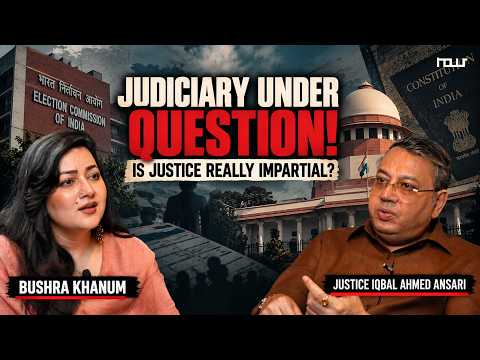 1:13:08
How independent is the judiciary in India today? And what happens when citizens begin to lose confidence in the institutions meant to protect their rights?
 3:25:59
What does it mean to renew Islamic thought in an age of modernity? In this conversation, Dr. Waris Mazhari discusses his new book, Fikr-e-Islami Ki Tajdeed (Renewal/ Reconstruction of Islamic Thought), with Ali Javed. The conversation explores the diversity within the Islamic intellectual traditi…
3:25:59What does it mean to renew Islamic thought in an age of modernity? In this conversation, Dr. Waris Mazhari discusses his new book, Fikr-e-Islami Ki Tajdeed (Renewal/ Reconstruction of Islamic Thought), with Ali Javed. The conversation explores the diversity within the Islamic intellectual traditi…
Discussion
0Readers only · Comments are reviewed by the desk before they appear
The journalism is free for everyone — create a free account to join the discussion.