
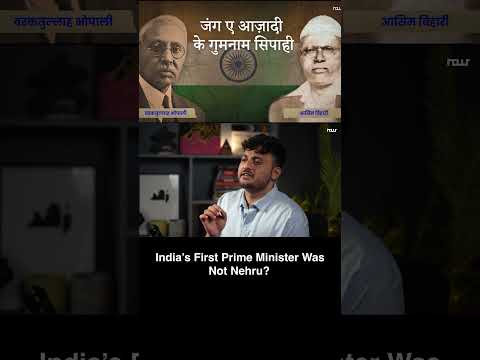
2:58India’s First Prime Minister Was Not Nehru? Abuzar Javed Traces History
From Japan and the Ghadar movement to the Provisional Government of India in Kabul, Maulana Barkatullah Bhopali helped build an international struggle for freedom.
2:58From Japan and the Ghadar movement to the Provisional Government of India in Kabul, Maulana Barkatullah Bhopali helped build an international struggle for freedom.
1:43"There is no inch of this country untouched by Muslim blood"
2:12Who actually conceived and pushed the idea of Partition? In this thought-provoking conversation, senior journalist Bushra Khanum speaks with Dr. Shamsul Islam, author of Muslims Against Partition of India, inviting us to look beyond the familiar assumption that Partition was simply the inevitable…
0:59“It would be a civic form of citizenship. It would not be a religious kind of thing.”
1:45“History is not only written. History is also remembered.”
0:44“A lot of Hindus, a lot of the Hindu elite, were not unhappy with Pakistan.”
2:18“They are removing people who grow forests where people reside.”
1:17“The story of India’s freedom does not end with these names.”
0:50“The Lucknow Pact was signed by Lokmanya Tilak. He accepted the reservation for Muslims.”
2:05“Hindus were silent out of fear.”
1:01“You are looking at them through the prism of Muslims.”
2:57"Fanaticism" as a concept traverses continental histories. Prof. Irfan Ahmad traces how the label was used against Indian Muslims under colonial rule—and Black Americans demanding equality. In conversation with Ali Javed, he explains how freedom demands become recast as extremism.
1:22“We have fallen behind.”
1:15“No society can win with strict religiousness.”
1:17“You can fool many people once, but you cannot fool many people many times.”
1:23“In Umar Khalid case, court hasn't connected the dots at all.”