

After the Exodus: Jyoti Yadav on What Covid Left Unrecorded
Five years on, the journalist behind the book Faith & Fury argues that India's migrant workers, its cremation workers and its district hospitals were failed once and have been given little since.
Contents · 10 sections

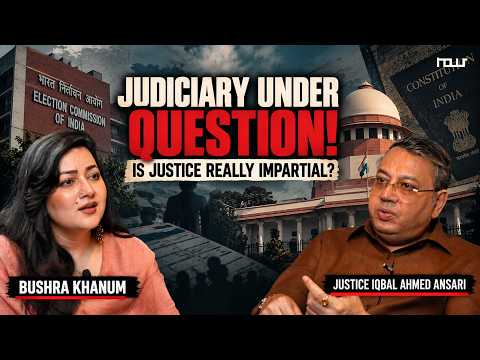
Five years after India's first Covid lockdown, the country has largely stopped talking about it. Jyoti Yadav, a journalist who spent the pandemic on the roads and in the crematoria of Uttar Pradesh and Bihar, thinks that silence is a problem in itself. Her book, Faith & Fury, draws on that reporting and on years of return visits to the same families. In a conversation on the Nous Podcast, she explains why it took so long, what she found when she went back, and why she doubts the state has learned what it should have.
The exchange ranges from undercounted deaths to the ethics of an empty seat in a reporting car, and from the cremation workers whom official narratives skipped to the gatherings that fed the second wave. What connects them is Yadav's insistence that the pandemic was not one experience but many, and that those who bore its worst edges are the ones the record has been slowest to keep.
A book five years in the making
Yadav says the book was conceived early. When migrant workers were making their way back to Uttar Pradesh and Bihar in the first wave, the publisher Westland told her it wanted to print her experiences. Then the second wave arrived in March to May, bringing a fresh round of the same scenes, and the project slid. She kept reporting in the same towns and with the same people, tracking what the pandemic did to their lives. Her last round of follow-ups was in 2024; she edited through 2025, and the book was published in 2026.
The title, she explains, names two things she watched side by side. The faith was often small and concrete. Bicycles mattered so much to workers that some refused to leave them behind even when a bus or truck was on offer. At a langar near the Gopalganj border between Uttar Pradesh and Bihar, she met a woman who herself depended on government rations and still came to contribute food for passing workers. Near Rampur and Bareilly, where police turned walkers back some 25 to 30 kilometres at a time, villagers offered buttermilk and water and let people cut across their fields.
The fury she saw in almost every class below the ruling elite. She points to a family from Punjab that received four hours' notice to leave and dragged its belongings through a twelve or thirteen hour journey without food or water, in a heat wave. Her publishers, she adds, were wary of putting Covid in the main title, because people were tired of the subject. So it sits in the subtitle.
The girl who cycled home
Asked what became of the people she profiled, Yadav turns to Jyoti Kumari, known as the girl of Bihar, who cycled home to Darbhanga with her ailing father over seven or eight days. Attention was enormous: Yadav says she was praised widely, including by Ivanka Trump, and received an award from the Prime Minister; Bihar politicians promised to fund her education, and a filmmaker said he would make a film on her life. Her father died in 2021, of a heart attack and not of Covid. Thanks to the coverage, Kumari built a house for her mother, better than those around it.
But when Yadav visited in 2024, Kumari was living with an aunt, having never enrolled in college. No ministerial funds had arrived, ministers had changed, and the film never appeared. If someone this visible slipped back into invisibility, Yadav says, one can only imagine the state of the millions who never had that attention.
The missing data
Asked about accountability, Yadav starts with the migrants. She takes Babloo Paswan, a worker from a remote village in Madhubani district near the Indian-Nepal border, as an example. He came back in the first wave, paid 4,000 rupees for a truck ride, walked a day and a night, and was then quarantined in a government school. The years since, in her telling, have been marked by disruption and by Covid-era debt he has still not cleared. When a cooking gas crisis hit recently he lost work again and came home once more on crowded trains, which she likens to livestock transport.
Her sharpest observation is about information. While working on a story, Yadav checked with labour departments in Uttar Pradesh and Bihar, the two largest sources of migrant labour, to see whether either had collected internal data after the first wave on how many workers had left or returned. She found no usable record. Without a solid dataset, she asks, how can policies be framed? A reporter can gather a panchayat's migration figures; a state with its machinery could do so easily. She reads the absence as evidence that the state did not treat the exodus as something to learn from.
Wages tell a similar story. When she first followed the workers' lives in 2019, they were earning 500 rupees a day. In Surat, doing loading work in plywood, she found some still earning 500 rupees a day in 2026, after years of rising prices. She also sees a parallel in the recent return of workers from industrial hubs such as Surat, which she links to the Middle East conflict and the cooking gas shortage: the same policing, the same hardship, the same joblessness on arrival. The one difference was that the trains were at least running this time.
The same commitment to numbers shaped her reporting on the dead. Yadav went to Lucknow's cremation grounds after visuals of ambulances and burning pyres seemed to contradict the official health bulletins. Her editor, she says, pointed out that claiming a gap needed data, and the data was itself unreliable: municipal commissioners held one set of figures and health bulletins another. Her approach was to gather a few days of cremation counts from major cremation grounds and compare them with the official tally. Her outlet, she says, applied no pressure to hold back.
The reporting also explained why the undercount existed. Some patients never reached a hospital, and some tested positive only after they died, while the government's figures reflected people who died in hospitals. That story, she says, was among the first to put such figures in print. The cost was personal. Apart from one earlier funeral she had never been to a cremation ground, and she went in a heat wave, wearing an N95 and a surgical mask, and had to ask grieving families whether the death was from Covid.
The empty seat
One of the book's most affecting passages concerns a car. Yadav was travelling beyond Lucknow with a colleague and a driver, luggage stacked in the back and the seat beside her holding biscuits and video equipment. Along the road she passed elderly walkers, toddlers, and women carrying loads. She would get out, ask where they had come from, and they would unload their bundles and answer. Then she would get back in and drive on, feeling their eyes on her. At one point a group asked whether the reporters could take one person, since people were falling sick.
The team discussed who deserved the seat and found that everyone did: a child, a sick elderly relative. Choosing was close to impossible. Yadav and her colleague found themselves looking away. She notes that a reporter's job is not relief work, but the guilt was real, and she says the faces have since blurred, though the memory is still tucked away somewhere. She is careful to add that the migrants carried the greater burden; their journey was harder than her emotional load. There was a further worry: a photograph of a reporter standing close to a worker could be used to accuse journalists of spreading the virus.
Reporting alone, as a woman
The host also raises the experience of women reporters. Yadav says the usual precautions, such as sharing a live location with family, were not enough, because police who would normally staff a checkpoint had been redeployed to hospitals, oxygen plants and containment zones. Sometimes the outpost she expected to be staffed was empty, leaving only her and her driver on deserted roads.
Her most frightening moment came in Araria, Bihar, while reporting on Covid orphans. Mud on a road under construction stopped the car, so she was told to continue on a motorcycle to a village some 12 kilometres away, with a man she could not verify. She spent the ride praying, she says, with images from viral videos of attacks on women running through her mind. She reached the village safely. Her point is structural: television crews travel with a video person and local stringers, while newer digital outlets without a legacy often send women reporters out alone. In hindsight, she says, senior editors should have taken extra measures.
Not quite a great equalizer
The host asks whether the crisis narrowed the gap between rich and poor. Yadav grants a narrow version of that claim. In the desperate weeks of the second wave, small-town private hospitals had shut, while elite hospitals such as Fortis kept functioning, so rich and poor alike converged on government hospitals. But she declines to call Covid a great equalizer. The inequalities that already existed, in health care and access to work, were in her view deepened afterwards.
On preparedness for a health crisis, she makes a specific argument. India, she says, has raced to build AIIMS institutions and medical colleges in every district, much as it raced to build metros. In Madhepura she found an excellent building. What she asks is how many MBBS doctors, ANMs and GNMs, ward boys and lab technicians capable of running ventilators it has. Had Bihar's doctor-to-patient ratio visibly improved, she would say the state had worked on the problem; as far as she can tell it has not, and she has no confidence the country is better prepared than in the Covid years.
Who is remembered as a hero
The most extended argument of the conversation is about caste. Yadav begins with how the record of a crisis is written: who gets cast as the hero is tied to who they are in society. Doctors' work was selfless, she says, but the image of a Covid hero tends to be a doctor, a bureaucrat or a politician.
The cremation workers get little space in that picture. Yadav went to Manikarnika Ghat in Varanasi and later saw similar conditions in Patna. Members of the Dom community, placed at the bottom of the Hindu caste order and assigned by convention to deal with the dead, were working stretches of 40 hours, eating and sleeping among bodies. Wood pyres in a heat wave were the norm, since electric machines need time to cool between cremations and mostly stopped working. Protective kits, she says, were not a realistic option: one worker told her that people sitting in air conditioning could wear them, but he would collapse. Elsewhere, she notes, cremation work is a job and not a caste function, and comes with safety gear; here it is assumed that workers will handle the dead bare-handed.
They were also outside the essential-service category that gave others movement passes. Yadav says police beat some Doms, including a young man in Patna whom she and her team drove back to his settlement. They cremated bodies that families had left at the cremation ground's boundary, wrapped in plastic; in some places the priests left too, and the Doms performed the rituals they had learned over the years. Most of them, she says, are landless and are periodically cleared from their settlements in eviction drives.
She does not claim they were entirely forgotten: alternative media, including The Wire as she recalls, covered them, and a researcher at Banaras Hindu University wrote a paper. But mainstream media could have done far more, and better coverage might at least have brought compensation. What came, in Patna, was an invitation to an Independence Day event, where the Doms were seated on chairs and sent home without any honour. She asks how differently the work would have been acknowledged had another caste or class done it.
Gatherings, weddings and mixed signals
On religion, Yadav is careful. She had reported on Tablighi Jamaat returnees from Mewat, but that reporting is not in the book. The book does address the fairs and gatherings across north India, including Holi in Jaunpur and the Haridwar mela. People returned from Holi gatherings and from Haridwar carrying the virus, she says, and while the Tablighi Jamaat was covered overwhelmingly, scrutiny that should have been applied to both sides was not. Administrations did not want to interfere with religion; in one Bihar district a collector imposed a curfew at a fair and then withdrew it after what she describes as orders.
The second wave was also fed by political rallies and weddings. Madhu, a Covid widow in Patna, told her that families had postponed weddings from the first wave to the second, not knowing another wave was coming. By Madhu's account, Bihar announced a lockdown on 4 May while her family attended a wedding on 28 April; with the state itself not locking down, how was she, an unlettered woman, to know how seriously to take the virus? Yadav reads this as the product of contradictory government notifications, one signal one day and a contrary one the next. She thinks weddings, fairs, rallies and the panchayat elections in Uttar Pradesh could all have been curbed by timely intervention.
Rumour and blame
Asked whether communal framing such as the phrase Covid jihad reached the ground, Yadav says it was heavy on social media and prime-time debates. She saw it in the National Capital Region, where she says it was aggressive, and in one or two other places. In Uttar Pradesh and Bihar people mostly did not talk that way. Other theories circulated: in her native Haryana, that it was a Chinese virus; in Uttar Pradesh, that the government wanted to inject people; in Bihar, disbelief lasted until the virus took someone in a person's own family. Vaccine hesitancy, she says, often rested on practical fear of being ill for weeks and unable to work. She did not hear people blame a particular caste or religion.
Grief, distance and the next reporters
The host, who lost his father during the pandemic and says the memories still return in flashes, asks whether writing released her from what she saw. Yadav answers that reporting was the hardest part, and writing was not easy either. She chose to structure the narrative chronologically through a reporter's eyes, starting from Delhi and moving district by district. Sitting down to write in 2022 and 2023, she found the memories returning: a hospital where four patients shared a single cylinder and she could only watch. She has never sought professional help. Old photographs show her malnourished and dehydrated, wearing three masks all day and reluctant to remove them. After returning to Delhi she took a break of ten to fifteen days.
She still avoids some stories, among them Kalyani Agrahari's, because she is a mother herself and can relate. Today she would advise any young reporter sent to cover a war, a pandemic or a flood to seek professional help on return, because distance gives perspective. That was not possible in Covid, when reporter and subject stood close. She also recounts falling ill in Lucknow during the second wave; her Covid test was negative and a CT scan in Varanasi was clear, and she attributes the illness to poor food and dehydration.
The conversation ends on the state of the profession. Yadav entered journalism in 2016, when digital media was rising and Ravish Kumar stood as an ideal. Young reporters now look to people like her, she says, and she thinks about the example she sets. But she places most responsibility on newsrooms and editors. Ground reporting is expensive; it needs resources and people who are guided. Independent outlets face logistical constraints, and corporate funders are pulling back. Outlets chase what goes viral on Twitter, she says, while a routine death that would need RTI filings and legwork is left alone. The problem, she suggests, lies with editors and whether they are willing to take that risk.


Discussion
0Readers only · Comments are reviewed by the desk before they appear
The journalism is free for everyone — create a free account to join the discussion.