

Did Indian Muslims Really Want Pakistan?
Historian Javed Gaya argues that the electoral and migration evidence long cited for a Muslim mandate for Partition is far too thin to support the claim — and that treating it as settled has let India avoid a harder reckoning ever since.
Contents · 4 sections
A question with no clean answer
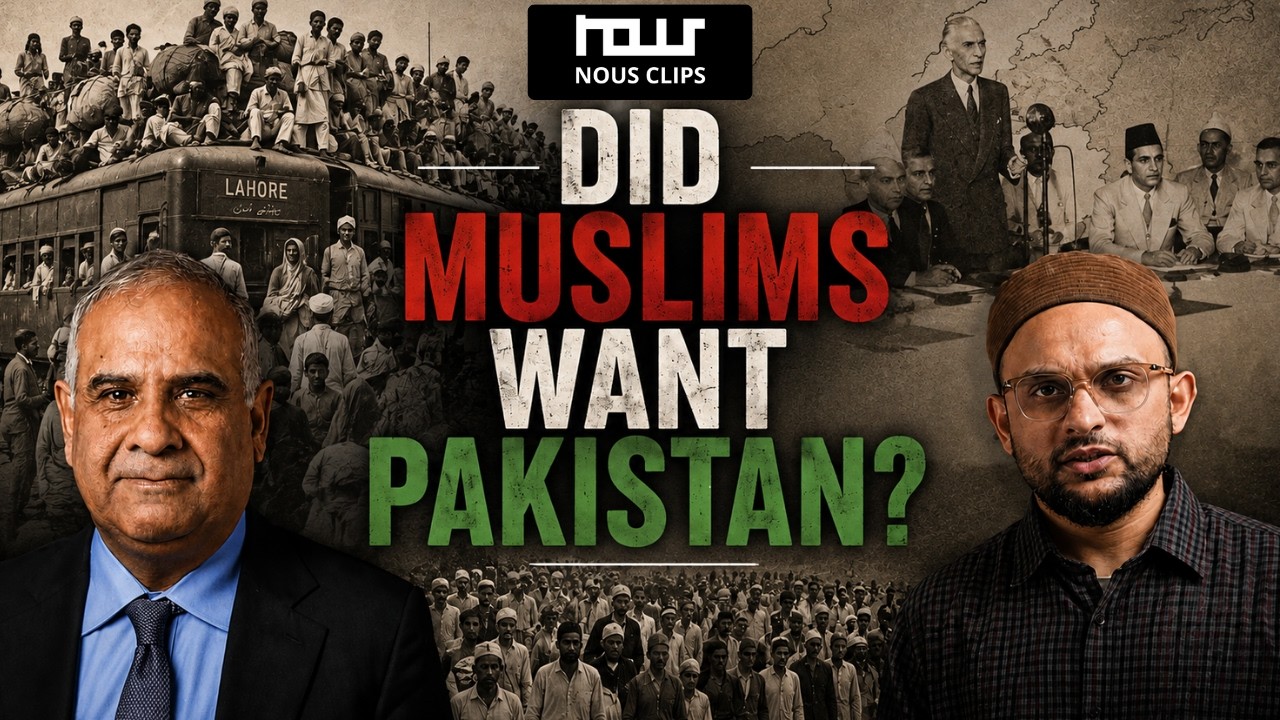
Did Indian Muslims want Pakistan? Historian Javed Gaya's answer, laid out in conversation with Nous, is that the question itself may be unanswerable — and that insisting otherwise has done lasting damage to how India thinks about its largest minority. Partition, he argues, is routinely narrated as the outcome of a Muslim demand, backed by a Muslim electorate, for a separate state. Almost none of that claim, he says, survives contact with the historical record.
Gaya's starting point is the franchise itself. The 1935 Government of India Act extended the vote to only about 14 percent of the population. Whatever the Muslim League's provincial performance in the 1946 elections — the polls most often cited as proof of a Muslim mandate for Pakistan — it was a mandate from a small, disproportionately propertied and educated slice of Muslims, not from Muslims as a whole. "We can't actually make out very clearly," he said, whether a Muslim majority ever existed for partition, because the electoral evidence itself is too thin to say.
Who actually campaigned for Pakistan, and why
Gaya points to a specific, narrower constituency behind the Pakistan demand: young, educated, urban Muslims — particularly recent graduates — who feared they would find no room for themselves in the professional and administrative life of a Hindu-majority India after independence. Their anxieties, he argues, were economic and social far more than theological. Wealthier, enfranchised Muslims played an outsized role in Muslim League politics and in popularising the Pakistan idea precisely because they were the ones with a vote, a public voice and a stake in how post-colonial opportunity would be distributed.
He is equally sceptical of migration as evidence of popular will. Roughly seven million Muslims crossed into the western and eastern wings of Pakistan around Partition, out of a Muslim population that, at the time, ran into tens of millions across the subcontinent — most of whom, including the largest Muslim populations of all, in Punjab and Bengal, simply stayed where they already lived, since those provinces became Pakistan around them rather than the reverse. Of those who did cross the new borders, Gaya argues the reasons were rarely a clean ideological choice for Pakistan as an idea. Many fled documented violence, or followed a brother or a neighbour who had already gone, in a climate defined by "great polarization" and "a sense of uncertainty and fear as to what the future held" — the same forces, he notes, that pushed Hindus and Sikhs out of Punjab in the opposite direction, for reasons no one would call an ideological embrace of India.
The "gift" that became a trap
The conversation's sharpest argument concerns what happened after 1947, once Pakistan had been created regardless of how firmly Indian Muslims as a whole had wanted it. Gaya argues that the Hindu right came to treat Partition itself as a settlement of accounts — a "huge gift" to Muslims that discharged, once and for all, any further obligation Indian society owed the Muslims who remained. "Having gifted them this great thing, then nothing else needs to be done," he said, describing the logic he sees running from that moment to the present. In his account, this is the idea that has done the most lasting damage: it converts an actual, contested and poorly understood historical episode into a permanent justification for refusing Indian Muslims further political voice or claims on the state, "bedeviling the Muslim question to the present day."
He is careful to note a second, less examined motive on the other side of the ledger. Congress, he argues, had its own interest in treating Muslim-majority regions as politically neutral or peripheral after 1947 — an arrangement that helped guarantee Congress dominance for three decades after independence, quite apart from any principled position on minority rights.
Why the question resists a number
Gaya's closing point is methodological as much as historical. Historians, he argues, should resist claiming a certainty the evidence does not support — what moved any individual family to cross a border in 1947 is, in the overwhelming majority of cases, simply unrecoverable, a private decision "we don't know and we will never know." Treating a poorly sourced claim about collective Muslim intent as settled fact, he warns, has let a convenient political story stand in for a genuinely uncertain history — one where the loudest available answer was never the most honest one.


Discussion
0Readers only · Comments are reviewed by the desk before they appear
The journalism is free for everyone — create a free account to join the discussion.