

 5:04
5:04Video· Nous Clips
Inside India's Growing Religious Divide I nous Clips
This is an excerpt from a longer conversation.
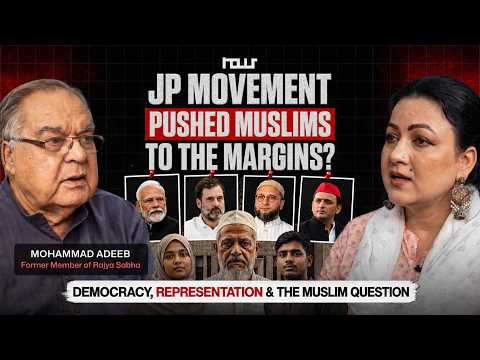
As concerns grow over the demonisation and dehumanisation of Muslims in India, former Rajya Sabha MP Mohammad Adeeb joins senior journalist Bushra Khanum for a deeply reflective conversation on the community's political future. Adeeb discusses the shrinking space for Muslim representation, questi…
Has any political party tried to strengthen its ranks with a Muslim who can understand Muslim issues, care for them, speak up for them? Why do people like Owaisi, or is he so popular among Muslims? This is the pain, this is the philistinism. You're mentioning Vajpayee in the same breath as Nehru and Gandhi, but why is that? This is the same Vajpayee who talked about demolishing the Babri Masjid. In some parties, every fourth or fifth Muslim is so powerful that he can get a Panchayat ticket. They've made you mental slaves. It feels like you're just picking up their shoes. So the question arises: where should those Muslims, and especially those oppressed—SCs, STs, Christians—go? Which way should they look? We've tried to make all the communities and all the people of substance rise above their own sects and make a decision. They should ask the secular parties, "Will you stand with us when our mosques are demolished? Will your hearts ache when our children are lynched?" Where is Akhilesh Yadav, who will now seek Muslim votes? Where is Tejashwi Yadav in the upcoming Uttar Pradesh elections? Where are the others who cannot stand without Muslim votes? At Nouns, we use data and ground realities to bring you stories that are often suppressed or misrepresented. We are an independent platform, meaning we have no corporate backing. Our true strength lies in you. If you want to continue to see such true and important stories, please share our videos as widely as possible. Subscribe to the channel, and if possible, support us through the QR code on the screen so we can continue to bring you stories and continue our work. You are watching Aadaab News Network. I am Bushra Khan Fahad with you. Right now, you're witnessing how Muslims are being subjected to every level of oppression. Every barbarity is being transcended. Everything connected to their very existence has been questioned. Today, I'm with a figure who is actively engaged in every battle that needs to be fought, from the political arena to the courts. I'm talking about Mohammad Adeeb, whom you can see boldly raising all the important questions that Muslims face, their lives, and their rights, on almost every platform possible. Needless to say, he was a Rajya Sabha MP until 2014 and currently heads the ICMR. He has an English newspaper he's repeatedly tried to publish, and you'll see him making every effort in this seemingly hopeless environment. Today, we'll be speaking with Mohammad Adeeb about what should be done in the current situation facing Muslims. How does he view Muslim politics since independence and what does he envision for their future? Adeeb, sir, a very welcome. Thank you. My first question to you, sir. I want to talk about the past, the future, and the present. Because you're a person who has witnessed the rise of the entire socialist movement, from the JP movement to its inception and decline. You've also witnessed the formation and rise of the RSS and the BJP. You've remained close to the Congress and the socialists. When you won the Rajya Sabha election independently, the Congress, the RLD, and the Samajwadi Party all supported you. How do you view the current situation facing Muslims? You made that statement in your introduction, and the whole world is watching. The idea of India that our elders had, has been blown away. It was never imagined. Not me, not anyone who sacrificed for this country. If those people had known that India would descend into a state where humans would celebrate by killing humans, that governments would be formed by torturing and oppressing a particular community, then perhaps they wouldn't have made those sacrifices. They spent years in jails, driven from their homes, but the wind changed. I feel like, as you said, I was associated with the JP Movement, and even before joining the JP Movement, I had already associated with Jayaprakash Narayan. When I was President of Aligarh University, I took Jayaprakash Narayan to Aligarh University, made him a life member, and had his photo placed in front of Nehru's in the union because I believed in socialist thinking. I was deeply influenced by the movement that was going on at that time, first in Europe and then in India . Nehru himself was a socialist, not just me. And within the Congress party, there were two schools of thought, as you said. Some were socialist-minded, led by Nehru. So, when Jayaprakash Narayan started the movement, there were only two of us in Uttar Pradesh—Zulfikar Ullah Sahib from Allahabad, who later became Finance Minister (Minister of State) in the Janata Party, and me. At that time, I told Jayaprakash Narayan, "Sir, the Jan Sangh people are far ahead with you." He said, "The Jan Sangh people are the most angry with me . But they have the organization. That's why we are with them. Don't worry. This will never happen." And we committed a crime. He joined the JP Movement. And the result of his involvement was the emergence of small parties. And Muslims were increasingly marginalized. A Muslim even became a Chief Minister in this country, in several states. But this marginalization means that Muslims now have a fixed portfolio for Minority Affairs. We are no longer in any position where we can claim a stake. Congress, as it weakened, had many weaknesses of its own. However, the rise of individual parties, and the way those parties divided votes, has changed the mindset. Those who were dying for Mamata Banerjee abandoned her after her defeat . Now, when these people come here, they say they have become secular, they have become communal. But when an ideology is lost from within, the body appears without a soul . All these leaders you see are just card-carrying figures, but they lack a soul. This is a walking report of what we call the shape of India. But Adeep, since you mentioned the JP movement, and I'm asking this question so I don't forget the context, if I go further, when you're talking about the JP movement, it's said that it was a socialist movement. But let's consider that the movement succeeded only because it had the support of the RSS. What kind of betrayal did we see of the country? Nitish Kumar emerged from that movement. Lalu Prasad Yadav emerged from that movement. Mulayam Singh Yadav emerged from that movement. Besides Lalu Prasad Yadav, no one hesitated to align with the BJP. So, what kind of socialist movement was this? Was it a betrayal of the country? Was it a conspiracy to weaken the Congress or the secular socialist forces, which were the real forces? Because you were part of it. You were an internal part of it. You're absolutely right. Let me tell you one sentence about the internal discussions. I was a member of the Uttar Pradesh Sangharsh Committee during the JP movement. Everyone was arrested, and I ran away from this place. At that time, Bahugunaji was the Chief Minister. Indira Gandhi also removed Bahugunaji. He wouldn't arrest me. And I had a very close relationship with him. He then came to Dubai as a minister in the Janata Party. When I went to meet him, he said, " Nephew, you've done a great job. You've come back, and your slate is clean. Go ahead and write whatever you want." I was happy. I was young, and I was excited that Indira Gandhi had imposed the Emergency and taken away our rights , so she's lost. But Bhognathji told me , "Nephew, I've committed a grave sin. I've ruined the country by fighting Indira Gandhi." I couldn't understand what he was saying. He said that the Jan Sangh people, the RSS members who were afraid to speak their names, who hid their names, had become deeply entrenched. I've lived a long life. Nephew, what will happen to you? "I couldn't understand. When I returned to India, V.P. Singh had become Prime Minister. The Janata Party , the Jan Sangh, and the Left all joined forces with VP Singh. The result was that the RSS gained recognition, and the RSS quietly emerged as a dominant power. These small parties weakened the Congress but propelled the RSS to positions it hadn't reached in 200 years. So, you're saying that all these so-called socialist groups have strengthened the RSS. Look, you mentioned Lalu Prasad Yadav. When he was jailed, I went to visit him in Ranchi, and he was surprised to see me and said," Oh, you've come to meet me. "I told him," I'm not saying you were a very good Railway Minister or Chief Minister; I'm here because you didn't compromise with the RSS, and we are ungrateful people. "Lalu immediately burst into tears, and he declared," I won't compromise with the RSS in my entire life. "Lalu was a very small leader of the Samajwadi Party. George Fernandes is among the more prominent leaders. Such a cruel, deceitful man, when babies were ripped from their mothers ' wombs in Gujarat, what was he saying while in the shameless Vajpayee government? These big leaders he had made, all the dust has been removed from them. They openly wanted only power. But now, when this government is formed , what can anyone say about Nitish Kumar? What happened to his speech? Naidu, who used to call himself a socialist, has now started buying him. Now they don't need Naidu. Now, in a few days, he will come back and say," Sir, this is a big deal. Biju Patnaik's son, sir, he's always been doing this. Where has he gone? We will all be finished. "But the only question is, when will Congress come to the ground? They think they can do everything with a press conference. Just look at the entire revolution Rahul Gandhi launched about vote theft. His party should have gone to every district, every tehsil, and taken to the streets to declare this theft. Yes, but when the perception becomes that we will write on Twitter, we will hold press conferences, then their fate will be the same. I will join Congress, Mr. Adeep. But when we talk about the JP movement and all these socialist faces after that, their biggest vote bank was the castes they came from, the caste-based politics they pursued—Yadav politics, Kurmi politics, various parties that formed their own parties in this way— and their second-largest vote bank was Muslims. Yes, Muslims considered them their leaders. They voted for them in large numbers. Not just once, but many times. Tokenism was played against them. Some of their leaders were given certain departments. They were given certain representation in certain places in the ministry in that state. Don't you think that these groups are the biggest culprits for the current social and political situation of Muslims because they never emerged on their own? The one question that's always asked is," Those who spread the carpet. "If I don't call them" those who spread the carpet, "but let's just say," In the face of tokenism, at least we're getting something done. They're talking about us, at least they're saying that. "But no one ever addressed their most important questions. So, don't you think these people are more responsible than the BJP and RSS? Absolutely, you're right. The carpet-stretching issue is now a reality. If Owaisi is saying it, what's wrong with us? This is the reality. In my youth, I spent 50, 60 years roaming the political corridors. Previously, there was a perception that Mr. Modi might get angry. When Modi came to contest the 2014 elections, he said that we, minus Muslims, would become the truth. We were then under a 10-year Congress incumbency. He had the background of 2002, which showed his thinking and what his thinking was. The youth had a hope that something new was about to happen. They became the rulers of the time. And first came the report about Anthony Sahib, claiming that we lost because we were Muslim namaz. After that, every party said," Brother, stay away from them. Where will they go ? They are forced to roam around. " Now, Anthony Sahib's son is an important BJP leader in Kerala. This is the situation. What happened to us was that we gradually became marginalized, and now he is the Minister of Minority Affairs. He doesn't even offer namaz. No, now he doesn't even have that, but when he comes back, what is the reason that whichever Muslim party he joined, his community didn't support him? When your community doesn't support you , you're just a model to be used. But then, who was voting for them? If you're saying that the community wasn't with them, why not? There were opportunities if the Congress Party, the Samajwadi Party, or Lalu Prasad Yadav's party had given their Muslim representatives enough power to do something about their community. We would have become those leaders, and they weren't supposed to be leaders. Take, for example, the Muzaffarnagar riots. There were 66 Muslim MLAs. Not a single one spoke up. They didn't have the courage to speak out. No one was empowered to go to Muzaffarnagar and raise their voice against the massacre and atrocities inflicted on their community. We are guilty too, aren't we? Absolutely. After we made this compromise, I know many leaders who are trying new things. Young people, it's a pity. The leadership that's about to emerge is the same leadership that says," Get us a ticket from Mulayam Singh Yadav, if we can't get one, then get it from Mayawati, get it from the Congress party. "That is, without any ideology, they understood the need to wreak havoc . All those useless people, those who can't achieve anything in the world, want to enter politics. Who do you hold responsible for this? Do you think that our Muslim leaders, whom the community saw as leaders, from Maulana Azad onwards, and I'm talking about those who held good positions in political parties, did they prepare a second, third, or fourth generation of leaders? The first generation prepares their children, saying," After me, this child will take over my business or whatever I have, or do something better in the future? "If we look at those Muslim leaders, did they completely fail in this, that they didn't prepare any future political leadership, or do you think, intentionally, that they were so selfish that they didn't? In reality, if you look at these past 100 years, you'll see that the only leader who was equal to Muslims was Jinnah. They gave the slogan of one country without any idea of how it would be formed, how it would function, which Parliament would be in power. Look at our leadership from there. The problems that arose were that we did not listen to Maulana Azad. Maulana Azad was saying that you are going to divide a community, not divide the land. And when the community was divided, we said, no sir, Pakistan will be formed. And Jina Sahib gave the slogan of Pakistan. He did not even explain why he gave it. In his first speech in Lahore, Pakistan, he said that this is a secular country. If it was a secular country, then why was this partition done? We dug our own grave from there. When we remained in this country, the only thing we had was Ambedkar's Constitution, which Nehru used in the election in 1952 as a mandate, a referendum, saying that we will make this country a secular country and the Constitution will be our guideline. Now , when they say," Run away, " we say to them," You too should hold a referendum. If you want to create a Hindu nation in this referendum, then do so. We won't raise a voice. But you fought this election based on the Constitution that made you Prime Minister today. That Constitution tells you that you cannot oppress us. If you want to oppress us, to break the Constitution, then hold a referendum. Ask the Sikhs whether they will live in a Hindu nation. Ask the Christians. They will live in a Hindu nation. Ask the Hindus of the South. They will live in a Hindu nation. Ask those who worship Ravana whether they will live in a Hindu nation, under the rule of Ram. If you still win, then oppress as much as you want. But this oppression you inflict on us, you deceive, you violate the Constitution. Sadly, and regrettably, the secular parties are unable to see this. They are still worried about losing the Hindu vote, and about the massive appeasement plot hatched by Advani, hoping to trap us in it. This is the situation we face today. And I openly tell them this. I'm constantly reminded of you: You should go to Pakistan. Why would we go to Pakistan? Because we have already divided our blood. We rejected Jinnah. We made India yours because you publicly declared that you were going to create a secular India and affirmed it by adopting Ambedkar's Constitution, affirming our equal rights. But the problem with us now is that if we couldn't produce a leader like Maulana Azad, then Hindus couldn't produce a Nehru, and Jinns couldn't produce a Gandhi. You are equally guilty. You bring up this deceptive Gandhi, and Hindus are just as guilty when they say , "This world leader of ours was born, by God." Where Nehru was Prime Minister, where Indira Gandhi was Prime Minister, where Atal Bihari Vajpayee was Prime Minister , there's a man who sits with his eyes closed every day. Well, you've silenced us. You could have spoken out about the looting of the temple your RSS people have built. You're mentioning Vajpayee in the same breath as Nehru and Gandhi. Yes, I'm talking about it, but why? This is the same Vajpayee who called for the demolition of the Babri Masjid. Was he part of the RSS ideology? He was a Janas (people's man). Let me tell you, I had an interaction with Vajpayee. One thing you have to admit about Vajpayee is that he was a democrat. He never spoke about violating the Constitution. First of all, he was a civilized man, educated, and well-mannered. So, are we acceptable to a cultured Sanghi? Why? You're saying we accept the Sangh of culture. Look, one way is that, you're talking about a Constitution. But when he said he wanted to demolish the Babri Masjid, he became very sharp, saying that it should be demolished. This is unconstitutional. The biggest thing he did was condemn it. After the demolition of the Babri Masjid, he was a diplomat. He was an RSS man, there's no doubt about it. But you saw such scenes: who went to the Himachal Pradesh Chief Minister's daughter's wedding to get him arrested? This is Indian culture. You send innocent opposition leaders to jail. This is your culture. That's why I'm saying about Vajpayee ji that he had his own ideology. But these weren't atrocities. And when the massacre happened in Gujarat, his historical speech is still there: you have to fulfill your political duty. What is happening today? Today, you're not willing to utter a single word, and you openly say that every person...So, I say this because Vajpayee, while his thinking may differ from mine, his ideology was different, and mine is different, but he was a respectable man whom I believe you can distinguish between on a racial level. As Prime Minister, he didn't do anything that violated the Constitution after you took the oath, and after taking the oath, he didn't take over the institution in the way you did. So, I say this clearly. I had differences with Indira Gandhi because of the Emergency. I'm a Congressman at heart, and I don't belong to anyone in the party. But one of Indira Gandhi's greatness was also that, which is why I say that she was very concerned about the Emergency. After the Emergency, she conducted fair elections and lost. They will conduct fair elections. After this current Congress party, one can imagine. To prevent fair elections, she created a nominated Election Commission. I say nominated because when you removed the Chief Justice, the natural ruler, he was already nominated. Absolutely. So, will this election be fair? And because of the troubles caused by our infiltrators , I repeatedly say, and I'm telling you , and I say it everywhere, that Muslims should once again declare that they are withdrawing from the elections. Because we are the catalysts; the government in this country is formed by those who oppress us. When we withdraw, there will be a fight for livelihood. Now, how much damage is being done because of this? The Election Commission has been ruined because the names of infiltrators were to be struck off. Oh, we should step down, but we ourselves are not voting. How long will you go on striking off names, brother, we might fail. Right now, we are putting a spanner in the name of who knows how many people. So, this is being said continuously about the secular parties as well. They are being told, "Don't participate in this election. You're going to lose anyway." So you're saying the same thing about Muslims, saying don't involve them. Then there won't be an open field. No, let it be an open field. Look, what's the reason? Are secular parties fighting for the country? They fight for their existence. We, Mamata Banerjee, didn't know she would be defeated. She didn't know her votes were being cut. She didn't know the army was deployed there, and she didn't know what to do. But she wasn't willing to give up 25 seats. Because we have to become the leader. Every party is fighting for its existence. And you know what these fights are about? What happened in Bihar? What will happen in UP now? There will be alliances. Wherever we have Muslims in power, there will be fights. Because Muslim votes teach them how to win. So, when these fights arise again, if you're willing to sacrifice for your party or for the country, then put aside all differences. Fight as one. We are completely with you. But you're fighting for your party, brother. Our necks are being lost. Mamata Banerjee is embracing defeat in Bengal. Who are the bulldozers running against? Whose homes are they looting? Our community is being targeted in the name of infiltration. And the same will happen in Uttar Pradesh, and everywhere. So everyone should know their place once and for all. This is my thinking. But the problem is that no one cares about Muslims for five years. During elections, some people come forward and follow them. Some are put in cars. Some are given money in their pockets. And they treat elections like a festival. They think it's a festival, a fair, a celebration. Elections are not a celebration. You have to prepare a blueprint for the next five or ten years. Who will be your leader? People in this country are too clever to understand this. I'm not saying everyone has one. Who didn't they go to? They stayed with the Congress. To defeat the Congress, they all ended with Mulayam Singh Yadav. They were finished with him. Someone was saved and when no one was saved then what option do you have? They say protest. We don't have the right to protest. It is not because women started a Gandhian movement in Shaheen Bagh. Their men are still in jails. That right has also been snatched away from us. Does anyone ask these people whose children are in jails. What is happening in their homes? What kind of mourning is there? How are their mothers waiting at their doors wondering when will their son return? We don't even have that right. Their names are not even taken in rallies. No one even approves of taking the names of the political prisoners who have been in jails for six years without trial in the Shaheen Bagh movement. Talking about them is a far cry. No, let me tell you a sentence. I was in a debate with Justice Karju. I said to him, "In independent India, there were two Gandhian movements—one the farmers' movement and the other the Shaheen Bagh movement. There's no doubt about his secular credentials. But what came out of his mouth was, 'Oh , brother, that was a Muslim movement.' " I said, "Did they take away this right too? You're scared. When they thought these Muslims had come together, imagine the plight of those whose minds are warlike and who say, 'Press a button so that the current reaches there.'" But on the one hand, we look at the political parties. We look at the RSS and the BJP. We look at all these political parties, and on the other, we look at the public. Do you think the public, especially the majority, was always so divided, or did it suddenly become so divided after the BJP came to power, or was it always like this? This mindset is exactly what the RSS has worked for 100 years, and they nurtured and nurtured it in the same way, and we are all witnessing it before us. Otherwise, how could it be possible, Mr. Adib, that your neighbor would start suspecting you? They would start believing that if you wear kurta pajama and have a beard, you could be a terrorist. You could wage jihad. Their women are like this. They must be fed with spit. Their camps in mosques must be run in this way. How could an ordinary person believe this? Let me leave India aside. I was recently traveling in America. I had very dear friends who studied with me. And their entire families are hard core. We had no idea that Hindus and Muslims existed in our childhood. They too are now dreaming of a Hindu nation. What can we even explain to you? Now, they are secular. The way they spoke to me broke my heart. My friends of 50-60 years. How can anyone explain to them that you were never a Hindu nation, nor can you become one? Because they say Bharat Mata ki Jai. Now, how many mothers were there before the British or the Mughals ? How many mothers should I talk to? The reality is that the Mughals collected the idea of India, and the British consolidated it. They handed it over to you. They say we are the oldest democracy. There has never been democracy in India's history. There was monarchy. One king fought with another, one state fought with another. They say , "Sir, the Mughals inflicted great oppression on us. Who ruled the Mughals ?" These same Rajputs, whom we call sons of kings, are today the Chief Ministers of Uttar Pradesh. They have always been sons of kings. Now, they have come to power. But some people are so different from the way they have been groomed. The RSS has committed two grave crimes. And I always say this. First, they engulfed the entire community in an inferiority complex. It means that 20%will consume 80%. We instilled fear in them. And second, the religion that had immense tolerance—we believe in Ram, Krishna, Brahma, Shankar, and everyone. They created meritocracy within that religion. Bajrang Dal, and so on. Now, this is the newest religion in the world, called Hindutva. Sanatan Dharma, or Vedic Dharma, is the oldest religion . Our Hindutva religion is a new religion, founded on hatred. But which ideology? Now, look at the fact that Navratri is such an important festival for them inside mosques. We now celebrate it by climbing on the roofs of mosques and brandishing swords . They claim to be Sanatan Dharmis. These people are not Sanatan Dharmis. If you want to talk to Sanatan Dharmis, talk to Shankaracharyas. But such an environment has been created. But all this has happened because of the attitude the courts have adopted. If they had wanted to, and if they were judges, they should have definitely asked. We were protectors of the Constitution, it was their responsibility to protect it. But such statements are coming. Such judges are coming. Mosques are being demolished every day. And now the situation is such that first they kept lynching, but no one spoke. Now they said that the last resort is to destroy their places of worship. They would say something. Even then they did not speak. Now what will they do if they do it? I am coming to this, and I have many questions related to this. I will come to this later. But when you talked about the courts, you are saying that this country, the Constitution that Ambedkar gave us, Dr. Ambedkar, and then you talk about Nehru, you talk about that ideology, this country is based on that. But don't you think that on one hand there's talk of a Hindu nation? Some experts say that this is already an undeclared Hindu nation. This is being said. They are also saying that the Israeli model is being implemented here. That is, what Israel does in Gaza, what it's doing in Lebanon, the way it violates human rights and all that, all of that is happening in India and is being implemented gradually. The courts are an institution where it used to feel that if you don't get justice anywhere, you'll turn to the Supreme Court. You'll turn to the High Court. If the same court tells millions of people that if you don't get justice this time , then you'll have to give it next time . If the Chief Justice there says that he had to seek refuge in God before giving this judgment, then on what basis did you give this judgment? When both you and the Prime Minister were seen standing and praying in his house. So the question arises: where should those Muslims, and especially those oppressed SCs, STs, and Christians, go? Where should they look? You've taken away their political agency. Their leaders are sitting silent; they're not ready to speak out; they're there only in name. Especially among Muslims, SCs, and STs, I see that they still have political agency; they still have a kind of fear about them, a fear of representation. With Muslims, even that has vanished. So where should they go? This is a strange atmosphere of despair . Look, anyone who claims this country is secular is lying. This country has never been secular. And you're saying it hasn't been for the past 12 years, or even before that, and you're talking about you. Absolutely, this is not a secular country at all. Whoever says so is lying. You just talked about Israel and them. After the UN report came out that 20,000 children were killed, Modi didn't utter a single word. What is the friendship for? The world knows that Israel is the biggest enemy of Muslims. That's the only connection. Ideological alignment. That's the only connection: we destroyed our entire foreign policy. We abandoned them because we didn't even mourn their deaths. After that, there were many countries that still weren't against Israel. But after the UN report came out, the entire world was shocked: what kind of people are these? What kind of community is this? And if they didn't speak out, our Prime Minister didn't speak out. When this foundation was laid, and even after that, people remained silent. The silence of our secular Hindu brothers caused immense damage. We will sink, but this country will sink, and they haven't realized it yet. We know that many of our Hindu friends are as troubled as we are. Because of us, they too are called traitors. But the only issue is that those supposed world leaders have shown a dream. I said in a program that they abuse Nehru 24 hours a day. Imagine going to speak to young people at an IIT. They had invited me. I asked them two or three questions there. I said, "Why do you hate us, brother? We might have been rulers here , but now we repair your punctures. We can't get jobs. We wash your cars. Why do you treat us with such cruelty? Why do you hate us? Hatred is directed towards equals. We don't work, we're not in the army, we're not at home." When he heard everything, he came to my house a second time and told me, "Sir, I'm an IIT student." He said, "I didn't know this other side of the picture." So I asked him, "Do you think Nehru was a Muslim?" He said, "No, he's an IIT kid, now in America." He said, "It wasn't Nehru, it was Motilal who converted to Islam."" This is the WhatsApp account of the RSS ," I said. "He was a very fond man of Nehru. You see, he laid such a foundation in this country." Now, Modi's issue is that he's very concerned about us. Our properties, the properties of the faithful, are being severely damaged. We will fix the properties of Muslims, and we will remain silent on the plunder of our own properties. We Muslim women are being severely oppressed. We will enact laws. We will remain silent on the problems of our wives and all the poor Hindu women who have been ill for years and who can't get a divorce. So, when this perception develops, this thinking that we will interfere in your religion, we won't study our religion. "Now that this situation has arisen, the biggest regret is that the day the secular parties stand up for this country, and the day they understand that we are not outside this country, and if they understand that we will stop being afraid to raise our voices when there is oppression against us, they will, in a way, be abusing the Hindu community. They believe that if we speak up for Muslims, we will see that they are being oppressed. If we raise our voices, we will lose our Hindu votes. I want to say to those secular parties: you are making fun of Hindus. Are all Hindus communal? We exist because of Hindus. We exist because of secular Hindus. Then why are you afraid? Why don't you come out openly? And this was also Adip Sahib. Even after that, you are still losing. Even after that, you are still losing. Tell me, look at anywhere else. In Bihar, you said you would fight on your own. In Bihar, you lost badly. Twenty years of anti-incumbency didn't work there. They used to call Mamata Banerjee a lioness, and they were given all sorts of names. Look at that. We've seen everything about the lioness, her courage, and everything. What happened to her? Furthermore, look at the Congress party: if you're not raising the legitimate issues of Muslims or talking openly about them, you're not achieving anything. Recently, a meeting was held, where representatives from their Muslim wing were present. Rahul Gandhi said that if we don't say" minority, "if we don't say" Muslim, " then that's a betrayal of the Congress party. He said that it's not a betrayal , and then it's not the Congress party. Now, imagine if we stand here and say that this is our sole importance, and Muslims are seen dancing and singing about it, saying that Rahul Gandhi has said that Muslims will now be called Muslims, not minorities. So, where does our bargaining power, the bargaining power of Muslims come from? Let me tell you, I've been with Sonia Gandhi for many years. I was a very respectable woman. Unfortunately, her health deteriorated when she was expected to become Prime Minister. All sorts of accusations were leveled at her, like," You're from outside, you're a, "and when an Indian becomes Prime Minister of England, they celebrate. And this same Sonia Gandhi, who made such a huge sacrifice, why do I consider her the greatest? Because, for the love of her own soul, she left her religion, her culture, her country, and then, the people here tore apart the body of the one she loved. She breathed her last in the lap of the one she considered her mother. If it had been any other woman, she would have cursed this country and left. But she kept her children here. The unfortunate thing about Rahul Gandhi's efforts after that woman's illness is that he should have consulted with the old Congress members who understood and worked on the Congress ideology, and not this current trend of posting it on Twitter, sending it to someone, and holding a press conference. He should have taken to the streets. As for Muslims, the reality is that a lot of hype is added to our name . Dalits, backward castes, and everyone else's names are added. And RTs are being used against us for oppression. Is it being used against any Sikh? Does he have the courage to kill a Sikh? Is it being used against any Jain? Are they Christians or Muslims? The entire institution will have to be changed. Regarding elections, you can no longer defeat them through elections. What other means is there? The SIR is a constitutional system, but you are in a democratic system. Gandhi had already said this. He had given a formula by saying this. We are talking about non-cooperation on the streets and non-violence. Ask them what will happen in the Parliament? They will let this continue. They are just trying to make all their own laws once they get two-thirds majority. From UCC to everything else, because when we were in the Parliament, we used to speak and the Speaker used to listen. Now the Speaker says if you speak, you will be thrown out, 100-100 people, 100-100 Members of Parliament are dismissed in a day and then they say this is democracy, this is secularism, is democracy left here, is secularism left here? What do you think about Rahul Gandhi? Rahul Gandhi took out a yatra in a time when only hatred was being talked about , he talked about love, he is the only man who fought with the RSS, but let me tell you the ideology of the Congress. Rahul Gandhi was the first one in the Congress to directly attack the RSS. I first made a statement, and our friend published it in Inquilab, claiming that he was the first person after Nehru to directly attack the RSS. Three or four days later, when Kamal Nath was on his way to Delhi, Madhya Pradesh, he said," He's a Shiva devotee and a Brahmin. A Jaldhari Brahmin. "I then issued another statement, saying," He's the son of a Christian mother and a Parsi father. These people lie. What was the need to tell you that he's a Brahmin? Nehru's blood flows in his veins. Indira Gandhi's blood flows in his veins. The blood of the noble Prime Minister Rajiv Gandhi flows in his veins. "Congress members then told me," Sir, you always speak ill of the Congress party. This is what we have to be afraid of. Do you think there's a lack of coordination between what Rahul Gandhi says, what he's saying, and the Congress party as a whole? "Because look at this, Mr. Adeep, when you watch various debates and all this, as soon as the Ram Temple issue comes up, they defend it by saying," You'll tell us, Rajiv Gandhi opened the locks of the Babri Masjid. "Yes, this is a defense. Now, look at Digvijay Singh, who is leading a yatra and saying," First of all, return the money I donated. "He's talking about a journey from Ujjain to Ayodhya. So, don't you see, this is a very confused Congress. On one side, there's Rahul Gandhi, who seems to have clarity of thought. He talks about taking everyone along, who talks about participation, who talks about Muslims. Although he doesn't do it as openly as he talks about SCs, STs, and OBCs. He doesn't talk about Muslims as much. But at least, during this entire period, there's someone who seems to be speaking up. But my question remains the same: when Muslim homes are bulldozed, when their shrines are demolished, and the biggest illegal acts are carried out under the guise of legality. When they are beaten up every minute at every street corner. When the dignity of their women is violated in different ways, I find it very strange to say what is being done to them, what kind of words are being used for them, then why do these people remain silent? When you are talking about fighting the RSS, should you talk openly with Muslims in the same manner, just by writing a video, tweeting, or holding a press conference? Is this enough? Where is Akhilesh Yadav, who will now seek the Muslim vote in the upcoming Uttar Pradesh elections? Where is Tejaswi Yadav and others who cannot stand without the Muslim vote? This is the pain in my heart. This is what I see happening to me. I cannot express this pain to you. I cannot even imagine it. For example, Mulayam Singh Yadav was a good friend of mine. We were together a lot. One of his major leaders was Azam Khan. In our elections, he was given a helicopter and told to go and get our Muslim votes. In the last two elections , since Modi ji came to power, he is not even given a bicycle. He is not allowed on stage. This is the condition of every party. And this is Azam Khan, the leader who used to have the upper hand. Yes, yes, it is not because of Mulayam Singh Yadav that he became Mulayam Singh Yadav. It is because of Muslims, but now he feels that if his Hindu vote does not go away, Muslims will vote for him out of compulsion. That is why I say, end this compulsion. Tell him once that if you stand with me and are giving me a share , then come along. This isn't from today. Let me ask you, every party, forget about the third, fourth, fifth, second. In some parties, every fourth, fifth Muslim is powerful enough to get a Panchayat ticket. What's the celebration? Why obey, brother? They've made you mental slaves. It feels like you should just pick up their shoes. Why do we like Owaisi, or is he popular among Muslims? This is the pain, this frustration. But Muslims don't even vote for Owaisi to defeat the BJP, saying," Brother, they don't vote for Owaisi because he won't win. " But that fear is an attempt to understand. If any political party tried to strengthen a Muslim in its group who could understand the issues of Muslims, care about them, and speak up for them, then there would have been no need for any Muslim party. Muslims did not vote for any Muslim group in India. Do you consider this a mistake? Do you consider this a mistake? Is it not a mistake? They still want a secular India, but that secular India? But my question is always this, Adeep Sahib, that when a Muslim starts his own party, does it become communal? Listen to my question, it becomes communal when a Muslim forms his own party, and he forms a party in the name of a religion. Those who form parties based on caste are never communal? Don't Sikhs have their own party? Sikhs have their own SC party. The various small castes within STs, some with 1%of the vote, some with 2%of the vote, have their own SC parties. Mayawati's party, formed in the name of STs, in the name of Dalits, is not communal, but a Muslim party. Why does it become communal? Look, on August 15th, we were considered second-class citizens. You're talking about August 15th. In 1947, both communities clapped and the land was divided. And on August 16th, we were declared criminals. All the blame was placed on us. It was Maulana Azad who said that if you create divisions in the name of religion, you will have to endure the tyranny of Hindus for the rest of your life. We are its victims. And that's why we hate Jinnah. And we hate those who left us to fend for ourselves and went off to build their own worlds. But we won't give up our rights as long as this Constitution exists. We don't ask for any special offers. The foundation on which we shared our blood was the foundation that we would live in a democratic country. And that's why Muslims haven't given any Muslim group a bigger leader than Dr. Faridi in independent India, in Uttar Pradesh and throughout North India. I was fortunate. I was very close to him. Dr. Faridi also didn't get more than two or three percent of the vote, although he had formed a party in alliance with Dalits. Kanshi Ram told me this when I returned to India after a long time. He said that Dr. Faridi had held a meeting with the Dalits and Parihar. After that, I formed DS4, which I am here with today. Your community has forgotten Dr. Faridi . So, what we could have done was what Dr. Faridi had said: form a group with Dalits and backward classes. We didn't do that. Kanshi Ram tried, but now you have no clue, but he tried everything. If these secular parties continue to fear us and assume we will vote out of compulsion, I am telling my Muslim brothers through your channel: try an experiment. Stay away from one election until they give you a share. How long will you continue to be subservient? And all these parties will be subservient. Look, elections are coming up in Uttar Pradesh. There will be a fight over every seat. They are forming alliances. Wherever there are Muslims, Congress will want to contest, and Mulayam Singh Yadav will also want to contest all the seats. Our seats will be up in arms, and the result will be division. We should step aside, take a look, then we'll see . I discussed this with me many years ago. Kuldeep Nayar Sahib told me to stop this presumptuous talk. If you do this, Thakurs will fight Kurmis, Pandits will fight them, Pandits will fight them, but we, as catalysts, have united everyone. They have a saying: if you want to run your government and hide your flaws, create a villain, and a villain has been created. The mischief makers are all responsible for the destruction of this country. So, when this reaches the children, imagine the society we live in. We are very good and wonderful people. I'm the only Muslim. Now, 10 years later, I've discovered that when I went there, every household was worried about how a Muslim had come here. And then they gradually started saying," You don't look like a Muslim. I don't have a beard, I don't have a cap, I don't have high pajamas. " My children study in good schools. They are studying. So, look at the votes we've instilled in them. When this issue arises in such an elite class, do you hold Muslims responsible for this? Do you also hold Muslims responsible for this, for having lost themselves in a world of their own misconceptions, for having neglected the kind of inter-religious dialogue that should have taken place, the kind of conversation that should have reached them? For example, if any kind of work is being done for the welfare of the people, we see that Sikh organizations do this work, and it is promoted and propagated on a large scale. I'm not saying that Muslims don't do it; they do it too. But I see that such publicity is not done on such a large scale. Or perhaps they need to do it on a larger scale, and now perhaps they are coming to their senses. They are seen doing it a little. Are we criticizing the current situation of Muslims? We're criticizing the leadership, claiming it's responsible for it. They never allowed any leadership above them to flourish. That's why we're in a mess today. We don't have a single face we can say," Yes, this is a leader. "Muslims should follow him, or there should be a leader like him. Each as an example. But what shortcomings do you see as a society, as a community? You have to look at Muslims in two parts. We are South Muslims, and Hindi-speaking Muslims. South Muslims are doing more than any other community. They didn't see 1857. They didn't see Partition. They didn't see 1947. They didn't see the atrocities that started in Bhagalpur and continued into Gujarat. Absolutely. So, there's a difference between the South and the North. In the North, we are definitely guilty. It's not like when you look at the North, before independence, they say that Muslims in India didn't have an education. Sir Syed was the first person to ignite the flame of modern education in Ghazipur. He opened an English school in 1962, and then Sir Syed established Aligarh University. When Sir Syed established that university or college, there was an Islamia school in every district after him. It still exists today. There isn't a single district in Uttar Pradesh or Bihar where modern Muslim schools, or educational schools, weren't established. But after 1947, those schools fell into disrepair. And today, those schools have fallen to the last. While we're talking about schools, a question keeps coming to my mind: whether you're me, or other children in my family, or my daughter, or if you look at the schools they attend, they're convent schools. Convent schools are schools started by Christians. You could say that, brother , because the British were here, perhaps all of this started during that time. But there were the Mughals, and after that, there was a whole era of Muslims. Don't you think that the work that should have been done in terms of education, given the large percentage of Muslims, should have been the kind of high-level education schools that should have been available, such that if a Muslim thought," No, I want to send me to this school "(or any other, I'm not limiting this to just Muslims), they should send me to that school. How many such schools do you see? Then do you see a difference between the North and the South? Look, that's exactly what I was telling you: Muslims in the North became defensive. Muslims in the North became defensive after '47. And I remember when I was in school, I'm talking about the '50s. Early '52, my schoolmates would say to me," Pakistan has been formed. Why do you live here? "That's what you're saying then. Yes. I didn't understand what Pakistan was. I would go to my parents and ask them," Why are we living here? "They've become a separate country. These incidents from our childhood have been prevalent since day one, when you put us on the defensive, and any community becomes defensive or afraid. This is why the Islamia school is still the same college today. Modern education hasn't been imparted there. Regarding education, it's equal in the South. Just look at the fact that Muslims constitute 4%of the population in Tamil Nadu, while they hold 10%of government jobs there. This is the difference there. They're getting the same education. Their language is the same. We wouldn't have faced all these difficulties if we had been truly sincere. Our leadership and secular parties never allowed Muslim leadership to emerge. I know Fakhuddin Sahib, who was probably the last to be given full power by Indira Gandhi. Since then, no such leader has emerged, and every leader who has come has worked for the party. Today's situation is that we don't exist anywhere. We don't exist at all. I have two or three questions for you. Lastly, since you're a longtime member of the Muslim Personal Law Board, when we talk about the Muslim Personal Law Board, we believe that the Muslim Personal Law Board will, in some way, resolve or raise voices for all the communal issues facing Muslims. Furthermore, how do you currently view the role of other communal groups? I've noticed that when it comes to the Waf, we often see large gatherings, with millions of people gathering. Similarly, when there's a discussion about the hijab or other religious matters, we see a large gathering. I've personally covered a lot of these kinds of things. But when it comes to lynching, when it comes to their constitutional rights, when it comes to their voting rights, when it comes to the way mosques are being demolished or the way they are being killed at every street corner and intersection, I don't see such a big protest or such a big rally or anything like that. Why is this so? Adip Sahib, what is this fear about? If you are not representing the religion you are meant to represent, then what will so many people do who are present with you and who see you as a hope? You're absolutely right, if we're against political groups, we've also been deeply disappointed by the Milli groups . Let me specifically tell you that we have a relationship with the Milli groups, and we're deeply disappointed by them. That's why we've made an effort to bring together educated Muslims and intellectuals on a platform, saying," Brothers, come forward. When will you come out? "" Some other time will come, "he said." Those who have made names for themselves around the world, in India, and elsewhere—those who have made names for themselves in their service —are now retired. So, come and sit down and discuss what to do. Now, we run our own small organization, comprised of retired judges, retired military personnel, professors, and lawyers. We're trying to do what we should have done 25, 50 years ago. And on this very issue, we've just called about 150 people from India on the 24th of this month to sit down and decide whether or not to go anywhere else from now on. "What should we do? Now, no one has the status to follow the people. We don't have the Ali brothers, nor Maulana Azad. We don't have any such leader. Now, collective leadership will be needed. We, along with secular Hindus, Christians, Sikhs, and the deprived classes, will have to find a way to stop this storm of hatred. Our leadership must now be collective. We have tried to get all the communities and people of substance to rise above their own sects and make a decision. They should ask the secular parties: will you stand with us when our mosque is demolished, when our children are lynched? Will your hearts ache? You only want votes. If a Dalit commits suicide, every political party goes there for votes. Seven people were lynched in Gurgaon. We yearned for someone to come and ask what these people were guilty of? So, if this entire community decides this, Akhilesh Yadav won't be afraid to bring a Muslim on stage. And Rahul Gandhi won't have any problem raising his voice with Muslims. We have to assert our identity. We have to prove our relevance. How? But Mr. Adeeb, relevance will be proven if we, the Muslim community, rise above the stereotypes of ourselves as Ashraf, Paswana, Mansak, or community. If you stand up, you can be assured. I can say with certainty that many secular Hindus are looking at you. Many secular Hindus are looking at you. You stand with them. First, strengthen yourself. The misfortune is that elections are a celebration, a fair for Muslims. Now tell them to withdraw from the elections. Sir, when I first said this, people said," Parliament itself is over. Now they're about to die, and they're telling us to die. " So, what can you tell me now? But we, we, have stopped thinking. And who are we competing against? Those who 100 years ago decided what we would be like. But Adeeb Sahib, these people are asking the question of representation, that Muslims are not getting representation, and that their leadership, their politics, has been completely destroyed. They no longer have any convincing power, nor do they seem to be thinking in this direction. They feel that whatever the Lord shows mercy on them is enough. But for the Muslims, I also feel that even after so many years of independence, their only issue remains their protection:" Let us live, we will take care of the rest. " Leave aside what's happening on the streets. There are dirty streets, no schools, no hospitals—we will take care of that. That will only happen when we survive, when you leave something for us. This is the question; Secondly, at a time when Muslims are going through their worst phase? In a way, they are going through the most dangerous period since independence. They are going through a regrettable period. Should they then talk about representation or should they move forward to work on themselves? Or do you think everything can go simultaneously and we should work with everything? Meaning, work is needed in every way right now. Because I would like to give you an example here. We are looking at Iran. Currently, Iran has been caged. It has been cut off from the entire world. It was under censorship for 40 years. In 40 days, it brought the world's biggest power to its knees and showed the world how to assert power and how to fight. Don't you think that a single model has been presented to Muslims? Although the circumstances may be different. Things are completely different here and there . It is a Muslim country. Here too, there's a secular system. But you can learn from anywhere. Look, Iran has taught the entire world a lesson, and the same petrol was coming to Arab countries as well. They had income. They kept creating an environment, building huge palaces. Even after sanctions were imposed on Iran, they devised their own strategies for self-defense, and they did so in a way that left the world astonished. They had a blueprint prepared. We had no blueprint. Now the water has risen above our heads. It will take a long time if we wake up today. If we try from today, then in just two years we will be ahead of them. We are already 20 years behind them. And if this government, as you said, talks about elections in a revolutionary manner, why was this SIR created? To cut our votes. Now, after this, delimitation will begin. The UCC will be clear in that too. Why don't Muslims understand that you once had 50 members in Parliament, now you have 15? You won't even be five. Stop your hobby. Let's get our work, our existence recognized. Expand our educational institutions, our businesses. Look, the Muslim community doesn't just make a spectacle . Be it the Bore, the Memnal, the Akhanis, what are their statuses? Where has this hobby taken us? We have to think about all this. That's why I'm trying to get them to formulate their own agenda. Kashmir is part of India. We, the rest of the Muslims, haven't even looked back at Kashmir, fearing being called traitors. We were scared. What fate befell those Kashmiris? They said they would take Article 370 but would return statehood. What atrocities are being committed? We don't have the courage to speak up for Kashmir. Exactly the same, clearly, a despair is what we see. And finally, if you could answer in very few words, we see the despair. We are observing what is happening to Muslims. All of these things are as clear as a mirror before us, and we see that this situation is only going to get worse. Now they've brought up the issue of passports, saying they're not proof of your citizenship. So you're being told that a new card will be introduced that will prove your citizenship. All this is happening for infiltrators. This is for you. Because of this, other poor citizens are dying too. All this is meant to catch infiltrators , the ones they were catching from Bihar. But Adeeb Sahib, you were dying then, and you're dying now. Your rights were being taken away from you even then. Being taken away means that whatever your condition is, the same thing is happening to you. If someone is lynched, even if one person is lynching another person, they're beating them with their hands. You've been given hands too. You're living and dying like this. So don't you think that why has the voice that should be raised, the courage that should be there, become so weak, this is the question that comes to mind again and again, in very brief, if you look at the history of Hindu society, it has created a section of Dalits among its own people, it has inflicted so much atrocities on those Dalits that they will not be able to sit on a horse , will not be able to keep a moustache, will not be able to play songs in a wedding. They kept doing this, now they have become educated. They wanted another community. They have prepared the Muslims. The Muslims have become so prepared that they are ready to do anything. Jai Shri Ram slogans are raised in Aligarh Muslim University and the teacher there, the ASAJ there is silent. Jamia Millia Islamia which is associated with the date of independence. There, there is talk of celebrating 100 years by bowing their heads. We Muslims have brought those institutions to this state, from where we used to say that this cloud will rise from here and settle all over the world. We have reduced those institutions to this state. This is a point to ponder over. It is not anyone else's responsibility. It is the responsibility of Muslim scholars. It is the responsibility of Muslim elders. It is the responsibility of Muslim scholars. It is the responsibility of Muslim scholars. By praying these five prayers, you have completed the task. That is your obligation. Absolutely. Allah did not promise paradise for prayer, fasting, zakat, or charity. That is your obligation. That is a duty. He has promised you paradise for raising your voice against the oppressed. He has promised paradise for helping the innocent. We never understood this. Absolutely. You are absolutely right, Adeep Sahib. I still feel that there are many questions on which this conversation could go on for hours, but we too have a time limit. Thank you very much for your time. Your concern, your passion, is evident in your eyes, your words, and everything you do. I believe the Muslim community needs many more people like you who aren't afraid. You filed an FIR against yourself, you did everything, you even went to the Supreme Court; if even a few thousand people gathered like this, I believe a lot would change. People often ask me," Why are you speaking? Just shut up. "My family also says," I'm in poor health, I'm old. No one is saying anything. I just want to do this, Babar . Whether it's Amit Shah, Yogi, or Modi . I won't be afraid of you. Because if we get scared, you mean I'd rather die than take my last breath. I won't compromise out of fear. And I say this to my community as well: if you haven't done anything wrong, why be afraid? They will scare you. Many people are afraid. An FIR was filed against me. I had to withdraw because I filed a case against them. So when you have earned it, why are people afraid? You have earned a lot of money. You have earned wealth. It should not be snatched away from you . So if you develop a passion for wealth, then surely your heart becomes dark. I do not have two yards of land for my grave. Why should I be afraid of them? I educated my children. Thank God my children are in this position. I do whatever I want. Why should I be afraid of them? Thank you very much for giving your time and thank you to all of you too.
Companion article
Mohammad Adeeb has spent more than half a century inside the machinery of Indian politics without ever fully belonging to a party. A former president of the Aligarh Muslim University students' union, he was elected to the Rajya Sabha as an independent candidate in the early 1990s with the combined backing of the Congress, the Rashtriya Lok Dal and the Samajwadi Party, and he served until 2014. He now heads a small organisation called the ICMR and has repeatedly tried to launch an English-language newspaper. In a conversation with journalist Bushra Khan Fahad, he traced how the country he describes as a shared national project with Hindus, Sikhs and Christians arrived at a point where, in his words, governments are formed by "torturing and oppressing a particular community."
What makes Adeeb's account distinctive is where he places the blame. He does not let the Rashtriya Swayamsevak Sangh and the Bharatiya Janata Party off the hook, but he reserves some of his sharpest criticism for the parties that have long claimed the Muslim vote as their own — the Congress, the Samajwadi Party, the Rashtriya Janata Dal and the Trinamool Congress among them — arguing that their transactional relationship with Muslim voters helped produce the very marginalisation those parties now claim to oppose.
Adeeb was a founding participant in Jayaprakash Narayan's movement of the mid-1970s, which he still describes in socialist terms. He recalls warning JP that Jan Sangh activists — the RSS's political wing at the time — had joined the agitation in disproportionate numbers, and JP's reply that the Sangh's cadre discipline made it indispensable to the movement's organisational strength.
The consequence, in Adeeb's telling, arrived later. After the Emergency, when the Janata Party briefly held power and then splintered into the regional formations that produced Lalu Prasad Yadav, Mulayam Singh Yadav, Nitish Kumar and others, he says Hemwati Nandan Bahuguna — the former Uttar Pradesh chief minister who had sheltered him from arrest during the Emergency — told him directly that the anti-Congress agitation had been a mistake: it had let RSS members, who had until then hidden their organisational identity, "become deeply entrenched." When the Janata Party, the Jan Sangh and the Left united behind V.P. Singh's government, Adeeb argues, the RSS gained a legitimacy it had not achieved in two centuries, even as the socialist parties that emerged from the same movement went on to weaken Congress without displacing Hindu nationalist politics. He credits only Lalu Prasad Yadav, among the movement's major figures, with refusing later to compromise with the Sangh; he is far more scathing about George Fernandes, whom he accuses of staying silent through the 2002 Gujarat violence while serving in the Vajpayee government.
Much of the conversation returns to a dispute that Adeeb frames as still unresolved: the argument between Muhammad Ali Jinnah and Maulana Abul Kalam Azad over Partition. Adeeb argues that Jinnah offered Muslims a slogan without a plan — he says Jinnah's own first speech in Lahore, Pakistan described the new country as secular, which for Adeeb makes the logic of a religious partition incoherent from the outset. Azad, by contrast, warned that dividing the subcontinent would not divide communities so much as trap the Muslims who remained behind under permanent majoritarian pressure — a warning Adeeb says was ignored and that Indian Muslims are still paying for.
He locates his own political identity in that unresolved argument. Growing up in the 1950s, he recalls classmates asking him why he had not left for the new country across the border, a question he could not answer as a child and that he says has never really stopped being asked. His reply to Hindu nationalists making the same suggestion today is that Muslims did not simply choose to stay: independent India was built on Jawaharlal Nehru's 1952 election mandate for a secular republic under the Constitution B.R. Ambedkar had drafted, and it is that constitutional bargain, not sentiment, that he says gives Muslims their claim to full citizenship. If the country's rulers now want something else, his challenge is characteristically blunt: hold a referendum on turning India into a Hindu nation and ask Sikhs, Christians, south Indian Hindus and Ravana-worshippers whether they consent.
Adeeb's central charge against the secular parties is that they converted Muslim political support into a fixed, symbolic quota rather than real power. He points to the pattern by which Muslim representation in government has narrowed over decades into a single, largely ceremonial portfolio — Minority Affairs — occupied, he notes pointedly, by a minister who does not himself observe basic religious practice. He cites the 2013 Muzaffarnagar riots as the sharpest illustration of the pattern: sixty-six Muslim members of the Uttar Pradesh legislative assembly held seats at the time, and in his account not one spoke out publicly against the violence, because none had been given the standing or the courage to do so.
He extends the same critique to Azam Khan, the Samajwadi Party's most prominent Muslim leader for decades, who Adeeb says was once given a helicopter to campaign for the party among Muslim voters but, in the two elections since Narendra Modi's rise to national power, has not even been allotted a bicycle or a place on stage. For Adeeb this reflects a deeper failure: Muslim leaders who reached positions of influence, going back to Maulana Azad, largely failed to cultivate successors, leaving the community without the kind of multi-generational political bench that other groups built. He is careful to describe this as a shared failure — of Muslim leadership as much as of the parties that used and discarded it.
One of Adeeb's more pointed arguments concerns the language used to describe Muslim political organisation. He asks why a party built around caste — the Bahujan Samaj Party's appeal to Dalits, or the smaller Scheduled Caste and Scheduled Tribe parties that exist across states — is never described as communal, while a party organised by and for Muslims, such as Asaduddin Owaisi's AIMIM, is treated as inherently divisive. He argues that Muslim voters themselves have internalised this double standard: they decline to vote for Owaisi's party not because they reject its politics but because they have concluded it cannot win, leaving them locked into supporting parties that, in Adeeb's phrase, have made them feel like "mental slaves."
He offers the historical counter-example of Dr Abdul Jalil Faridi, the Uttar Pradesh Muslim leader whose party attempted an alliance with Dalit voters in the 1960s but managed only two or three percent of the vote — a coalition Adeeb says the Bahujan Samaj Party's founder, Kanshi Ram, later told him he had tried and failed to revive. Adeeb's conclusion is that the Muslim community has largely forgotten this history, and with it the possibility of building independent political leverage through alliances with other marginalised groups rather than dependence on Congress or the regional parties.
Adeeb's most provocative proposal is that Muslims should collectively withdraw from voting in an upcoming election — not permanently, but as a demonstration of leverage. His reasoning is that Muslims function as what he calls "catalysts": their votes decide close contests in states like Uttar Pradesh and Bihar, yet the parties that depend on those votes take them for granted between elections. He argues that a deliberate boycott would force parties such as the Samajwadi Party and the Rashtriya Janata Dal to negotiate real power-sharing rather than simply assuming Muslim support out of fear of the BJP.
He connects this to what he describes as an ongoing assault on the electoral process itself, referring to the Special Intensive Revision of voter rolls as a mechanism aimed at removing names, including those of long-settled citizens, under the pretext of catching undocumented immigrants. He is also unsparing about the Congress party's current approach, arguing that Rahul Gandhi's rhetoric — including his Bharat Jodo Yatra and his direct criticism of the RSS — has not translated into the kind of sustained, district-level mobilisation Adeeb says the moment demands. He singles out Digvijay Singh's mixed messaging around a yatra to Ayodhya, and the party's habit of citing Rajiv Gandhi's decision to open the locks of the Babri Masjid site as a defensive talking point, as evidence of a Congress still uncertain of its own position.
Adeeb argues that the RSS's decades-long project achieved two things simultaneously: it instilled what he calls an inferiority complex in India's roughly twenty percent religious-minority population relative to the Hindu majority, and it manufactured a homogenised, majoritarian "Hindutva" identity that he insists is distinct from — and newer than — the plural Sanatan Dharma tradition he says actually accommodates multiple deities and interpretations. He points to displays such as sword-brandishing processions on mosque rooftops during Navratri as evidence that this newer identity has little to do with classical Hindu religious authority, which he says would more properly be represented by the Shankaracharyas.
He is equally critical of the judiciary, arguing that courts have failed in their constitutional duty to check this trend, citing controversial remarks by judges who framed rulings on contested religious sites in terms of divine guidance rather than law. For Adeeb, the erosion runs from the street — lynchings that draw no political response — to the demolition of mosques under administrative pretexts, to a Parliament where, he says, opposition MPs are now routinely suspended in blocs of a hundred at a time when they attempt to speak.
Adeeb draws a sharp distinction between Muslims in south India and those in the Hindi-speaking north, arguing the two communities have had fundamentally different post-independence trajectories. He cites Tamil Nadu, where Muslims make up roughly four percent of the population but hold close to ten percent of government jobs, as evidence that a community without the trauma of Partition and its aftermath fares markedly better. North Indian Muslims, by contrast, he says have lived in a defensive crouch since 1947, a psychological legacy he traces to his own childhood experience of being asked why he had not emigrated.
He locates part of the explanation in education. Sir Syed Ahmad Khan's reform movement, which began with an English school in Ghazipur in the 1860s and led to the founding of Aligarh Muslim University, once produced a network of modern Islamia schools across nearly every district of Uttar Pradesh and Bihar. Adeeb says that network fell into disrepair after 1947 and has never been rebuilt to a standard comparable with the convent and missionary schools that now educate the community's own elite, including, he notes, his own family.
Adeeb is candid about his disappointment with Muslim religious and community organisations, including the Muslim Personal Law Board, of which he has long been a member. He observes that issues such as the Waqf law or the hijab have drawn mass gatherings of hundreds of thousands, while lynchings, demolitions and the erosion of voting rights generate no comparable mobilisation. In response, he says he has been organising a smaller platform of retired judges, retired military officers, professors and lawyers, and that around 150 people were due to convene later in the month to decide on a collective course of action, since he believes the era of single charismatic leaders — figures on the scale of Maulana Azad or the Ali brothers of the Khilafat movement — is over and only collective leadership can now respond to organised hostility.
Toward the end of the conversation, Adeeb points to Iran's endurance under decades of international sanctions and isolation as a model of strategic resilience he believes Muslim communities elsewhere have failed to study, while acknowledging that Iran's circumstances as an Islamic state differ sharply from India's constitutional secularism. He also breaks a silence he says has settled over the community regarding Kashmir, arguing that Indian Muslims outside the region avoided speaking up after the 2019 revocation of Article 370 for fear of being branded separatists, even as the promised restoration of statehood has not materialised.
He closes by turning to his own example. He says he has faced an FIR over his public statements and has taken disputes to the Supreme Court, and that he tells his own family, who worry about his age and health, that he will not be silenced by figures as powerful as Amit Shah, Yogi Adityanath or Narendra Modi. His message to the wider community is unadorned: those who have done nothing wrong have nothing to fear, and prayer and ritual observance, in his reading of Islamic obligation, are not a substitute for the duty to speak against oppression.
5:04This is an excerpt from a longer conversation.
 10:04
10:04This is an excerpt from a longer conversation.
 6:06
6:06This is an excerpt from a longer conversation.
 9:01
9:01This is an excerpt from a longer conversation.
 5:14
5:14This is an excerpt from a longer conversation.
 56:39
56:39In the first episode of Emerging Perspectives, Sania Ismailee joins Wardah Beg for a conversation about the philosophical questions that lie beneath India’s debate on the Uniform Civil Code. For eight years, through her PhD research, Sania examined the UCC through the questions of secularism and …
 1:13:08
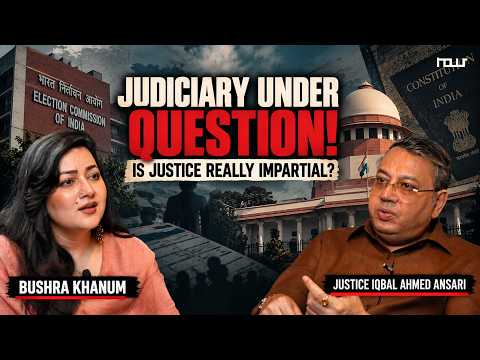
How independent is the judiciary in India today? And what happens when citizens begin to lose confidence in the institutions meant to protect their rights?
 2:44:36
In this conversation, Dr. Harish S. Wankhede joins Ali Javed to examine the political and cultural legacy of Dr. B.R. Ambedkar and the evolution of the Dalit movement. They discuss how Ambedkar imagined Dalits as political subjects at a time when they were denied even basic human dignity, and how…
Discussion
0Readers only · Comments are reviewed by the desk before they appear
The journalism is free for everyone — create a free account to join the discussion.