

 5:18
5:18Video· Nous Clips
Did Ali Khamenei Bridge the Shia-Sunni Divide? nous Clips
This is an excerpt from a longer conversation.
Iran is witnessing a funeral procession of historic proportions—an event that many believe has no parallel in modern history. In this special conversation, senior journalist Bushra Khanum speaks with Akif Zaidi, an Islamic scholar and Indian researcher based in Iran, to understand the significanc…
Companion article
The funeral procession that unfolded across Iran this week was, in the words of Nous host Bushra Khanam Fahad, unlike anything modern history has recorded — and unlikely, she said, to be repeated. Ayatollah Ali Khamenei, Iran's Supreme Leader, was being mourned as a martyr following the recent war between Iran, the United States and Israel, with Fahad estimating that Iran could end up hosting somewhere between twenty-five and thirty million people over the course of the mourning period. International delegations from more than a hundred countries attended, and portions of the Quran were recited as part of the formal proceedings — a use of scripture in diplomacy, Fahad said, that she had never before witnessed.
To make sense of the moment, Fahad turned to a guest identified on the programme as Aqib, an Islamic scholar and analyst of Western affairs who was reporting from inside Iran, present in Tehran for the funeral prayers and procession before travelling on to Qom, from where the cortege was expected to continue to the shrines of Najaf and Karbala in Iraq and, eventually, to burial in Mashhad.
Aqib told Fahad he did not regard himself simply as an observer of the funeral but as a participant in what he described as a shared mission of mourning. He said he had spent two days near Tehran's Musalla, where the bodies honoured in the procession had been laid, and described crowds moving through in numbers he put at several crore over that period.
Travelling back toward Qom before dawn, he said, he found many kilometres of traffic backed up on the opposite carriageway — Iranians from across the country driving through the night, at their own expense, to reach Tehran in time for the ceremonies. He described strangers on motorbikes searching the roadside crowds for visitors from other cities to host in their homes, and roadside kitchens feeding mourners throughout the event — evidence, he argued, that the mourning was a genuinely public undertaking rather than one simply staged by the state, even though government support for it was, in his words, self-evident.
Two colours dominated the visuals from the procession, Aqib said: black, worn as mourning, and red, carried on banners bearing the phrase "Saratil Hussain" — a reference to avenging the killers of Imam Hussain, the central figure of Shia mourning ritual associated with the Battle of Karbala. He described the demand for retribution voiced at the funeral as, at root, a demand for justice rather than vengeance for its own sake — an accumulated inheritance, in his telling, of centuries of Karbala's teachings resurfacing whenever a community needs them.
The campaign built around the funeral carried an English-language slogan, "We must rise," represented by the symbol of a clenched left fist. Aqib explained the symbolism: Khamenei had lost the use of his right hand after an assassination attempt in 1981 and learned to write and work with his left hand afterward, and when his body was recovered from rubble it was found with that same hand clenched — a detail the campaign has adopted as an emblem of resolve rather than defeat.
Fahad asked whether the funeral, drawing delegations from avowedly Sunni states and even the Taliban, had done something the region's leaders had long resisted: narrow the Shia-Sunni divide. Aqib argued that the divide among ordinary people had always been thinner than the divide among rulers, who he said feared less a doctrinal dispute than the political example set by Iran's 1979 revolution — dignity, justice and independence from foreign military bases — an example that threatened regimes built on suppressing precisely those demands. He said he expected further change over the coming year or two, describing it as "mostly for the better."
Both Fahad and Aqib drew a contrast with Ayatollah Khomeini's funeral in 1989, which followed a natural death rather than what was being described here as martyrdom in wartime. Aqib argued that the manner of Khamenei's death, in the midst of a war Iran was widely seen to have won, had generated a different order of public response than Khomeini's passing did — intensified, he said, by a media environment in which the funeral was being followed live and in high definition from petrol stations in America to households in Australia.
He noted that Khamenei's successor as Supreme Leader would face particular scrutiny given his family relationship to his predecessor, even though succession in Iran's system is not formally hereditary.
5:18This is an excerpt from a longer conversation.
 8:07
8:07This is an excerpt from a longer conversation.
8:08This is an excerpt from a longer conversation.
 56:39
56:39In the first episode of Emerging Perspectives, Sania Ismailee joins Wardah Beg for a conversation about the philosophical questions that lie beneath India’s debate on the Uniform Civil Code. For eight years, through her PhD research, Sania examined the UCC through the questions of secularism and …
 1:13:08
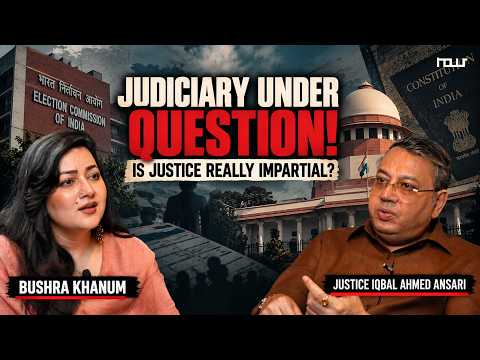
How independent is the judiciary in India today? And what happens when citizens begin to lose confidence in the institutions meant to protect their rights?
 2:44:36
In this conversation, Dr. Harish S. Wankhede joins Ali Javed to examine the political and cultural legacy of Dr. B.R. Ambedkar and the evolution of the Dalit movement. They discuss how Ambedkar imagined Dalits as political subjects at a time when they were denied even basic human dignity, and how…
Discussion
0Readers only · Comments are reviewed by the desk before they appear
The journalism is free for everyone — create a free account to join the discussion.