

 5:18
5:18Video· Nous Clips
Did Ali Khamenei Bridge the Shia-Sunni Divide? nous Clips
This is an excerpt from a longer conversation.
Iran is witnessing a funeral procession of historic proportions—an event that many believe has no parallel in modern history. In this special conversation, senior journalist Bushra Khanum speaks with Akif Zaidi, an Islamic scholar and Indian researcher based in Iran, to understand the significanc…
History is currently being written in Iran. Dates are being recorded. We are witnessing a procession, a funeral that perhaps no one has seen before in modern history, and who knows if they will ever see again. International delegations are arriving, and verses from the Quran are being recited with such reverence. Where have we seen this? Where have we seen such a direct role of the Quran in diplomacy? Iran is not ready to forget those 168 girls even for a second. I wish someone could do the same for the 20,000 children in Gaza. Here in Iran, whether it's the leadership or the common people, what has happened in Gaza is extremely painful for them. Do you think their martyrdom has bridged the ever-present divide between Shia and Sunni? That's what we'll see. We'll see the demands for revenge that are currently being made. This demand for revenge is, in reality, a demand for justice. Through this procession, people are also connecting emotionally with Iran, realizing that if a leader is like this, this is his last farewell. At NOW, we use data and ground realities to bring you stories that are often suppressed or misrepresented. We are an independent platform, meaning we have no corporate backing. Our real strength lies in you. If you want to continue to see such true and important stories, please share our videos as widely as possible. Subscribe to the channel, and if possible, support us through the QR code on the screen so we can continue to bring you stories and continue our work. You are watching Aadab News Network. I am Bushra Khanum Fahad with you. History is currently being written in Iran. Dates are being recorded. I'm witnessing a procession, a funeral like no one has ever seen before in modern history, and I don't know if anyone will ever see it again. I'm watching people from all over the world gather there. Muslims, non-Muslims, Shiites, and non-Shia. International media and delegates from around the world are present. It's estimated that Iran will host, and continues to host, approximately 25 million to 30 million people during this time. At the time I'm recording this program, the funeral prayers for Martyr Ayatollah Ali Khamenei have already been held. The procession in Tehran has also concluded. Now, this caravan is headed to Qom, then Najaf, Karbala, where the funeral of Maula Ali is celebrated, and Imam Hussein is celebrated, and then Mashhad, where the funeral prayers for Martyr Ayatollah Ali Khamenei will be held. But this is just one program I've presented to you. What is the significance of all this? How is the world viewing it? A leader who had a unique significance when he was alive. The world viewed him differently. Since his martyrdom, his status has risen so much higher. People are returning from Iran, or those who are still present, who are at a loss for words to express the emotions they are feeling right now. People are crying. People are beating their chests. You could even call it mourning. There are cries of Allahu Akbar. Imam Hussein will obviously be remembered there. Or Hussein's, or Ali's, slogans are being raised there. And only one name is on everyone's lips: Martyr Ayatollah Ali Khamenei. And the sacrifices he made, the state he found Iran in, and the place he brought it to. Has he left a legacy? All of this is being discussed today. It feels as if the martyr Ayatollah Ali Khamenei has passed away and come back to life. My emotions are also overflowing. I feel a sense of regret and remorse that I couldn't go to Iran, and it was my deepest desire to go there and record it with my own eyes and bear witness to it. Nevertheless, I'm trying to cover it as much as I can and bring you all the important things you need to know. That's why I've invited a special guest today. I'm joined by Aki Zadi Sahib, an Islamic scholar and expert on Western affairs. He's currently in Qom. You've seen him before on NOW and in my program, and I felt there couldn't be a better guest than him because he's a witness to what's happening there. He'll tell you how he feels as he witnesses this historical scene. And besides, how are they viewing the world that has changed after this war and this final funeral procession? Mr. Aqib, I welcome you very much to the Now Network. Welcome to the Now Network. Thank you for inviting me to your service, and to all your viewers, I offer my salam and respect. Yes, Mr. Aqib, thank you for being here at a time when this is a completely different occasion for you, and you are in Qom. I'm talking to you. The funeral procession may arrive shortly after that, and you were in Tehran, and now you're in Qom. My first question to you is, how are you viewing this entire procession, this entire funeral? How is Iran viewing it, and how has Iran changed since then? And how are you viewing the people who are arriving there and recording their real-time accounts? Look, it's obvious that discussing this topic requires a lot of time, and this history is being compiled these days. History is being written; it will probably take years to understand and analyze it, and future generations will study these dimensions. I'm here not just as a witness, not just an observer, but as a participant, one who considers himself a partner in this mourning, and along with the mourning, I also consider myself a part of that human and universal mission, the mission that Martyr Ayatollah Khamenei and his millions of followers have carried forward. So, what I'm seeing here, what I'm feeling, it's obvious that it's a history that's hard to describe. People say it's a history. People say our lives have changed. We felt such emotions. We had no idea that such emotions existed within us. I was in Tehran for two days yesterday. Where the funeral processions were held in the mosque. And you and your viewers must have seen how millions, or perhaps even a few crores, of people came and went through the mosque over the course of two days. I was there for a considerable period of time and saw closely the emotions of the people. And I want to emphasize that it's not just about emotions. Many of us have the misconception that where emotions are present, reason ceases to function. This is not the case. When emotions go beyond limits, reason ceases to function. But emotions and reason usually work together. So, I also saw the courage, determination, and resolve of the people there, which, along with the emotions, were at a peak. I will shed some light on that later. Right now, the program is going on in the streets of Tehran. And sometime tonight or tomorrow morning, these funeral processions will be brought to Qom, where I have now arrived. They will be brought there. One day, this program will be held again in Qom, and a large number of people will attend. This is estimated. The entire city is currently preparing itself to deal with this event and participate. And people have come from many other cities, and indeed from many countries, especially from India, spending their own money to welcome them. There's a visible influx and preparation everywhere in Qom. Then, as you mentioned, Iraq, which is itself very significant, is the fact that this funeral is going to another country. It turns out that the government spokesperson here also said that there were requests from several countries, but they could only accommodate one country's request. Where does it happen that the head of a political structure in one country insists and pressures people from another country to carry a funeral? Where does this happen? So we're seeing this happen in Iraq, and there's been an eight-year war between Iraq and Iran. Millions of people were martyred or killed on both sides. This is the situation that's evident in this war. The people there are welcoming the government. Iraq, which still sells oil, still has its oil money going to the US. From there, it gives a little to Iraq. Iraq is doing this right now. This is a very important and significant aspect. People from so many countries have come here. The official delegations that have come here now include representatives from over 100 countries. But some of the most prominent names who are invited first haven't even been invited. No European country has even been invited. This is a new world. This is a new approach. What new era is the world entering? These are signs of all of that. So many trends are at play. There are many aspects to this. It's not just people being sad, but the role they play in organizing it. I was in Tehran yesterday and the day before yesterday. I was walking near the mosque. A young man came by on a motorcycle and called out to me. He put his hand on my shoulder. He said, "Are you from Tehran?" I said, "No, I'm from another city." He said, "Come to my house. Come to my house." And I saw several young men walking and riding bikes like this. They were looking for someone who had come from another city and wanted to take them to their homes so they could host them and serve them. So this support, or the way food was being distributed, the langars set up on the streets surrounding this entire event, means it's definitely state support. Obviously, it was the head of state, but this isn't a state-sponsored or government-sponsored event; it's not that kind of event; they're basically trying to limit participation. People are going at their own expense. When I was returning last night, it was almost early this morning. The azaan was about to begin. I was returning from Tehran to Qom. The road I was on was a highway. There were very few vehicles there. But as I approached Qom, I saw a highway and an expressway. On the other side, there was a traffic jam stretching for several kilometers. These were people from different parts of the country, passing by Qom, but also from different parts of the country, traveling to Tehran to attend the funeral there today, taking their time and spending their own money. This public engagement means the public is mourning. When someone dies in a family, the family finds themselves in a different state, and the others who come to attend are in a different state. Everyone in Iran understands that this death has happened in our home. So, this is a matter that should be discussed for as many days as possible, from as many different perspectives as possible, whether it's in the light of faith, emotions, strategic implications, its connection to the war, and the world order. It's so relevant that it will truly be considered for years to come. It would be appropriate to discuss it not only today, in its current dimensions (these are the dimensions of Tadween and Tashak), but also since the war began. Anyway, time is limited. Let's discuss some aspects in detail. Of course. Another thing that's been on my mind, and probably on many others 'minds, sir, is that a country that has been under sanctions for 40 years has been put in a cage, as if it were cut off from the rest of the world. It prepared itself, and it prepared itself so brilliantly that it presented the world with a model of how such asymmetric wars can not only be fought, but how the world's most powerful power, America, and its stooge Israel, can be brought to their knees. Perhaps America and Israel have never felt more remorse for waging war with any country than they have with Iran. First, let's look at the feat Iran accomplished in 40 days. And I'd say, even if we consider the history of the past 100-200 years, Muslims have probably never witnessed such a significant victory from the Muslim world. Perhaps they haven't witnessed it at all. I can say this with certainty, and you will confirm it. But my question related to this is, during this same war, when it still seems that exchanges are taking place between America, Israel, and Iran, Israel seems capable of anything at any time, and it's so bewildered by the way it's organized, not only the procession itself, but also the historic manner in which it's organized, the hosting of delegates from abroad; delegates and people from over 100 countries are being hosted there. Free metros are being provided, running 24 hours a day. Food, water, and accommodation are provided. So, this is also an example that Iran is setting before the world: on one hand, Donald Trump is saying that people there are dying of hunger and thirst, so we're giving them money. And on the other hand, Iran is saying that we're feeding people from all over the world here, hosting them. So, does this also hold a significant message for the world? Through this entire program, Iran—and when I say "Iran," I should make it clear that I'm not just referring to the government here—is the way the entire society, the government, and the people are organizing this program together. The way they've collaborated at various levels. You'll remember when the war began, in March, news started coming from Iran that there were no food shortages. In fact, prices of some commodities had fallen. At that time, it was reported that the public played a key role in this: despite knowing the war was ongoing, they deliberately refrained from panic buying or holding, knowing they had to cooperate. So, there's a friendly and cooperative relationship between the government and the public. Yes, there are occasional grudges and complaints, but they know when to cooperate. This message is being sent to the world on behalf of the entire society. And if we talk about that message, Mura Sahiba, look, when you saw the visuals of the procession, or the funeral procession that passed through the streets for several kilometers today, on trucks, etc., two colors were visible. First, we saw that black was dominant, because there was grief, sorrow, and mourning, so black is the color. Second, you must have noticed that you saw a lot of red in all the visuals. This red color, its significance is red. In the culture and tradition of Karbala, this red color symbolizes the demand for revenge, and often on those red flags is written the phrase, "Ya Saratil Hussain"—a slogan demanding revenge against the killers of Imam Hussain. This society has been in this state ever since the war began, and now, this week, we are witnessing its climax and peak. The treasure of Karbala's teachings has been accumulating within it for centuries. Level after level, generation after generation, these are the things that, when needed, emerge and reveal how significant a role can be played. Whether it's an individual like Martyr Ayatollah Khamenei or an entire society that is awakened and active in this moment. You may have seen the slogan here in this dimension, your viewers may have noticed that the slogan given right now is translated into English: "We must rise, we must rise." And if this is called the campaign theme, using such words gives it a commercial feel, which is not the case at all. But to explain it, the campaign theme is "We must rise," and its logo or symbol is this closed fist. This closed fist, or this, in reality, this closed fist, is a memory that truly burns the memory of the martyred leader himself, who was attacked in 1980-81. At that time, for some reason, his right hand was not functional. Only his left hand was functional, and this closed fist of the left hand is his logo. He learned everything, including writing, with his left hand. When his body was found under the rubble, it was found in the shape of this closed fist, or in this state, which is a sign of a strong resolve to fight. So, this is how the entire program is being carried out. And in reality, if I may say this, through this, this program, which will last for a few days, there is grief in it, there is everything. But I also feel that there is a large number of Muslims and many non-Muslims around the world who support the Iranian community and its people, but in fact, there is a lot of support within the Ummah. Many cracks and old lines seem to be blurring because of this war, because of this pure bloodshed. So, it feels as if Imam Khamenei's followers, especially in Iran but also abroad, are gradually clenching their fists through these programs, and after these programs are over, we can expect them to carry forward their mission with even greater vigor. Does this mean there will be war? Yes, there will probably be. But war, whether it will be a military war or not, is not that important in itself. As needed, if there is a need, if there is another attack, there will be war. The point is that this fist is being clenched to advance the paradigm of Karbala, the mission of justice, the mission of humanity, which begins with Karbala, in a way, with the intention of carrying it forward in today's world. For example, many of your viewers may have noticed how a new world is being created. When have we seen Quranic verses being recited with such respect when international delegations are visiting? When have we seen the Quran play such a direct role in diplomacy? For us, we understand the Quran as simply reading it on a special day, or if someone dies, to earn a reward. But the Quran can bring about profound changes in the world. This society is demonstrating that yes, it can happen. And I was especially watching this, Mr. Aki, because you mentioned the verses, and my question was also related to this. It was very fascinating to see. And you see, not only Muslims, but I was also watching some American podcasters, who are not even Muslims, talk about it. And they were highlighting its significance, explaining which verses were recited when the Taliban arrived. When the Saudi delegation came, they were probably not even invited, or they were invited but their names were not included. There was no confirmation. Can you explain the reason behind this? What was recited when they came, and what kind of verses were recited when the Hamas delegation or Hezbollah delegation came from other countries? So, how well organized and thoughtfully done was this? The message from Iran, from the government there, and from all those associated with it, is forcing us to think deeply about how all these things were understood during this entire period. I mean, I was a little flustered in asking this question, because I too had many such questions in my mind. If you could shed some light on this: a society that resolves to develop itself on the principles of Islam—not just individual individuals, not just families, but the entire society—begins to experience a surge of strength and blessings, and God's promises begin to be fulfilled. This spirit of our Muslims is not only faith and belief, but now experience is showing that this is what happens. The decision was made by an overwhelming segment of Iranian society to support Imam Hunaini, that the revolution would come, and that they would continue the revolution and remain steadfast. You know the various difficulties you just mentioned—an attempt was made to lock this country in a cage, as it were. How many wars were imposed on it, how many different kinds of internal conflicts were created within it, etc., and so much propaganda was spread against this country in the world, and it still hasn't ended. But one thing, and one resolve, was made: to fight back. Look, these powers and strengths are visible as a result of confrontation. If you look at Iran, people have been surprised for the past few days. The way Iran defeated a military superpower like the United States in an open war is truly astonishing, as Iran's military budget is only 1%of America's. However, this open war wouldn't be considered guerrilla warfare. It was an open war. They defeated it using technology. And a large number of people in the world are shocked by this defeat. But Mushra Khan, this is me, or even some of us who have been following this deeply here, and some people around the world who have been following it for many years. The reality is that when this war started, we started declaring this on the very first day. Confidently living in a world of hopes and dreams, without knowing that this war would end with Iran's victory. I spoke with you during those days; you probably remember our conversation. I certainly remember it, and at that time, I wondered, Aaqib Sahib, how are you speaking with such confidence? You used to tell me that when this war is over and Iran wins, we'll discuss these aspects of it. And then I thought, perhaps, Aaqib Sahib was a bit overconfident, or maybe he was doing this to give people some reassurance. I had no idea that within a few months, we'd be talking and discussing that victory. So, I must say that from the very first day I started talking with you, you had this confidence within you. This confidence was based on a solid foundation. It wasn't just a miracle, which the world is calling Iran's victory. The truth is, it's not a miracle. It's the inevitable result of following God's principles. There's no miracle aspect to this. It's a cause and effect, and that's why the message Iran is currently sending to the world, to all oppressed communities around the world, but especially to Muslims, because Muslims have a greater receptivity to messages, is that the successes we've achieved, and I'll emphasize this further, are just the beginning. The successes the Iranians are telling us they've achieved, are achievable by everyone. The path lies in how society prepares itself to live according to God's teachings and principles. Make sacrifices, struggle, and strive. Then, as a result, strengths will emerge. It's not a miracle. Calling it a miracle is exaggeration, accumulation. There's a pattern, a cause and effect. And the door is open to every society, even to those of us in India who are facing so many challenges. Yes, absolutely. And they too, in some way, are Indians who are Muslims who are facing a lot of oppression and brutality. I often say that the way Iran has prepared itself, the way it has worked on itself while remaining silent, I think it has set an example for the Muslim world and for all those who are facing oppression and atrocities, and it has set a wonderful example from which a lot needs to be learned. Do you also feel, Aki Sahib, that when the Taliban or the Saudi delegation arrives there and they offer their last salute to the martyr Ayatollah Ali Khamenei, what message are they also trying to convey? Do you think his martyrdom has bridged the divide that has always existed between Shia and Sunni? It may not be as widespread among the public, but there's no hesitation in saying that among the heads of countries, we've seen a Shia-Sunni divide, which Ayatollah Ali Khamenei has consistently spoken about throughout his life, insisting that it must be eliminated. Do you think his martyrdom has bridged this divide as well? Was it a case of his participation in the Saudi and, in particular, Taliban delegations, which you might call hardline Sunnis or otherwise? Many have said that his martyrdom has significantly narrowed these gaps and fissures. Perhaps it's too early to say they've been completely eliminated. But there's no doubt that those fissures have narrowed considerably. It's no surprise that this sacrifice and this martyrdom are the result of this sacrifice and this martyrdom. Mura Sahiba, look, if this martyr, Imam Khamnai, were such a person that if he had lived 1400 years ago in Mecca or Medina, he would have been among the special companions, meaning he held that status. If he had lived during the time of Imam Ali, he would have been among his special companions. This is the kind of personality that is obvious, and the influence of his blood is evident, so it's no surprise that we are seeing these things. Regarding the Shia-Sunni rift, you are right in saying that there wasn't a natural rift among the people, and whatever rift existed was artificial. Meaning, it was created. I would also like to say that the rift that existed in the courts and among the rulers wasn't a Shia-Sunni rift either. They were, in fact, seeing their own interests, their power, and their positions as threatened, and to some extent they still do. Because the very thing that the Islamic Revolution in Iran represents is dangerous to them. What is that? Fundamentally, honor, dignity, freedom for the people, the pursuit of justice and fairness, and the emphasis on unity—all these things are dangerous to many rulers, rulers of Muslim countries, or their leaders. Because their rule has been established or maintained by suppressing these very things. Somewhere there is a king, somewhere there is a sultan, somewhere there is a military general, etc. So, it's obvious that these kinds of ideas have been very dangerous. So, actually, as you said, there was very little Shia-Sunni opposition among the people, and even among the rulers, the rhetoric and expressions of hostility towards Iran were not, in fact, their religious country. They only saw their power and authority in danger because of the message Iran was sending. Even if Iran didn't do anything, it wasn't necessary that Iran interfered first. Iran's very existence in their country was a thorn in their eyes, and it still is. Why? Because when the people of their country saw Iran, "Brother, Iran isn't enslaving itself, or licking their boots. Iran isn't doing this, then if it can progress and move forward, then why do we need so many American bases in our country to progress? Why do we need to be enslaved, to give up our oil wealth to progress? These questions arise. These questions arise even if Iran doesn't do anything. So, it's clear that this is a sign of trouble. And while this issue hasn't been completely resolved yet, it's close to being resolved. Because these rulers have realized that the military bases built by America weren't for their protection. Rather, they were built inside them to use their populations as human shields to protect those bases. But those bases couldn't protect themselves, and their false claims of protecting these people didn't come true either. So, the world is changing, and we're experiencing those changes now. It hasn't settled down yet. The situation hasn't settled down yet. It might take another year or two. But changes are happening very rapidly. And mostly for the better. What major differences do you see in the processions of Imam Khomeini and Ayatollah Ali Khamenei? One thing is that they died natural deaths. Ayatollah Ali Khamenei was martyred here, and his martyrdom came at a time when a country attacked, and that too, the most powerful country in the world. And after that, we saw how Iran won this war and achieved the success that the world is talking about today. But I wanted to ask you a question about three things in this. Imam Khomeini, then Ayatollah Ali Khamenei, the procession of both of them, and now the inheritance of Ayatollah Ali Khamenei's son. I wouldn't say inheritance because this is not done in Iran, but the fact that he has been chosen as the new Supreme Leader cannot be ignored, and people will try to see this in him. So, do you think there will be pressure on Mustafa Khamenei already? And what major differences do you see in the processions for these two, the way people are remembering them, or the funerals for them? Is it also that the world has changed so much since then? Now, people can see every minute detail of these events live in 4K on social media, and whatever message Iran wants to convey is reaching people's minds, even in their homes. Is this also a major difference? You asked, is this a difference? Obviously, all the things you mentioned are definitely true. For one, the media environment has changed. Iran's capacity and ability to organize such large events has also increased significantly. It has increased a lot. That kind of organization and discipline was not there when Imam Husseini passed away in 1989. All these things are important in themselves. But I feel that perhaps a major difference, which you also alluded to in your remarks, is that Imam Umaini's (may Allah have mercy on him) departure from this world was not a form of martyrdom. God did not grant him the kind of martyrdom that results in the effects of martyrdom, of blood shed in the path of God. Those effects were not evident in Iranian society in the same way. And so, his passing was a very obvious one: love, grief, and all these things. But now, after the death of Martyr Imam Khamenei, there is a feeling everywhere, not only in Iran but also abroad, that this sacrifice is changing the world, and that too in a relatively short period of time, it has begun to change and will continue to do so. This sense was not there after the martyrdom of Imam Khamenei in 1989. Rather, it wasn't after the death of Imam Khomeini. After his passing, he was certainly remembered with great reverence in the Islamic world. A tribute of respect was offered. Again, the Shia-Sunni divide had somewhat disappeared at that time. Because of this, all of those things existed, but after that, Iran's focus shifted to rebuilding itself after the war. Since the eight-year war had recently ended, imposed by the West and other Arab powers through Iraq (using Iraq), the focus was on internal strength and internal rebuilding. But right now, it feels as if everything hasn't been settled yet. That warlike situation still lingers. But in every corner of the world, from the US petrol pump to Australia, and so on, it seems that changes are coming at a rapid pace. And all these changes are, in some way, determined by the decisions of the Islamic Resistance Action. Whether it's the October 7th attack in the form of Toofan-ul-Ah, or other events, whether it's the martyrdom of Syed Hassan Nasullah, Mohammad Siwar, or Sawar, or the martyrdom of Abu Ubayda, these martyrdoms, and then the climax of Imam Khaminai. We thought there could be no further climax, but this burial and the tash are showing that no, climaxes and climaxes are coming one after another. So, these things are determining changes, and that too in every corner of the world. So this is a huge, world-changing event, that too in a relatively short timeframe. The qualities and qualities we are witnessing during the martyrdom of Imam Khamenei are not seen during the martyrdom of Imam Qumeini. This is an important point you are making. Do you also feel, Aki Sahib, that people first witnessed Iran's strength? Now, after that, the way Iran is offering its final salute to its Supreme Leader is also setting an example for the world: if a leader is someone who is a loving father to some, a brother to others, and a different form to others. Meaning, he has a unique personality, but people are viewing him differently: the way he spoke to children, the way he spoke to women, or when he was in full action mode as a leader. Different ways when he delivered speeches. People have seen him in all sorts of ways. As his final procession concludes, do you feel that through this procession, people are connecting emotionally with Iran, realizing that if a leader is like this, his farewell is like this, his last salute? I think that even if I leave aside the Western world and the entire Muslim world for a moment, the Western world is also watching. Perhaps even they have never seen such a final farewell before. Where, after so many months, people are mourning and crying like this, with each leader being honored with so much respect, and at the same time, they are also talking about revenge. While they are talking about revenge for this martyrdom, they are not forgetting their purpose. Yes, you are right that the leadership and life of the martyred leader have set a very high standard for other leaders. And this is a very good thing. Because the worst situations in the world arise where the public accepts that the leaders are inherently corrupt and will inevitably commit evil acts. When this becomes internalized, it becomes nearly impossible to stop and control the evildoers. And wherever these internalized norms are broken and challenged, to whatever extent possible, the personality of martyr Imam Kaminai challenges and breaks them throughout his life. This is extremely useful and beneficial. And this will remain one of his lasting contributions, and it is hoped that in every corner of the world, including India, we will learn lessons and benefit from this. The second thing I want to say in this regard is that Imam Khamenei's personality is exceptional and unique in its own way, and it certainly is, and it will take many years to fully understand its various facets. But we shouldn't take it all for granted. That is, we shouldn't think that this happened out of nowhere. No, it is the result of following the teachings of Islam. This doesn't mean that anyone can instantly become like him. No, but the path is the path. Whether viewed at the individual level or at the societal level. There are schools, teachings, principles, and principles that have evolved over centuries, and we see their results in our time. With a figure like Imam Khamenei, this path still exists. To the extent that any other society can advance it, the results and impacts will be the same. Yes, my last and important question for you is that I was noticing that the audacity, innocence, and simplicity of the three sons of martyr Ayatollah Ali Khamenei is deeply influencing the world. Firstly, his second son, Mustaba Khamenei, who is now the Supreme Leader, but I was reading about his three other sons, whom we saw at the funeral prayers, that they don't hold any such positions. Their father was a Supreme Leader, and it doesn't appear they took advantage of that. Looking at Ayatollah Ali Khamenei's house in Mashhad, it's surprising that such leaders still exist today. Now that he's martyred, he lived in a house so simple you can't even imagine, and perhaps his sons also live with the same simplicity. So, firstly, the question is, does each of these send a message to the world about what a leader should be like? A leader's role isn't like we see, where he's only interested in filling his own pockets and pursuing his own nepotism, as you mentioned. There was nothing like that. When he was first elected Supreme Leader, he was informed; before that, he had no idea. A video is currently going viral of him, showing him stunned. He was aware of the enormous responsibility that was falling upon him, and how well he fulfilled that responsibility, right up to his last breath. The world is witnessing that. Aqib Sahib, I was also asking another related question: there's a lot to learn from Iran. The world has a lot to learn. One is that the girls of Minap were murdered, the brutality with which bombs were dropped on them, those girls were murdered by America and Israel. It seems as if every Iranian is living the lives of those Minap girls. When you land at the airport, the first thing you'll see is pictures of those girls, right where the procession is. When you fly to Iran, there's that message on the plane. Look everywhere: Iran refuses to forget those 168 girls, even for a second. And it's telling this Epstein gang how precious and important our girls are to us. I wish someone could do the same for the 2,000, or thousands of, children in Gaza. Look, whether these girls are from Mina or Gaza, they're all our girls. The only difference is that in global politics, there's more scope for every country to speak up for its citizens and more easily demand revenge for them. The world's consciousness is ready to accept this. Here in Iran, whether it's the leadership or the common people, what happened in Gaza is extremely painful for them. It's still the same today. Just as it is for Muslims in India and for many non-Muslims. So, that incident hasn't been forgotten. The story is progressing step by step. Until Palestine is completely liberated, and that's what we'll see. We'll see that the demand for revenge that's happening now is, in reality, a demand for justice, and justice demands that the perpetrators be punished. They will get what they deserve in the Hereafter, but we're not demanding that they get it in the Hereafter. Whether we demand it or not, that's God's law. There's a severe punishment for these people in the Hereafter. They should be punished in this world. Their punishment should begin here. And whether they're responsible here, they may be. Today I was watching a statement made by the Chief Justice of Iran. The Chief Justice of Iran focused on the fact that everyone around the funeral demanded justice. Revenge. This is a very good step. Through this, justice and fairness have been established in the world. When such grave criminals are punished, and I hope that they are brought to court, tried with dignity and peace, then whatever punishment they deserve, and we can predict the punishment they deserve, they will receive it. Not if they suddenly die in an explosion or something similar. That probably wouldn't be as satisfying. It wouldn't be as beneficial for the world. Because if they are punished for the grave crimes they committed, especially in Palestine, only then will the world begin to recover and move towards balance. Otherwise, if there are no consequences, these executioners' lives are coming to an end anyway. The next executioner will come and continue this cycle. Absolutely. My last question to you is, you see the current government, and especially the RSS and BJP, and I'll talk about the kind of oppression and atrocities Muslims are facing right now. They don't understand what the solution is. From the decline in representation to lynchings, to the way their rights are being violated, all of this is before us. My question to you, and briefly because time is running out, sir, is: does the way Iran won, with all its preparations, hold any message for Muslims, or even for the Muslims of India? Do you see it that way? It holds a lesson and a message for oppressed communities, to whom this victory is screaming out loud. The question is, which oppressed nations will be able to listen, understand, and learn from this? That is the question. And if I were to point out some key points or elements of that message, as time is short, some of its key aspects are that fundamentally, we must strengthen ourselves. We must empower ourselves. We cannot depend on anyone else. When Iran has recently faced the challenge, there was a Cold War. There was the USSR. Iran did not even get close to it. It kept its distance. Just a few days ago, I was watching an interview with a Russian security official. He spoke from his perspective. He said that Iran made a grave mistake. We offered Iran a comprehensive defense pact, which included a nuclear umbrella. But Iran, for some unknown reason, rejected our offer. They don't know why they rejected it. I know, I know why Iran rejected this unbelievable offer. That's because Iran operates on the belief that work can only be done under God's umbrella, and then we must stand on our own feet. So and so party will come and save us, so and so party will save us, so and so, whatever you do separately, we will support others. Yes, we have to maintain friendly relations with everyone. I'm talking about India, but what about other parts of the world, such and such, who are good people, such and such secular people. We have had such a bitter experience over 70-80 years that we should understand that based on that experience, and without Iran's victory right now, when we stand on our own feet, following Islamic principles, then a series of successes will begin. What does it mean to stand on our own feet? Obviously, every country and every nation has different demands. What is practical in Iran is not the same in India. But the principles are consistent. The Quran is the same everywhere. The same Sunnah prevails everywhere. Its principles are found within it. If we follow it, we will achieve success. This is Iran's fundamental message, which is true for all of us, and the same message is found in India as well. Yes, absolutely. For now, I wanted to focus my podcast on this procession and the questions surrounding it, so I'll stop here, but many questions still linger in my mind. After this victory, after this procession, and after the MoU signed, how will things change and how will things proceed? There are many questions that remain to be discussed, and Aki Sahib will be revisited another day. But for now, Aki Sahib, thank you very much for giving your time to the N House Network and for being a part of this podcast. Thank you very much for inviting me. Thank you very much.
Companion article
Bushra Khanum Fahad opens this Aadab News Network conversation by describing what she calls a funeral like no other in modern history. By the time of recording, the funeral prayers for Ayatollah Ali Khamenei, whom she and her guest call a martyr, had been held and the procession in Tehran had concluded. The caravan was to travel on to Qom, then to the Iraqi shrine cities of Najaf and Karbala, and finally to Mashhad, where the last prayers would be held. Fahad cites an estimate that Iran would host some 25 to 30 million people over this period.
Her guest, an Islamic scholar and commentator on Western affairs who is introduced by first name as Aqib and was speaking from Qom, says he came as a participant rather than an observer. He spent two days in Tehran, where by his account millions of people, possibly tens of millions, filed through the mosque where the mourning was held. Emotion, he argues, does not cancel reason: alongside the grief he saw courage, determination and resolve.
What struck him most was how the event was organised. In Tehran, he says, young men on motorcycles went looking for visitors from other cities to take home and host. Food was distributed from stalls along the streets. Returning to Qom before dawn, he saw a traffic jam stretching for kilometres on the opposite carriageway, of people driving to Tehran at their own expense. It was state-supported, he says, but not a state-sponsored event, and he describes it as a family mourning together. Fahad adds that free metro services were running around the clock and that food, water and accommodation were provided for visitors.
Aqib points to the diplomatic dimension. He says delegations from more than 100 countries had come, that no European country had been invited, and that the procession was travelling on to Iraq, a country that fought an eight-year war with Iran and where, he says, people are welcoming it. In his view these are signs of a new world and a new approach. Fahad asks about the Quran recitations that accompanied arriving delegations, noting that even non-Muslim commentators had been dissecting which verses were chosen for whom. Aqib does not go through the choices, but says the scene shows the Quran playing a direct role in diplomacy, and that a society organised on Islamic principles can experience a surge of strength.
He reads the colours and slogans of the procession closely. Black, he says, is for grief; red, in the tradition of Karbala, stands for a demand for revenge, and red flags carry the cry demanding vengeance for the killers of Imam Hussain. The campaign slogan, "We must rise", is paired with a closed fist. Aqib says the fist recalls the late leader, whose right hand was disabled in an attack in 1980 or 1981, leaving his left hand functional, and whose body, he says, was found under the rubble in the shape of a closed fist, a sign of resolve. The revenge being demanded, he insists, is in reality a demand for justice, and he hopes the perpetrators are eventually brought to court and tried. He cites a statement by Iran's Chief Justice that mourners at the funeral were demanding justice.
Both speakers treat Iran's confrontation with the United States and Israel as a victory, and the article should be clear that this is their reading rather than an independent assessment. Fahad calls it an achievement in the space of 40 days by a country that had been under sanctions for 40 years. Aqib says Iran defeated a military superpower in an open war on a military budget of about 1 per cent of America's, using technology, and that he had said so confidently from the first day of the war.
He rejects the word "miracle". What happened, he argues, follows cause and effect: a society that prepares itself and follows God's principles, makes sacrifices and struggles, will see results. He describes cooperation between government and public, recalling that when the war began in March there were no food shortages and some prices fell because people refrained from panic buying and hoarding. The message for other oppressed communities, he says, is that the door is open to them too.
Fahad asks whether the presence of Taliban and Saudi delegations suggests the late leader's death has bridged the Shia-Sunni divide, something he spoke about throughout his life. Aqib says it is too early to say the divide is gone but that the fissures have narrowed considerably. In his analysis the divide was never natural among ordinary people. Where it existed among rulers, he says, it reflected their fear that their power was threatened by what the Islamic Revolution represents: dignity, freedom, justice and unity. Iran's existence, he argues, raises uncomfortable questions in other countries about why they need American bases, and he claims that those bases were built to use local populations as human shields rather than to protect them.
Comparing this funeral with Ayatollah Khomeini's in 1989, Aqib names two differences. The media environment has changed, and Iran's capacity for organising large events has grown. More fundamentally, he says, Khomeini's passing was not a martyrdom, and after 1989 Iran's attention turned to rebuilding after the war. The current moment, he says, feels different: as if the sacrifice is changing the world in a short time, and as if the war-like situation has not yet settled. He links it to a chain of events he calls the decisions of the Islamic Resistance, from 7 October and the deaths of Hassan Nasrallah and others.
Fahad raises the leader's simplicity and that of his family. She notes that his other sons do not hold official positions and that his house in Mashhad was modest, while one son is now the Supreme Leader. Aqib says a leader like this challenges the belief, which he calls the worst situation a society can accept, that leaders are inherently corrupt. But he warns against treating the late leader as an accident: it is the result of a path that can be followed by others, though not everyone can become like him.
Fahad says the girls of Minab, 168 of them, were killed by American and Israeli bombing, and that Iranians will not forget them for a second, adding that she wishes someone would do the same for the children of Gaza. Aqib says the girls of Minab and of Gaza are all "our girls", that what happened in Gaza is deeply painful to Iranians as it is to Muslims in India and many non-Muslims, and that the story moves step by step until Palestine is liberated.
Turning to India, Fahad asks what Iran's example holds for Muslims who face oppression and violence. Aqib says the core lesson is to strengthen oneself and not depend on others. He cites an interview with a Russian security official who said Iran had rejected an offer of a comprehensive defence pact including a nuclear umbrella, and says he knows why: Iran works on the belief that one acts under God's umbrella and stands on one's own feet. That does not mean cutting ties, he says, since friendly relations with everyone are needed, but it does mean that after 70 or 80 years of bitter experience, communities should not wait for some party to save them. Every country's demands differ, he says, but the Quran and the Sunnah are the same everywhere.
Fahad closes by saying that questions remain about how things will proceed after the victory, the procession and the memorandum of understanding, and says Aqib will be invited back.
 56:39
56:39In the first episode of Emerging Perspectives, Sania Ismailee joins Wardah Beg for a conversation about the philosophical questions that lie beneath India’s debate on the Uniform Civil Code. For eight years, through her PhD research, Sania examined the UCC through the questions of secularism and …
 1:13:08
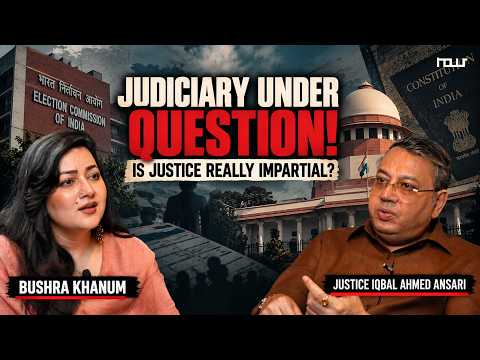
How independent is the judiciary in India today? And what happens when citizens begin to lose confidence in the institutions meant to protect their rights?
 2:44:36
In this conversation, Dr. Harish S. Wankhede joins Ali Javed to examine the political and cultural legacy of Dr. B.R. Ambedkar and the evolution of the Dalit movement. They discuss how Ambedkar imagined Dalits as political subjects at a time when they were denied even basic human dignity, and how…

Discussion
0Readers only · Comments are reviewed by the desk before they appear
The journalism is free for everyone — create a free account to join the discussion.