

 10:45
10:45Video· Nous Clips
Why Muslims Lack Political Agency in India? nous Clips
This is an excerpt from a longer conversation. Full Video: https://www.youtube.com/watch?v=cW9vNRyjL4o&t=4s&pp=ygUEbm91cw%3D%3D
In this episode of Nous, author and columnist Aakar Patel joins senior journalist Bushra Khanum for an incisive conversation on the Muslim question under Narendra Modi and the BJP. They examine the growing assault on the rights, security, and dignity of Muslims, the ideological and political logi…
Our greatest asset and the biggest liability for the RSS is the population of our minorities. The Jewish population in 1930s Germany was less than one percent. Do you consider it an exaggeration when people say that the Hindu Rashtra is already here, and it is just waiting to be declared? Here, you have 200 million Muslims. If you try to damage such a large part of your nation, the nation itself will be damaged. How different do you consider this movement to be from previous ones? We saw the farmers 'protest. We saw the CAA-NRC movement. For the BJP, and especially for Modi, Hindutva is not just a means to an end; they believe in it from the heart and mind. After all, how long will Muslims keep waiting like this, given that they have always been taken for granted? These people cannot go there and say that they run bulldozers over Muslim shops, so they take up someone else's shield—that of Gandhi and Nehru. When we talk about Muslim representation, Aakar, don't you think that not just the BJP, but the opposition parties as well, fail miserably at this? The patience that Muslims have shown after 2014, despite so much oppression, is perhaps something no other community in any other country could have shown. In the current politics of Hindutva that we are witnessing, who do you see benefiting the most? Narendra Modi, the RSS, or the BJP as a party? When I was a full-time journalist 20 years ago, RSS and communalism were considered negative terms in most newspapers. If Modi's history were to be written, what would it be like? What would its chapters be? Successful at communalism, a failure at development. At' Now, 'we use data and ground realities to bring you stories that are often suppressed or misrepresented. We are an independent platform. Meaning, we do not have any kind of corporate backing. You are our real strength. If you want such truthful and essential stories to keep reaching you, please share our videos as much as possible. Subscribe to the channel, and if it is possible for you, support us via the QR code on the screen so that we can continue to bring you stories and keep working. Greetings, you are watching News Network. I am your host, Bushra Khanam Fahad. The question arising is: after the Jantar Mantar protests, is Narendra Modi going through his weakest phase? Is the RSS looking for an alternative to Narendra Modi? Are we seeing the rise of Rahul Gandhi's politics now? And will we truly see a new Prime Minister before 2029, that is, before the next general election? Is this the weakest moment for the entire Hindutva politics that we have seen flourish over the last 12 years? Has fear completely vanished from the people, and is it the same for everyone? Or does it mean something entirely different for Muslims, Dalits, Adivasis, and Christians? Today, we will talk about all these things. What kind of leader has Modi been during his 25 years as Chief Minister and Prime Minister? How did he present and sell the Gujarat model to the country and fool everyone? We are going to talk in detail today about all this, revolving around RSS politics and Hindutva politics. With me is Aakar Patel, who has nearly 30 years of experience in journalism. He has written many books. Currently serving as Chair of Amnesty International too. Aakar, welcome to Now Network. Thank you so much for your time. Thank you. My first question to you, Aakar, is that you also observed the farmers' protests very closely. I was looking at all your social media. And do you also feel what is being said, that we are in very hopeful times now? Has the fear left people's hearts? Is this Modi's weakest stage, and is the RSS looking for an alternative to him? Do you feel the same way? How do you see this era of Modi at the moment, especially this year? I will take your last question first; I do not believe the RSS is looking for anyone to replace Modi. The reason for this is that Modi's power does not come from the RSS. It comes from his own popularity, and he is perhaps the only BJP leader who is bigger than the RSS. If you look at it, he is as old as Mohan Bhagwat. But in the RSS, for the formal training you have to undergo, you have to stay at your senior's house. So, Modi's senior, Madhukar Rao Bhagwat, was Mohan Bhagwat's father. So he has known this RSS leader for many decades, and I believe the RSS will show its hand after Modi, not while he is still there. Regarding your first question, I must agree that this is Modi’s weakest point, and not because he hasn't faced difficulties in the past; he certainly has. But as we saw, his seat count dropped in 2024. The BJP lost its majority, yet his image remained intact. That was true during his 12 years in Gujarat, and his 12 years here in Delhi until now. The words the youngsters and Gen Z have used so openly for Modi—we are hearing these words for the first time. This level of bitterness, this contempt for him, is something we hadn't seen before. So, I believe his biggest challenge is this kind of opposition—one that is energetic, wide-based, and ready to take to the streets. He hasn't seen this before, and that is why, with what happened in court today, the government asked the Supreme Court to drop the FIRs filed when the public and others marched toward Parliament. And I don't think any other group, party, or generation could have forced the government into such a humiliating, public retreat. And that is why I believe you are right, and this is his weakest point. Yes, but my next question to you is, how exactly did Modi reach this point? Look, the institutions are under his control. The entire media, what is called the mainstream media, is under his control. From social media to everywhere else, he is crafting his own narrative. Avatar of Vishnu, 56-inch chest, Vishwaguru, non-biological—he has given himself every title imaginable. But now, coming to July 2026, the kind of language that has been used for him...I don't think such language has ever been used for any prime minister in independent India, especially one who kept comparing himself to Nehru and Indira Gandhi, and who used every institution primarily to build his own image. And these are children who come from middle-class, upper-middle-class Hindu communities, whose parents are basically considered traditional BJP voters, so why do you think these circumstances have arisen so suddenly, and do you see this as momentary or long-term? This is not momentary. It will persist, and there are two reasons for this. First, there is a line by Emerson that every hero becomes a bore at last; when you are on the screen for so many years. A time will come when people will feel that he is repeating the same things over and over. So, one reason is that it is time for them to be bored. Secondly, being in the position of Prime Minister for 12 years is a very long time. Look at 12 years, look at any other leader. Hitler became Chancellor of Germany in '33, and after 12 years, everything he did—his deeds, his misdeeds, his atrocities—had all already happened. By then, he had built the German highways known as the Autobahn, he waged war, conquered France, and launched an attack on Russia. He lost the war and died. 12 years is a very long time. If we look at Nehru, from '47, if we add 12 years, we reach 1960. So, all the institutions we associate with Nehru—whether they are scientific, cultural, or educational institutions that still stand today—they had all been built by then. So, what have you done in 12 years? What have you shown? It is in front of us, and the difficulty is that after 12 years, you cannot hide. Whatever you had to do, you had to do it during this period. Especially in those two Lok Sabhas where you had a full majority, where you had 303 MPs, where you had 282 MPs in 2014. So, to say in the 13th year that I will do something further. You are asking for patience, but this will not happen, and I also believe that their actions have brought us to a point where the youth are standing on the road feeling they have no future. My understanding here is that the protest did not just happen for NEET. It happened for their future. They believe that they have no future today. And if this sentiment persists in such a large country among so many people, then the PM will certainly face difficulties, and they have already arrived. This will stay with them; it is not a temporary phase. Okay. How different do you consider this movement to be from the previous ones? We have seen the farmers 'movement. We have seen the CAA-NRC movement. I am referring to all those major movements where the government had to bow down. But for the first time, government accountability was established and Dharmendra Pradhan resigned. Do you believe that this Hindu-Muslim politics, this communal hatred spread over the last 12 years, and the damage done to the country's social fabric...Do you see it being repaired after this movement, or do you view them in two separate categories, that these things are different and these issues are separate? No, see, in South Asia, extremism is not in the water here; so if the government stops imposing things on you, normalcy will return. It is true that what has happened to the institutions, the Supreme Court, and the media in these 12 years will persist to some extent. But our natural state—the natural state of Bangladesh, Pakistan, India, Lanka, and Nepal—is not an extremist state. And I believe that once they are gone—by them, I mean the BJP—normalcy will return. As for your first question, there are some things common in these three movements and some things that are different. The common thing is that we see that in India, whenever people come out onto the streets in large numbers, whether it was the Muslim women who showed leadership in the CAA-NRC...protests, or the Sikhs who were at the forefront of the farmers' protest, or agencies; when you mobilize and stand in large numbers, the government has to retreat. So today we don't have NRC because what those Muslim women did in 2019-2020 was successful. In exactly the same way, Modi had to roll back the farm laws. The difference here is that this is the first time the government has accepted the principle of accountability. By removing Dharmendra Pradhan, the government has told us all and admitted itself that when I make a mistake, I have to face the consequences. And when you face the consequences, you will remember it in the future, so perhaps you won't repeat that mistake again. The principle of accountability is more than just punishing someone. This cabinet is telling itself that we have made a mistake. We are whipping ourselves so that we remember not to repeat this mistake again. So, on the issue of accountability, Modi had apologized to the farmers on TV. And the NRC law was not even implemented later on. But this matter of accountability, Dharmendra Pradhan was no ordinary person. He had been a minister since 2014. And secondly, when Modi is a leader whom people consider a king, and the government wants to show us that it is a one-man show and ministers have no relevance here. Whose 56-inch chest is it? It's mine, not my ministers '. When you forcibly remove the cronies of such a king-like figure, it causes a blow. So this is a new thing, which the previous two major protests, the CAA and the farm laws, could not achieve. There was a retreat, but the principle of accountability is seen here for the first time. The fear that has vanished among people, for 12 whole years and even before that, Modi's entire politics has been a politics of fear. The politics of the BJP and RSS has also been a politics of fear. To silence people through fear. To put them in jails. So that all their important questions take a backseat. So that there is no government accountability. We are seeing the state of democracy. We are seeing the state of all the institutions. How has this fear vanished? Akash ji, this question constantly comes to my mind, what happened suddenly that this fear has vanished? These are the ones whose parents must have constantly told them that Modi is the one, we are the subjects, and Modi ji is the king. As you rightly just mentioned, so is this sudden change, do you see it as sudden, or do you think it was brewing slowly and we saw it surface suddenly? And do you see this changing condition, do you see it changing for Muslims as well? Do you feel that the situation is changing for Muslims too? Because look, the government's agenda is still the same. From UCC to infiltrators, to NPR and their citizenship, bulldozer, lynching, all those issues are still exactly where they were. My understanding tells me that this is a sudden thing. This is a section of our society that neither the government understands, nor people of my age group understand. Do whatever you want. With this mindset, when they head out onto the streets. So many people—I do not believe this happened gradually. This has come upon us suddenly, and this is a generational shift. These people are not willing to wait for the government to fulfill its promises. They want change now, and this is a generational thing. Because here with us there is patience. Such poverty has existed in this country for centuries. We have not seen any revolution here. People have nothing to eat. But we do not see them on the streets. This generation is not ready to pause, not ready to stop. And for this, they have no patience. So this is one thing. Will the same thing happen with Muslims or our other minorities? I do not know. But as far as you said that their agenda is still ongoing. I believe it will continue, because we see that for the BJP, especially for Modi, Hindutva is not just a means to an end. They are not using it just to stay in power. They believe in it from their heart and mind. In the ideology of Hindutva, it says those who do not consider India their holy land are not Hindu, and that the word Hindu is linked to the Indus, so they are not Indian. In this framing of Savarkar from the 1920s, they believe—these people believe—that here, Christians and Muslims, even if you go to Ajmer Sharif, even if you go to your local neighborhood church, I will still assume that your loyalty is with Mecca, Jerusalem, or the Pope. Whether this is right or wrong, as long as it is in my mind, in my heart, my politics will stand on this very foundation. Look, no one says—even a BJP supporter—that everything is economically fine; no one will say that, even Surjit Bhalla won't say it, all their sycophants who were with them in the Economic Advisory Committee, not a single person will say that. But everyone is fully satisfied with this, the way the communal agenda has been implemented by Modi, his government, and BJP state governments since 2014, especially after 2015 when the first beef laws came, and in 2018 when the love jihad laws first appeared. They are fully satisfied with these things and because of this, I believe this will not go away. It will remain because it is in their hearts. We Then why does Mohan Bhagwat have to go to New York and say that Hindus who believe Muslims should not stay here are not Hindus? Was it a compulsion for him to say that there, or do you see any shift or change? No, there is no shift. See, there is an inferiority complex in many Indians, but especially in these people, they want validation from the West. That the Western countries should validate that India is a Vishwaguru. A country like ours. A democracy. A republic. Now, these people cannot go there and say that we run bulldozers on Muslims' shops. They won't say that we have kept Muslims excluded from the CAA. They won't say that we are conducting SIR here. We are attacking the Muslim voter rolls. Which is true, they are doing these things. But they take someone else's shield there, that of Gandhi and Nehru. These people praise Savarkar here. Let them go there and do it. They won't be able to because it is not a universal sentiment. They take the most beautiful aspects of Hinduism, like 'Sarva Dharma Sambhav' and 'Vasudhaiva Kutumbakam' and talk about them there; they don't practice them here, and this is just a facade of theirs. Because they are hypocrites, they have to go there and say something else. This is just for acceptability because they lack the confidence to go there and speak the truth that what we believe and what we want is not this, it is that. And they have shown it so clearly here that the world is not ready to believe it. You can go there and spout any nonsense, people have seen your deeds, because this is their 13th year. So, whether they are academics, media personnel, foreign correspondents, and foreign leaders of course; the diplomatic corps of any country in Delhi, Bengaluru, or Bombay is there to send reports back, not just to stamp visas. They send reports to their government about what is happening in India. And those reports are very clear that here they implement the CAA. Here they use bulldozers. You can go there and say anything about Vasudhaiva Kutumbakam. How will people believe it? But because you don't have the confidence to tell the truth. You are shameful. To some extent, you are ashamed that I cannot say these things here because this audience is different. For the Indians who were at Bhagwat's rally, it was fine, but maybe there was some media there too. Hmm. Why did Bhagwat speak in English for them there? He doesn't speak like that here. Here, he gives lectures on language. Exactly, that is because his message was not as much for the local groups or Indians there, but for the people of that country. Do you feel that the politics of Hindutva, the ideology of the RSS, is a failed ideology, because even after 100 years, if you have to go to foreign countries to justify it, you have to explain it, and even then, people stand outside and say, "No, these are Indian Nazis," and even after 100 years you have to keep telling people that we are not what you think we are. We are this instead, so don't you think it is a failed ideology? And do you think such voices are rising in India as well? In these 100 years, especially in the 13 years of Modi's era, have they been able to change people's minds to the point where we can say that this has taken root in their consciousness? Because the RSS has reached every household, there is no doubt about that. Have they also been able to change people's thinking? In one way, this ideology has failed, and in another, it has succeeded. If you look, until 2008, there was only one Hindu nation in the world, and that was Nepal. There were two things in Nepal's constitution that made it a Hindu nation. The first was that the executive power, the government, would be headed by a Kshatriya king, from the Kshatriya dynasties. That. The second was that in this king's court, there would be a chief priest, a Brahmin, who would tell the king how to govern properly. As it is written in our Smritis. A Kshatriya is a politician, that is their class, and those who impart knowledge belong to this class. So, these were the two things. But nowhere in the laws of Nepal was it stated that Shudras cannot read or write. Or that women cannot work or cannot read or write. These things are also written in our Smritis. But in the world of 2026, you will not be able to do this. So, that Hindu Rashtra was limited to this extent. Now look, Pakistan had the same difficulties. Iran is the only country in the Gulf that is a republic and the only country that is, in the true sense, a theocratic state. How? Because in no other community is there a vertical hierarchy where the Grand Ayatollah sits at the very top. Beneath them, there are junior Ayatollahs and so on and so forth. So, when the laws of your country originate from only one thing, Shia Twelver theology, then you can build it. The difficulty in Pakistan was that Pakistan's population, like India's, is a diverse population. Many people, the majority of people, are Sunni, but there are differences among Sunnis as well. They did not have a vertical structure like Iran's, with only one person at the very top. Like Khamenei is here. This is the reason why Pakistan, like Nepal, could not fully become a theocratic state or a faith-based state. You can go to Lahore, Karachi, Dhaka, or Peshawar and mention 420, 302, or 144, and people will know what these are, and they know this because their laws are exactly like ours, which have not changed in 150 years. The RSS's problem is that, looking at Nepal, once you come to power, how will you create a Hindu Rashtra? If you want to change an established nation, it can only be done through laws. What laws will you introduce on the basis of which this will become a Hindu Rashtra? One thing we could do, which Subramanian Swamy mentioned a few years ago, is to disenfranchise Muslims, that Muslims should not be allowed to vote here—something that is perhaps happening today on a smaller scale through the CAA. But Swamy wanted this to be absolute, that Muslims should not vote at all; perhaps then your Hindu Rashtra could be formed, but you see, our greatest asset and the RSS's greatest liability is our minority population. The Jewish population in 1930s Germany was less than 1 percent. Here you have 200 million Muslims. You would want to damage such a large part of your nation, the nation will be damaged. If you persecute only a few people, they will remain persecuted. This is not it. So this is part of the failure. This success is because a pure or perfect Hindu Rashtra cannot be created. The purpose is that I am spending all my time going after Muslims. Either in an exclusionary way. For the first time in India today, and it’s been a few years now, there is no Muslim in the Union cabinet. Out of India's 240 members, which were 303 before, and 282 before that, there isn't a single Muslim. Out of the approximately 95 BJP Rajya Sabha members, not a single one is Muslim. Among their 1,000 MLAs, there are none there either. So this is one thing, absolute exclusion, and the second is that I introduce policies or laws every day so that Muslims cannot live here, cannot eat what they want, cannot marry whoever they love. Um. This is what these people are engaged in and will continue to be, because this is the meaning of Hindu Rashtra—when you come into power, you bring in laws and policies based on which you remain engaged in persecution, so the success is here. Okay. Do you consider it an exaggeration when people say that a Hindu Rashtra is already here, but just awaits official declaration? And they give examples like what is happening with Dalits, Adivasis, or Christians, and on a massive scale, the dehumanization of Muslims, having turned them into a permanent enemy. Where their neighbor might believe, yes, they could be terrorists. These are that kind of people. They might run away with our daughters. They might do something like this to us. If there are over 100 speeches by Narendra Modi that are considered hate speeches. If hate becomes normalized in Parliament. If terms like 'infiltrators' are used in a Red Fort (Independence Day) speech and an open call is made, in a way, against Muslims, then do you think that when some experts say 'Hindu Rashtra is already there' and only the declaration remains, you consider it an exaggeration or do you think 'it's in the final stage'? There is no further final stage coming; what is here is exactly it. Whether persecution increases or decreases, what the BJP has done in the last 12 years is exactly what a Hindu Rashtra is. Right now, this...this is just a name. If I assume this is a Hindu Rashtra, that's fine; if I assume it's a great nation, an expansive nation, that is also true, that too. The definition of a Hindu Rashtra should mean there is a difference from the Constitution. Constitutionally, what are the differences? Constitutionally, what are the laws that tell us this is a Hindu Rashtra? In Pakistan, by law, no non-Muslim can become its President or its PM. That is their law. Similarly, in Nepal, it was the case that only a Kshatriya king could be the sovereign there. Are we ready to bring that here? Do we have any such person among us to call the ruler of this Hindu Rashtra? We do not. If I assume that what I see around me, what is happening, and what is being printed in newspapers means it has become a Hindu Rashtra, then fine, perhaps it has. But this is just a belief. It is not a reality in any practical sense. Okay. So, many of the things you said are, I would say, very consistent with each other because you are talking about Pakistan's laws, where such laws exist that no Hindu can become [the leader]. You are saying the same thing about Nepal. But here, it has not been declared. No constitutional changes have been made, but the same thing is happening. If you look at it practically, that is exactly what is happening all around. When we talk about the representation of Muslims, Aakar, don't you think that not just the BJP, but the opposition parties also fail miserably in this? When you talk about social justice and equality, when it comes to representation, the press conferences, the movements, and the big talk—I would still say, and I am not denying that there are atrocities against Dalits, there are immense atrocities against them. We see this constantly. There are atrocities against Adivasis. We are seeing it constantly. It is happening to Christians, and we see that too, because their percentage is small. But when we talk about Muslims, I find that they don't even have any political agency, and here I also hold the opposition accountable for not giving them that kind of political agency. If Rahul Gandhi or Akhilesh Yadav talk about the issues of Dalits or other issues, even though they know that a large number of Muslims vote for them and will continue to do so. But why is that kind of movement, that kind of protest, not centered specifically on them? Why is there so much fear in these opposition parties? You haven't achieved anything by doing nothing for 12 years anyway. No, that is a very valid point. There are other groups here in India that also face atrocities. But violence against an individual or a group is not the same as the government going out of its way to create new laws that target you. This is one thing that is reserved only for Muslims. You are absolutely right that it is not just one section of Indian society that is facing these atrocities. But there is only one section for whom law and policy targeting happens, and this has occurred after 2014. As far as that goes, look, I believe that whatever India needed to do institutionally—the judiciary, the media, the opposition, civil society—they haven't been able to do it. One reason for this is that there are some institutions that don't want to do it. If you look at the media today, except for a few people, most of the media has no interest in addressing this issue. This secularism, liberalism, fraternity, our...On the first page of the Constitution, there is fraternity; it is a duty to foster fraternity among the people. Where do we see it? But it is a failing of the opposition, media, and judiciary that either they couldn't do what they were supposed to do on this issue, or they didn't want to. Now, people like me might think that, well, after these people leave, maybe things will improve. But this is a tired way of thinking. We have to bring about change today, and the generations before Gen Z have failed in this; and perhaps that is why we see something new in these people, in these youths, that they were not willing to stop; that they don't have the patience we had (which we shouldn't have had), that we stayed silent thinking perhaps things would improve in the future. This, these people do not have. And and this is a very good thing, because the generations that came before them have failed India, not just on the issue of communalism, but in many things related to development, and we must listen to and understand these generations to see what has happened beneath us. This is the reason why India today is where it is, that poverty has not gone away, and the food given to children in schools here, we see videos every other day of what is happening. How their bathrooms are. There are very few countries that, 80 years after independence—where freedom means that you can take power into your own hands and improve your life. Where has this happened? It's the smallest of things. We cannot even build a proper sidewalk. Now, the airports we have, in Bengaluru, there are three airports. The facilities for the rich are not for the 90%of us who ride bicycles, who take the bus, who walk; this India is not for them. It is only for the rich people. And this, this failure, I believe that because of this generational change, we will see small revolutions happening every other day. Because these people, this new generation, is not ready to accept that their lives should pass just as ours did. Do you see this as a political change, where there is anger, then the anger cools down after a few days, or perhaps we made some changes, the government took some actions, and then people felt, okay, let's move on; or do you think, no, it is a political shift, because until there is a change in power, any such change has no meaning? Because even my previous question, Akash, was that the opposition...why do you think they are hesitant to raise the issue of Muslims, that if it were just said that instead of 'minorities,' they will be called 'Muslims'? Atrocities are being committed against Muslims. So we will call it as it is, we will call it Muslims. We will not use the word 'minorities.' I mean, I was wondering that to even say this, you have leaders formally gathering there. You have to make an announcement about it. It is as if it is some strange word that you are about to use. My first question is how do you view this hesitation, and could you connect it to what kind of political shifts you foresee, given that the general elections are still far off? 2029 is still a long way away. Will this momentum continue until then, and will the 2027 Uttar Pradesh elections be fought on issues like education, employment, infrastructure, and the current situation? Political change is mainly of two types: one, who is in power and who holds the authority. The second is what they do while sitting there; the youth and others have shown that regardless of who is in power, we will bring about change. So, this is also a form of political change. I believe we will see that in many areas—education is one, but there are others like jobs—where we might witness a change. Even if there is no change in power. Why is the opposition not raising the issue of atrocities against Muslims more aggressively? Perhaps the reason is that a politician is someone who is in the most direct physical contact with people. They meet 50, 75, or even 100 people every single day. Many of these 100 people are new faces. And perhaps the reason is their belief that there is no political benefit in raising Muslim issues. Or if there is any benefit, it is limited to certain sections. This could be one reason. Those of us in civil society have goals, values, and ethics that cannot be compared to those of corporations or politicians, because their primary motivation is gaining power to bring about change. So, coming to power is perhaps more important to them than what they will actually do with it. This could be the reason; you must have a very hard heart. You have to keep that to do this job; I wouldn't be able to do it, that being in politics and not talking about the most pressing issue in India today. That is exactly what I was thinking, because if you look at the issues concerning Dalits or Adivasis, that question doesn't arise. You talk about them. You raise their issues. You talk about the Manusmriti. You are saying this is an ideological and political war. It is being said repeatedly that this is not a normal political battle where one party is in power and then it goes away. Now elections will happen. Another party will come. And now they will come into power. We have seen what has happened in the last 12 years, and it is completely different from all the years we have seen before. A new kind of India, a new kind of politics; we are seeing that the entire style of politics has changed in a completely different way. But why are the issues of Muslims left behind, while issues concerning Dalits, Adivasis, and to some extent Christians and Sikhs, remain where they are? There isn't as much trouble in talking about them. So my question is, how long will Muslims have to keep waiting like this? Because they have always been taken for granted. Their representation is not just continuously decreasing; it is vanishing. And if, even after 80 years of independence, their only issue is "let us live,""let us cast our votes,""we will handle the rest ourselves," then what greater irony could there be for this country? And then, isn't it hypocrisy when you talk about ideological political warfare or take a strong stand on the issues of Dalits or others? You visit their homes, eat their food, drink their water, and send a message. But you don't do the same thing with Muslims. The patience that Muslims have shown after 2014, perhaps no other community in any other country could have shown. Even after so much oppression, patiently you are enduring it. Knowing that the world knows Umar Khalid or Sharjeel Imam are being kept in jail because they are Muslim. Not because they have committed any crime. So, uh, this patience—a strategic patience, perhaps we could call it—how long it will last, I don't know. But I believe that the situation that has arisen after 2014, where you have been completely kept away from power, this cannot continue for a long time. It has to break eventually, because there is no benefit in this anywhere. So I believe, and I am repeating this, that people of my age have sat waiting for things to improve, but they haven't improved. But perhaps it is a mentality of ours to look far ahead and feel that what we see in the distance might be right. You should step out of your car and talk to that person at the traffic signal—that 10 or 12-year-old girl asking you for money. If you honestly ask yourself with an open mind if there is a future for this, the answer is no; the way she is living today is how she will die. But my generation, and those who came before me, believed—perhaps as part of some independence movement—that our future would be good; but how long will people wait when you completely ostracize them politically, and it's not just about them being ignored. You inflict atrocities daily, either through laws or policies, and those who should stand with you are not standing with you today; how long will this last? I don't know, but I believe it won't last for long. Do you foresee a change of power in 2029? Do you consider Rahul Gandhi to be its face? Do you think that the dream the RSS has nurtured for 100 years—and since all your work revolves around this—is why I want to understand, and our audience is currently in a state of confusion, as to what exactly is happening? Are we passing through a new kind of era? I want to understand that from you, Akash. So, do you see Rahul Gandhi as that face, and do you think that the dream the RSS has nurtured for 100 years, and now that they have been in power for 13 years—because the BJP and RSS cannot be seen separately—will they just let power slip from their hands? These three years—now it's 2026, from 2027 to 2029—how do you see them, and how do you see things unfolding? I don't know, and I can't look that far ahead. But I can say one thing: I didn't think in 2024 that their majority would be lost. But it happened. Are there things they could do between now and 29 that would allow them to return? But there is another thing: there are many parts of India where, despite the first-past-the-post system, a one-party system has emerged. Like in Gujarat, where, after the demolition of the Babri Masjid, the Congress never returned to power even once. And except for one Janata Dal government, only the BJP has been there. So there are places where the BJP has been in power for 30–35 years. Is it possible for them to lose and for others to come in? Yes. Is it also possible that they might stick around and stay in power based on 240, 230, or 220 seats? That is also possible. But it is not possible that there will be no change at all. Whoever is in power, the policies that will be written, the basis upon which these speeches will be given—it will not be what happened in the past. I feel that the revolutions we have seen here since 2019—one in 2019, one in 2021, one in 2020, and one this year—tell us that the Indian people are no longer ready to wait; they want change in their lives. And because of that, I believe that the promises made from 2014 until today— 'developed nation', 'superpower', etc.—that will not happen. Moving forward, there will be specific things that will target those whose support the government needs, and I also believe that perhaps the communal agenda might decrease slightly. Bhagwat's speech in New York gave us a a perspective as well that it should be viewed in this light. If this happens, then it is a very good thing. But as I told you, for these people, this is not just a means to an end. These people won't let go because they truly believe in persecution. After such a big defeat where a minister had to leave. Will they learn a lesson that they need to leave this path and go somewhere else? Let's see what happens. That was my question to you as well—will they change their style, character, and DNA? For now, Modi ji is trying to look very cool. Sometimes he is seen wearing a T-shirt, and sometimes he is seen making videos with selfies. So, they have formed a new team for the BJP IT cell. Where they have inducted even more hateful people, and the kind of tweets being made are directly genocidal. And it is not just for one particular community, but in the name of "urban naxals," they are seen doing all of this. So, my question to you remains: will their style, character, and DNA change? It is possible that for a few days they might put the communal agenda on the back burner, saying that now they have to talk about employment and such things. But do you really think that if they get a breath of fresh air in between, don't you think it will come back with more power, and they have to reach their ultimate goal anyway? No, they will have to do something new that won't just be words. They will have to show things that make people feel a difference is coming or has arrived in their lives. And this is difficult; when you are 75 years old, it is very hard to change. It is difficult to learn new things. So, they won't change, but as far as their character is concerned, that is before us, it will not be able to change. But their actions, I think there will be a difference in those, that is what I feel. A question was coming to my mind that, looking at the politics of the last 12 years, or when we look at Narendra Modi as a CM, I have two questions: first, how different do you consider his image as PM compared to when he was CM? And do you think the Gujarat model that was spoken about by Narendra Modi in 2014, did people vote for that Gujarat model in the name of development or did people vote in the name of 2002? And if they voted in the name of 2002, then it is obvious that whatever is happening, the people chose it themselves. And my second question is, in the Hindutva politics we are currently seeing, who do you see benefiting the most? Narendra Modi, the RSS, or the BJP as a party. The people who vote for them fall into two sections. First, those who are Hindutva supporters, who vote for them based on ideology, they will not change because there is no other alternative to the BJP. If you are secular-minded. If you are normal. You are a normal human being. Wherever you are in India, you will vote for whichever party is there, be it TDP, TMC, DMK, National Conference, or whoever. If you want the foundation of politics to be communalism, then there is only one party for you in all of India and no other. So only one shop is open for this thing. So, the voter who comes with an ideological frame that I am anti-Christian and anti-Muslim, and anti-reservation, then there is only one party for you. There was another section, which has perhaps shrunk today, that believed that India's flaws—be it dynastic politics, corruption, or a lack of ambition, etc.—were systemic flaws, and this system......would be fixed by this person. This person would come and fix it because the people of India are very talented. When they go elsewhere in the world, they become CEOs of Microsoft and Google. Here, they are not being led properly, and Modi would come and do this job. This is this second section. This group has shrunk because, after 12 years, their experience tells them that even the youth from their own class are on the streets today, saying that what is happening in the country is not right. So, this image of his has been damaged to some extent in this second section. After his departure, and throughout the years he has been in power, the biggest beneficiary has been the RSS. The reason for this is that the RSS has gained legitimacy. When I was a full-time journalist 20 years ago...Yes. ...in most newspapers, 'RSS' and 'communalism' were negative terms. These were not positive words. People didn't spit on 'secularism' the way they do today. So, this success that the RSS has achieved, Modi has given it to them by legitimizing communalism, allowing for absolute exclusion. In a country where songs like 'Mile Sur Mera Tumhara' were once sung, today there isn't a single Muslim minister or a single Muslim Lok Sabha MP......from the ruling party. And this has become normalized; Modi has a hand in normalizing this, but the benefit goes to the Sangh. Regarding the Sangh, what will happen after he leaves is that there will be a fight within the party, and in any extremist party, when a change occurs, those who are more extreme......fight on their own base. So, the next person who comes...Hmm. ...will be even more......sharp and bitter in their language. Will they be capable? Look, regarding the two sections I spoke to you about...Yes. ...there is no one in the BJP other than Modi who can bring them together. Okay. Ideologically, those who might raise their hands and say, "I am more communal," or whose background is like that—there are many such people. Hmm. But those who credibly talk about modernity, development, economics, dynastic politics, nepotism, and so on, they are very few or perhaps don't even exist. Hmm. With Modi, there was this other segment that is not communal but believed that Modi would bring development. Since he could not bring that, those people will not go with Yogi. And Modi's Yes. How do you see Amit Shah, because people have been thinking that after Modi, Amit Shah is the Chanakya? He is their everything, he oversees everything. Modi is. He has no popularity of his own. Hmm. He himself is not a person who can hold a rally outside the BJP and have 20 people show up. So, inside the BJP, who is more extreme, who is more of a Hindutvawadi—this debate will happen after Modi leaves. But what happened in the 90s will happen again, that the RSS will show its hand, will tell people to sit down, and then it will be decided who will come forward, whether Vajpayee would come or Lal Krishna Advani would come, and so on. So the referee's whistle that Nagpur had, it will come back into their hands. And do you believe that the RSS has weakened and now all the control is in the hands of Modi and Amit Shah, or do you see it reversing? And along with that, do you think what is being said about a lot of—I don't want to use the word, but—infighting, meaning there is internal conflict, and a cabinet reshuffle was supposed to happen, but some ministers said no, you cannot take our ministry from us? Such news has emerged, so people are raising their heads against Modi because Modi is becoming weak. Do you buy into all of that? Or do you think these are just some stories being used for headline management? How do you see it? There is a difference between a person and an institution. A person has to go one day. Either they lose or they die. There is no match for an institution like the RSS. Even after 100 years, they have neither split, nor broken, nor have any factions formed outside them. It is the only institution that has stood here for 100 years in the same form, so it will remain, no matter what happens here. So if you take a long-term view, it is the RSS that is the ultimate reality. People like Amit will come and go. A quick rapid-fire round with you and one last question, then I'll let you go. I know this podcast has become quite long. Modi's biggest weakness? Ego. Will Modi contest the 2029 elections? Yes. Who will be the face of BJP after Modi? The RSS. Will Hindutva survive without Modi? Yes. Do you see Rahul Gandhi as the next leader? The next PM, perhaps not, but I don't know what the results will be. Do you see communalism coming to an end in this country? Yes. Okay, okay, fair enough. My last question to you, Aakar, is that if 25 years from today—I'm saying 25, that's a bit long. Let's say 10 years from now, if Modi's history is written, or if people like you write a book about him, what would it look like? What would his chapters be? Successful at communalism, failure at development. Okay, okay, thank you very much Aakar, you gave us your valuable time. Thank you so much, it was wonderful to have you on Now, and I am sure that many questions that were on my mind and on the people's minds have been clarified. And with the promise that we will meet again soon, I will take your leave for now. Thank you. Thank you. Thank you so much.
Companion article
Asked by host Bushra Khanum whether the Rashtriya Swayamsevak Sangh is quietly auditioning a successor to Narendra Modi, the journalist and author Aakar Patel says no. Modi's authority, in his telling, was never on loan from Nagpur. "Modi's power does not come from the RSS," he said, pointing out that Modi and RSS chief Mohan Bhagwat are near-contemporaries, and that Modi's own decades-old RSS training took place under Bhagwat's father. The organisation, Patel argues, will show its hand only once Modi is gone.
On the present moment, though, Patel — currently chair of Amnesty International India, after nearly thirty years in journalism — is unambiguous. This is Modi's weakest stretch in office, he says, not because of any single crisis but because of what has followed it: open contempt from young Indians of a kind he has not seen directed at Modi before, and a government that, after a mass march toward Parliament, asked the Supreme Court to drop the FIRs filed against protesters. That retreat, in his reading, has no precedent in the Modi years.
Part of the explanation, Patel suggests, is simple fatigue — he cites Ralph Waldo Emerson's line that "every hero becomes a bore at last" once he has been on the screen long enough. But the sharper problem is arithmetic. Twelve years, he notes, was enough time for Adolf Hitler to build the Autobahn, invade much of Europe, and lose a war; it was enough time for Jawaharlal Nehru to build the scientific and cultural institutions India still relies on. After that long in power, backed by two outright parliamentary majorities, a government can no longer credibly ask for more patience.
That, he argues, is the real context for this year's student protests over the delayed NEET medical entrance exam — protests he says were never really about the exam itself. "They believe that they have no future today," he said of the young people involved, a grievance he expects to persist rather than fade with time.
Patel places the current unrest alongside the 2019–20 anti-CAA/NRC movement and the farmers' protest that forced the repeal of three farm laws. All three, he says, share a pattern: when Indians mobilise in large enough numbers, governments retreat. The NRC was shelved after the movement led by Muslim women; the farm laws were withdrawn after months of sustained protest. What is new this time, he argues, is that the government accepted a principle of accountability by removing a minister, Dharmendra Pradhan, rather than merely reversing a policy — "a cabinet telling itself that we have made a mistake," as he puts it.
Patel is careful to separate this political opening from the deeper structure of Hindutva politics, which he does not expect to dissolve alongside it. But he also argues that religious extremism is not, in his words, native to the region — the "natural state" of India, Pakistan, Bangladesh, Sri Lanka and Nepal, he says, is not an extremist one, and normalcy will return once the current government leaves power.
Patel resists the idea that Hindutva is simply a tool the BJP uses to win elections. "Hindutva is not just a means to an end" for Modi and the BJP, he said — it is something the party's leadership believes in, rooted in the 1920s framework laid out by V. D. Savarkar, in which Muslims and Christians are treated as people whose true loyalties lie outside India, toward Mecca, Jerusalem or the Vatican, regardless of where they actually worship. Even sympathetic economists, Patel notes, will not defend the government's economic record — but no one in that camp objects to the communal turn the BJP has taken since 2014, from the first cow-slaughter laws to the "love jihad" statutes introduced from 2018 onward. That, he says, is precisely why the project will not simply be abandoned.
Asked why Bhagwat travelled to New York to declare that Hindus who want Muslims excluded from India are not real Hindus, Patel reads it as theatre for a Western audience rather than a genuine shift. He describes an underlying insecurity that seeks foreign validation for India's self-image as a democratic "Vishwaguru," while avoiding any honest account of domestic policy. Abroad, he says, BJP figures reach for the language of Gandhi and Nehru rather than admit what is actually happening — that authorities "run bulldozers on Muslims' shops," that Muslims were excluded from the CAA, or that voter-roll exercises disproportionately affect Muslim voters. Bhagwat's choice to address that particular audience in English, rather than the Hindi he typically uses to lecture domestic crowds, Patel takes as confirmation of who the message was really for.
Pressed on whether an undeclared Hindu Rashtra already exists, Patel situates India against the few states that have actually built religious constitutions. Nepal, a Hindu kingdom until 2008, required its head of state to come from a Kshatriya lineage and kept a Brahmin priest at court — yet even its Smriti-derived laws stopped short of formally barring women or lower castes from reading or working. Pakistan bars non-Muslims from its presidency and premiership by law. Iran, he notes, is unusual in having a genuine vertical religious hierarchy, with the Supreme Leader at its apex, that a diverse Sunni-majority country like Pakistan never had.
India, Patel argues, has no equivalent legal architecture, and he doubts it ever will — because of scale. "Our greatest asset and the RSS's greatest liability is our minority population," he said, contrasting India's roughly 200 million Muslims with the under-1-percent Jewish population of 1930s Germany: a population that large cannot be excised without damaging the nation itself. What the project has achieved instead, he says, is exclusion by attrition — no Muslim currently sits in the Union Cabinet, none among the BJP's roughly 95 Rajya Sabha members, and none among its approximately 1,000 state legislators. Absent a constitutional bar like Pakistan's or Nepal's, he concludes, a Hindu Rashtra remains "a belief," not yet "a reality in any practical sense" — even if daily governance increasingly behaves as though it were.
Patel is equally critical of the opposition, which he says has failed to give Muslims genuine political agency even while relying on their votes. Parties that will visibly champion Dalit or Adivasi grievances, he argues, go quiet on Muslim issues specifically — a caution he attributes to politicians calculating there is little electoral benefit, and possibly some cost, in being seen to do so. He extends the charge to the judiciary, media and civil society more broadly, all of which he says failed to defend the constitutional value of fraternity even as it eroded.
Against that backdrop, Patel describes the endurance of Muslims since 2014 — including the continued, uncharged detention of activists like Umar Khalid and Sharjeel Imam — as a form of strategic patience he does not expect to last indefinitely. "This cannot continue for a long time," he said. "It has to break eventually."
On succession, Patel distinguishes between a person and an institution: Modi will eventually lose office or die, he says, while the RSS — unsplit and unbroken across a century — is the more durable force, and will ultimately decide who leads the BJP next, much as it arbitrated between Atal Bihari Vajpayee and L. K. Advani in the 1990s. He is skeptical that Amit Shah, whom many see as Modi's likely successor, commands independent popular support.
Closing on a rapid round of predictions, Patel named ego as Modi's biggest weakness, said he expects Modi to contest the 2029 election, and named the RSS — not any individual — as the real face of the BJP after Modi eventually departs. He does not expect Rahul Gandhi to become the next prime minister, though he is careful to say he cannot forecast results that far out. He does, eventually, expect communalism in India to end. Asked what a history of Modi might say a decade from now, Patel offered a single line: "Successful at communalism, a failure at development."
10:45This is an excerpt from a longer conversation. Full Video: https://www.youtube.com/watch?v=cW9vNRyjL4o&t=4s&pp=ygUEbm91cw%3D%3D
 1:18
1:18Journalist Aakar Patel describes what they call the political exclusion of Muslims from India’s governing institutions, pointing to their absence from the Union Cabinet.
 1:13:08
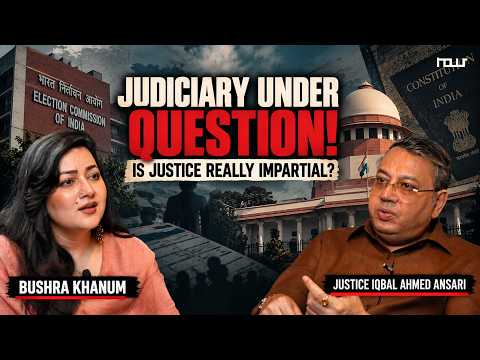
How independent is the judiciary in India today? And what happens when citizens begin to lose confidence in the institutions meant to protect their rights?
 2:44:36
In this conversation, Dr. Harish S. Wankhede joins Ali Javed to examine the political and cultural legacy of Dr. B.R. Ambedkar and the evolution of the Dalit movement. They discuss how Ambedkar imagined Dalits as political subjects at a time when they were denied even basic human dignity, and how…
 3:25:59
What does it mean to renew Islamic thought in an age of modernity? In this conversation, Dr. Waris Mazhari discusses his new book, Fikr-e-Islami Ki Tajdeed (Renewal/ Reconstruction of Islamic Thought), with Ali Javed. The conversation explores the diversity within the Islamic intellectual traditi…
Discussion
0Readers only · Comments are reviewed by the desk before they appear
The journalism is free for everyone — create a free account to join the discussion.