

 12:22
12:22Video· Nous Clips
How Uttar Pradesh Shapes Indian Politics? nous Clips
This is an excerpt from a longer conversation.
In this thought-provoking conversation, Ali Javed speaks with Javed Gaya about his new book, Heartland Rising: The Making of Majoritarian India. They unpack the contested history of Partition, examining the roles of Congress, the Hindu Right, and the Muslim League in shaping the subcontinent's fu…
What was the majority willing to sacrifice to retain a [music] united India? That is the question. And it's my argument that frankly a lot of the Hindu elite were not unhappy with Pakistan. I mean of course there's Aisha Jalal and so on. She has done a considerable amount of scholarship on that. But also an earlier slim volume by um HMC he examines the issue of thing and he [music] comes to the conclusion that it was actually Congress that wanted partition. [music] >> Of course it's a very complex thing but broadly speaking there were few [music] that had more power to decide in terms of their organizational capacity than others. There were views across the board. So who do you think is really responsible? A lot of the Hindu right were were very happy that the Muslims were being removed. I mean they were quite honest about it. I mean there's even I think recently a book that the title of the book is the benefit jina brought to the Hindus. >> You know how do you see that the Muslim problem emerged in India as a byproduct of both Muslim uh you know Hindu right and the Muslim uh you know feudal elites. So Jina was banking on the cabinet mission plan as the last [music] because he really had no plan B. I mean the problem the sad thing about about [music] the thing was that China was um a gambler. He was someone who gambled with the community >> and so Gandhi had a different view in [music] terms of secularism. But how do you think the Congress led secularism especially Neu and after that was compromised? you know this talk about secularism necessarily being you know good for Muslims um I mean I in theory yes but in practice it's never been like that >> so how do you see that the Indian Muslim question today how should Muslims be uh taking up that in terms of discourse in terms of demands in terms of articulation now see independent think tank media [music] platform minority or human rights issues per research or evidence-based [music] conversations. Subscribe or support. One of the interesting things that I saw when I went through your book sir was the articulation of this anxiety, the articulation of this sadness, the articulation of this unbelonging that the Indian Muslims are feeling at least from 2014. They've been feeling it much before than this. But after 2014 the the myth of the potential of Muslim upliftment uh completely goes away and then there are scholars like you and others who because of uh coming to this situation are forced to go back and read what happened and why it happened and then when they come across all of the literature that is available they find uh that it's not just 2014 it's a structural culmination of a wrong uh you know the way the state the way the Indian state was conceived and structured at its very origin but the interesting point is not that it was supposed to be fatalist there were other options people were discussing is it is not as if the idea of representation proportionality the idea of power sovereignty hierarchy they were not present in The years before the partition, there was the uh cast movement, there were the class movement, there was the religious uh communal differences that were articulated and all of that also went through the constituent assembly debates. But what you start with in the book is really interesting to me. You put this question on a philosophical pedestal on a structural level in which you talk about liberty and equality. So to say the these seems like very intertwined terminologies that liberty would lead to equality and equality is embedded within the liberal order within the order where choice is maximized. that is so to speak the politics of the terminology and how these can be perceived. And you begin with it by uh by putting these debates between liberty and equality to the forefront and locating all of the structural issues that India Indian Muslims faced later on after the partition as a result of this choice that was made at the very beginning of what India is supposed to be. First and foremost sir, I would like to understand this difference that you've articulated. What does that mean? And how does that change the potential future of any polity or any society and any community in the way that it was going to organize itself as a policym state? Well, essentially the position is that um I use this um um the dichotomy between liberty and equality to basically um trace or identify a major issue um which had been I mean discussed earlier um you know in the 1930s and so on when there was a prospect of India achieving independence and the question was whether whether the future India would be a you you know a unitary state, would it be a federal state and there would be and of course there was the question of how the minorities would be treated and to that extent there was there were dialogues certainly in the 30s um in between Jana and the Nerus for example you know which led ultimately to the NU report and the point was that Jina was conscious I mean Jina was a congressman at that stage um he was quite a novel um product because he wasn't he wasn't he wasn't from uh the UP heartland he wasn't from he was from he was a Bombay um barristister um And he was you know very westernized in his in his thinking. But the point is that despite the westernization which he shared with in that sense also with Panditu and so on, he was conscious of of communalism and of the and he had this fear and a sense that look that that his that his community should be in some respects protected that there has to be some degree whereby there would be some leverage there would be some um some degree where where where where whe where whe where whe where whe where whe where whe where whe where whe where whe where whe where whe where whe where whe where whe where whe where whe where whe where whe where whe where whe where whether the majority cannot um as it were um trespass upon certain rights. Now the thing is that that in a sense this position I mean was was to some extent entrenched in colonial secularism because you had um uh you know the the system of elections for example you had separate electorates and things like that which um of course the Congress regarded as part of the divide and rule policy and and you know this thing but the point is that that whatever that may be, uh the issue is that the minorities had some uh level of protection in terms of their representation because ultimately in a democracy the question of representation is key. And if people vote, and this is where the issue of liberty and equality comes in, because if people have the liberty to vote according to um say for example their cast or their community, which unfortunately we're seeing in today's elections, I mean for example um uh the for the present chief minister of UP um Yogi Aditya talked about um you an election between 80 and 20. Now 80/20 means what? It means the majority versus the minority. And therefore the position is that if people decide to weigh to vote according to their religion then and they have the liberty to do so because there are no there are no restraints on them. There are no separate electorates. There's no proportional representation. there's no form of any guard rails basically which would essentially prevent a majority from this thing because it's ultimately and I quote a passage by I think Jonathan Lord Sumpion who uh who was the head of the um of the of the Supreme Court in in or a judge in the Supreme Court in the UK Supreme Court the English Supreme Court rather where he talks about you know this business of majority being really it's a thing of numbers. it doesn't give legitimacy and that is the key to any any dem democratic you can't have a winner takes all solution because that's basically what liberty has boiled down to and I think at that time there were academics and there were people who who were apart from apart from politicians I mean people like for example Iva Jennings who was a great constitutional lawyer was saying that look you can't it may be difficult in a country which has um very um has is a very multi- religious country in a sense where cast also plays a role where there's a vast a great deal of difference. It's a it's a subcontinent that in that kind of context you know things like sep separate electorates and things like that are not uncommon. In fact, they're very necessary. Um, or the point was that therefore the question of equality is really the the position that liberty has to be restrained. Liberty has to be restrained when it comes to um the matter of representation because ultimately when we talk about politics, politics to acquire any legitimacy has to be a discourse between different people. It has to be the art of the possible. And if you if you actually have a situation as you have unfortunately today where you know one party one community have a say over everything. You are now reaching a position where and of course I deal with part in also the matter of delimitation because you know the issue of delimitation we have also a problem where people would address the del limitation in terms of saying well you don't want the majority the majority rule one man one vote that's the that's the you know that is the signature that is the that is the most important thing about a democracy And of course the problem is that um that democracy is much wider than a notion of one man one vote. And certainly for example in India I mean we had a situation where Mrs. Gandhi for good reasons. I think um passed the 42nd amendment where you had a freezing of the census from 1971 levels. And the reason that was done was obviously to ensure that you cannot should not reward states which cannot control their populations and you cannot and if you if they cannot control their populations that issue goes much deeper than merely the question of um you know population control. It leads to things like for example education of women and general enhancement of of the matters of social indicators which would basically mean that people who um uh you know uh that that that government is is is prodded or is directed to to consider factors like for example literacy, you know, and particularly female literacy and um and their involvement in Dharma. So basically the point is that you know it's not simply a question. Now of course delimitation raises its own problems. It's distinct from what the issues we faced in the 1940s. But the issues we faced in the 1940s was also something of great concern because it it really went to the the heart of whether we were to maintain what I call the glitting glittering prize of a united India. And I think that was a very important thing and that and I think that it was something which frankly Congress you know singularly failed to do. And I and I I mean that and I think the point is that u partition was really in a sense I think certainly for the Muslims I think it was the worst possible solution. you know, I mean, my Pakistani friends would probably may may disagree, >> but a lot of them actually do agree because, you know, the way the way Pakistan has developed, you know, as a kind of garrison state, it's been mostly but but the point about it was that there was a need for some kind of um safeguards. Um and of course some of those things were were debated in the constituent assembly you know proportional representation and things like that which we h which has been discussed. But I think critically the important thing was actually a greater federal structure because I think the way which I see and I think that in a sense probably Jina also saw saw was that the the answer to the kind of Hindu communal uh threat was really a greater emphasis on regional identities. And if you look at for example the two states which were neutered in the partition, neutered in the political sense because they were divided and they were rendered um almost toothless you know in terms of being able to really in a political sense were of course Punjab and Bengal >> which broadly speaking were states which >> which were not very communal or or very cast >> and the point was and they of course were slightly they had I mean they had a slight Muslim majority authority. Um that that was it. But the point about those states were that had we had that thing we could have had for one thing I think a a greater sort of federal structure a federal a sense of of of and a sense where you know a lot of this poison of you know which has emanated from the cowbell you know would essentially have been to some extent diluted. M so I mean we going to take up these questions of federalism, communalism, cow cow belt in much detail later. uh I uh the the one of the things that for example between liberty and equality and you you mentioned that within the constituent assembly debates there were points wherein all of these things were discussed >> and somebody from Congress or other people other you know socialist parties would argue that India has so to say reservations so to say you know minority rights and and that is because of the fact that equality and you know between equality and liberty uh in certain areas equality was chosen above of liberty. But the question uh that you're raising uh at the you know very base is that at what level was liberty privileged over equality wherein which which you know uh which which was mostly responsible for uh the kind of unequal structure in terms of power and sovereignty so to speak would emerge. >> So there is a question of equality which is embedded for example for SCST rights for reservations for them maybe not for Muslims. Uh so why did Congress a socialist party Neu as a socialist planning oriented thinker who recognizes the fact that there is unequal starts for others and they recognize that there has been communal violence in pre-artition era. So it is not as if uh you know Pakistan and Bangladesh are divided within India there's a big chunk of Muslims. Why did you think that you know Congress chose a path wherein it was in terms of the debates that happened before uh in in the constituent assembly and before that and that was all jina and you know nu debates that this is going to happen so so to speak why do you think that congress chose that path? Well, I mean, I think the point was that NU um part largely because he had a great belief >> in the notion of of of economic man. I mean it was kind of marxian kind of thing that basically with greater prosperity and remember when the British left in 47 the situation in India was pretty dire. I mean in terms of just the the the level the income level that we didn't have very much of an industry they had de actually de-industrialized us for over two centuries things were pretty bad. So he had this notion that look if we were to get our sovereignty >> we would be able to propel our economy. And of course he was very highly um impressed by for example you know the planning central planning which had been uh taken from the the the Russian the Russian model of the 1930s. And he felt that um that if you actually used that form of that that that that that kind of economic strategy uh you protected industries to start with uh you you developed some key core infrastructure I mean steel plants and things like that dams and so on and all these things. He felt that somehow you know the matter of communal differences will dis disappear. I mean that he didn't really feel that, you know, that that uh I mean he saw he was in that sense I think I describe him as someone of that of of that that sort of liberal um of of that liberal disposition where you just see the world getting better and better and that people begin to forget about become a secular society. And he saw that we will become a secular society maybe in 20 years time and really people will forget being cast or being religious and community. They would think of themselves and they would they would really aspire to I mean they would it would be a civic form of citizenship. it would not be a religious kind thing and he felt that that that and that was it that was now that would be the most how shall I put it charitable view I mean there could be another view which may be a little more machavelian I'm not sure but there could be a view that look the congress um the cowbell of the congress were were were critical in the sense that this was a relationship which postindependence would would propel would propel Congress not only um as the as effectively the only you know I describe it as a sort of creating almost a one party state you know that there was um you know the the problem the spoiler in the United India thing were the Punjab and Bengal things because they they subscribed to different political trajectories. I mean if you look at the unionist party in Punjab at that time and if you look at the Krisha Pra party in in Bengal you you you find a very different kind of trajectory. They were of course um uh you know different uh they they they uh they were you know completely different in what they aspired to. I mean one was a landlord party. The other was a a peasants party and but at any rate the point is there were not Congress. I mean the Congress and the Bose brothers and whatever the Congress didn't have much of a stronghold in Bengal and it didn't really have much of a stronghold in in Punjab. The point is that and therefore UP was central UP and Bihar was central to the Congress hegeman and the reality was that the Congress was very divided in UP. I mean if you look at it in terms of of of of on cultural rights I mean um the point is that you know people like for example Gin Balab Pant uh was very um you know he was a trade unionist. I mean he had he had left I mean a lot of the leftists actually were were culturally very Hindu. I mean in the sense that they were not they were not open to the pluralistic thing. The plur the people who championed pluralism tended to be the upper class uh say the Kashmiri Brahminss and people like S like Nu and Sapru and people like that who saw that who could see the value in a um I mean could see the value of for example Udu and and the cultural and all the the cultural benefits and legacies of of of of the moguls and of of the Muslim period. And therefore the point is that there was a major cultural schism and the point was that that that that the last thing that Neu could have afforded to do at that stage was to create a schism in the Congress. along those lines. I mean, you know, for example, after the 37 elections, you know, there are these stories of where, you know, nationalist Muslim Muslim nationalist congressmen would go and hear their Hindu counterparts, the Hindu Congress being very triumphalist about the particularly the the loss of the League. You know, the League was did terribly in the 37 election. And I mean it was you know suggested that the league should actually merge with the congress and the point was that uh that uh that uh that that triumphalism in a sense um you know I think created a lot of problems for um in terms of the social thing. So it's not that nu could be said that he was unaware of that. I mean he was aware of the fact that there that you know um that there were a lot of congressmen who were very keen to impose a kind of you know hindutual light um on you know on on you know certainly UP as uh you know the most as the most significant state at the time because of its um cultural legacies because of its size and so on and therefore the point is that I I think that this was something which uh which um which I think was very crit was very very now whether NU was actually genuinely um you know genu had a genuine belief in this in this notion of um you know inevitable secularism um of society or whether he was being Machavelian and really didn't want a a split in the Congress. Um I I mean I don't know. We'll never know. But the point is that what we can say is that definite that that um that um that you know you it it it is really very difficult to believe [clears throat] that um you know the that the Congress was um uh you know was that the the a lot of the leadership of the Congress were unaware of of what of the problems of the of the the concerns of the minorities and The what is clear is certainly post 37 they never really sought to address those concerns. Um um and I think the and that I think is been frankly um you know um was was a major problem because it it was uh what you call it um you know the canary in the gold in the in the gold coal mine you know the the thing of what is going to happen the presentiment of what will happen in the future you know the sense that look um that at this stage when there was when the that we had not got independence when there was certainly a talk of Pakistan I mean became amplified after the after the lore resolution in 1940. But at that stage you would imagine that there would be attempts to try to um you know try to um address those concerns and unfortunately the at least the Congress and certainly the Congress in UP never really attempted to do that. Um and I think the point was that and and it's my argument that frankly um a lot of Hindus a lot of the Hindu elite were not unhappy with Pakistan. They were actually saying that look the question um I quote someone from I think Punjab you know some who said that the issue of Jina was that Jina wanted par. He wanted that notion that look um suppose if if um if if say the the Muslim population was say which was around 25 26% at that time that if they for example had been given a notional 30% and that 30% would be like um a sort of a veto on certain things you know uh which would affect them you know >> one of the interesting uh things that you're raising here uh because especially post 2014 and before that uh after the rise of Hindutwa and after the rise of Hindutwa there has been proliferation of uh ideological positions on partition itself from the Hindu right uh there has been theoretical interventions in terms of who caused the partition but also this question has been raised from the Muslim side itself >> whether all of these activities all of these interactions and negotiations negotiations that were happening before the 1930s 7 before the 1940 and after that there was a context to it and all of these parties involved the Muslim League the Hindu Mahas Sabha so to speak which is absent from our discourse and RSS has taken the position uh otherwise which Hindu Mahas Sabha is the actor who you know participated in violence and akaras and cow politics and vigilantism and that has been erased in so to say a way in which the Hindu right history of violence of communalization has been a as if absent as a reason and so the uh you know role of uh Congress in which all of these parties were an amalgamation where Hindu elite was present. So in your reading uh of all of this hodgepodge of ideological positions in which a demography was imagined post 1881 of being constituted of these visible uh demographies of you know communities in that context where do you see uh because if you argued in the book that there there was an option that uh you you for not partitioning and uh so to speak from Congress that was demanded uh more along with whatever The demands were coming from Muslim League. So the question in front of you is who was really respond. Of course it's a very complex thing. But broadly speaking there were few that had more power to decide in terms of their organizational capacity than others. There were views across the board which may be relevant to few but irrelevant so to speak uh from the perspective of actually the you know creation of the state. So who do you think is really responsible? >> I'll start with one thing which I think is should actually be the the important basis of the argument uh which we want to which which I think you the which is the well the response to your question which is a very valid question. I start with I mean I bring up the question the thing of Sir Stafford Crypts. Crips was a conversation with with SP Mukaji where you know Crips basically said look you know you can't you have to you can't you have to have some degree of safeguards >> for a minority in in the situation of a thing and it's for the minor majority to give it's not the minority may ask because remember the Muslims were not the only minority that even sought some form or ultimately sought some form of secession. The Sikhs also wanted uh see they were not given there were princely states for example like Travenor for example they were they they were not interested in joining the union um Kashmir for example did not want to join the union um so the point about it is that it's not as if the Muslims were solely the only people who sought um who saw who were looking at the thing but the Point is the interesting point is this that the it was for the majority to give. It was not for the minority to take. >> And therefore the point is that it was then it became a question that you know what was the what was the majority willing to sacrifice to retain a united India? That is the question. And I think the point is that in that way I think the book which really in a sense I mean of course there's Aisha Jalal and so on she has done a considerable amount of scholarship on that but also frankly an earlier piece of an earlier slim volume um by um HMC you know which looks he examines the issue of thing and he comes to the conclusion that it was actually you know Congress that wanted partition and that Jina wanted to distinguish that because the ultimate issue came really the issue was on the cabinet mission plan and that did actually provide a basis whereby safeguards for the minorities. It of course meant that you would have a much more um federal India. you would not have the kind of um unitary structure sort of quasi unitary structure you have today. But it was it was an attempt. Now there were issues the league had with with with the miss cabinet mission plan including I think the Northwest Frontier Province which of course had voted for the Congress um in the thing. that those were not um in my view uh issues that could be really um were really of any um you know which could not have been resolved. I think the point was that Jina was banking on the cabinet mission plan as the last because he really had no plan B. I mean the problem the sad thing about about the thing was that Jina was um a gambler. He was someone who gambled with the community, with his community. And the thing was there was no real plan B until the British came up with the cabinet mission plan which frankly had it been taken. But it was Congress who torpedoed it. And the Congress torpedoed it because of various factors. And I what the argument I make is that look a lot of the Hindu right were were very happy that the Muslims were being removed. I mean they were quite honest about it. I mean you know um uh they I mean there's even I think recently a book written by some um um person who's you know very strongly RSS imbued kind of not an academic but he writes that the title of the book is what a jina what you know the the the benefit jina brought to the Hindus basically arguing >> that look by asking for partition >> that this was the best thing. Yes, >> that could happen for the Hindus. So the the the point is that but that's something which is not ever really spoken about you know um you know I mean he says it now many many years decades after after this thing but certainly there is this there was this definitely this um um under undercurrent in the Hindu right that you know we are better off without them. M >> um we can have a state which would where where where our cultural demands would be accepted. We would have no problem because we don't have to deal with these uh difficult these the these these uh these difficult characters who talk about you know this kind of syncric culture and stuff like that. And we we can have very much the thing and of course the other support was really from the left which was uh you know I mean I'm I I rather I not inclined I mean well Ambedka is a rather peculiar character because I'm not sure he was you could really describe him as off the left because I mean many ways he was fairly right-wing except for when it came to the interests and needs of his community where he basically was very keen keen on having um um you know reverse disc you know positive discrimination or whatever for policies for them >> but otherwise um certainly he didn't um but but but certainly the point was that and of course NU was very very keen even um you know I I think it was you know I think NU thought well you know uh perhaps this may be the best solution because he would not it It would be difficult for him to countenance a federal structure because he could not have the kind of central PR planning that he wanted >> to promote within the context of a federal structure where basically the govern the central government the union government would be vested with things like foreign affairs, defense, things like that >> and wouldn't have as much control over the local econ over the states over the provincial provinces um as was envisaged in the >> cabinet mission plan. So basically you had a co a you know convergence of both these two important elements. Um and uh and so you know uh you know and they were very I mean I mean Gandhi to some extent was very unc did not want partition but actually the trouble was that he really didn't I mean Gandhi had I mean his views his views in terms of of political um of of how of how the country was to to look he was he was against the nation's state. I mean he had a great problem with because he saw you know a conventional state which what what people like Patel and and people like Neru were were sort of were were arguing for as being you know basically swapping one form of of of of tyranny for another. Um and and therefore in his view his his views were very inco. we were not sure what what actually um what how that would actually work out. I mean he had this notion of this village democracy and you know punites and so on but the point is there wasn't there wasn't any clear thinking on that but except that I mean he was certainly against this he was against the partition of Punjab and Bengal it's he felt that it would be because ultimately even jinai I think in a sense and I and I I I I quote professor Dave G um here where he when he I think writing this comes from his biography of Gandhi which is a kind of intellectual biography. says that look you know that that both Jina and N both see both secretly wanted a situation where Pakistan could possibly have a slight Hindu majority [laughter] you know because if you look at it the way he was Jina was acting in terms of wanting of course to keep the full list the listening of Punjab but also some of the princely states like Jodpur for example very keen to have Bjpur as um as uh as a thing and all right George Paul had a maybe a 15 or 20% Muslim minority but it wasn't a it wasn't a substantial minority but the point I'm making is that that also um Jina was concerned about the future of the Muslim state and maybe he thought having a large Hindu population would help the cause of secularism for the future. So one of the um because we need to talk about all the worldviews that exist >> and as I mentioned the word name Ward Dulipala he wrote the book in which he's argued about the >> quest for the new Medina is much before you know 1940s and uh people like Aisha Jalal and others have argued that it's more like a you know uh bargaining chip but so to say the way you are arguing that you know Neu was somebody who would gamble So gambling on such a big you know population >> I'm I I'm talking about then Jina in that correlation that if Jina is doing the same you know taking Muslims and the idea of a separate state as a bargaining chip >> and then then that actually ended up happening where the interest of uh feudal elite Muslims is served more in the uh modern age Pakistan and that led to an internal Muslim problem within India and so so to speak given the fact that as Hindu right and Congress were aware of the problems of minorities and issues and discourses and ideological differences so to speak Muslims were also aware you know Muslim League was a product of post 19005 Bengal partition it understood the underpinnings of majority minority the change of democracy demography power after the fall of the Bengal uh you know uh Muslim sovereignty state so in that context this demand which created a Pakistan so to say which we are not going to focus on what happened to that but it created a kind of a political situations for Muslims in India that was so unfair to them and which was visibly part of Jenna's gauge that he sometime I think I'm if I'm remember right he also argued if I have to give up you know some amount of Muslim uh sovereignty within a partition state in India I would readily give it for uh you know uh Muslim sovereign state. So in that context you know how do you see that the Muslim problem emerged in India as a byproduct of both Muslim uh you know Hindu right and the Muslim uh you know feudal elites. >> No it's an interesting question. I mean I think the point at any rate is that um um Ben Wen Bupalia for example does bring up I mean he like me I does center on the question of UP as being one of the areas where there were this thing and he refers to a what you know there was undoubtedly an element of Muslim separatism. I mean he particularly refers to people like Molanai and people like that ideologues like that. So, so essentially that is the thing but but the point which he seems to really um where he really doesn't where he he he kind of um not exactly suppresses but I mean he certainly doesn't deal with any great thing is the attitude of the Hindu and of the Congress to the legitimate concerns of Muslims. >> He just doesn't deal with that. He talks about Muslim and you see the interesting thing about the book is this that you know it came out at a time when there was a kind of this whole clash of civilizational things were were whatever uh you know had come onto the you know Huntington was clash of civilizations was flavor of the month and you know this whole issue of of of Muslim Muslims being aggressive and being difficult and being violent and prone to jihad and so on. You know that these issues were this thing. So therefore it became very fashionable for him to attack to say well look you know partition was this thing because but you know I mean fundamentally what I I I would also say something very very simplistic is that you know a lot of this revolves around the elector the I mean we have to remember that the 1935 constitution gave only 14% was 14% was the electorate >> so We can't actually make out very clearly, you know, whether there was a Muslim majority for partition um by virtue of looking at elections um certainly the 46th election because the point is that things had been polarized at that stage and and whatever and um the point is that but anyway what we are talking about is is basically 14%. And the thing is this that uh and it is often the case that people who are better off, people who are educated um maybe um would be more um inclined, particularly young graduates for example, who would probably be very uncomfortable with getting or would feel that there would be no scope for them for prof you know the sort of middle class in in a Hindu India you know that there was fear on the part of the Muslim middle class so a lot of the say more well-off Muslims who would be infranchised were played a disproportionate role in say for example promoting the Pakistan thing or being members of the league or whatever and they were not for religious reasons they were for economic reasons and there were a whole lot of factors because it's very difficult Frankly, at a time of, for example, part of at a time of partition when there was great polarization, there was great violence, there was discrimination, there was um a sense of uncertainty and fear as to what the future held. And in such circumstances, um you know, people do make decisions, you know, whether to cross the border or or whatever, you know, and you have to see that in in a context. It is not an ideological choice as simply as some people put it. I mean you know someone like Patel for example kept saying that you know that that that you know that that that that you know for example Muslims who have opted for Pakistan as somehow disloyal to India. But for example if if you were I don't know if you lived on the border of uh you were a ma Muslim you were Alvo or something I mean whether you were actually uh you know you were actually subject to violence. I mean what would you do? Would you you would go to cross the border not because you necessarily had an ideological this thing for Pakistan but because in the same way that Hindus did. I mean there were a lot of Hindus who and Sikhs who left Punjab not because they wanted to but because they felt that they would be subject to violence. So those questions are, you know, they're all very unclear, but it's certainly not a simple issue of, you know, how many Muslims, what was the case? I mean certainly what we what we have because you see what I think and this is a point which which I which I try to is that the the notion of giving Pakistan was seen by the Hindu right as something which was a huge gift to the Muslims that having gifted them this great thing then nothing else needs to be done you know that that basically all their needs were satisfied and therefore they can't really make any demands on society and that I think is actually the most tragic thing and it's something which has frankly bedeled the Muslim question to the present day because everyone has this crazy notion on the basis of what we don't know because as I said we don't know we honestly don't know and we will never know um um you know what prompted um such and such a family to cross the border or was it a choice and how many of what percentage of the Muslims were actually listening because remember a lot of Muslims would have just remained in their would for example those living in Pakistan Punjabis and Bengalies remained in Pakistan and the point is there was no question of opting for Pakistan that's where they lived right so we're talking about a very small percentage of people about some seven million or so who actually left India for either P you know the west part of Pakistan or the east part of Pakistan but we're talking about 7 million people and now the reasons why they they went we don't know >> and you know so so so there could be two factors basically which which would which would have some which would give us some clue as to the the the popularity of Pakistan among Indian Muslims. Um, one was obviously the question of the elections and that I think is really ridiculous because on a 14% uh franchise you can't really uh you can't really make out a case. And secondly, on the question of migration, there could be hundreds of reasons why people have left. I mean, which which really have no I mean, it could just be a fact that your brother went went across and you may not want go in in my my family. I mean one of my uncles went father's brother went across but we did we didn't um but the point was that that that that um that we can't say with any certainty what the thing is now if you have a situation we are really not sure about why about whether the Muslims wanted Pakistan to assume that u that Pakistan was somehow some great um um deliverance for the community that it was some great gift is absurd because I mean why why can you not see it by as a lot of the Hindu right see it well good riddance to them you know um we don't want them we don't want to compromise our politics we don't want to compromise our culture we are we don't want um you know um we don't want these people to have a say in the future of our society in any substantial way and remember it was largely succeeded because post 1947 what was the population the population of Muslims in India was 11%. So it was a a small you know it was from for it had gone down and that was largely not because of Muslims going Pakistan largely because the two majority provinces of Punjab and Bengal hosted the largest Muslim populations. M >> so the point is that what we have then is this situation that it's you know that on on any this argument that that that that the Muslims you know wanted Pakistan well first we don't know whether they wanted Pakistan and the fact that they gave got Pakistan doesn't again mean mean very mean mean very much because the the reality is that um it I think it there would certainly and and as I said, you know, there is this other aspect of the thing which we again don't talk very much about and that is the notion that really it suited the Congress party at that time for um for it to be um uh you know for for these states to be in a sense politically neutally guaranteed a hegemony for 30 for three decades after independence. So uh because you mentioned about UP and we you mentioned about not just you I mean interestingly uh Wenut uh talking from a very different perspective is also privileging what is happening within UP and uh mostly what is getting partitioned is Bengal is uh you know Punjab but despite that uh UP with a much more uh you know different much more differentiated intertwined, intermixed population of so to speak both Muslims and Hindus uh with a long history of existing coexisting together. Why do you think that uh UP became this hotbed of uh you know of course one one answer would be that it was closer to Delhi in the sense that historically speaking the power politics and the center of the way you know uh power and sovereignty were thought about was so to speak seated within this region in a sense but then uh this this argument that uh all of this is happening within UP within the leadership of UP be both Muslims and Hindus alike so to say and then UP becomes the space of what we now call cowbell. >> So what was in UP in that context in in a way that necessitated I mean necessitated is a very harsh word but then in hindsight all of it happened. So what was happening within UP? What were people thinking? Of course, there was Maharashtra, there was Bengal, there was Punjab, but then this region became the you know overarching organizing force of the Hindu right. >> Yes. Well, it was a very important state. It was important also for religious reason. It would was important in the sense that um it was also the as a state and of course now we're talking about the old United Provinces >> um um which was minus utraken which is largely a braannical sort of >> at that time the brahinss had you know 12% were 12% of up's population then you had the chhatrias And you had the commercial casts um the the bunas. So you had a high cast you had preponderance of high cast thing. You didn't have that for example the same display for example Bihar. You certainly didn't have that in the south. I mean for example in Tamil Nadar the Brahman population is about 1 to 2%. Now the point is the cultural aspect of this was very important because you had you know the desire for example of the brahinss to you know to impose for example sun very sunskritized the nagri script you have the issue of cows slaughter you have the issue of um a general antagonism and sanskritization of the population in order to get a sort of a majority you know you have this whole majority itarian thing working at that stage because they felt they had a need to uh incorporate the lower class um as um you know as allies for them against the Muslims and therefore for example to some extent this whole business of beef was a big had become a big issue in terms of because it was obviously baiting the Muslims. was trying to trying to create a a situation where where where so so so the point is that um that so but in in and of course the point was that there was also a lot of um you know cultural truths and and and there were important things. I mean you know of course you had of course the the issue of Aayodia which of course did did pre independence and you had altercations between Punt and Nu about you know when that first incident happened etc. Um you have of course Bananas Banaris and you had Banaras Hindu University. You had you had Arian Muslim University. On the other side you had you had all these you had various important madrasas and cultural thing of the Muslims um and uh and similarly those of the Hindus. So the point was that you had um and you had something which was in a sense something which was very irritating and troublesome for the Hindu elite at that time. Um or certainly the the um people like Malvan and Malvian and Punt and Tandon and so on was the fact that that you know there was a tremendous uh the the the the Muslims had a certain cultural um had a great pride in their in the in their in their in a sort of there was a Muslim cultural hegemany in UP um which you know because simply because and that was a shared thing. You had this what is called the syncratic culture, you know, where you know where you know Udu was widely widely spoken and um and a lot of the supporters of Udu were it crossed religious barriers and it was something which was I think very offensive to a lot of the uh Hindu right. They felt that they should eradicate it. I mean I even give come to the example of my my book which one of the most extraordinary examples which which I came across while researching the book was the whole business of numbers. You know the fact that that Arabic numbers were being used which is what the numbers which we use today offended them so much that they said that we must turn to some you know uh nagri numbers or vic numbers or whatever but they didn't want to use them because of the Islamic provenence. So the now of course that's not peculiar to UPM that was used all over India but but the point about it was that what there was there was a sense of um uh of humiliation perhaps that that you know that this that these people were sort of walking tall that they were that the culture and the taz and whatever else you know was was there you know I mean there was a something which uh which uh which certainly the Moguls left and was adopted by by the populace in terms of everything and things like you know whether be you know from food to dress to whatever I mean you know there was a huge legacy and it's a legacy which which was they they were intolerant of and I think you know this whole point of tolerance I think is a key matter because you know um even today you see this level of intolerance on the part of which I I you know I don't think is um you know certainly if we go historically I mean we we don't find that I mean in say for example the Moguls for example as a as a as a as a as a as a dynasty we're not you know the exception of orang to some extent but that's somewhat cont that is very much contested um we're not intolerant people. But the but somehow there was this idea that look we must the only way we can recover our pride is by erasing um a previous culture and you know and so therefore the attitude I mean the attitude of udu was far worse in than it was in my state in Maharashtra. I mean in Maharashtra we still had you know udu schools and whatever you know but >> but that was that stopped in the 50s in UP. So I mean that so I think we we have a I mean I don't know how much how well I I've explained it but I think I think that you know given as I said the composition given the culture given all these factors >> that there was a desire to completely eradicate >> that most of the uh for example the most of the dimensions required for Hindu right civilizational glory to manifest in terms of the desire were more concentrated in rupee so to speak as compared to other regions in India. No, Tel >> you know while they were still pres of course RSS is happening in Maharashtra. You have a you know Bengal Bengali uh communal history wherein you know the dominance of Hindu uh cultural and festivity symbols within the context of the national movement but then all of it is uh you know intersectionality of all of it is most concentrated in UP. Also you argue within your book about the fact that this is not just uh you know so to say civilizational and cultural in terms of the uh you know claim but it's also political and economic and I would like you to you know uh focus on that argument also how that how did the Hindu undivided family how did the political nature of uh UP as a large state contributed to the expansion of >> yeah I no I think this is a very important point and it's a point which I never tire of laboring. >> Um, you see, because the thing is that, you know, I um I by my my political leanings are basically off the left. I mean, I I do um have this sense of not I mean uh you know, I would consider myself some socialist. One of the things I do find very irritating in our public discourse about the general Indian economy and the general Indian this thing is this notion of these Fabian socialists who seem to be um people who seem to have destroyed or upset the Indian um economic story. >> And one of the things which I I find really curious is this. I think there's a lot of what I call lazy thinking surrounding this point. I mean because if you look at in the 50s now the point is that um you know UP in a sense has to be held to account because UP was not only the largest state it had a lot it had it was it was a state totally dominated by the Congress throughout this period and by a very right-wing brahmanical kind of order and and of course a lot of the UP congressmen as indeed throughout the country throughout North India anyway were funded by you know the Marwari business communities which were the majis and the bilars and whatever and the point is that the HUF itself is a very interesting concept because it is a a notion it's the only notion it's the only country in the world where you actually tax someone on the basis of the family not on the basis of an individual on their individual uh thing but on the basis of the family and also that the incident for the taxation comes at a time of division it's not like a normal this thing it's it it is there so basically I mean the Banchu committee which went into the whole thing of taxation of India 1971 described it as a a tax dodge whereby the Hindu um business community were largely insulated from major taxation both income tax and at that time there was wealth tax and estate duty. So basically the point is that certainly in the 1950s you had a very strange situation where you had the three big sources of wealth or people who had wealth were the the mercantile community. The royals the the Maharajas and the Nabs and whatever who were exempt from tax and in fact they drew the princely purses. And the third element um were the agriculturalists. Now again UP and Bihar were big agricultural the cowbell generally was largely agricultural and you had large um ag you had large landholders. Now of course you did have uh you know land reforms but those land reforms were very weak. I mean they could have up to 40 acres and then if you divided it among your various family friends and whatever you could you know could have substantial land owners. Now the point is again India is probably the only country in the world where you have no t zero tax on agricultural income without limit without limit. So the point is that that that if you were really a socialist society where did you get the monies >> you know to distribute or to create public goods? You had no money >> and this was in a sense a thing for stagnation. you know it was a recipe for stagnation and my argument is that you know this was a deliberate thing because for example you didn't find any interest in education I mean one of the things which uh which should have been done now of course nu's blamed for that and said that nu to be fair to him at least as far as tertiary education did do a good job I mean he set up all these IT and IM and whatever the point was that was for the But when it came to the at the state level it was pathetic. I mean you know for example you one draws a parallel with say for example Tamil Nad where you had Kamaraj who introduced in the 50s introduced the midday meal thing for children that encouraged children to go to school. It also in improved their nutrition. It it was a very basically a very good thing. And the point is that now federalism as it existed at that a at that stage where the states had substantial could draw upon resources which they raised um and weren't kind of crowded out with all these central schemes could do that but the point is in UP you had a situation of absolutely pathetic social indicators which continue to this day I mean um so it's Not it's not that this thing and therefore this this argument about you know this the so-called Fabian socialists who apparently were doing their best to to the thing is just frankly a distraction. It's a distraction from the reality that a lot of the Hindu upper class had no interested in development at all. And frankly probably a lot of the the Muslim upper class as well. I mean you know whatever not that they really had much of a say but the Muslims were already becoming you know under the spell of particular kind of you know sort of uh thing. Muslims I mean to some extent were partly there was a I mean there was some relief I think for for them in the sense that that in in the 70s post certainly 74 you saw the Gulf opening up and you saw and offer opportunities for young Muslims to go you know to work in the Gulf and you know make make some money and do something but basically if we look at it really speaking um the source of a lot of our I think stagnation has been has been this has been the cowbells because there was really no interest in in in in in developing and in educating people improving their health and bringing industry. Um because the point is that you know what we've seen certainly what we've seen very much from the 80s onwards has been you know whole what is politically important are things like temples are things like you know cast issues in terms of the particularly the OBC's mandal and so on and we see these issues as being really very central to the political discourse and not so much um not so much um a desire on the part of people to have better public goods and public services and I think that that is now that's quite different in the south in the south you do have um you know a constituency for that unfortunately north you don't and the problem in the north it's it's not there I mean in Maharashtra to some extent there's always means Marsh has had a number of great social reform groups you know um in in certainly 30s and 40s 50s unfortunately it's ended up with this ship zena and these kind of particularist ideologies but basically what my argument is that that that you know we constantly use this this this excuse of the fabian socialists and because I say that look it's now almost it is more 35 years since we've gone through liberalization. Now all the things which um these people you know a lot of the so-called economic reformists have sought you know things like u better use land you know better uh ability to acquire land or or for example reforms in labor laws and things like like like that. um that those things the government has had a majority, governments have had majorities. I mean Mr. Modi himself has had a has had several majorities. He's not done very much. I mean he tried to bring in the agricultural things but without any discussion and without any any any thing it's like imposing a fiat you know imposing some kind of fman or something can't bring in a law like that which affects so many millions of people. But the po so but the point I'm making is that that that that um that the cowbell has been largely responsible for guiding the politics of the age of of of the of the political narrative. And what is clear in that political narrative is that it's not a an ideologic battle between left and right. Um it's really a question. It's just really an issue between um you know a sort of um uh you know the the the the needs of the the needs of the Hindu right which you know seem to dwell on things which are atistic you know things like temple politics and so on um and the politics of the cow and and things like that and um and and of course conversions you know Um and and those are those seem to be the the sort of you know the kind of the kind of issues and of course part of them are generated from this whole majoritarianism thing because if you look at conversions you know it's rather like what the western in in the west the right-wing talk about the great replacement theory idea that for example Europe is going to be Islamicized in the next couple of decades you know I mean you know despite the fact that you I mean for example in in in Britain I think it's about 5 to 6% of the country is Muslim are are Muslims but but anyway in the same way this conversion thing has this argument that somehow Muslims are going to overtake them in >> in terms of the population which is completely absurd. >> So so to say uh if you're going to if I'm going I'm following your argument right from the you know first theme. So the choice between liberty and equality wherein liberty is uh you know taken as a priority because it's somewhere between liberty and equality that things are negotiated but where liberty dominated against equality in which domains led to the structural nature of the state that was to be born and which which would lead to certain kinds of structures which were privileged in a sense that it privileged the majority Hindu right narrative and that Hindu right majority breminical you know framework from the cowbell because it had the largest prime minister so to say. That's right. Their uh their interest was not uh the upliftment of not just Muslims but generally speaking the country from uh because that creates uh the reserve army of labor in graded realities and in that Muslims were chosen as this enemy which they knew before the partition also that not all of India can be partitioned. is what you need a balanced population wherein you can uh you know structure majoritarian demands and structure a state based on that and your argument is that within the UP the culmination of this kind of politics with the kind of uh you know electoral power that this region had uh so to speak structured the uh polity as such. But then we fall back to the theme wherein the power was ultimately consolidated into the secular socialist Congress ecosystem wherein all of this was read by you know Nehu and the others. They they knew what Patel was thinking. They knew Hindu Mahas Sabha. They dealt with all of this. It was not as if these were newborn babies which had suddenly sprung out after the partition. They were well aware of that politics. They were well aware and they were you know they had dealt with that so to speak that after 1937 election they they could see Muslim League and you know Hindu Mahas Sabha coming together to form a governmentdeed for for electoral uh you know uh reasons. But again then we fall back to the uh commitments of Congress and Neu to the ideological uh paradigmatic frameworks that they they had proposed you know socialism, equality, parity, fraternity uh secularism in that sense and then you say that there is pseudocularism. Uh so one what do you mean by that the commitment to secularism and second that within that uh uh you know uh smart uh positioning of secularism uh what you argue was uh you know pedled is a certain interpretation of modernity and religion. Uh so modernity and religion that discounts uh religious sentiment sentimentalities but you cannot discount majority. You could only end up asymmetrically discounting the minority which is the Muslim which is the sick which is the other >> and so Gandhi had a different view in terms of secularism. But how do you think the Congressled secularism especially Neu and after that was compromised and that led to the empowerment of the Hindu right majoritarian uh ethnationalist civilizational politics that we see as a structural outcome of it? >> No, I mean I think what happened what originally secularism was sold was um as a unify as a force which would obliterate. there was a a d a distinction was ma made well not a distinction but the the the the two were put at odds secularism on the one hand and communalism on the other and therefore the idea of secularism was that it would stamp out differences it would be something which essentially would um would would would create a create [clears throat] some sorts of sense of unity And that was what secularism was about. It was meant because and that was not unreasonable because remember this was all post partition and partition we had seen or at least according to the narrative that you know Jina wanted Pakistan and he was this thing now we are this thing we are one. Therefore, the u differences should be stamped out that there should be some notion of unity. Accompanied with that was this notion that um this idea of science being the center being a very important loadar. You know that that basically people should give up this uh or people should not have dwell in superstition and be mired in the uh in the past. And therefore in that in that in that sort of um um you know um that kind the thing which which which which I suppose in a sense religion brings along with it you know a sort of sense of superstition and a sense of of whatever. So the the so anyway the the thing is that that if we look at uh if we look at uh um at at at NU in particular, I mean he was he was certainly obviously concerned that that that the Muslims have proper citizenship rights as equal to those of Hindus. And uh when those rights were infringed, he was very upset about that and he made it clear. But the problem was that he he he was um you know I mean for example in UP and the UP congress was an autonomous body they did what they liked and in many ways for example the issue of udu for example was something which they really wanted to stamp out and they wanted to ensure that it wasn't taught it wasn't this thing I mean they ultimately came up with this three language formula which had you know Hindi then Sanskrit and then you had a choice between udu or English which um I mean any for any Muslim who wanted to better themselves they would have had to opt for English rather than udu. So you know, so the point about it is that that this uh that in reality this this uh this secularism was not a real kind of um did not really address some of the needs because the problem was that there was a dis the question of collective rights other than those of the Harigans of the scheduleled casts and tribes was really not extended it to anyone else. I mean I think other than the AngloIndians which are kind of a microscopic minority, no one else had had these had these rights other than cast rights within the Hindu configuration. So for example if you were a so and that bea has become the big case in the last frankly last 20 years or 30 years certainly since mundan you have had this whole desire for the upliftment of of the OBC's you see and also protection also with the 103rd amendment where basically you provide um a sakur for the upperccasts in this new configuration because that is something these are benefits which are on an economic basis that if you earn less than I don't know how much it is I mean eight lakhs a year or something like that you get the benefit of of of of five lakhs something you don't you get the benefit of a particular quot so basically the issue of group rights and this is what I call is the real pseudocularism >> the pseudocularism is that you the the the Muslims are completely uh uh what you call it um kind of marginalized as far as I can see as through any rights apart from certain states like Kerala and so on which does and and certainly West Bengal until well until recently I think one of the first things they did was to um deny certain certain rights um to to to Muslims in terms of jobs and But basically if you look at this whole issue of um of secularism is that you know NU said that you know a castridden society is not properly secular and I think you know that and I think you know the cast issue is the elephant in the room you know we don't like to talk about it but the point is it is a situation where you give group rights but within the Hindu configuration the minorities are excluded >> 341 that you know somebody converts from uh Hindu Muslim or Christian can convert from that then you you don't you don't have the right to that so therefore the basically the ma the the Hindus have to to to to a large extent um decided to to take the full advantage of of any of these kind of things That's the a consequence of the majoritarian thing. >> The the minorities um the minorities are excluded. The minorities even cultural rights are excluded. um the question of um uh so therefore we have a very strange sense of um of of what what secularism entails because it certainly doesn't the only thing which which can be pointed out that somehow Muslims are the beneficiaries of uh is sort of Muslim personal law but I'll come to that later but the but the point is that's about the only thing that Muslims have got something but that's part of a a wider tapestry of personal laws >> which um you know are not are not discussed like for example the HUF which >> gives tangible benefits to a person you know economic uh perspective >> economic ways that's right but the point I'm making is that that I don't you know this talk about secularism necessarily being you know good for Muslims um I mean I in theory yes but in practice it's never been like that because the problem is that uh now a lot of this remember was premised on the fact that we would be having a Supreme Court which would be supposedly um dispassionate and whatever in distur determining constitutional issues enforcing secularism etc etc and civic rights but the point is that has proved to be very disappointed and a lot of the minorities remember who had rights in 49 in 48 49 gave those rights up um you know in separate electorates things like that on the basis that we are going to have a written constitution with judicial review. Now having a written constitution with judicial review meant that these would be tangible rights which we could could be enforced in the courts. But unfortunately we've seen where that that road has not really has led to a bit of a dead end really. Interestingly also u you know because you said secularism pseudocularism and secular sec secularism cannot be read without the compounding other uh you know philosophical choices like pluralism like uh you know federalism and so to speak [clears throat] so many else. So secularism in that sense is a neutral container until and unless is it liberal secularism, it's Gandhian secularism, is it French secularism, is it you know >> so in that sense uh the secularism uh which intertwined with you know the understanding of modernity so to speak in the Nairovian fashion uh wanted a certain kind of uniform civil code too. uh it's part of the directive principle and for several different reasons the Hindu right and you know some other groups wanted a certain kind of UCCC uh in the longer run assuming different kinds of justices you know somebody is thinking about teaching a lesson to the Muslims but somebody else is thinking about okay pluralism but ultimately we're going to uh homogenize the population in terms of how they act uh maybe however they're believing but you're enforcing law upon them such a such a way that they're forced to act in opposition to what they believe. So in that sense uh you know UC uh how do you see as a debate given the fact that uh people you know the Hindu right argue that we were the UCCC has been imposed on us but it's just a codification of the Hindu law not you know uniformal un you know imposed uniformity over them and there's a you know great debate about common law or uniform law uniform within what uniform between which groups I mean there so to speak so many debates within that. But when it comes to the Muslim question, you know, a uniform civil code is seen in a certain way an appeasement to the Muslim minority and in also another way a disenfranchisement of the women of you know other groups within the Muslim community and how do you see this? Well, I think this is just really I mean I think you I think the point is the way it's been framed as appeasement of Muslims which is really the most convenient way the Hindu right can posited. The point is that you know is it that way because if you look in at the time of the found the constitution um the the person who headed the committee on fundamental rights >> was Sad Patel. Now the point was the question of a uniform civil code came up there. I mean people like Minu Masani and Amrit K and all that were very were very keen on the imposition of a uniform civil code at that period of time. It was opposed violently by uh by Patel who in fact relegated the UCC to the directive principles. Now that was Patel wasn't wasn't and Patel was the least um was a very Hindu politician. I mean he was not he was not animated by the concerns of the Muslims you know I mean he was not there was not he was not a Muslim appeaser and the reason he did that was really for another reason and that was the HUF and that's not discussed >> because the point is that backers of people like Patel were the bajis and the bidders and whatever and the point was that they that if you had a uniform civil code how were you going to treat co- personal property >> and >> like the Sabriala case also I mean the that's a debate that is being put in the court that essentiality itself is being you know one way the Hindu right wants that essentiality test to happen on the Muslim minority but because then that also gets you know utilized in their case so then they say okay let's not have it at all >> yeah yeah yeah no so so I think I think the point is that Because I mean you know remember one thing that the Shen you know during the time of the Shahabanu um case in 1986 8586 um at that time um a Hindu woman in a copy family had no rights to any family property. She only got that right in 2005 when the Supreme Court ruled that she should she's entitled to have an equal share with her brother in that property. And we see the hypocrisy of the Hindu right because they are they will shout from the hill from the from the from the rooftops that look look and weep crocodile tears for the for the Muslim woman but what about their own women because remember that was the thing which scuttled Ambedkar's thing Ambedkar in 1951 52 tried to push through a reform of Hindu law and in that he had put in expressly that the Hindu um the Hindu girl child or woman would have as much rights as her brother in the HUF and that was rejected and in fact uh I even quote in my book what I think Paraka or whatever the the the minister who was an minister who ultimately got it passed and he said you know that the notion of a woman having any rights in family property is unknown to Hindu law. You know, so the point is that that you know, I I want to put things also in perspective that this idea that everyone was so animated by I think a lot of these issues actually came up at the time of Shahabanu, you know, and Shahabanu and I think to my to my understanding the Muslim personal law did a great injustice to the Muslims in that sense in the sense that that you know their obsinacy in terms of whatever whatever because you know I I think I think I think the thing is that it did definitely lead to the um to the to the uh uh to the and it was a you know it was a very difficult case because here it was quite a wealthy lawyer who was basically denying his wife of many decades you know a very simp you know a kind of thing because at least my understanding is that there's no restriction on someone paying meaning their wife. I mean maybe under under some view of law that look you can't you should not pay more than that beyond and so on. But honestly I think the point is that >> so particular we could have we could have been a bit more sort of this thing and not given the Hindu right the bone which which they you know have been chewing on after that. the the meat of the discussion that you do in in terms of uh in your book that how is it that all of this liberty and equality and the choosing of liberty. How is it that it is transposing to the structure of state itself by devaluing federalism which was something uh you know demanded by many that the state even though as a union should have more rights at the federal level wherein uh you know different positionalities can come from different demographic dividends and so to speak Muslims and other minorities alike can have some level of independent reasoning. on how to move about in many ways in their own uh contexts including politics including economics. So why do you think you've already argued that the overarching planning uh you know requirement or the planning mindset that Neu had uh which he thought federalism would you know decompose disagregate too much for him to control. But uh how do you think that Ambedkar himself uh you know the way the the constitution was structured for me I'm not a law student I'm somebody who's trained in philosophy politics and economics and then moving to economics with extreme uh interest in philosophy so I see it also as a question of philosophy of law you have preamble you have constituent you have constitution and then you have directive principles the preamble has 10 terminologies that can be interpreted in any way you want from the ideological disposition you come from. So whichever majority takes up the uh you know the the state as in terms of sovereignty they can reinterpret it and that is happening. uh what is uh you know constitution is the result of constituent assembly debates where wherein whoever could argue and negotiate the best position possible they were able to negotiate and Muslims frankly could not negotiate some of it while they get got a lot of it and the directive principle is this overarching direction in which still there can be a mobilization that can be done to restructure the thought of constitution itself in terms of philosophy I see it like that so in that context you know what how is Ambedkar when you write you know uh that uh it's a flexible constitution in a sense and that flexibility could be utilized by majority >> yeah well I think you know certainly it is a flexible constitution um the problems the problems basically really stem from frankly I think one of the big problems is that there are it's a constitution which is very much based on on the Westminster model in the sense that we have really no proper checks and balances. For example, we have an upper house which is as far as I can see is completely and utterly redundant. It's a useless institution for placement and whatever. It doesn't really I mean other than this twothirds majority thing which is important for constitutional amendments but it it could have been used as a like the Senate you know it could have been used like the US Senate you know for example for for the purpose of um being a representation of the states and a check on government on the executive in the sense of uh a check on on on on the lower house on majority authoritarianism in that way. Um it wasn't uh we have a great belief in all these ideas of uh conventions you know where you know people behave are supposed to be they behave in a particular manner you know like like bad you know the conventions of Badget Walter Badget who was a great constitutional writer of the 19th century talks about but now I mean you look at the composition of most of these assemblies which are sort you know where I 60% of them generally on average have got criminal charges against them a certain and certainly quite a large percentage of them have even criminal convictions now if you are talking about that kind of that kind of politician I mean you know these conventions are all very well when you have people is you know it's like that comment you know it's like a gentleman's agreement you know it's binding when the other when they are when it's between gentlemen But if it's not it's it's not and the point here is that that that we so so governors have to behave in a particular way and whatever we've seen how governors behave you know I mean for example I mean I'm I'm like shocked at for example the way um that um in this Ravi Rabi in Tamilad behaved in terms of sitting on acts you know passed by a democratically elected legislature and sitting on it for years without giving ascent. You know, now that is something which um which uh which is just simply would not be considered to be acceptable in any sort of democracy or any kind of federal structure. Um and yet I mean it there was it was this kind of the acts were struck down then the government went back to the Supreme Court for a opinion and that was a wishy-washy opinion which suggested that the governor has the right to sit on things and so on. But but what I'm saying is that and of course we have 356 which is you know been the constant bane of our democracy where you know we have the issue of u of govern governor suspending the um elected assembly and taking on charge. Now there have been less cases of that um certainly since the bombay judgment um but but there have been cases and um the thing is that in most cases it's been done for political uh political um for political benefit and then and of course we've got article three which is very important because that deals with the I mean that that led to the formation of the linguistic states I mean you Initially you had the you know the state Bombay state which got divided between Maharashtra and Gujarat and that was part of the flexibility of the constitution. But the point about the flexibility of the constitution is that there are powers where for example the the central government can in infringe upon the state list you know like which this government seems to do all the time. So basically it's if you if you have a position where and this is these are all parts all these are all constitutionally correct things. I mean the sense that there are powers within the constitutional government to act like that. Um I mean now for example we have the ridiculous thing in Kashmir for example where you have you know a sort of a president a permanent kind of president's rule. Um and you have a a thing and you know ultimately you're going to end up in a situation I think Prattab Banu meta said we're going to be a union of union states. No, I mean that that ultimately there will be no democratic uh so you know so you know you can you can have a a very good well-ritten constitution but ultimately the people who are in and the problem also is the Indian middle class you know the Indian middle class I think about a percentage according to a pew um survey showed that something like 85% % of of them are quite keen on military rule now [laughter] and certainly about 75% are very keen on an authoritarian rule. They have no problem with that. So we have this idea of this great leader. A great leader needs a centralized polity polity. >> He can't do without that. He would be he like our present great leader for example has a great issue with state governments and which are run by states which are in you know which are which are ruled over by opposition parties. He doesn't like the notion of um um you know he's very uncomfortable with the southern states because they don't vote for him and so on or for his party. So the point is that that you know in theory you can say well we are going to have a flexible constitution but the problem is that to to to also you know to to uh uh you know they there's there's just far too much flexibility which has led to a situation of today whereby basically federalism is really now a um you know it's a chimera it's something which >> so Coming back to the question of partition, uh what we've seen in the discussion we've had so far that before the partition there were certain issues that were discussed which was related to the demographic demands of different kind of communities who had different worldviews and different anxieties. And so what happened uh with the partition in the Indian context is the uh privileging of a majority uh psyche. Although that itself in terms of cast consciousness is divided but then the civilizational discourse of a Hindu unified nation from the Hindu side became a very unifying demand because of the post partition conditionalities of the Muslim so to see. So to say when you said that the Hindu right upper cast upper class elite were happy in saying that we've gifted >> the Muslims what they needed >> but at the same time uh they were letting their lowerass lower cast know that this is a huge injustice that the Muslims have done to the Akanda Bharata. So there were two kinds of narratives that the same lobby was utilizing >> and in that context uh we you see you know partition as and others have also argued as an unfinished business. You know the Pakistan question that and every Muslim is a either a infiltrator Bangladeshi or a you know elite Muslim >> trying to be a Pakistani and the issue of Kashmir you know the way it is portrayed. So there are two things that you've argued one the confessional failure of Pakistan itself towards its own minorities and the question of protection of minority and the second is the externalization of the Muslim problem to uh from the Muslim state and the Islamic state perspective to a state that was supposedly born as a secular you know state wherein Hindus Muslims in India were likely to live together peacefully. So there are two problems that you say that uh this partition created and what we see today is also a lingering effect which you know would continue otherwise. How do you see that? Why do you say that it's an unfinished business and of course all of this uh you know uh vocabulary not just in the Hindu right even the way UAPA was structured the way you know SIM and other organizations were portrayed even before the coming of the to you know the BJP government the riots the the pograms that have happened in India so to speak that has become the second nature of the Indian state in terms of the way uh partition happened. Well, yes. I mean, I think the point here is that um and I think there's a lot of intervening with this with Kashmir because I think the problem is that [snorts] um Kashmir and maybe to even a lesser extent Assam because I would argue that essentially um if Muslims are seen as making demands as a community, the the the the Hindu right raise the spectre of a second Pakistan. They see that particular thing as being uniquely divisive and in a sense it's it's kind of you know it has some resonance with a lot of the Hindu middle class who who are who've been drilled by this dr who've been brainwashed by this whole argument that that the um you know that the Muslims were um sort of uh that the Muslims were privileged by given by being given Pakistan and then you know and then look at them now today they're making all these demands on us now the point is a lot of those demands can be just arise from simply citizenship from the very rights of citizenship it's got nothing to do because at the end of Today you are looking at them through the prism of Muslims. I mean it's not as if it's a one-way street. I mean for example you have something like take for example something like uh you know the enemy property act you know which was passed in ' 68 which had a lot of a major impact on the wealthy Muslim classes a lot of the people who had property because the point is that that um you know affected given the way our airship is structured there would be some percentage of a enemy property element perhaps in a in a in any property which was left be behind but the point is it had a unique effect on on Indian Muslims um as may be number of other laws but basically the point I'm making is that we uh there is a there is a a narrative which is that Muslims cannot not agitate for rights as Muslims. Um and that because that is something which is going to be politically divisive. it is going to create a second Pakistan. And I mean, you know, and that is the way that they seek to render this this these arguments or these demands illegitimate that they are part of some desire to secede the country secession or something like that. So that really is what what is what is uh what is um what is uh stated so that you can't Um you can't uh you Muslims cannot in that sense um you know um agitate for things which I mean other but you know for example cast elements can agitate for things they want in terms of say reservations or whatever but Muslims are excluded from that and that is just the bizarre secularism which we have you know where essentially Muslims are delegitimized >> um except for the area of Muslim personal law which as I said is a unique thing and is really is really much more related to the Hindu merkantile class and their desire to maintain the copenary system than really any great desire for Muslims could remember that you know so that that >> also uh I mean to conclude uh in terms of our thematic uh you know uh podcast. So this this issue of delimitation that that you've raised and feels like uh on a first pass a very different issue in terms of what is being discussed philosophically an Indian Muslim problem in terms of the way uh you know the certain kinds of philosophies and structures are privileged but then uh you see delimitation in a particular way in the sense that the way it is going to restructure territories itself itself is going to further. What happened in UP in the beginning is the proliferation of it in many ways to the extent that absolute power and sovereignty can come to certain ideological positions that have already gaining that have already been gaining ground since the independence and so in a particular way it would be raified and very difficult to undo. So in that sense >> what is the limitation to you as an exercise? Of course, sir is also happening. Other things are also happening. >> Yeah, delimitation is an extension of the cowbell argument. >> It is a is an extension of the you see one of the problems, one of the interesting things about the whole issue of UP is the the reason why it's never been divided. >> You know, there was the states council of there was a states council of 1950s, I think. I'm just trying to think of the particular name but anyway there was a basically um it was a um it was presided over by by by Pant and it included on its committee KM Paneka and Ambedka and they both argued both in fact Ambedka said in in very clear terms that look if UP is not divided into four it will pose an existential threat to Indian democracy. That's what Ambedka had said and they were keen on dividing it four ways. Um and the point is according to the various linguistic subgroups which would have in a sense undermined Hindi in the sense that whatever it would have undermined this whole romanical thing and I think in that sense Ambedka was correct but the problem was that Punt was the you know was very much a devotey of that of that principle of that principle of majoritarianism. Now the point about it is that and when I argue against majoritarians I I say that look uh the point about it is that um you know because I have to confr I'm confronted with the argument that look one man one wrote is a basic principle of democracy and that if you deviate from that principle you're not properly democratic. It's a very strong argument. It's not an argument which is which can be wished away. But at the same time, the position is that that we also need to have representation. And the same argument as was apparent in the 1940s regarding the Muslims has now resurfaced with relation to the north and south. In fact, there's a very interesting book north and south by um person called Neil Kharees who's in fact um a jour thing and he he refers to the cabinet mission plan in his book. He actually says that actually if he had gone down that route federal route we would be we would be you know India would be a much more um you know diverse business but the point I'm making is that the same arguments that were there which nu and and company um countered jina you know that we are the majority that we can do in a sense what we want is the same arguments you're finding today in the thing and you have complications because the south contribute much more financially to the north than the other way around. In fact, the south subsidizes the north, you know, to the point of at least three or 4 thousand rupees, you know, whatever st. So you know so you might end up in a situation where the south will be extremely um will be there will be there'll be fissures there will be schisms there'll be problems but the point is and remember that this this part of the country you know they say you know onethird of India grows at the rate of China a lot of that is in the south >> so the point is that you cannot you can't you cannot get away from the fact that the south is significant, important. Um, and the point is that and they need representation because otherwise your representation is going to be raified the current representation and that's not been good. It's not been good for the last 70 odd years. It won't be good for the future. We just saw a CJP protest and we saw Herman Pradhan resigning. Uh we also within the Muslim side we think about Congress returning and everything which I mean uh any party which is going to have a more robust commitment to secularism is a necessity. But then also the Muslim question is revisited that it is within that context that the such committee report comes out and that uh in a way articulates the past 60 years of deprivation uh the socioeconomic issue but in terms of the security issue that we have started facing after 2014 it appears to be a zero sum game either this or that And for Muslims today, it's the question of not zero sum game. It's the question of how to negotiate their identity and how to negotiate their uh fundamental rights that supposedly constitution has embedded for its citizen and how to use that vocabulary or that framework or to to argue for more uh that has not yet been promised in the sense that federalism should be strengthened. And you know certain rights that had been extended to other minorities should be extended to certain others. And the way the constitution had seen minorities like Dalits and others in the past 70 years the demographic realities of others have changed and they may have repositioned in terms of the uh you know structural uh disparities. So how do you see that the Indian Muslim question today? How should Muslims be uh taking up that in terms of discourse, in terms of demands, in terms of articulation? >> Well, I think one thing is this that there should be a sense also of Muslims building alliances. I mean, I think building alliances with other dispossessed with the other dispossessed people. And I think the point is that um there is a need to um to I think cut down or this thing on the metic on what I call the Muslim particularisms. you know things like maybe um you know you know we have this particular obsession with personal law or we have this obsession with you know certain you know maybe historical sites and whatever with you know and I I think the point is that what we have to face is that that that the Muslims are becoming steadily you know are in fact sec secondass citizens The point is it's really a question of trying to um um you know trying to uh develop um or you know their citizenship rights. Now how that can be done it's a difficult it's a difficult question but certainly in political terms I think the least we're held hostage to to bodies like the Muslim personal law board and so on I think the better I mean I think the point is that for example in the south it's quite remarkable how you know you can see that for example that the Muslims have done better than they have in the north And the point is that now but it's again very difficult because you look at the RSS ideology um you know where and remember education is a big function of this you know the this old ideology which the late and unl I mean the the much unlemented Mr. Radan was pursuing was u you know something which the Muslims have to confront because today and and and remember it's to when we were talking about the SATA committee report we were looking at economic benefits and how to how Muslims can can can can up can have bene have that those kind of benefits. Today I think it it's it's really become an issue of security. I mean, you know, more than I would say the the that I think, you know, some things are a bit of a non-starter. I think what we also have to understand is that generally speaking, if we look at um at at India as a whole, we see a lot of a lack of opportunities across the board. I mean what was exciting about this whole cockroach uh jantaa movement party movement was the fact that that you had everyone together you know you had some kind of unity or some kind of thing and I think the point is that um that uh uh you know I I do feel that that that we have to um um uh uh you know that that that certainly security is is is absolutely vital. Because I mean even things of you know people being able to do their business you know I mean like you know the whole thing b businesses associated with the cows and whatever but I think also there's a lot of scope for for Indian Muslims themselves to try to improve their lot by by simply um you know a much more community um you know centric um projects and things which you should be, you know, access to, for example, access to finance and access to to these kind of things. I mean, I I think I think we should as a commu as a as a community be perhaps less reliant on the state because we can really see the state as being other than maybe for basic security. But I'm but I'm looking at things like for example benefits and quotas and things like that. I'm really not so sure. I mean I I think it's very sad for example that you know this particular university in UP got demolished you know because that was something which was set up you know for to help in a bli Muslim do you really area but I think you know educational institutions uh things of where the community can can can try and access uh finance for small businesses and things like that um and and and educational institutions I Those are the sort of things I mean I'm I'm not really clear because it's not very it's not a very easy question because the problem the problem is that you know um one is in an in an age where you know Muslims are unfortunately disparaged and denigrated and it's not just in India it is a global phenomenon. >> Thank you very much uh Mr. Java uh thank you for writing this book. In a day and age where the identity itself is a crisis, it is very much important today that we also try to have our historical grounding on what happened, why it happened, who was responsible, what was our role to be able to conceive uh you know a reality which is a future oriented you know uh uh activity. So that can only happen when you know the structural realities that you are embedded within and mostly that is what we have been disenfranchised with with the false history with the narratives of somebody this that orang you know uh uh rubbled temples to build mosques. So every potential mosque is a temple. Uh so all of this uh is deeply rooted within the myth of history and to untangle that history to see what was and what could have been and what should be is I think uh the first approach to building a future. So thank you very much for writing this book to make it much more clearer to a generation which has inherited a country which was otherwise relatively better than it was it is today. Now that does not mean that we had all the privileges. There was a battle uh in terms of our rights negotiations which should always continue so that equality, parity and uh you know right to dignity is always a goal uh which should be uh you know approached. Uh so thank you uh and I hope we >> thank you for having me and um um give allowing me some space to talk right. Thank you very much. Thank you.
Companion article
For decades, the story of Partition has been told as a story of what Muslims wanted and got: a homeland, carved out of a united India, that left the Muslims who stayed behind to fend for themselves in a Hindu-majority state. Javed Gaya, whose book reconstructs the making of what he calls majoritarian India, wants to invert that story. The real question, he argues, was never what the minority was owed. It was what the majority was prepared to give up.
"What was the majority willing to sacrifice to retain a united India?" Gaya asks. His answer is: almost nothing. Citing the British lawyer Sir Stafford Cripps, who told the Hindu Mahasabha leader Syama Prasad Mookerjee that safeguards for a minority are not something a minority can seize but something a majority must offer, Gaya insists the burden of proof in 1947 fell on the wrong side. Muslims were not the only community that sought some form of protection or exit — Sikhs and several princely states, including Kashmir and what is now Rajasthan, resisted joining the union too. But only the Muslim demand was allowed to define the settlement, and only Muslims were made to answer for it afterward.
This inversion sets up the book's governing idea: that India's constitutional order was built on a choice between liberty — the unrestrained right of any group to organise and vote as it pleases, including along religious lines — and equality, understood as the deliberate restraint of a majority so that a minority is not simply outvoted into irrelevance. Gaya's example of the stakes is blunt: when Uttar Pradesh's chief minister frames an election as a contest of "80 and 20" he is describing, quite precisely, liberty without restraint. A majority that faces no guardrails, Gaya says, produces not democracy but arithmetic — echoing a line he attributes to the British judge Jonathan Sumption, that a majority is, in the end, just a matter of numbers, not of legitimacy.
Gaya's revisionism is sharpest on the question of blame for Partition itself. He does not absolve Muhammad Ali Jinnah, whom he describes as a gambler who "gambled with his community" by betting everything on the Cabinet Mission Plan of 1946 — a scheme that would have kept India united under a loose federal structure with group safeguards, and which Jinnah, having no fallback, treated as his last real option. But Gaya's central claim, drawing on an older strand of legal scholarship that concluded Congress bore more responsibility for the final break than is usually admitted, is that it was Congress that torpedoed the plan, not the League that demanded Partition outright.
Why would Congress do this? Gaya offers two readings, one charitable and one not. The charitable version centres on Jawaharlal Nehru's near-Marxist faith in what Gaya calls "economic man": a belief that state-led industrialisation, modelled on Soviet central planning, would generate enough prosperity within a generation or two that religious and caste identity would simply fade into a shared civic nationalism. The less charitable version is that a federal settlement of the kind envisioned by the Cabinet Mission would have limited the very central planning apparatus Nehru wanted, and would have denied Congress the uncontested, near one-party dominance it went on to enjoy for three decades.
Either way, Gaya argues, a significant part of the Hindu political elite was not merely resigned to Partition — it welcomed it. He cites a recent book, written from within the Hindu right, that frames Partition itself as a gift Jinnah handed to Hindus by removing the Muslim question from politics altogether. That, Gaya says, is the poison at the root of everything that followed: the idea that Partition discharged India's obligations to its Muslims once and for all, so that nothing further need ever be conceded to them.
If Partition set the terms, Gaya locates the engine room of majoritarian politics specifically in Uttar Pradesh — not Maharashtra, where the RSS was founded, nor Bengal, with its own communal history, but the old United Provinces, whose social composition made it uniquely suited to the project. Brahmins made up roughly twelve percent of the state's population, an unusually high concentration compared with Bihar or Tamil Nadu, alongside a substantial merchant caste and a landed Kshatriya elite. That combination, Gaya argues, produced both the appetite and the capacity to fuse caste hierarchy with religious mobilisation, absorbing lower castes as allies against a common Muslim other — a strategy in which cow slaughter became a deliberately chosen wedge issue.
What strikes Gaya most, researching the book, was how much of this was about wounded cultural pride rather than material grievance. Urdu, spoken across religious lines as part of a shared north Indian tehzeeb, was pushed out of Uttar Pradesh's schools in the 1950s in a way it never was in Maharashtra. The state pressed for a Sanskritised Hindi and the Nagari script; even Arabic numerals, used everywhere in India then as now, drew objections purely because of their Islamic association. Gaya reads this as a project of erasure aimed at a composite Indo-Muslim culture — in food, dress, language — that much of the Hindu elite in Uttar Pradesh experienced as humiliating precisely because it had been so thoroughly, and pleasurably, adopted by everyone.
Gaya, who describes his own politics as broadly socialist, is unwilling to let the usual economic story of Indian stagnation stand unchallenged. The familiar accusation is that Nehruvian planning strangled growth. His counter-argument is that the real culprit was the cow belt's own elite — and specifically two features of the tax system that a government-appointed committee reviewing direct taxes in the early 1970s effectively called a scam.
The first was the Hindu Undivided Family, a unique legal category that let India's mercantile families, the Marwari business houses that bankrolled the Congress party in Uttar Pradesh among them, shelter wealth from income and wealth tax by taxing family units rather than individuals. The second was a blanket, uncapped exemption from tax on agricultural income, which let large landholders in Uttar Pradesh and Bihar — the beneficiaries of only partial, weakly enforced land reform — escape taxation altogether. Between the two, Gaya argues, the cow belt's elite, Hindu and Muslim landholders alike, had every incentive to keep the state poor and uninterested in public goods.
The contrast he draws is with Tamil Nadu, where Chief Minister K. Kamaraj's midday meal scheme in the 1950s used state resources to get children into school and improve their nutrition — a policy choice, not an accident of planning models. Uttar Pradesh's social indicators, by comparison, have remained dismal for seventy years. Gaya dismisses the standard blame placed on Nehruvian planners, calling it, in his words, "just frankly a distraction," and insists that what actually captured Uttar Pradesh's politics from the 1980s onward was not an ideological battle between left and right but a shift toward temple disputes, cow protection and anxieties about religious conversion — issues that cost the state's elite nothing and mobilised everything.
This is the term Gaya uses for what Congress built instead of genuine equality. Postwar secularism, he explains, was originally sold as a unifying force meant to erase communal difference altogether, folding everyone into a shared, quasi-scientific civic identity that had no need for religion or superstition. In principle this looked neutral. In practice, Gaya argues, it operated asymmetrically: it discounted minority religious sentiment while leaving majority caste and communal structures largely intact.
The clearest evidence, in his reading, is what kind of group rights the Indian state has actually been willing to extend. Reservations for Scheduled Castes and Scheduled Tribes, later extended to Other Backward Classes and, more recently, to economically weaker sections among upper castes, all operate as recognised group entitlements within the Hindu social order. Muslims, by contrast, have no equivalent recognition as a community — the one partial exception, Muslim personal law, is treated by the Hindu right as evidence of appeasement rather than as the meagre concession it actually is.
Gaya's account of the Uniform Civil Code debate reframes it entirely around this same asymmetry. The provision that eventually relegated the UCC to a mere directive principle rather than an enforceable right was championed, he notes, by Sardar Patel — a politician nobody could accuse of pandering to Muslims. Patel did it, Gaya argues, to protect the coparcenary property arrangements of the Hindu Undivided Family, since a genuine uniform code would have forced open the question of how Hindu joint-family wealth was divided. The controversy around Muslim personal law, in other words, has always been entangled with a much larger, largely unexamined web of Hindu personal-law protections that deliver real economic benefits to Hindu families.
The 1985 Shah Bano case, Gaya says, exposed a matching hypocrisy on the other side. While the Hindu right wept over one Muslim woman's maintenance case, Hindu women had no equal claim to ancestral family property until the law changed in 2005 — sixty years after independence. He points to B. R. Ambedkar's failed attempt, in 1951, to reform Hindu personal law and give daughters equal inheritance rights, an effort the Congress establishment itself blocked. Muslim personal law's obstinacy over Shah Bano, Gaya concedes, was a real failure of Muslim leadership — but it also handed the Hindu right, in his words, "the bone which they have been chewing on" ever since.
Gaya's account does not stop at ideology and political economy; he traces the same imbalance into the structure of the constitution itself. India inherited the Westminster model's dependence on unwritten convention rather than hard checks and balances — an upper house, the Rajya Sabha, that functions mainly as a retirement home for the politically useful rather than as a genuine check on the lower house, unlike the American Senate. Conventions of restraint assume a shared code of conduct among "gentlemen," Gaya notes dryly, which sits awkwardly with legislatures where a majority of members, by some counts, face criminal charges.
The instruments of central overreach, in his account, have always been available and have simply been used more aggressively of late: Article 356, permitting the dismissal of elected state governments; the practice of governors sitting indefinitely on state legislation, which he says has become routine wherever an opposition party governs; and Article 3, which lets the Union redraw state boundaries, a power originally used to create linguistic states but equally capable of unmaking them. He cites the political scientist Pratap Bhanu Mehta's warning that India risks becoming not a union of states but "a union of union states" — a bureaucratic euphemism for the slow death of federalism, exemplified by Kashmir's now-prolonged period under central rule.
Even public opinion, Gaya suggests, offers little resistance. He cites survey findings suggesting a striking majority of India's middle class expresses comfort with military or authoritarian rule — a preference, he argues, for a "great leader" who requires, and gets, an increasingly centralised polity impatient with opposition-run states.
Gaya's final structural argument connects the 1940s debate over minority safeguards directly to today's fight over delimitation — the redrawing of parliamentary constituencies according to population. In the 1950s, a states reorganisation committee that included the scholar-diplomat K. M. Panikkar and Ambedkar himself considered splitting Uttar Pradesh into four linguistically coherent states. Ambedkar reportedly argued that leaving Uttar Pradesh undivided would pose an existential threat to Indian democracy. Govind Ballabh Pant, who chaired the process and who Gaya describes as a committed majoritarian, ensured it stayed whole — preserving, in one stroke, the demographic bloc that has anchored cow-belt politics ever since.
Delimitation, tying parliamentary seats more tightly to population growth, threatens to repeat the pattern at national scale, this time pitting the more populous, poorer north against a south that has both slowed its population growth and outperformed the north economically — the same southern states, Gaya notes, that already subsidise the north fiscally by a wide margin. The argument used against Muslims in the 1940s — that one man, one vote settles every question, and any deviation is undemocratic — is, in his view, exactly the argument now being redeployed against southern India. Representation, he insists, has never simply meant headcount; treating it as though it does is how majorities have historically justified overriding everyone else.
Gaya is notably cautious when the conversation turns from diagnosis to prescription. He resists the idea that India's Muslim question can be solved through state largesse — quotas, reservations, or entitlements modelled on caste-based group rights — arguing that such demands are unlikely to succeed politically and risk reinforcing the "particularism" that has made the community an easier target. He is openly sceptical of continued deference to bodies like the Muslim personal law board, arguing that Muslims in southern India, freed from some of this baggage, have generally fared better than their counterparts in the north.
Instead, he points toward community-built institutions — access to finance for small businesses, and education, citing with regret the demolition of an educational institution serving Muslims in Uttar Pradesh — alongside political alliances with other groups that share a stake in expanded rights and stronger federalism, rather than isolated Muslim advocacy. Above all, he argues, the immediate concern for Indian Muslims today is no longer economic upliftment alone, as it was when the Sachar Committee's 2006 report first quantified the community's deprivation, but basic physical and legal security — a shift he calls, without much comfort, a global phenomenon and not one unique to India.
What makes Gaya's account unsettling is less its politics than its timeline. The devaluing of federalism, the entrenchment of Uttar Pradesh's political weight, the redefinition of secularism to protect majority sentiment while disregarding minority sentiment — none of it, in his telling, began in 2014. It was built into the republic's design from the debates of the 1930s onward, through choices that felt, at the time, like reasonable compromises. The task he leaves his readers with is not simply to identify who is responsible, but to see how ordinary, incremental, and broadly popular each of those choices seemed when they were made.
 1:13:08
How independent is the judiciary in India today? And what happens when citizens begin to lose confidence in the institutions meant to protect their rights?
 2:44:36
In this conversation, Dr. Harish S. Wankhede joins Ali Javed to examine the political and cultural legacy of Dr. B.R. Ambedkar and the evolution of the Dalit movement. They discuss how Ambedkar imagined Dalits as political subjects at a time when they were denied even basic human dignity, and how…
 3:25:59
What does it mean to renew Islamic thought in an age of modernity? In this conversation, Dr. Waris Mazhari discusses his new book, Fikr-e-Islami Ki Tajdeed (Renewal/ Reconstruction of Islamic Thought), with Ali Javed. The conversation explores the diversity within the Islamic intellectual traditi…
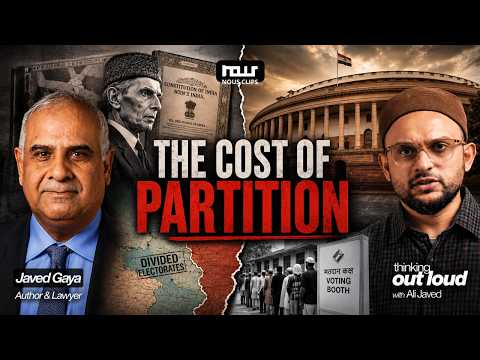
Discussion
0Readers only · Comments are reviewed by the desk before they appear
The journalism is free for everyone — create a free account to join the discussion.