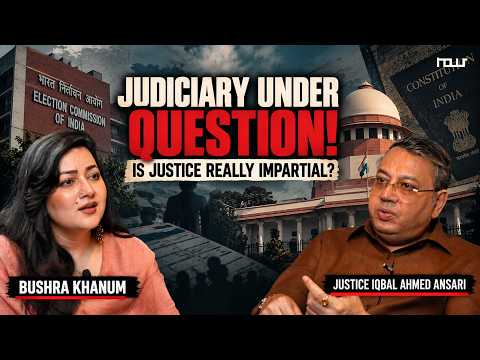
Nous Podcast· 12 Mar 2026· 1:46:26

The Map of Medina: Why Fiqh is a Blueprint for Society | Dr. Sohail Hanif

In this episode, the discussion explores Fiqh not merely as a personal legal code but as a comprehensive social vision rooted in the prophetic experience of Madinah. The conversation examines how Islamic law was historically meant to organize society—shaping economic justice, social responsibilit…

Full Transcript

and to be faithful to this legal tradition. It just dawned deep in my core that it's about bringing about a social vision because all of is really a social map more than it is just a personal code. And we have in the modern world for reasons that might be obvious. We've reduced it in many cases to a personal code. What can I or can I not do? That's the end of what I need to know about. But when the prophet reaches Medina sallallahu alaihi wasallam, he gets the opportunity to build systems out of those frameworks. What was that system? >> Zakat according to the Sunnah is one of the most important engines of creating the form of structured community that we've been labeling as building Medina. And that's what tax always does. Another part of what Zakat is achieving just through its rules is that no one should be sitting on liquid wealth. either circulate it through the real economy or give a share of it to the poor. How do I treat from the very moment the prophet got the wii to the last moment of his life? All those 23 years are sacred and how do I abstract all of it in a way that I can reconfigure it. But we treat the mosque as exceptional but no the mosque is the entire Sharia. Medina is nothing more if you want to say the will of Mecca. Medina is nothing more than the will of the mosque. What is zakat correcting in terms of inequalities? In terms of what is it solving as a problem? But the human being that zakat is creating naturally then wants to is being taken on a journey in that education. A journey of responsibility to place responsibility to people who are struggling and a journey of wanting to give more. Because if you look at the civilization Zakat unlocked, it's great champion was actually W, which is nothing to do with Zakat. Dr. Silhan is the chief executive officer at the National Zakat Foundation of UK. He works on Islamic legal theory with a focus on the Hanafi School of Law. He received an MA and DEFIL from the University of Oxford. His doctoral thesis studies the interplay of rationality and tradition in a major work of legal commentary. So has also spent over a decade in Jordan where he studied a full curriculum of Islamic sciences with traditional ulama. He was previously the head of Arabic sciences at Kasid Arabic Institute in Aman BA program manager and lecturer at the Cambridge Muslim College and an instructor in Islamic studies at Kibla online academy. Additionally, he has taught undergraduate classes on modern Islam and Quranic studies at the University of Oxford. He has also served as the head of research and development at the National Zakat Foundation. you were doing this hardcore uh academic uh teaching, writing and then you thought uh you know the prophetic model is it about only armchair intellectualism or is it institutionalizing those ideas into frameworks that can be embodied and that could translate into day-to-day life and of course you found zakat as that pillar as that institutional framework where you thought that a lot of what Islam intends to do in terms of organizing the society uh you know changing the dynamics of how the world is organized between people especially given the context that we know today we have been suffering from the highest inequalities throughout the history of you know human beings. If you remember even covid a pandemic of that scale where we were reminded of that kind of inequality what we ended up you know producing is much more starker inequality and wars and pandemics and everything. Why did you think with your broad background in fik that zakat is that institutional framework wherein you could bring that change from a broader Islamic paradigm. >> Uh thank you very much. What can I say? Since I was 17, I think I've been very interested in understanding uh what you could broadly call traditional Islamic studies. Uh and I think halfway through that journey, I I had some teachers who influenced me a lot and I felt at that stage that academic work to develop my own what can I say deeper frameworks of how to engage with FK would be helpful for me and that's what took me back to university and the PhD. Then at Cambridge Muslim College, I was lecturing for four years and to a group of very intelligent students, we went through a whole the whole set of classical from the the worship of it to the trade and marriage of it to the jihad of it to the hud of it to the slavery of it. And so we were really the blood we were really thinking throughout this whole spectrum of topics. Uh first of all, what does it mean to reason juristprudentially with these topics? Meaning it's not legal statements to be memorized, but they're conveying some information about thinking about reasoning about a craft of Jewish prudence. So how do you access a craft out of these statements? But then secondly, we reflected throughout what does this all really mean in the world then and in the world today. So then there's there's like a triangle. What's the craft of reasoning across each of these topics? And then as you develop that craft and insight, what would this have all meant in an old world and what could this mean in a new world? And as we did this over the years, it just dawned deeper and deeper and deeper on me. Something that we might know, but sometimes it's different to know something and to really feel something in your core. Perhaps that it went very deep in my core that to be faithful and faithfulness was always a very important word to me. What does it mean to be true to this tradition? Because sometimes we parrot off a tradition. But then you have to ask yourself, is this what it was really about? Are you being faithful in just quoting words or does faithful mean does faithfulness mean deeply taxing yourself to understand what is really being conveyed? So faithfulness was a word that meant a lot to me. And to be faithful to this legal tradition, it just dawned deep in my core that it's about bringing about a social vision because all of is really a social map more than it is just a personal code and we have in the modern world for reasons that might be obvious we've reduced it in many cases to a personal code. What can I or can I not do? That's the end of what I need to know about. And then when you go through a fick study, the goal is to be a teacher, which is odd because the goal should be that the craft enables you to do something, not just a rinse and repeat in the classroom. So I think there's a lot of structural problems in how we envision this discipline of classical Islamic law or Sharia. Uh and so it was that and then then I thought to myself my goal is to prepare students who should go out in the world be lawyers be activists be this be that I'll just teach and inform you and so it was a strange what can I say a strange set of affairs that led to me myself being the one if you like uh to go out in the world with very little I thought worldly experience uh and the opportunity presented itself in zakat that's all I would say but um As I've been in this space, I do really believe that zakat really allows us to move the conversation from the community building that mosques allow for to really the next level of a structured, organized, empowered, orderly Muslim community. And it is noteworthy that zakat and salat have always been the most emphasized of the pillars and the if you like the foundational institutions of an Islamic community. Last thing I'll say before I hand back to you, the mirrors and differences between what you might call a western minority context and an Indian minority context. Because I remarked to you when we met that it's a shame how much when westerners look at minorities for an for a shared conversation they often don't extend their thinking towards a place like India where you have a huge minority with a great history uh ancient institutions an indigenous scholarly tradition and then challenges which in many ways far outweigh existentially uh possibly I mean we can explore that challenges that we face in some of our western minority contexts and I really hoped that having an equal or shared conversation might produce learnings for both of our contexts before moving on to specifically talking about zakad and uh one of your lectures that I heard the map of Madina uh it really moved me in the sense that I've always been motivated towards thinking structurally literally about things and issues not just talking about of course you know I I'm very moved towards abstract thinking but what is that abstract thinking uh you know developing in this world and in that context my interest in philosophy always has created that anxiety within me of the relationship between falsafa aa and madhab I mean where from abstract philosophical ideals to restrained philosophical thinking within the frame of Islamic paradigm to actually methodologically applying them into system building from the perspective of institutions but also from the perspective of individual nuffs. So in that context you having very unique backgrounds of one an engineer the second in formal training in in actually you know fair hanafi law and every everything and then your background in Oxford as somebody who's thinking about this from much deeper first principle perspective than a traditional would do and then finally you becoming this institute initution builder itself or you know becoming part of that institution. How does this anxiety between the world of ideas the restricted the restriction imposed within those world of ideas with the framework that in Islam or Quran introduces and then channelizing those thoughts into actionable programs. How do you navigate that? >> I'm navigating it by not calling it anxiety. You know a friend once told me I went through a period I was sort of I always say that you know to really be able to create within the knowledge that you have to create ideas you always have to learn within a tradition because if you can't learn within a tradition that you can't really benefit from people before you and at some point you have to step out of that mold which has trained you to analyze from first principles what's the what this experience has been and um uh are there other frameworks that you could benefit from? So there's always this period of growing in a mold or climbing up a ladder and then analyzing the mold or the ladder and if you like breaking some of your premises and then having to rebuild yourself again from what you've deeply understood. That's a very painful thing that the act of unlearning after learning. But everyone I've deeply respected has gone through some form of this. Uh and I remember going through this once and I was speaking to a friend. I said I'm going through a lot of doubt. I'm doubting this, doubting that. D. He said no no no. said, "Don't call it doubt. Call it." This is what he said. Call it certainty. You're going deeper into certainty. And I found that a very deep thing that my friend told me because sometimes the way you label your own ideas does actually influence how you take them and how you emotionally react to them. So although I said this as a joke, but there's a truth in it. labeling a a a sort of returning to certitude a doubt uh is quite unsettling and labeling uh bringing worlds together in a synthetic way labeling that anxiety could be a settling as well anyway so I'll say that as >> definitely that's what usually happens that uh you know after you're going through this phase of really thinking about things from structural perspective that it's it's the yin it's the you know uh the belief beyond faith that you are invested in this uh framework and it has given you 99% of the answers and in time it would give you that 1% as a lived experience so what is this map of Madina wherein you know the uh foundational thinking that I saw was zakat or pillars of Islam as civilizational projects rather than atomized individuals modes of beings. So as a civilizational project, what is the difference? How do you differentiate what the prophet did in terms of building these institutions as uh you know recursive or repeating frameworks even after he passed away? >> One last thing if you don't mind on your last question beyond the labeling of it as not labeling it as as anxiety. I've uh had the good fortune of not thinking too much beyond the step that is in front of me. Meaning if I'm trying to understand because what does it mean to go towards yen? It means to understand your knowledge system from first principle because when you're learning you kind of surrender to something so you can study but you kind of have to collapse it to its first principle so it can be a truly deep internalized thinking system. Otherwise it's not yours and you can't create with it. This is the problem. This is what I mean by looking for certitude. And as you look for certitude, I think what I've been uh what I've been fortunate with is I only know what my next step is in front of me. So at one stage it was uh finding a different teacher and challenging myself in that framework. At another time it was I need to almost state these first principles and I think an academic environment will help me and as I produced that I felt the best thing now is to start educating myself and others within first principles so I can understand how that journey is and alongside that then became this next journey of actually building an institution out of the system that I'm deeper understanding at a deeper level now that requires institution building. And so in this idea, one is more what what I say is you kind of want to at least in in this discipline of so you want to surrender to the you want to let it lead you and not you lead it. It will like all knowledge it takes you on a journey and you kind of have to surrender to that journey. There's an inquiry, there's an understanding and there's so you're just taking it one step at a time. you're not uh and I what I tell students is never put a label on yourself. Don't say I'm a teacher. I'm not a this or I'm a writer. I'm not. Don't ever say not to yourself. Just follow the journey. And as you follow the journey of knowledge, it might take you into writing. It might take you into teaching. It might take you into activism. So I now start saying Sharia is all activism. Such a strange thing to say now. It might take you into leadership. I've never CEOed. I've never managed. I've never done but now I am. Not because I was seeking it as an aspiration. It's because I was trying to follow the knowledge and the knowledge just took me step on step in directions I never imagined. And I'm still not putting a ceiling on me. I'm not saying now I'm a CEO institution builder. I don't The best thing is not to give yourself a fixed identity. just call yourself because we call it in Arabic the phrase is so talib is about seeking which is not always the same as finding meaning you're taking step after step and as you go closer to certitude things will dawn on you and a time dawn on you so I think knowledge will transform you to the core and they always say you know knowledge knowledge is the key to leadership and power knowledge is everything nothing is greater than knowledge uh but what stops us are our own boxes whether they are institutional, imaginary, social. The the best thing in knowledge is don't have any boxes. Just sort of lower your head and see what steps come. Like now you're a podcaster. Tomorrow you might be a president. You don't have to say I'm just a philosopher. You just the that's the power of ideas. They just drive individuals and societies and civilizations. But every human is a minimum is a micro civilization. So just let the let the uh journey take you. So I said to one person, I feel like I'm that camel. I think it's the when the prophet sallallahu alaihi wasallam entered Medina, which is your next question. Uh they all wanted to host him. And uh or they wanted to you know and he said to them, "No, leave the camel alone. It's being instructed." And it's not clear to me, did the camel know I'm going to Abu Yubans's house. Which number is it? Or was the camel following a destiny and when the camel was told to sit it sat and prior to that destiny all the camel knew was one step after one step and uh you know so I just feel if you look at it this way all a sudden there's no anxiety it's just this is what I'm understanding today this is what I feel I have to do and so even now it ends I'm fundamentally I'm fundamentally trying to understand things. I'm a lifelong student, but that's taking me into a shape-shifting of identities. So, all I'll say is for anyone listening is you don't have to box yourself and you don't have to have anxiety, but you want to surrender to Allah and understand that Allah has a destiny for you. And if he's placed the love of knowledge in your heart, just realize knowledge is never dogma. Dogma is just a step towards knowledge. and let Allah guide you. If you make any institution or label or teacher as your ultimate guide, it's kind of like an idol that you've erected. Allah is your guide and you have to surrender to the the forms of guides he gives you. You know, teacher after teacher and tradition after tradition, but uh allow Allah to guide you and it's a beautiful journey of enjoyment, not of anxiety. That's all I want to say on that one. lot of profound things that you've said and some things that are related to it. Especially the fatigue of doing too many things also catches up in many people and it's that curve that if you are specializing in something the curve is that you gain too much too early and then it flattens out and for people who are taking too many responsibility too many key roles the the uh you know curve is almost the opposite. It just is flat in the beginning and if you are able to move past those hurdles then you might rise exponentially and that that's what the transition from Makkah to Madina is in a sense that it's from the metaphysics to masses. Uh you know the prophet took a while to nurture people and himself into this multifaceted personality. So I'm I'm completely with you in that sense philosophically speaking and you know uh as as a lived experience. So moving uh forward. So by you know this this map of Medadina in a sense that the prophet with all of his followers and companions. What is Makkah representing is basically the the internal system. The system internalized and embodied as human beings. For example slavery for example how do you treat women? How do you treat uh uh you know poor? How do you treat everybody else in that sense? But it's not part of the structure of uh the governing structure of the society. But when the prophet reaches Medina sallallahu alaihi wasallam, he gets the opportunity to build systems out of those frameworks. What was that system? Especially in terms of you know zakat. So if I start in general uh with what we've discovered or discussed so far uh which is that I'm going to call it Islamic sacred law. I'm trying to force myself to say Sharia more by the way only because Sharia has turned into such a bad word and I feel we have to rescue it. I mean, who are we to rescue uh the uh the sacred terminology of the Quran? But it's just we have to serve it just because it's been hijacked into notions of barbarism and domination and things that are so antithetical actually uh to what the Sharia actually represents. But just to say this system which you're calling Islamic law, Sharia, just this set of rules and laws, this is describing what was revealed in Medina. that's at the heart of it. Uh I think prayer was uh uh you know obligated fractionally before Medina the migration but if you really think about the but the whole set of systems again the first mosque prayer is institutions all in Medina. So if you really start thinking you are just studying Medina right now uh and that's when you start realizing that what is a book it is the legal equivalent of walking through the streets of the prophet's Medina sallallahu alaihi wasallam that that's all it is because what's the significance of the hijra it's not the GPS of this town called that's not the significant part the significant part of what the hijra represents is not the oases or the date trees or the tribe of o as its history. None of this is consequential. These are just features. The consequential part of the Medina uh that the hijra really instates uh our calendar remembers our civilization marks as our starting point is civilization. It is a new order or a new way of living in the world. What is the essence of that way? It is the Sharia. That's it. The Sharia is the code of Medina. The Sharia is the constitution of Medina. The Sharia is the blueprint of Medina. Anything else that you might see in the history of those 10 blessed years, miraculously blessed years of our prophet sallallahu alaihi wasallam in Medina. Anything else you'll see is just the instantiation of these principles. uh if you like it's the modeling of them in that time and place but if you collapse the time and place to its core institutional pillars or blueprint that is what you call Sharia. So you cannot therefore separate Sharia from civilization and you cannot separate Islamic law from an entire vision of organizing a society socially, politically, economically. There is no separation. So therefore we can say then if you are a student of or a student of the Sharia you are a student of the prophet's Medina sallallahu alaihi wasallam and if we were to say that we are trying to serve the Sharia not as an individual code which what I think we've fallen to nowadays but to serve its vision bring it into the world as we uh must in truth aspire to then what are you trying to bring into the world the prophets Medina okay therefore what I've started saying to people is if a book is lots of topics like prayer is obligatory is for and um marriage is offer and acceptance you know uh micro statements of law those micro statements lead to a macro statement which is this entire set of statements should be brought into the And that's what I mean by saying if you collapse the Sharia into a single instruction. I would like to suggest that single instruction would be because Sharia is fundamentally a social political code or a um a social vision. Then that one statement will be build Medina wherever you are to the best of your ability. And I believe all the instructions of classical come underneath this uh because it is fundamental if you were to think of it. It is a public and social code. Now before I pass back to you or maybe we can drill into this Medina is a city. Uh and so what the prophet did sallallahu alaihi wasallam in his time he brought these pillars about. prayer as institution, Jum as institution, zakat as institution. These two probably the greatest foundational in ingredients. Then there was arbitration as institution. There was you could even say marriage as institution meaning how it's preserved by publicly. Uh you have trade as institution. The second thing established in Medina after the mosque was the market, the free market. uh we had then leadership as institution uh defense as institution but what I also want to remind people of why Sharia as domination is such a lie you had the notion of structured communities as recognized institutions meaning in the case of Medina the Jewish communities were told just self-organize follow the Torat go to your rabbis organize your marriages uh be respected and empowered and legally enforced in your own codes. And that was sacred in the entire Sharia which is not that it's one code for all but it's a multitude of structured and self-organized faith communities which are being guarded and protected in their right to self-govern and celebrate God uh according to what they believe. So we have to come back to this idea because if I go overly into the structure of a Sharia then people who are scared of Sharia say well you want all of us to surrender and that's not the case. So we have to come back to this idea of a respected plurality of I don't know if you can call it pluralistic theocracy. Chachi says I I could call it this but I don't know if that's a real word. you're my you're my philosopher if there's such a term but the plurality we have to come back to otherwise everyone's mind will go to this system is dominating in the way that modern systems dominate and it's not like that uh and then last thing I'll say before I hand back to you I know I've not gone into much of the details yet but then when Mecca entered into Islam which is the let's say seventh year after the hijra uh the prophet sallallahu alaihi wasallam then transported Medina to Mecca. Meaning he came back to Medina but he appointed a governor which is a 20-year-old called Ibid. Under the governor would have been organized zakat. He appointed a head of the market. He appointed uh uh that the governor was in charge of Hajj. So now Hajj had a governor. What I'm trying to get at is the structure of Medina was to be copied wherever there was a faith community after Medina has come. There's a hadith that says there's no migration after the after the opening. And so when the tribes came into the other when they came in the latter two years of the prophet's life sallallahu alaihi wasallam to declare their allegiance, he would send back Medina. He would send he would send them khadis. He would send Muad as his card collector. He would send somebody as a governor. It was the civilization coming across Arabia. Wherever Islam went, structure went. And what does that mean? Micro medinas. Wherever you are, that's the idea. It's a place-based code of creating a faith-based leadership which is responsible for upholding these fundamental institutions. That is what Sharia is. And that is what we have to build wherever we are to the best of our abilities. >> I'm reminded of two things when you say about replicability. It's it's the fractals which you know they scale to whatever level they look look like the same and it's it's the structure is replicable. uh it's also like the honeycomb you know the basic structure is same and then it replicates itself to become this uh holistic uh framework which is u optimized which is stable which is robust but also uh I am reminded of this conversation that I had had with Dr. Yaser Kadi uh and we did a podcast together and uh I told him that my belief is that the only theological code of conduct which has legal pluralism so to say in the modern linguistics embedded and theorized and uh you know has theological value is Islam where you have the Quran says you know you introduce all of these universals all of the rights what Islam says to all of the people but at the end of the day to them their dean to them their religion and to your own if they don't agree and then you establish a contract in terms of jaza for protection and let them have their space so in the modern context what we in constitutional theory call legal pluralism that there is legality there is supra legal framework which is the meta legal framework of Islam but there are mic micro uh you know uh micro microlealities uh which are operating within that of course with some level of restrictions in terms of what can be exported. Just to be clear when you said these microlealities under that global legalities of Islam just to be clear that that global legality just comes back to fundamentally protecting life and property because it's not infor it's it's not enforcing Islamic the beliefs that are for the Muslim community which is structured by the Sharia on the other faith communities to the extent I always give this example and uh people might find it offensive But in our book uh in a chapter called I think it's alik I can't pronounce but it's it's in the hay it's well known it's not it's like hidden doctrine that the jurists are being told that you cannot interfere with the incestual marriages of the magians because they are a protected faith community. So in our ethics that's unethical in our ethics or in our what can I say social um acceptance or values that's disgusting but the law is saying you cannot interfere it's part of their code they are conducting these marriages in their places of worship under their clergy and we have promised them a safety and that safety is not to interfere and so whenever That's why I said to be very careful think there's an Islamic controlling that's what everyone's terrified of but that's not it's that's exactly what you said it's the only code again I can't say that without studying all historical codes but it's very hard to imagine another code which believes in a fundamental uh demonstrable uh non relational truth claim that there's a ultimate truth and yet on the legal social plane it condones and protects a regime of multiple truths in in in the in in the legal sense. And so it's really important to uh really understand that according to Abu Hanifh even I'm sorry to be so specific in this very unpleasant topic but if there's one couple in an in ancestral marriage like a guy married his sister and the sister comes to the Muslim Khadi says can you divorce me Abu Hanifh says the khadi's got no power to divorce her because this was conducted in a protected faith community why are we interfering Abuhifa only allows if both of the couple come to the Muslim judge and they say can you give us a paper to separate us says fine the Muslim judge can now separate as arbitrator of both parties uh so it's really important to understand even what you call an Islamic value on top we're not in uh they are fully protected to buy and sell pork to buy and sell wine and so it's just to be really really clear that the code on top really returns to protection of life and property as its fundamental purpose which can involve things like prohibiting usery by the way because they felt that usery is prohibited by all ancient codes and it undermines the safety of the market. So I just want to interrupt you that that one point we can debate it further but just so listeners don't get confused by what you've just said as well. I have a different theory of this that uh what has happened is the concepts of sovereignty and darul Islams and darl herbs now we have to think in the way you are saying fractals uh in the 2 km radius that I'm in the way this is organized it's actually a map of medina in a very limit in a very you know extensive manner that we are allowed to have this in a country like India and so this 2 km radius may be a darul Islam and then there will be a darl And so you you can't you shouldn't uh you know think of it at a national scale only. You could reduce it to micro realities of you know and people just you know okay it's it's this country versus that country. If you deconstruct that locality or that region you would find different kinds of modes of being interacting together and we should be more nuanced in terms of these relations. The only thing I'd add though with the only what can I say qualification to a fractalization of this model is the insistence of the thin layer of leadership as broadly as possible because the whole vision of this sacred law is creating Jama and the strength and protection and all the advantages that a jama brings or a group. So Mecca is still governed by Medina although it's got its own sort of structure Medina like structure. Medina is in the time of Smar appointing the governors in Basra and Kufa and possibly firing them. But Basra in Kufa is fully self-governing within the structures of this blueprint. So it's just one thing to keep in mind. But why is the fractural thing also so important? What you're saying is that for the vast majority of Islamic history, the idea of a strong central government really dies out very early. So like it's hard to say, you know, so like uh the omeads who people were not very fond of, they sort of persisted this idea of a single global entity of some sort. But the Abbasids very soon on uh fractured in so many ways. Uh and the the caliphate became for many people a symbolic leadership. Uh but the idea you've raised about the fractal allows that symbolic leadership to have a unifying and you could still say consequential purpose. So you've created now fluidity and therefore stability in this political imagination that even if the center is compromised or weakened, it's fine. We've got the fractal structure and we have a way to unify the fractures in some capacity under a unifying narrative and that's created stability and a way to bring things back to center at a time or a place when that's possible. So just to say we need to bring a unifying narrative but still I agree with you that there's a power in this fracturing >> what you're saying in in my I call it transcendental contextualism there's context its whole embedded realities its whole nuances differences even then there is a transcendental structure in terms of the algorithmic way in which you conceive the highest goal and still it can have multi- uh multiple manifestations in different contexts different geographies different localities ities different group relations. So even if you know if you have this relation between Hindu and Muslim, Muslim and Christian, Muslim and Jew, Muslim and Sabian, Muslim and uh atheist, Muslim and communist, Muslim and capitalist, all of these will have a transcendental relationship but also a contextual relationship that also follows from this. You know one of the things that has that struck me from the moment I heard you uh because of my interest in philosophy when we think about map of Medina in my opinion and I may be wrong about I'm not a trained you know uh scholar in tradition but as far as I have read from the from my own philosophical perspective I see the Medina the abbiscinia and the Makkah and then the expansion as a continuum in the sense that one is informing the other and then so for example when you when you're in Makkah the prophet sallallahu alaihi wasallam and the companions they're under the law of whatever governed Makkah at that time it's it's like an oligopoly uh very hierarchical society with with mythified uh local sovereignty uh and that the way he was dealing with that kind of structure and when he was to govern the minorities. So there is a continuity in which the kind of dignity he gave in terms of the right that you said to govern themselves to have a meaningful interpretation of what what an individual or a collective or a group thinks of what their life is intended to do despite the fact that there's always da'a. There is always the invitation towards what is right and what is wrong but it is not imposed. So it comes from a very uh you know bottom up alak oriented where even in the free market that the prophet introduced the people get benefit from it and then people from different ways in which they interact with the society somebody is spiritual somebody is economic somebody is political it is there they find meaning that Islam is giving the best of alternatives and then people come to the fold it has never seen you know uh you hardcore imposition the way people like to say when you started Sharia totalitarian fascist frameworks so I totally agree with you when you say that and uh so the follow-up question then is so when you say the map of Madina Medina presupposes certain kinds of structures that the prophet embodied in Misak Madina like a sort of a head of that state in terms of even the negotiations that different groups have. So in classical fik when these uh discussions were uh you know people were having these discussions between modern theologians and classical fik in the late 19th and early 20th century. So one of the questions people said whenever people are invoking Medina they're forgetting the part that the the uh you know framework that is being given is from the prophet himself even when it is pluralistic and so to be able to have that kind of model in a modern state nation state wherein almost always even in Muslim context where majority Muslim populations live Medina in its first principle configurations of say 10 different axes that are required 10 different first principles that are required to structure the madin and polity maybe three are fundamentally non-accessible for example sovereignty for example uh like you all you give the example of establishing Juma when there is no and in in in 20th century even the classical jurist said that you can do it so in that context how do you fit this map of Madina wherein these populations Muslim populations are configured into 200 different nation state contexts. >> So you know we have to have uh the first step is meaning trying to grasp what it is that the sacred law is saying. That's one part. Now we're almost bordering onto fatwa meaning what do you tell people to do where they are and what you tell people to do has to be informed by a broader vision. But the broader vision might not be what's possible now and therefore the individuals can't be required to do that now but rather it's taking society on a journey. Uh so um that's why I said if I collapse all of I feel it's simple sentences build medina wherever you are to the best of your ability and the last part's very important because it shows that society building or civilization building is taking society on a journey and societies are always on journeys you know every 10 years ideas are shifting what is current is shifting so It's not that you're breaking a mold. Society is already on a journey. But can you be a positive agent to take societies to a better journey? And what I'd like us to start owning and it's very tricky is that the Sharia is a code for the betterment of all people and the dignity of all people and the protection of all people because of what you just said in your last comment. It's not dominating. It's actually protecting and preserving and empowering. What Sharia does that modern states don't do is that modern states uh and I do subscribe somewhat uh to the core thesis of uh professor halak about the incompatibility of an ideal shar with an ideal modern that there's a clash of control and lowkey of power. Not saying that Muslims can't govern today. That's what people misunderstand. But just as a when you think of ideals that there's there's a variance within these ideals. So one thing that this Sharia does that modern states don't do is that modern states because they are centralizing power it's in their interest to weaken other Loki of power. So in other words uh small family is easier to govern than large family. And you'll find that the laws work to say that if you're in trouble, the state will help you as opposed to saying, "Let's make your uncle help you," which strengthens family. The Sharia says, "Let's make your uncle help you." So the Sharia's laws are actually all strengthening Loki of power that are non-governmental. And as you strengthen family, strengthen the legislating power of faith communities, you are creating these centers of authority that are not central government and therefore you're actually protecting individuals. You're placing uh barriers on the penetration and power of government. Uh and so it's a theory of protecting people in an era where everyone is scared of totalitinarian. Everyone is scared of how technology is just accelerating a race of control. Sharia is a code of systems that can give more autonomy to people. That's why when I think through Sharia although your question was right now in Muslim majority uh if I think of Muslim minority which is where I'm sitting right now it really produces a very important powerful narrative because not only are people uncertain how to respond to the centralizing power of these states but now they're dealing with the question of these central states can't even look after us anymore. uh health system not working. Uh cost of living out of control, uh benefit system hard to access. Uh there's this idea that power has been centered. We're being controlled by it and it's not even help looking after us. And so in a very delicate moment of fracture, which might be responded to by extreme totalism, which is we're controlling all of you, stop complaining. Or it goes where? Where is civilization going? We have to understand that this is not just a theoretical conversation that we're having today. It's not just a philosophical one. It's not just a faith one. It is one at a moment which can have great consequence for humanity. And we almost have to enter that arena by saying we have something to offer. It's about let's build structured communities. Let's put uh weight back into communities. Let's look after each other. Uh let's create our leadership structures. Let's create our welfare structures. Let's plug these gaps. And if you could have a Muslim community plugging its gap, which the local government can't cover because in England, local authorities like Birmingham are bankrupt and they're very Muslim populated. So if Muslims could say, "Don't worry, we we have this. We're going to organize our welfare, our zakat, our work, all this." Naturally, you're creating a shift of power. Meaning now you are part of the governing of Birmingham because you have filled the gap. What you're doing is you are contributing to a future of society which you can actually protect people's dignity better. You can say to your church networks, come why don't you self-organize? Let's plug these gaps. Let's look after these asylum seekers which are being villainized, demonized, left with little and they're human beings and they're in our societies. How do you solve this problem? So what I'm trying to say is this conversation is very real and palpable and I'm sorry I've hijacked it with a minority example but why did I say that is because our fukah say that even in a minority settings Muslims should self-organize to the best of their ability. You don't have a Muslim government but try to organize into some kind of Muslim council and appoint a Friday prayer leader appoint a khadi appoint the institutions which are the institutions of Medina then to the best of your ability that's why I add this clause at the end to the best of your ability you have to organize and every uh struggle and weakness that I can see in western Muslim and minority Muslim communities is the lack of the organizing vision And the wider societies are scared. Are you trying to organize and dominate? But that's where we have to lead with a deep understanding of our tradition that it's through organization we represent the justice and mercy of our prophet to these societies. It's not dominating and controlling but it's how we contribute otherwise we are scattered and uh not helpful contributors. So I'm sorry to take this in a in a in a different loop but just to say that uh societies are all in flux. Societies are all in a journey forwards in this current moment. Uh our these modern states are really being stressed. uh and it's a moment between totalitarianism, authoritarianism or another kind of civic responsibility that people have to start showing. It doesn't have to be presented as revolution. It could be presented as collaboration. But as you know, the moment you collaborate, power is being shared always. If I collaborate with anybody, I'm sharing power with them. So it's not about it doesn't have to be presented in anything other than a new form of civic ethical collaboration to look after people to fill gaps to organize to coordinate and you're contributing to very real conversations without any of this having to sound threatening to anybody. Uh it's what our faith tradition does. We are called to being active civic agents. That's what I called activism last time. I'll let you respond and then maybe we can build on your question. >> Actually, what you're saying is very prophetic in the sense the Misak Madina represents this the the the treaty between different groups and with the assurance that we're not going to take over each other but we'll protect each other with the external threat and build Medina as you know for everybody. So it's deeply prophetic what you're saying. It's anything less than that would be you know actually in a way I'm I'm thinking of it actually the map of Medina is in a way like you rightly argued in whatever uh capacity and demography that you are organized in you need to have u some level of alignment some level of collaboration and that's what that ultimately leads to this uh leading towards a nonpartisan society otherwise people would always say you know there's too much concentration of power there. There's too much wealth there. And with that regard coming to the zakat, so mostly what happens is that it's a concentration of power either in the form of military, in the form of information, in the form of wealth, in the form of political representation. That is where the societies start to really fracture. And historically speaking, there is a zone or a you know a range in which even when people are oppressed they can be contained. And it is as you said that the nations today are really going through that test of actually failing. And as I you know uh quoted the example of COVID I remember in India when the COVID happened so millions and millions of people were stranded in urban centers and they had to walk back almost thousand kilometers to their homes walk literally and these are poor agrarian uh working-class labors and what was filling that gap was charity. bottomup institutional individual plus collective com uh you know contribution in terms of the charity being able to move say for example hire a truck that people can board in and go get some food that that can be distributed and zakat in that sense is these kinds of failures that happen in the market. What is zakat? In a framework where when you go through these stress moments in society and and how does zakat in Islam has organized it for every kind of situation you're in? It's not as if when you'll be in stress then you have to go through this. It is institutionalized in the very nature of redistribution in Islam. >> Okay. Now that's a very big question and you could tackle it in very very very many ways. I would like to go back to the model we've been starting with just to develop it in abstraction and then when you want to then bring it into the world the abstraction I'm going to suggest right now maybe we can discuss it in the levels of minority majority again and then we'll come back if you think that's answered your question. So in the level of abstraction for just the idea of zakat zakat is taxation it's incorrect to not call it that uh because it in its first because if we remember that medina is what the sharia is modeling in medina zakat had all the features of taxation but taxation within this notion of a pluralistic structured set of faith communities overseen by this central um body if you So zakat within that space was specific within the structure of the Muslim community. That explains why most scholars saw it as a payment from Muslim to Muslim because if it's a society of multiple communities structured and organized and if faith uh this is the hardest thing when you want to map a classical Sharia vision for society to the modern world then the hardest units to deal with is how faith was envisaged to be a fundamental unit of social organization which which it is it isn't anymore. anymore. That's probably the biggest question when you struggle with some of the implementing or bringing these into the modern context. So in the old world or the world or the vision of how the Sharia is documented, recorded in its books, uh being Christian or being Jew or being Muslim is part of your it's not just a personal choice. It will inform where you're going to wed and inform what kind of laws might apply to you and will inform what form of welfare, what notions of welfare you'll pay into and tap into. And so informs a lot about you in the world, much more than anything we'd imagine today. Uh and so zakat is for the people whose identity in society is Muslim. And then for those people it's an organized tax regime meaning there are there were there were collectors they would document they would record they would gather they would guard they would distribute and it would repeat just like a a tax would. But unlike attacks it's a tax in a civilization that's not fundamentally secular. It's fundamentally custodians under God. And that's why this pluralism is so important to understand going back to this pluralism because any human being any human system which believes in a truth claim naturally wants to dominate. Truth must prevail. And that's why this system isn't doing that. It has a fundamental truth claim but it's under God. And God has said you are custodians who protect. That's it. And in obedience to God, there's this protection that we've been stressing about all faith communities. And so, if you like, it's God's tax regime for this Muslim community. And so, the government can't determine the tax rate. And that's part of the system. I say, why Sharia is so relevant in today's anti-totalitinarianism conversations is because Sharia at its core is limiting government all the time. It's limiting the tax rate. It's limiting where the tax can go. It's limiting what kind of taxes may be raised. It's limiting when a government is overstretching in taxation. The whole system is protecting people and limiting the possibilities of of authoritarianism. We really have to bring that about into real conversations today, not just theoretical faith conversations that we're, you know, we might currently be having. Um, coming back to this then, it's a tax under God. And so the government or the the tax authority let's call it that can't determine anything other than the fact that it's duty bound to collect and redistribute. That's that's the first step. It's centralized. Then within this is the idea of why within this there is two things is that the scholars of say the time of the prophet sallallahu alaihi wasallam Abu Bakr and Omar may Allah be pleased with them all of zakat was centrally collected and distributed after snman they say there was a distinction between public and private wealth public wealth was agriculture and uh animal livestock private wealth was about gold silver and trade items Uh I believe the distinction was partly because it protects individuals from the tyranny of government. Meaning a government would never enter your house to count your money. You count your own money. The government will not count your private wealth or take stock of it. You count it and you're trusted to declare it and spend it. And when you spend that zakat, you can give it to a government collector or you give it yourself directly. So then zakat becomes two-tiered. a part that you have agency to give directly and a part that is still centrally collected, accounted for and distributed. This then takes us to the next conversation about localization. All the schools say that the sunnah of zakat is it's all distributed. The wealth collected in a town or city is distributed in that town and city. There's some small debates about can you still take it out if there's greater need or if your relatives are there. So that's fine. So I'm not saying zakat is only in a town but in its sunnah it's structured within a town. Now you've come to that idea then you can come to the next idea that uh zakat according to the sunnah is one of the most important engines of creating the form of structured community that we've been labeling as building Medina. And that's what tax always does. Tax is one of the most important features of showing the legitimacy and authority of a government uh because it means that you can exact uh money from a population who then can make demands of you to represent them. That contract, that political contract is expressed through taxation. Uh and so now we've shown how zakat is this sort of placebased structured system. You can see why it's the most important engine to moving towards the sort of idea we've only hinted at. Again, we've not gone into great detail about, but that's why I'd say it's necessary for us to start thinking about how to organize our societies just to serve this pillar of zakat because it's the accelerator of everything else we've talked about. In other words, can we organize zakat in a unit? Whether the unit is Delhi or the unit is a state in India or the unit is a part of an area. Can we start structuring? Can we start organizing? Can we create a leadership that we can trust, a leadership we can give our money to and they can distribute? Can we make sure that Muslims wherever they're living in a place they are known, their needs are known and identified, their needs are cared for because then you're really fixing a place and you're creating struct uh structure and leadership. That's important for the next step. Lastly, I'll say and I'll hand back to you. Zakat is not exclusively the structure within place. Givers do have an agency. So I believe we have to build the structure in place and we have to leave givers with their agency. How much of their own zakat they want to put within their local city or town structure. How much of their own zakat they want to take further a field to relatives they might have or other links they might have that they wish to contribute to. So I don't want to say that zakat is illegitimately transported to other places. No, there is a legitimacy in that. But zakat as a system should also be developing our communities because that's the sunnah. That's how zakat came into the world. >> I just want to Yes. Exactly. Come to that. So in the madan context and the prophet uh when he organized this structure, the collectors were taking all of this money to this organized uh framework in which who was leading the distribution and selection of where to be spent is prophet Muhammad sallallahu alaihi wasallam and the leaders he appointed. So in that sense zakat in the madin model uh is state bound say for example and if it's state bound uh and it has certain categories like asnav eight categories where you can spend it so there is minimization in a certain sense of the agency to utilize in it it in a way and manner that you would like it from a very uh you know individualistic perspective but the way we are attuned to using zakat in like India and other places is like there is an isab the minimum threshold after which you your surplus wealth needs to be tax say for example 2.45% and then you spend it according to your own understanding of these eight categories to your local massagid to somebody you think uh you know is in need. So the these are two very different ways in which the zakat is organized and then there's this middle way in which you know even your experience with national zakat foundation or organizations here who prefer to structure themselves into nos or local uh you know Islamic bodies and they take the zakat from you on your behalf and then they spend it. So it's like a middle way. So in the Indian context or in even in the global context the problem that we face in the hyperindividualization atomization of zakat as this model where the eight categories I see are these frameworks within a nation state or an you know or an organized polity where the institutions of economy, the institutions of political representation, the institutions of education, the institutions of banking and debt. These markets fail and it's the correction of these markets through the surplus wealth collected from the community itself and restructuring those asymmetries into potentially uplifting you know frameworks for everybody involved in that society. So in that context, how do you see the institution building of zakad which was embodied in the Medina model as a state paradigm while it was already said 2 3 years before as was the case in Mecca for organizing into prayers. Zakat was also the the ayats were revealed although it was never collected before reaching the Madina but the context was set about charity about zakat the rate was not set but there was this that is why I personally feel that Medina the Medina is the manifestation of the will of Makkah wherein the minority context in which you we demanded plurality we demanded agency we demanded agency to carve out our roots towards truth and to be able to say it it say it out loud. For me, it's a continuum of mapping of that will into the foundational institutional structures of where you got the potential to build frameworks. So for example in the Medinan model of the prophetic time there were certain structures in which you could organize and now in the modern context you have NOS's you have say for example local so many things and you have different modes of organizing how do you map that how do you make zakat from a first principles perspective of its original application in a certain way to recontextualizing it to abstracting it out of that context to anywhere as a solution towards community needs. >> No, I found it very beautiful what you said about Medina as the manifestation of the will of Mecca. I find that very very beautiful and very very fair and it shows that there's no rupture. Uh what I struggle with sometimes is people saying minorities are more in Mecca. We have to go back to Makkah. The problem with that is are you going to leave J and zakat and hijab and you know how that's the this hadith I'm using it broadly like uh this the opening has come uh you can't now discard that you can't discard the fact that clarity has come which people had been seeking all you have to do is understand that clarity that has come it's your it's your core question right now. How does it be applied to where you are? That's that's the question. You can't say after Medina there is no Medina. You you can't say that now. This is that that's why symbolically our calendar is only Medina. It's Medina until the end. And you have also uh answered that question in a way if I recall our conversation when the manina Madina is taken back to Makkah. It's that mapping that was done from Makkah to Medadina institutionalized in Madina and then remapping it to the Makkah. So in in in my understanding of how I read you uh from the first moment I've uh heard you is this constant question in back of my mind. How do I treat from the very moment the prophet got the wahi to the last moment of his life? All those 23 years are sacred. And how do I abstract all of it in a way that I can reconfigure it wherever needed in all of these contexts which you won't find being mapped exactly to the way chronologically it mapped to the prophetic time. You will find ingredients mixing and mapping and for that you will have to abstract it to the level that you have all the meta theory of 23 years and you can always apply anything everywhere given the context which elements are being configured. So I see it in I read you in that manner. So even though when you say map of Madina it gets translated in me as the manifestation of those foundations willed into institutional frameworks and then reimpporting them to other places. very first sum and what you've summarized is what the meaning of is really meant to be because is meant to mean deep understanding and because what you've talked about Makkah Medina Medina Makka is not about ethics or being good to parents or being good to neighbors or telling the truth. uh it's not about uh arguments of is God one and how can you show that or how do you relate to nature can you see it's a very specific context in which your question is coming and it's the context of civilization actually in society and so the science for that is but unfortunately when is professionalized it's teaching repeating rinse repeating is this idea but really the journey to is to journey to a deep understanding of what is the sacred code because if you can penetrate the letters to the understanding then it has to enable what you're saying applying the understanding to every place to the best of your ability and that's what the early did that's why um I mean my own training is in the of Abuhanifh Abu Hanifh I have an article I believe he's the founder of as a as a formal discipline and it's because I I demonstrate to the rest of my ability that he was the first person in history to ask forensic questions of the law. Like if you take a topic multip what if what if how the how what's the purpose of forensic questioning it's to be able to identify and articulate the deep meanings of every topic and that's the beginning of deep theory meaning real comprehension as a discipline and I believe that the the books of the tradition are for that purpose but it's just we have to re arrive at fick reacquaint ourselves with fix what you're saying is not abstract philosophy It is and we just have to come back to and to use the very same tools whose purpose is exactly what you've said. Anyway, I just want to say that is the label in me for the diagram in you when you talk to me while I'm talking to you just awareness. That makes me very confident because uh in the traditional ways uh if you are not trained into traditional ulums then you're rejected outright outrightly. So that's how so by I we have this recorded now I can use it that somebody who spent 10 years of his life studying tradition he said this. Alhamdulillah. Now back to your actual question which we have to remember it but um uh one thing I wanted to say clearly when you say how do we actually bring it about now we're talking about road maps and there's no one clear answer on road maps but it's really important for us to get through our psyche of the entire Muslim community which is that to be a Muslim is to be a crossgenerational civilization builder. What do I mean by that? Because what's the most basic expression of Islam? You have a family. The the family is structured. There's a head. There's responsibilities. Okay. Then what's what's the next expression? You go to the mosque. The mosque is structured. Move as one behind a leader. The problem is as a community our imagination stops at the mosque. But we treat the mosque as exceptional. But no, the mosque is the entire Sharia. Medina is nothing more if you want to say the will of Mecca, Medina is nothing more than the will of the mosque or if at least the the organizing of a Muslim community is nothing more than what what the mosque represents. Just take the mosque, take it into welfare and you get zakat. Take it into justice and you get the kadi. Take it into the market and you get a market inspector. And so it's just we've forgotten that that it's intrinsic. To be a Muslim is to be a social creature. To be a Muslim is to understand how to talk your differences and reach resolution. To be a Muslim is to understand that you reach resolution by appointing a leadership. And to be a Muslim is to understand that that's a leadership is never absolute. It's held to a particular standard. It's the most fundamental education of all of Islam. So I just we just need to bring that back home basically. It's not a zakat is calling for it or a theory of Medina is calling. No, no, no. That's it. That's what it's all about. That's this vision. The will of Mecca in Medina. It's one thing manifest. But we just have to get it to the the most basic core of our education because that's the thing that we've forgotten because what's happened is this global Muslim community railing from you know multiple few centuries now of colonization and loss of central we're on this journey back to find our ourselves and we have to understand that finding ourselves has to be not in the abstract space of ideiation which is important but it has to be in the social space of collaboration, coalition, leadership and moving. Uh otherwise if we if we refuse to come together in our places and I always emphasize place because it's in place that you live in reality everything else is just a relation but place is where life happens and Sharia is place-based. If we cannot understand the duty of forming coalition and leadership to live our faith in place, we are the first people to betray Medina and we can have all the ideation and pontification that we like but we are the people betraying it. That's just a fundamental point of education we have to have. Then we can talk about road maps but why don't you respond and we'll come back to your question. So uh before asking you your uh National Zakat Foundation experience, there's one last question I want to ask about zakat. What is zakat correcting in terms of inequalities, in terms of what is it solving as a problem? >> Again, I think there's multiple answers to this based on who and how you asked this question. I for the longest time avoided the word inequality because I didn't know its philosophical trajectory. when I heard it, it seems to imply inequality is bad and equality is good. And that's not a uh Sharia framing. Uh I've started using it now because I understand that it's addressing mass extreme unprecedented inequality. So I've started using it now. But I just want to say I don't know its trajectory and we just want to you know we're not calling for equality to stick to the frame we've been discussing today which is by no means the only frame. With the six frame we've been discussing today, zakat is creating at its core a particular human being. And this human being is being educated in understanding a few basic principles. Those principles include you were not the owner of your wealth. The owner of your you are the trustee over your wealth which you are entrusted over you could say God's wealth. You know Allah has given you this and Allah has given you free reign uh free authority to choose how you spend your wealth but within that he has placed a tax on this wealth which is a right of the needy uh within your faith community which I still have to come back to. So that that that's one idea that a trustee with a right and if you don't see the right the whole wealth is polluted. You are the beneficiary of Allah's tax if you like you want different that's one piece of education and each of these things develop a kind of human okay next step next step is you are let's look at the step of uh faith first of all you are living uh uh your relationship to Allah necessarily leads to a particular relationship with those who believe in Allah a particular relationship that relationship is real and you have to feel a special tie in that relationship by spending this money there. So it's another piece of education about something about the meaning of um well next next step because zakat is as an institution localized then you are then being trained in another thing. You are responsible for the needs of the people around you. That is a fundamental piece of education that the modern human being is denied because a modern human being is told your education is for selfexpression, selfactualization. The people in your area are not your responsibility. They're the government's responsibility. So can you see there's another human being being created in modern education. In zakat education, the human being is told you are responsible for the wellkeep of the people around you. Another piece of education is you are uh part of an orderly faith community and you have to engage with those structures. So it's it's it's about civilization, it's about responsibility, it's about ethics of wealth and it's about a duty of care. Now it's really important to understand zakat is just a little bit of a person's duty to God. It's a very small amount of a very particular kind of wealth. It's only the beginning of one's giving. It's the beginning of one's entering this society. It's not the end of it. But the human being that zakat is creating naturally then wants to is being taken on a journey in that education. A journey of responsibility to place, responsibility to people who are struggling and a journey of wanting to give more. Because if you look at the civilization zakat unlocked, its great champion was actually wak, which is nothing to do with zakat. But the idea is that a civilization that sees a duty of pulled wealth and solving real problems in place is then what gets unlocked in them is my worth as a human being is what I can leave behind for for for the public good. And when you unlock that within the psyche of people, they all want to give more. That's not restricted to uh to zakat rates. Uh, I'll give half my business to this moss mosque. I'll give half my farmland to that uh women's shelter. I'll give I'll give I'll give I'll give. When you unlock this education, you you end up in a society which the which is paradigmatic for Muslims all over the Muslim world. You have free schools, free hospitals, free lodging, free free free free free free free free free free, not paid by tax, not paid by government but unleashed by a particular kind of human being. So I say zakat is creating all of this but we have to see zakat not just as a thing to get done but as a system we have to serve educationally and systemically in the way that we've been uh discussing. That's one part. Another part of what zakat is achieving just through its rules is that no one should be sitting on liquid wealth. Either circulate it through the real economy or give a share of it to the poor. That's it. That's how it works as a pure economic agent because I could get out of zakat by investing in businesses, investing in other matters, but then wealth will be circulating. So don't sit on liquid assets. Circulate it in risk ventures essentially or uh give some of it to the to the needy >> also in the larger Islamic economic paradigm. So when you're spending and you don't have the uh time to invest in every venture you do then you end up having a contract with somebody of the nature where you risk share where you profit share. So it is not as if you can keep on accumulating it. You're increasing the velocity of money you're increasing the distribution of the in terms of the modern economy the capital owner you know ends up accumulating wealth over time and it is not taxed in the Islamic economics framework. You cannot sit on wealth. So if you're sitting on wealth anyways it is not giving you anything. Whenever you will sell it you'll have to give zakat. So either you spend it or you invest it. And if you invest it you are entering into a kind of contract which is not the kind of contract that the modern world offers where labor is always subservient to the capital. You have a equivalent uh of a sort of contract. So in that sense in the larger paradigmatic economic Islamic framework Islamic economics framework it's at every level wherein if you see from the totalitarian perspective of power the way economic power can be totalized and then used to totalize politics to totalize society to totalize culture all of it is reversed even from zakat as an institution and it can be begin as you say from bottom up you don't require you sovereign uh political structures to do that you can do it from the level of your existence in a place as small communities I want to say that first of all one other benefit also as we're talking about just what zakat achieving is it reframes the relationship between the rich and the poor in the sense that the poor are not a burden but they're the means through which your wealth is purified and the shar does that all of the time if you can't fast well the poor will save you messed up on don't worry the poor will rescue you You've uh found uh something lost. You have a duty to pick it up. You know, lost property. You can't find the owner. What do you do with it? Don't worry. Give it to somebody poor and they will cleanse and it can be come back into society. So the poor are economic saviors uh in this moral understanding of money. Uh and so it changes lots of things in lots of perceptions. Coming to your second point because we have to talk I've dodged a lot your your your main question about uh Muslim majority political the politics part of it and I kept hijacking it almost come back to a minority sense but we want we need to talk about this to be fair which is if zakat starts his taxation then zakat starts you know in Medina then it is top down uh and the top down structure is diffused community-based uh honeycomb like so that's why the top- down structure maintained the thing that we're talking about. Now what could all of that mean today uh in engaging with modern Muslim political structures? I do not have a clear answer. So it would be very very helpful to study and survey different expressions of zakat management in today's diffused multinational Muslim world. I know that Malaysians have a very interesting model where zakat is managed at the level of state and every state has its own central body and it has a uh and there's a very good tax incentive. If you pay zakat to your state collector then you don't pay that amount in income tax. And so because it's so embedded in the tax regime then they collect a lot of money and they're very uh uh really a lot of money goes to the state collector then the 88 that is the uh uh what the state collector can take that they invest in and so it's become this big it's quite a big entity of how they're working. uh they themselves have their own successes and struggles of how the community perceives them or um their how people get more involved. So they're asking so they're still evolving how people can take part to feel more part of this entity. So it's good to study that Singapore has probably a fabulous example of a Muslim minority whose leadership structure is embedded formally within government. So in Singapore there is a minister of Muslim affairs. He's actually it's it's a position in government and under the minister is this body I say majama Islam Singapore they call it muis and that body is the official zakat collector of this Muslim minority and because it's official and centralized in the same way because they have also a grand muy of Singapore for the minority tied to this structure then whatever zakat debates it will be settled if you like centrally they collect across categories they have investment And so it's a it's an example of how an embedded structure would work. But again like all embedded structures there'll be people who talk about its successes and people who are not fond of some of its manifestations like all structures will have. Uh Pakistan I don't know enough about at all. I was in the middle of a conversation with the the podcast there which we'll continue. Um I know that at the time it was collected just by the bank through a central government and I know that maybe wasn't as popular. I heard people declare themselves a Shia to avoid that. I I don't know the the details of it. I know that um in many other Muslim majority countries there is no formal governmental zakat collection. There's just private charities who are not then doing zakat system. They're just facilitating the spend of zakat which is not the same as what we've been talking about today. Uh they're more like agents of givers. They're not any sort of systemic or systematic zakat solution. They're occupying a middle space which doesn't address most of the topics we've been raising today. Uh but I do know if somebody were to try to in those countries say okay let's start organizing zakat in a place that would be seen yet but has the signed you off like have you worked with the ministry of religious affairs? What are you trying to do exactly? Do you have a license for this? And so you'll have to in every place understand the systems at play and understand the best way to develop a journey towards uh zakat in a way that realizes some of the objects we'll be discussing today. So I think it's a country bycountry conversation which needs country by country nuance. But the advantage we have which maybe we can start today and maybe we can pick up you know as you see fit is both of us represent minorities and I'd love to have a conversation of where you see India how zakat is in India today and where you think it could go. I would love to hear your thoughts on that or to learn from that. >> You mentioned survey. We we are planning in the next couple of months to survey three kinds of localities. One is a rural uh Muslim place-based context. The other is a town based. The other is urban ghetto. So how is zakat being utilized in what way and manner and can we introduce institutions uh which can probably in 10 years 25 years down the line uh systematically improvise a certain specialtity a space-based uh solution and I was having this conversation with my chat GPT and I said that which are the best zakat based models out there in the world. So it gave me five. The first was Malaysia. The second was Indonesia. Third was I think Singapore. Then another Indonesia. Indonesia has one which is centralized and the other which is more like a semi-entralized structure. So they have two models working parallelly. And then uh you know I was doing my homework in a place like India how do you structure it? If you have a uh national zakat institute in India which has multiple pillars. One is the pillar of surveying and giving vision road maps through surveys and analysis of a locality with mazjid and other centers in collaboration. The second is uh you know how do you have a aggregator layer in terms of digital uh infrastructure wherein you are not to to trying to totalize zakat infrastructure but what you're what you're doing is organizing whatever is happening and the receivers and the givers are mapped on some level of digital layer where there is there is mobility you know where it goes there's sometime some kind of habit building of ASNAF you know potentiality of showing how you can improvise in this locality for 10 years through the research then through the you know digital based uh infrastructure of behavioral change and that infrastructure has relation with local say for example you met uh the head of Imarati Sharia so there is head of Jamiata there is head of Jamaat Islami there is head of different organization and you're just giving them the operational layer wherein they can efficiently mobilize things within their own context and then you have you know zakat councils in districts which creates worklike institutions of community centers where all of these activities live including uh you know base layer where actually you are renting out that's what India is I we did a you know uh a documentary on fatipuri mosque in all of Indian mughal architecture you would find a mosque with uh shops in its vicinity, earning revenue through those shops, reinvesting that into the you know zakat categories but also building infrastructure. So in you would have a school, you will have a madrasa, you will have a cemetery, you will have you know all of these things within that compound and so how do you that's what you know we are trying to think in Indian context especially in an antagonistic you know environment how do you rebuild where wak is almost dead where you know zakat is so dispersed that even you don't know where your own zakat is going despite knowing that you you are uh you know more concerned, more conscious about that because there is no institutional framework where you know you can put your money. So in that context how is National Zakat Foundation solving the problem in UK context? What are your learnings and what do you think can be exported universally in whatever state structure is is the universal thing you could do? >> Thank you for that question and I definitely want to say that National Zakat Foundation is on a journey. So it's not to say that we have the final model and we've solved all the puzzles. You know it is a journey because there's a few factors here and I want to also bring in another question I was about to ask you as well that as we as we just focus on our two countries India and UK let's forget the rest for now. We also have to understand how do you build something that not only because the the success requires participation right I can build the best thing but if people don't participate then it's not worth anything so the idea is not just what's a nice idea of a system but it's the whole human element how do you create broad participation the larger the participation the greater the consequence of what you've built right so that's one puzzle participate within the Muslim community but there's Another puzzle in both of our context we have to think about how do you present this thing that you're building as an advantage for larger society because if what you're building is seen as a threat to larger society then you're not going to succeed and I'm not saying pretend it's a advantage and really it's a threat I'm not saying that we have to really start thinking the way we started today if Sharia really is an advantage for humanity. Then we have to understand how a organizing our zakat in place is seen as an advantage because what will success what will drive success in this project is that the Muslim community finds broad participation in and representation by and why the society finds great advantage in this happening so that the the road is open if you like to really create something of consequence and not something of a few people like what what you have. This is the first thing. And so really there's multi- layers of human thinking and uh not just about how to handle zakat and report to givers. That's just a very basic element of this puzzle. So within that let me just say a few simple layers of our journey. Uh NZF in the UK is 15 years old. It has led to the birth and growth of NZF in other countries. So there's Australia, Canada, uh those are a little bit older. New Zealand sorry Netherlands a little bit newer and if you like very new is New Zealand and Germany and so we would like to support this sort of work in other countries and territories in whichever capacity we can help so it's like it is a global vision of organized localized placebased zard systems that is the idea now within the UK so the first uh hurdle is getting people to understand that there's need within the UK because people I'm talking about the the human hurdles right because the humans say well we live in a welfare state it's a wellto-do country all of us are been going to places why are you collecting it for the UK who are you working for you know what's your motive you all all of these things and uh what's helped our cause is that again it's it's a bad news that helps the cause it's just the recognition across UK society that there's gross huge inequality. Many people below the poverty line. One in three UK children have suffer from some definition of poverty. The Muslim community is the most impoverished of UK's faith communities. So the data from why the society is just becoming quite clear as time is going on. But that that that's a hurdle of localization. Why should we change our giving patterns? Why why give here? that becomes a hurdle as you then pass through that hurdle you then have to talk about that's it I'm talking about I'm talking just within the human and so uh I I believe if your goal is a national structure you have to work with at a level that everyone can accept and understand in other words don't be so creative in your personal ideas work on a thing that everyone can can work with and just create something of trust because trust Trust building is the most important thing here cuz we're not doing it through top down imposition in our two contexts. Okay. Now you're working with the fact that people understand. Now you've got people thinking fine I I I should be giving back. Now you've got a a moral narrative. I'm responsible for people around me. Okay. Now you've developed all of that. Then you go to systems of distribution. Let's say now we come up with ways to help people. Uh we currently help with cash giving and hardship and housing support and training to get into employment. Could be other ways of intervention can be thought about but let's just say we have you have interventions that that solve the problem everyone agrees to fine then you have to come to trust and uh trust uh and reporting that's where te technology can be very helpful. You can demonstrate where money has gone. You can tie givers to recipients. You can give reports. You can have auditing. You can show transparency. You can uh you can register because anyway you have to register with a government charity commission here. So you have oversight through an official structure. You can create other forms of oversight. So we have our own independent Sharia body that does checking on us. We have our own independent audits that we also pay for in addition to the governmental audit. So that's all creating trust. So you've created trust, you've created transparency, you've created reporting, you've built out the narrative. Now, all that's left is the conversation you and I have been having because I believe if you want to have mass participation, I don't believe human beings will ever mass participate for some independent charity like I'm loyal to NZF. What does that mean? What is NZF to me? You know, I'm just a person. I mean, a person on the street would say. And so, I believe if you want to really create the system we've been discussing, it's by actually building that system. Meaning if you start really localizing and you say well everyone's zakat is going back to the city that you're from. If you start what we've started doing now so we now through our technology any zakat you give online will match it to a recipient from your locality before batching it to any other recipient. So we're creating even through online virtual giving the idea of your helping locality the narrative of locality. We've started now partnering with mosques so that mosques in your locality are handling the funds that are being collected and working with community. So that leads to more ownership. Now the mosque can start telling the stories that it's real. It's not cuz no one trusts. We're a very suspicious community, especially we're British and Muslim. So there's a cynicism in being British. There's a there's a sort of suspicion in So when you bring it all together, it's the perfect cloud of suspicion which is fine. It's just a a culture in our community. I think other communities might be more naturally trusting. And so in this space then um people won't trust a charity saying it, but they might trust their local people that they know saying, "No, I volunteer here. I met people in need and we're helping them." So that's just the idea of encouraging more participation through more ownership. The next step we're trying to do now is can we bring multiple actors together maybe mosques and other sort of experts to create a sort of leadership forum over a place like Birmingham to start strategizing for Muslim welfare. So now we can start thinking about moving the whole conversation forwards about Muslim welfare in that place. If we could do that then I think you can encourage another kind of participation and you've created leadership right that's what the Medina thing was about around welfare because it's around welfare that's what solves the other the external puzzle cuz now you've created a head that can now start speaking to local authorities local government and be a partner in broader welfare conversation you can say this is what we've done with our Muslim community these are our systems uh how can we partner with you in creating a broader system for Birmingham or for London. So can you see we are we are collaborating. We've created a head that didn't exist with work that wasn't happening to solve a problem that everybody had to solve. How can so what you've done there is again you've given authority to this leadership which is going towards the Medina for for the Muslim community and you've created a collaborator and a needed partner for wider society. And so then we'll see the rest of this journey. And if you could connect these nodes, then you've gone very close to everything we've been discussing today. Basically, that's our next work that we're doing here, but always in the spirit of being a public collaborator, which is why we've also decided to start collecting non-zakat money so we can use the same systems for non-Muslims who are also neighbors to these mosques and centers that we are really creating system that don't yet exist which everyone can benefit from. uh so we have to always think of how we a public solution as well as a Muslim coordinating uh structure. Last thing I'll say to you before I hand back to you and I appreciate I think we've we've also I've I've spoken a lot in into the time but then this system I feel can be transported in whichever way people wish to practice it. So someone from Florida reached out to us. The conversation stalled at at the moment. But I thought, okay, you're coming from a community level. Let's give you some of our community solutions. I spoke to another group of American. I thought actually no, we could create a national body and work with community bodies. You might be in just in that uh imarad structure. Let's work with the Imarad structure. So because these are units, right? The the mosque solution is a unit. The the digital matching is a unit. The creating a forum is a unit. How to have forums, communicating with local government is a unit. These are units of products and it should be we should be able to help communities in whichever unit or product can help them. And that's the hope of our if you like global NZF vision. So we have like a glo NZF worldwide. The global vision is how can we then support all communities globally in ways that we can help them uh in this. So my final question would be about the organizational structure of NZF because you can't I I mean it is part of my research. It's one place that you're saying that the miraculous part of the prophet sallallahu alaihi wasallam's contribution is to create a role-based system also. So it's the roles that creates the structure. So it's not just the institutional framework in terms of the ideas but who is going to embody certain responsibilities to be able to achieve that idea. So in in in terms of NZF what is the structure? So because it's this structure that gets replicated and in terms of this structure then working towards the end of the categories and local context in which say for example the eight categories might translate differently in UK and they might uh you know translate differently in India and even in India they might translate differently in Delhi as compared to say Lacno say Bim Birmingham versus London. So the local uh geography or the local place has its own problems and so in that context the distribution of those funds can vary and even the way they are understood the categories they might differ. So how do you structure such an organization in terms of being able to conceive and then deliver that change? So again maybe there's more than one way to answer your your question. We're currently working at the level of country and we're developing our ability to work at the level of locality which is these what I'm calling local leadership or representative councils and so on. That's a new journey. We're just at the at the beginning of that just to be very clear. So NZFs are currently organized a level of countries and in every country we're encouraging them to have a local scholarly panel to advise them which can reflect the local scholarly context in the way that you're saying as we going towards building these local uh structures and bodies. uh we first have to create that trust and that's the that's that's the next step and then we'll see after that to address some of the questions that you're raising. >> Thank you uh Dr. Soil Hanife and I'm sure the kind of work that the NZF is doing and more than that you know uh I always from a philosophy perspective I always uh you know see there's a relationship between an individual and an organization. So sometimes individuals lead organizations and sometimes organizations build individuals and the prophet is both of them at the same time. So the traditional jamaats uh they are organization over individual and the modern Muslim thinkers are individuals over organizations. Both of them have failed to work because the world is uh it's it's a you know individuality producing plurality. It's an individuality creating community but also community shaping the individual. And so until unless we conceive that relationship as an organism as an interplay, we might not be able to really institutionalize these ideas. So it's a very humble experience knowing how you do it in your lived experience and for your time and for further future conversations. My apologies to anyone listening because the topic is very bor broad and I'm answering it from the point of view of what are the most salient features in my reflections and that's not at all to do justice to the larger topic of zakat or the sacred law. So this is just to point out the some of the narrowness of what otherwise could have been broader. your point on the intellectual humility. I'm grateful for your point, but there is something real in what you're saying, which is in the sort of direction of travel that we've been discussing today where we are as a global community trying to reorient, refind, and rebuild. Our leaders will be the ones who know how to build bridges. Our leaders will not be the ones who break the bridges. And I think that's what you're getting at. as a as a feature. This is absolutely correct. It won't work any other way.

Companion article

What does it actually mean to live by Islamic law? For Dr Sohail Hanif, chief executive of the National Zakat Foundation in the UK and a scholar trained for over a decade in the Hanafi legal tradition in Jordan and at Oxford, the question is badly served by the way it is usually asked. Fiqh, he argues in a wide-ranging conversation on the Nous Podcast, is not primarily a personal rulebook of what a Muslim may or may not do. It is a blueprint for building a society — and the place that blueprint was first drawn up was the Prophet Muhammad's Medina.

From Mecca's Ethics to Medina's Institutions

Hanif's framing rests on a distinction between the two cities central to early Islamic history. Mecca, in his reading, is where the ethical content of Islam — how to treat women, the poor, the enslaved, one's neighbours — was internalised by individuals without any accompanying state structure to enforce it. Medina is where the Prophet got the chance to convert those same internalised values into functioning institutions: prayer, Friday congregation, zakat, arbitration, marriage as a publicly recognised contract, a free market, leadership, and defence. "The mosque is the entire Sharia," he says — meaning that everything else Medina built, from welfare to markets to courts, is simply the mosque's logic extended into every part of collective life.

This is why he resists reducing Sharia to a personal code, a reduction he says the modern world has largely settled for. If he had to compress the entire Islamic legal tradition into one instruction, he says, it would be this: build Medina wherever you are, to the best of your ability. Everything else in classical fiqh, in his account, sits underneath that single civilisational command.

Crucially, Hanif argues this vision of Medina was never a single uniform code imposed on everyone within it. Jewish communities living there were told to organise their own affairs, follow their own rabbis, and have their marriages and internal disputes legally respected — a form of protected religious pluralism he says is foundational to the Sharia, not incidental to it. He offers a deliberately uncomfortable example from Hanafi law: jurists held that Muslim judges had no authority to intervene in incestuous marriages practised by Zoroastrian communities under Islamic rule, because those communities had been guaranteed the right to regulate their own affairs. The point, for Hanif, is that a legal system built on an absolute truth claim nonetheless chose, by that same truth claim, to protect a plurality of other truths living under it — which is precisely what a claim of Islamic domination gets backwards.

Zakat as the Engine of Medina

If Medina is the blueprint, zakat is what Hanif calls its most important engine. He insists on calling it what it is: taxation, not charity — a state-administered, rate-fixed levy first specified after the migration to Medina, collected and redistributed by appointed officials, structured around eight defined categories of recipients. Unlike an ordinary tax, though, its rate and its destinations are fixed by revelation rather than by government discretion, which is precisely why Hanif thinks it matters for arguments about limiting state power today: a government administering zakat cannot simply decide to raise the rate or redirect the funds. "Sharia is a code of systems that can give more autonomy to people," he argues, by deliberately strengthening loci of authority — the family, the mosque, the local community — that sit outside the central government, at a moment when he sees both Muslim-majority and Muslim-minority societies alike anxious about centralising, technology-driven state power.

Zakat's economic logic, in his account, is equally deliberate: wealth is not meant to sit idle. A Muslim either circulates liquid assets through productive investment or hands a share to those in need; hoarding is what the tax structurally discourages. And the relationship it builds between giver and recipient is not one of charity flowing downward from the fortunate to a burden on society. "The poor are economic saviours," Hanif says, framing them as the very means through which a wealthy person's assets are purified — an inversion, he argues, of how modern welfare economics tends to frame poverty.

He traces zakat's historical arc carefully: revealed conceptually in Mecca, but only fixed as a rate and formally collected once the Medinan state existed to administer it. Early on, under Abu Bakr and Umar, it was fully centralised; after Uthman, jurists began distinguishing public wealth (agriculture, livestock), which stayed centrally administered, from private wealth (gold, silver, trade goods), which individuals self-declared and could distribute more directly — a distinction Hanif reads as an early legal safeguard against government intrusion into private life. Its default, though, remained local: wealth collected in a town was meant to be redistributed within that same town, tying zakat directly to place-based community-building rather than to abstract, borderless charity.

Building Medina Without a State

The harder question, which the conversation returns to repeatedly, is what any of this means for Muslims who form minorities inside modern nation-states, with no sovereignty of their own — whether in Britain or in India. Hanif's answer is that the absence of sovereignty does not suspend the obligation to organise; it just changes its shape. Muslims in minority settings are still instructed, in his account, to self-organise to the best of their ability — appointing prayer leaders, informal arbitrators and community institutions that replicate Medina's functions even without a Muslim government behind them.

He points to a very practical version of this in Britain, where local authorities such as Birmingham's are effectively bankrupt while serving large Muslim populations. If Muslim communities can organise their own welfare, their own zakat distribution, and fill the gaps a failing local state can no longer cover, they are not withdrawing from wider society, he argues, but becoming a necessary partner within it — a distinction he considers essential, since he sees non-Muslim societies as often (and understandably) wary that such organising is really a bid for separatist control rather than collaboration. The goal, in his words, is presenting self-organisation as advantageous to the whole of society, not as a threat to it.

A Structure Built to Fracture Well

One recurring image in the conversation is that Medina's model was designed to scale down as much as up, replicating like a honeycomb rather than requiring one unbroken chain of command. Hanif points to Islamic history itself as evidence: after the early caliphs, the Umayyads still pursued something like a single centralised authority, but the Abbasid caliphate fractured quickly into effectively self-governing regions, with the caliph's authority becoming largely symbolic even as cities such as Basra and Kufa continued running their own affairs within the same broad legal blueprint. Rather than reading that fragmentation as decline, Hanif treats it as evidence the system was built to survive a weak or compromised centre — stability came from the repeatability of the local unit, not from an unbroken hierarchy running through it.

That is also, in his account, exactly what the Prophet modelled directly: when Mecca itself entered the fold in the seventh year after the migration to Medina, the Prophet did not relocate the capital back to Mecca but instead appointed a twenty-year-old governor there, complete with his own zakat collector and market official — in effect exporting a miniature Medina into a newly joined city. Every faith community that later swore allegiance was sent its own judge, tax collector and governor along the same template. The implication for a Muslim minority today, on this reading, is not that self-organisation requires waiting for sovereignty, but that the model was always meant to be planted wherever a community exists, at whatever scale is available to it — a household, a mosque, a neighbourhood council — without needing the whole apparatus of a state behind it.

How Different Countries Actually Run Zakat

Pressed on what this looks like in practice, Hanif surveys a genuinely varied global landscape. Malaysia runs zakat collection at the state level, each state with its own central body, backed by a tax incentive that lets zakat payments offset income tax — a structure that has pulled in substantial funds precisely because it is embedded in the formal tax system. Singapore embeds zakat collection still more formally: a government Minister of Muslim Affairs oversees Majlis Ugama Islam Singapura, the official state-linked zakat authority for the country's Muslim minority. Indonesia runs parallel centralised and semi-centralised systems side by side. Pakistan's experience, by contrast, has been rockier — zakat historically deducted directly by banks under central government rules proved unpopular enough that, as Hanif notes, some people reportedly declared themselves Shia specifically to be exempted from the collection. In most Muslim-majority countries, he says, there is no formal state zakat system at all; private charities merely facilitate ad hoc giving, without the systemic, place-based redistribution the Medinan model implies.

This survey sets up a discussion of what a comparable structure might look like in India, where — as the host notes — waqf institutions have come under severe legal and political pressure and zakat giving remains highly dispersed, with individual donors often having little visibility into where their own contributions end up. The proposal on the table is a national zakat body organised around local surveys of rural, small-town and urban Muslim localities; a digital layer matching givers to recipients within their own communities; and coordination with existing bodies such as Imarat-e-Sharia and Jamiat Ulama, rather than an attempt to centralise everything under one new authority. The Mughal-era model of the Fatehpuri mosque in Old Delhi, whose adjoining shops generated rental income that funded a school, a madrasa and communal infrastructure, is invoked as a template for combining zakat with revenue-generating waqf property rather than treating them as separate problems.

Hanif's own organisation offers a working case study of how that trust gets built incrementally rather than declared into existence. The National Zakat Foundation, fifteen years old in the UK and since extended to Australia, Canada, the Netherlands, New Zealand and Germany, built participation gradually: first establishing that poverty is a real and severe problem within Britain's Muslim community — among the most impoverished of the country's faith groups, he notes — then building transparency and independent Sharia and financial audits, then using technology to match individual givers to recipients in their own locality, and now partnering directly with local mosques so that donors trust people they actually know rather than an anonymous national charity. The next step, he says, is convening local leadership forums — starting with Birmingham — that can negotiate directly with local government on Muslim welfare, turning a charitable structure into a recognised civic partner. The Foundation has also begun collecting non-zakat donations so the same systems can serve non-Muslim neighbours, deliberately building what he calls a public solution rather than a purely communal one.

A Vision, Not a Nostalgia

Underlying all of this is a broader argument that recurs throughout the conversation: fiqh, done properly, is neither museum-piece nostalgia for seventh-century Arabia nor abstract philosophy detached from lived communities. Hanif is explicit that Islamic scholarship has often collapsed into rote repetition of legal statements rather than training people in the underlying craft of reasoning that classical jurists like Abu Hanifa pioneered — and that recovering that craft is what allows the Medinan blueprint to be reapplied intelligently to radically different contexts, from twenty-first-century Birmingham to Old Delhi, without pretending those contexts are identical to seventh-century Arabia.

He ends on what he frames as the real stakes of the conversation: a global Muslim community still working through the aftermath of colonisation and the loss of centralised religious authority needs leaders capable of building coalitions in the actual places people live, not just producing ideas about what an ideal Islamic society would look like in the abstract. "Our leaders will be the ones who know how to build bridges," he says. "Our leaders will not be the ones who break the bridges."


Clips & Shorts

Discussion

0

Readers only · Comments are reviewed by the desk before they appear

Readers only

The journalism is free for everyone — create a free account to join the discussion.

More from Nous Podcast