

 8:49
8:49Video· Nous Clips
CAA, NRC and SIR: Are They Connected? nous Clips
This is an excerpt from a longer conversation.
Is the crisis facing Indian Muslims about more than citizenship? In this thought-provoking conversation with Asad Ashraf, Political Sociologist Prof Tanveer Fazal argues that the challenges confronting Muslims in India extend beyond legal citizenship to what is described as a broader process of d…
Companion article
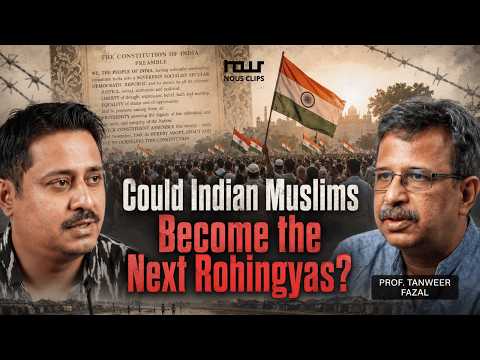
Tanweer Fazal, a political sociologist at BML Munjal University who has written extensively on minority rights, statehood and exclusion in India, opened his conversation with Nous by explaining the idea that runs through his recent work: illusive citizenship. Formal, legal citizenship promises every Indian equal rights, membership and standing before the state. In practice, Fazal told Nous, that promise functions like a mirage: real and important on paper, but receding the closer Muslims in particular try to approach it in daily life. He was careful to note that inequality of this kind is not exclusive to Muslims, but he argued the gap between constitutional promise and lived reality has been widening, not narrowing, especially over the last decade or two, as the institutions meant to enforce that promise have themselves drawn distance from it.
Fazal pointed to what he called "bulldozer justice" — demolitions carried out against individuals accused, but not convicted, of crimes — as a stark illustration. It is not simply extra-legal, he argued, but a complete denial of constitutional process, even though officials who have sworn an oath to the Constitution, from bureaucrats to police to elements of the judiciary, allow it to continue largely unchecked. He was emphatic that this is not a phenomenon affecting Muslims alone; other vulnerable groups experience similar treatment. But he argued something more specific and organised is underway with Muslims: not just erosion of citizenship rights but an active project of denationalisation, in which Muslims' claims to belonging as a national community are themselves placed in question, their patriotism persistently doubted and their own history denied.
Asked how India's Hindu nationalist discourse treats different minorities differently, Fazal traced a distinction he said dates to the publication of Vinayak Savarkar's Hindutva: a line between religions of supposed Indian origin and those, like Islam and Christianity, considered non-Indian in origin, whose adherents could therefore never be fully trusted, their loyalty always in question. He noted that some proponents of this view historically argued explicitly for reducing Muslims to second-class citizens. That idea, he said, is now visible in practice rather than merely in ideology.
Fazal illustrated the same distinction with a comparison closer to law: Article 341, governing Scheduled Caste status, formally excludes Christian and Muslim Dalits from its benefits, on the premise that caste hierarchy belongs only to religions considered indigenous. Two exceptions were carved out over time — Sikh castes in 1956, and neo-Buddhists under V.P. Singh's government in 1990 — but Christian and Muslim Dalits, who Fazal said suffer comparable social humiliation and occupational stigma, remain excluded. The result, he argued, is that reservation-driven upward mobility, visible among Sikh and Buddhist Dalits, is largely absent among Muslims of similarly low social status.
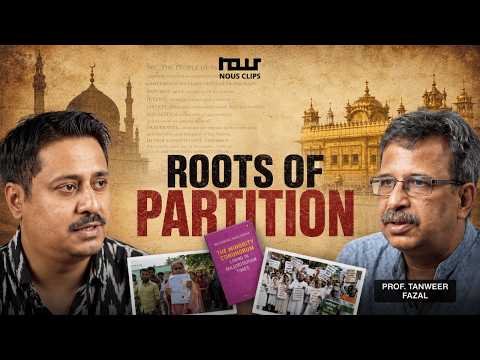
Fazal's earlier book compared Muslim and Sikh political identity in India, and he used that comparison to argue against reading either community's historical demand for separate nationhood as rooted in religious doctrine. Both Muslim nationalism before Partition and the Khalistan movement decades later, he said, emerged from political and social grievances specific to their moment, not from anything intrinsic to Islam or Sikhism. He traced the Khalistan movement's roots partly to Partition-era demographic shifts in Punjab, which left Sikhs a minority within a linguistically reorganised state even after the 1960s Punjabi Suba movement, and to grievances over irrigation and resources concentrated among the dominant Jat Sikh peasantry. Separatism, Fazal argued, persisted only as long as its proponents believed it could succeed; once it proved unsustainable, most of that energy did not simply vanish but shifted toward a more durable Sikh nationalism that resists absorption into a Hindutva-defined Indian identity without demanding secession.
Fazal described the 2019-20 protests against the Citizenship Amendment Act and National Register of Citizens as revealing genuine change inside Muslim society. Unlike earlier rounds of Muslim political mobilisation, which he said tended to center on cultural or symbolic grievances, the anti-CAA protests were framed squarely around citizenship and material rights. He was struck that many of the most visible and articulate voices were women, often in leadership roles and decision-making, not merely present in numbers, and that religious orthodoxy was, in his words, "nearly absent" from the movement, replaced by young people, students and women asserting themselves as citizens under threat.
That momentum, Fazal said, was cut short by two things in close succession: the Covid lockdown, which forced an abrupt demobilisation, and what he described as a heavy-handed state response even before the pandemic, including the killing of protesters in Uttar Pradesh and police action inside university campuses at Jamia Millia Islamia and Aligarh Muslim University. He compared the scale of that crackdown, in an independent India context, to nothing he could recall before it. Even so, Fazal argued the episode left a lasting residue: the emergence of a new Muslim middle class and an increasingly independent civil society within the community, one now capable of mobilising resources and running programmes, from Mewat to Kashmir, without waiting on established political leadership to act on its behalf.
8:49This is an excerpt from a longer conversation.
 9:12
9:12This is an excerpt from a longer conversation.
9:12This is an excerpt from a longer conversation.
 9:49
9:49This is an excerpt from a longer conversation.
9:50This is an excerpt from a longer conversation.
 8:11
8:11This is an excerpt from a longer conversation.
8:11This is an excerpt from a longer conversation.
 56:39
56:39In the first episode of Emerging Perspectives, Sania Ismailee joins Wardah Beg for a conversation about the philosophical questions that lie beneath India’s debate on the Uniform Civil Code. For eight years, through her PhD research, Sania examined the UCC through the questions of secularism and …
 1:13:08
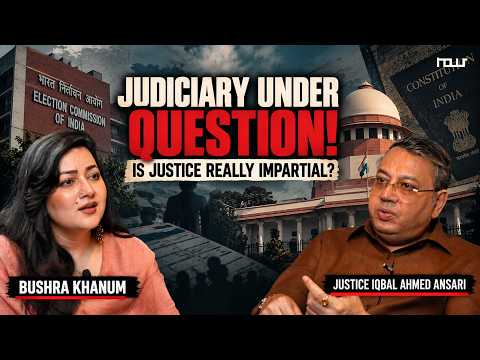
How independent is the judiciary in India today? And what happens when citizens begin to lose confidence in the institutions meant to protect their rights?
 2:44:36
In this conversation, Dr. Harish S. Wankhede joins Ali Javed to examine the political and cultural legacy of Dr. B.R. Ambedkar and the evolution of the Dalit movement. They discuss how Ambedkar imagined Dalits as political subjects at a time when they were denied even basic human dignity, and how…
Discussion
0Readers only · Comments are reviewed by the desk before they appear
The journalism is free for everyone — create a free account to join the discussion.