

In Saharanpur, a Demolished Mosque and a Paper Trail That Won't Go Away
After bulldozers razed a mosque inside the Saharanpur Collectorate compound, the city's MP says land revenue records still name two Muslim owners — and that the fight will now be won on paper, not on the street.
Contents · 6 sections
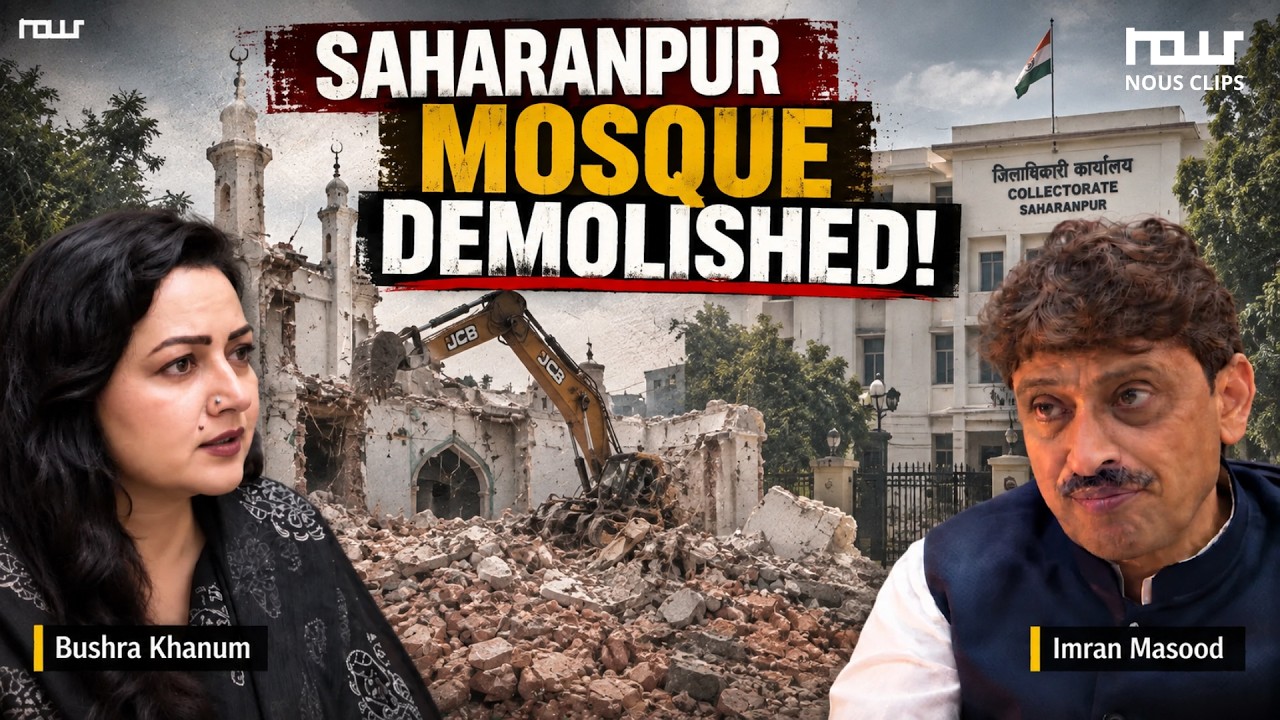
The Mosque Inside the Collectorate
A mosque that stood inside the compound of the Saharanpur district Collectorate has been demolished. "The mosque at the Collectorate has now been bulldozed," said Imran Masood, the local Member of Parliament, describing a visit to the site afterward. "It has been razed to the ground," he said, adding that there was no trace left that a mosque ever existed there.
The demolition followed an order from the City Magistrate. But Masood insists that order authorised only an eviction, not the razing of the structure. "It did not include demolition," he said. The gap between what was ordered and what was executed sits at the centre of the legal fight that has followed.
What the Land Records Say
According to Masood, the entire Collectorate — not just the mosque — sits on plot number 84, a parcel of roughly 84 bighas. Revenue documents for that plot, he says, still record the owners as Yakub Khan and Waheed Khan. "The Collectorate is built by occupying the land," he argued, turning the government's own framing of the dispute back on itself.
His side submitted settlement records from the 1324 and 1359 Fasli years to the City Magistrate as proof of long-standing ownership; he says they were "brushed aside." He also points to a more recent thread: the Telecommunications Department had been paying rent on the land since 1960, an arrangement he reads as an official acknowledgment of who the owners were. On the question of the government simply occupying land it does not legally hold, he cites a Supreme Court ruling that the state cannot claim adverse possession against a citizen, because the government's role is to be "a protector, not a land mafia."
The Case for the Mosque's Age
Much of the argument turns on how old the structure actually was. Masood's side maintains the mosque predates 1947, which would bring it under the Places of Worship Act of 1991 — the law that freezes the religious character of sites as they stood at independence. He also invokes the doctrine of "waqf by user,": that continuous use of a site for prayer, regardless of paperwork, establishes it as a mosque. Prayers, he says, were held there right up to the day it was demolished.
As evidence of age, his side had submitted an electricity bill dated 1911, along with a request that the Superintending Engineer be summoned to verify it — a step he says was never taken because officials assumed the document, pulled from the Electricity Board's own website, could simply be dismissed. He also disputes the opposing claim that the mosque is only about 70 years old and was built after Collectorate staff were informally allowed to pray there and later "captured" the site. Only an owner can grant such permission, he said, and the family named in the records was never in a position to withhold it in the first place.
A further dispute is procedural: officials relied on the Khasra register to determine the land's status. Masood cites a Supreme Court ruling that Khasra records are the governing document only in Madhya Pradesh; in Uttar Pradesh, it is the Khewat and Khatauni that carry legal weight; and in those, he says, the family's names remain to this day.
A Narrow Window, Then Bulldozers
The sequence of events, as Masood describes it, left little room for a legal response. The City Magistrate's eviction order was issued on the 3rd; demolition began the evening of the 4th. Ordinarily, he says, there would have been roughly three weeks to move the High Court against such an order. That window did not materialise. An administrative inquiry into the site, conducted by an Additional District Magistrate, was never made public. "The entire inquiry report was wiped out," he said.
A writ petition has since been filed before the Allahabad High Court. Masood says he expects the court to rule in the mosque committee's favour once it examines the underlying file, and points to a precedent: the same High Court previously fined the Prayagraj Development Authority several million rupees over an unrelated demolition.
Why the Response Stayed in the Courtroom
Masood has faced criticism locally for not leading street protests against the demolition, and he has pushed back on suggestions that he was effectively confined to his house while it happened. He says he was on the phone with the District Magistrate twice that night, and held a press conference as soon as he arrived at the scene.
His stated reasoning draws directly on two recent flashpoints. In Sambhal, where police and Muslim residents clashed last year, several people were shot dead; in Bareilly, the cleric Maulana Tauqeer Raza Khan remains without bail, and Masood says roughly fifty people connected to him have had their lives upended. He contrasts this with his own conduct during a 2014 riot in Saharanpur, when, he says, the sitting MP at the time was "roaming in cars" while the city burned. "My responsibility is to save my city, not to set the city on fire," he said, arguing that a legal battle, fought through the courts, was the only route that did not risk more deaths.
He also frames the mosque's loss as a citywide grief rather than a purely Muslim one, noting that two Hindu residents have given testimony before the City Magistrate on the mosque committee's behalf. "Saharanpur does not rub salt into wounds," he said. "It applies balm to the wounds."
What Happens Next
For now, the dispute rests with the Allahabad High Court, where the case will turn on the same land records, settlement papers and revenue registers that Masood says the City Magistrate never properly examined. Whether the mosque can ever be rebuilt is a separate question from whether the demolition itself was lawful — and it is the second question that the pending writ petition is meant to answer first.


Discussion
0Readers only · Comments are reviewed by the desk before they appear
The journalism is free for everyone — create a free account to join the discussion.