

Inside Iran's War Footing: A Historian's Report From the Funeral
War historian Amaresh Misra, reporting from Ayatollah Ali Khamenei's funeral and the renewed strikes that followed it, argues Iran is emerging from its clash with the United States and Israel more confident rather than more contained.
Contents · 7 sections

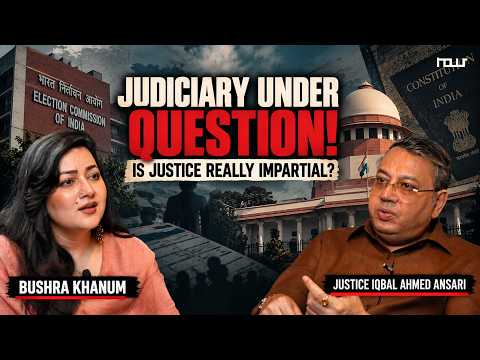
When Amaresh Misra flew into Tehran, he expected to document mourning. Iran's Supreme Leader, Ayatollah Ali Khamenei, had just died, and the funeral that followed drew what organizers called a record crowd, with some estimates put at tens of millions of mourners. Misra, a war historian who has covered conflicts from Afghanistan to Iraq, arrived to report on the ceremony. Instead, he found himself present for the reopening of a war. Within days, Iran had struck two ships in the Strait of Hormuz, the United States had hit back at Iranian targets, and a fresh wave of strikes on southern Iran was underway. In an interview with host Bushra Khanum, Misra laid out what he saw on the ground and what he believes the renewed hostilities mean for a region already exhausted by a twelve-day war earlier this year.
A Country Rewired by War
Misra had visited Iran once before, during the twelve-day war and again shortly after it ended, and he described a country transformed by the interval between those two trips. On his earlier visits, Tehran still carried a relaxed, almost ordinary rhythm: shops open, goods on shelves, people moving freely. By the time of the funeral, that had given way to something harder. Iranians, he said, had grown visibly suspicious of foreigners, and security around the funeral reflected it, with visitors screened repeatedly regardless of nationality.
Part of that caution, Misra argued, traces back to domestic unrest that followed the ceasefire. He cited Iranian government figures acknowledging that five to six hundred people were killed in security-force clashes tied to protests earlier in the year, protests he said were pushed toward violence with the involvement of Israeli and American intelligence. He also said he personally observed networks passing messages to foreign visitors that mixed anti-Islam framing with a specific political line: that Iran's leadership neglects its own citizens while funding Hezbollah, and that ordinary Iranians, not the state, are the ones worth talking to. Journalists who tried to approach people in isolation, he said, were sometimes confronted by bystanders wary of exactly that kind of targeting.
Alongside the suspicion, Misra described a deliberate diplomatic choreography at the funeral. Rather than heads of state, Iran had encouraged lower-level delegations from allied governments, on the theory that junior officials stay closer to ground realities than their principals. He recounted specific Quranic verses read before different delegations as pointed messaging: a passage invoking the Battle of Badr and Muslim unity for the Saudi delegation, a verse on repentance for Qatar's, and a verse condemning passivity for Turkey's. Misra read the pattern as evidence that Iran now approaches its regional relationships as an extension of the conflict itself, calibrated case by case.
A Lopsided Stalemate
Asked whether the exchanges of the past several days amount to a resumed war, Misra was careful. The ceasefire memorandum had collapsed, he said, and war was the logical next step, but he stopped short of calling the fighting a peak. His central claim was more specific: that since the memorandum fell apart, the exchanges have run one-sided, and not in Washington's favor. He pointed to Iranian missile strikes on King Faisal Base in Jordan that went unintercepted, and to footage from Bahrain showing a Patriot interceptor exploding in mid-air. “The US is currently supplying its third-grade goods to Gulf countries,” he said of the region's air defenses, arguing Washington has not managed even a tenth of the retaliation Iran has launched.
Misra attributed the restraint less to strategy than to disarray inside the American system. He described an administration split between hawks pushing for escalation and a camp, associated with Vice President JD Vance, that favored the original negotiated memorandum. He also floated a striking interpretation of reports that Iran had plotted to assassinate Donald Trump: that the story, however it originated, functioned as pressure applied by Israel on Trump himself, suggesting Israel could reach him if he failed to back its preferred course. Iran's parliament, for its part, responded to the memorandum's collapse by voting to review every agreement Tehran has struck with Western powers, including an inquiry into how far Western intelligence penetrated those negotiations.
Trump's Contradictions
Much of the interview turned on what Misra called the incoherence of Donald Trump's public posture. In the span of a few statements, Trump has threatened to target Iranian power plants, bridges and people; floated a twenty percent toll tied to the conflict; and then suggested Gulf states should cover the cost of any American response. Misra read the shifting rhetoric as a symptom rather than a strategy: an American security establishment committed to weakening Iran but unsettled on how, even as its president talks past that uncertainty in increasingly blunt terms.
He tied that incoherence to a deeper resource problem. According to Misra, the fighting has been conducted almost entirely from American bases in the Gulf, with the Navy contributing only ten to fifteen percent of the effort; he noted that the carrier USS Abraham Lincoln left the region and that the USS Gerald R. Ford suffered a mechanical failure. In his account, the United States has burned through its most advanced aircraft and is running short on missiles, air defense interceptors, helicopters and ground forces, with no clear answer for what comes next militarily. That vacuum, he argued, is what produced an unusually blunt statement from an Iranian parliamentarian, who suggested a commando raid to seize captured Americans would now be “a very easy task” — a boast Misra treated as a marker of Iran's shifted psychological position.
Hormuz as Doctrine, Not a Bargaining Chip
Pressed on the Strait of Hormuz, Misra was unambiguous: Iran no longer treats control of the strait as a lever to be traded away but as a fixed element of its national security doctrine, comparable to how a nuclear posture anchors other states' security planning. Any vessel transiting the strait, in his description of Iran's position, now has to coordinate with Tehran or risk being struck. He pointed to a pattern of tanker attacks along the route the United States built through pressure on Oman, including the destruction of a Kuwaiti tanker and strikes on at least six or seven others, as evidence Iran treats the corridor as non-negotiable rather than performative.
That posture, he suggested, is precisely what forced Washington into the memorandum that briefly paused hostilities: the strait's leverage over global oil flows, not diplomacy, brought the United States to the table. The memorandum's collapse does not undo what he called a demonstration effect — that Iran showed it could compel a superpower to negotiate on its terms, even temporarily.
A New Front With the Houthis, and a Gulf Caught Between
Misra also addressed the newly opened front between Saudi Arabia and the Houthi movement, which controls roughly seventy percent of Yemen's territory in the north. He described the flare-up as originating in American pressure on Riyadh to keep the Houthis occupied and cut off from Iran, but argued the move has backfired strategically, playing into Tehran's hands rather than containing it. Underlying that judgment was a broader read of the Gulf states' predicament since October 7, 2023: the pre-war vision of Saudi Arabia and its neighbors as post-oil hubs for finance, software and artificial intelligence, anchored by a prospective normalization deal with Israel, has stalled. Riyadh, in his account, remains reluctant to confront Iran directly, with Crown Prince Mohammed bin Salman's attention still fixed on his domestic development agenda even as the kingdom is drawn deeper into a war it did not choose.
The Nuclear Shadow
The conversation's most sobering turn concerned the possibility of tactical nuclear use. Misra noted that Trump, in a Fox News interview, described the strikes on Iranian nuclear sites in language that briefly implied nuclear weapons had already been used — a comment Misra called a telling slip rather than a considered statement. He argued that a significant quantity of Iran's enriched material survived the strikes, buried deep inside a mountain redoubt beyond the reach of American bunker-buster bombs, keeping Iran's program intact regardless of damage to visible infrastructure. Tehran continues to publicly deny pursuing a weapon, he said, even as voices inside the Islamic Revolutionary Guard Corps have begun openly asking why Iran should not seek one, on the reasoning that a nuclear deterrent is the only thing that would stop the United States and Israel from acting against it altogether.
On the American and Israeli side, Misra argued the likelier path is not a swift military solution but a long war of attrition: a naval blockade to choke off Iranian oil revenue, sustained economic pressure, and intermittent strikes intended to provoke internal collapse rather than deliver it directly. He was skeptical that plan is sustainable, noting it would require buy-in from Gulf states, Europe and NATO, and basing access stretching from Cyprus to Diego Garcia, at a moment when Washington also needs to watch Russia and China. “This regime change is about a long war,” he said, but one whose logistics do not currently add up.
Whose Mindset Bends First
Misra closed by tying the military picture to two leaders' domestic vulnerabilities. Benjamin Netanyahu, he argued, may be heading his last government, facing near-certain defeat if elections are held on schedule, which he believes gives Netanyahu's circle an incentive to manufacture a crisis large enough to postpone the reckoning. Trump, meanwhile, has said publicly he does not care about November's midterms, arguing his political fortunes run through 2028 regardless. Misra was blunt about the psychological continuity between the two men, noting Trump has quoted Netanyahu describing India's 1.4 billion people as natural supporters of Israel, a claim Misra dismissed as detached from how Indians actually view the conflict. “Mindsets don't change,” he said, comparing the two leaders to monarchs who kept faith in their own invincibility even as the ground shifted beneath them.
That overconfidence, in Misra's final assessment, is the real risk of the coming weeks. A renewed full-scale war, he argued, would look nothing like the twelve-day conflict earlier this year: Iran, having already tried negotiation in good faith, would respond to further escalation by striking Israel directly and, in his words, without holding back. He claimed a segment of Israel's own political class has quietly accepted this as a possible cost of continuing the confrontation, consistent with a founding ideology that, in his characterization, treats civilian casualties as an acceptable price of advancing Western interests in the region. Whether or not that reading holds, Misra's larger point was about credibility: publics in Iraq, Afghanistan, Vietnam and now Gaza have watched American and Israeli claims collide with events on the ground long enough, he suggested, that the coercive power of the threats themselves has begun to erode, regardless of what weapons remain in reserve.


Discussion
0Readers only · Comments are reviewed by the desk before they appear
The journalism is free for everyone — create a free account to join the discussion.