

Salman Khurshid on Courts, Personal Law and the Congress's Strategic Mistakes
In a long conversation, the senior Congress leader argues that India's crisis is one of democracy rather than of a single community, defends his reading of the Babri Masjid judgment, and concedes that his party made strategic errors.
Contents · 7 sections
- A crisis of democracy, not of one community
- Reversal, the Places of Worship Act and the Babri judgment
- Personal law, accommodation and the courts
- Strategy, mistakes and the Sachar legacy
- Solidarity, leadership and the communication gap
- Laws that outlive their authors
- Hindutva, liberalism and how the tide turned

A crisis of democracy, not of one community
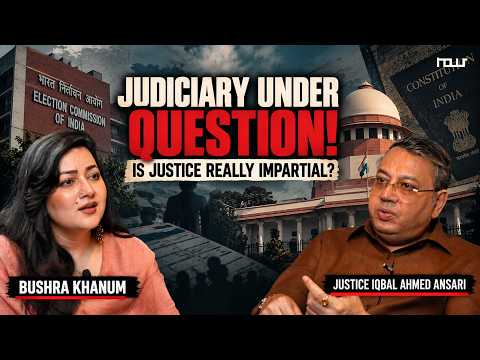
Asked how deep the crisis facing India's Muslims runs, Salman Khurshid, the senior Congress leader and former Union minister, began by declining the framing. In a long conversation on the Nous Podcast, he argued that what India faces is a foundational crisis of democracy, and that Muslims feel it first because democracy promised them special protection. The provisions in the Constitution for minorities, he said, are compensation for a group that cannot speak as forcefully as the majority, not appeasement, and those in power refuse to understand that.
The same reasoning shaped his response to the phrase "second-class citizen". He noted that the phrase has two audiences: those who say Muslims must accept that status and those who complain they are being pushed into it. Either way, he said, a state that produces second-class citizens has already broken the Constitution's promise of equality and fraternity. His frustration was directed as much at his own side. Secular parties, he said, tend either to stay silent in the face of propaganda or to advise against answering it, when they have answers and should give them.
Reversal, the Places of Worship Act and the Babri judgment
Much of the discussion turned on mosques. Khurshid described the Places of Worship Act as a deliberate line drawn at 15 August 1947: whatever had happened before that date would be left alone, so that the country could look forward. The difficulty today, he said, is that arrangements dating back centuries are being reversed through present-day court decisions, in the name of democracy, on the argument that earlier rulers imposed them.
He said he argued in the case over the Kamal Maula mosque in Dhar, known to Hindus as the Bhojshala, and that his position was narrow: the court should apply the reasoning of the Babri Masjid judgment. He did not, he said, oppose that judgment. His reading of it was as follows. The dispute had two parts, the Ram Chabutra outside and the mosque building inside. Muslim litigants conceded that the chabutra had been in Hindu possession for a long time, so nothing was claimed there. The inner structure was a title suit, and in his account the court found that Muslims had been in possession and that they had been wronged, before using its special powers under Article 142 to direct that five acres be given for a mosque.
Here Khurshid made a point that will not be universally welcomed. Declining that land, he said, was a mistake: a mosque built beside the temple could have become a symbol of Indian secularism, and today's Ayodhya looks one-sided. He also distinguished the Dhar matter from Babri procedurally. Babri was a title suit, he said, which would have tested possession and registration, whereas the petitioners in the Kamal Maula case brought a writ petition against the Archaeological Survey of India's permission. If the option of a title suit was taken when it helped and avoided when it did not, he said, he called that a tactic open to complaint. These are Khurshid's readings of the litigation, offered by a lawyer who argued in it, and the host noted that others see the reasoning in these judgments as selective.
The host raised a practical objection: Ram Mandir and the Dhar ruling have become so embedded in majority sentiment that reversing them may be more disruptive than living with them. Khurshid did not dispute that. His response was that a reversal has already occurred, and that the country has to decide how far back it wants to go. The Constitution of 1950, he said, was written with the past in view but on the resolve to look ahead.
Personal law, accommodation and the courts
The host pressed the familiar claim that personal law and secular law collide. Khurshid rejected the premise. Personal law, he said, is part of the secular order and is protected by the Constitution; the live question is how far the protection goes when the two seem to conflict. His answer was mostly practical. India is not a vegetarian country, he observed, and communities have always adjusted: a speaker pauses for the azaan, and Muslims are ready to forgo meat sales or sacrifice on a day that matters to neighbours. Disputes over prayer in homes or on streets, he said, are generally manufactured, and the answer is permission and reciprocity, not prohibition.
On triple talaq he offered a defence of the underlying institution. In his description, divorce in Islamic law is meant to be a considered process, with family elders attempting reconciliation, a waiting period, and obligations to the wife that survive the marriage. Pronouncing it three times in a sitting, he noted, is not something the Supreme Court found in Islam. He argued that a woman's rights within the system, including the option of delegated divorce written into the marriage contract, are rarely mentioned by critics.
On the Uniform Civil Code, he said the Directive Principles do not override Fundamental Rights and must be harmonised with them, and that no court has yet said what a uniform code would actually mean for personal law. He also raised the pending Sabarimala reference as a test of who decides what counts as an essential religious practice: courts, he suggested, have often said that believers must decide, and the answer will apply to everyone.
Strategy, mistakes and the Sachar legacy
Khurshid said that in a long public career he has never felt discriminated against as a Muslim, and that the criticism he has faced has come mainly from his own community, which expected more of him when the Congress was in government during the Babri demolition. The lesson he drew is that ideology and strategy are different things. One can stay firm on ideology, he said, but a strategy that satisfies the speaker while hurting the people being defended has no value.
He conceded that the Congress has made strategic mistakes, and that it is hard for a party to admit them because every admission is used against it. Asked about the Emergency, he said the party should acknowledge its errors but that the record needs full context. He argued that it was imposed within the constitutional framework, and that the electorate returned Indira Gandhi to power within two years. The host himself cautioned against treating the Congress and the BJP as morally equivalent, a comparison he called a leap.
His clearest defence of the UPA years was the Sachar Committee. He said the report deliberately used the word "Muslim" instead of "minority", with Manmohan Singh's backing, because policy had to address Muslim outcomes specifically. The proposed Equal Opportunity Commission, he said, foundered because existing commissions for Scheduled Castes, Backward Classes, minorities and women feared losing their own remit. What did work were special schemes in minority-concentration districts, designed so that a new school or road benefited everyone, and above all the scholarship programme, with direct transfers to families. That programme, he said, was the first thing dismantled when the government changed, and the demand for it had been rising every year. He added that Singh's remark about a first claim on resources was distorted and has been quoted against the community ever since. Delivery, he stressed, depended on state governments.
He drew a contrast with Asaduddin Owaisi, whose party speaks without the constraints that a member of a broad secular front accepts. People can fairly say Owaisi speaks more freely, Khurshid said, but the real question is which approach helps the country hold together: building one's own separate institutions, or strengthening a secular society in which everyone has a stake. The verdict, he added, belongs to the public.
Solidarity, leadership and the communication gap
On solidarity with Palestine, Khurshid said Indian Muslims and non-Muslims alike once identified with liberation struggles, from Turkey under Ataturk to Palestine, as questions of freedom, not of religion. Sympathy with those driven from their homes and bereaved in Gaza is sympathy with victims, he said, and should not be mistaken for sectarian feeling.
The host argued that the community and the party are talking past each other, and Khurshid agreed that a communication gap exists. Part of the difficulty, he said, is that Muslims do not readily accept anyone as a leader, so whoever nominates himself may neither know their concerns well nor express them well. The Congress, he said, has been trying to reach out through its minority department and through leaders it has sent to the Rajya Sabha. He added that Rahul Gandhi has invited scholars, activists and media managers for detailed conversations, but that such meetings tend to be spoiled by a hostile participant or by sympathisers too polite to speak plainly. His answer was consistency, and channels that a platform like this one might help provide. People from Bengal, he said, have started calling to ask to meet Congress leaders.
Laws that outlive their authors
Asked about UAPA and PMLA, Khurshid said the laws were passed under a Congress government by colleagues, P. Chidambaram among them, to deal with terrorism and economic crime, and that nobody expected them to be used as they are now. He acknowledged the misuse without reservation and said a future government of his party would need to confront it first. Relief, when it has come, has come from the courts, though the Supreme Court has not always lived up to expectations.
His broader point was that law changes less than the people interpreting it. He cited the Aligarh Muslim University case, where the statute was the same but a different reading by the Allahabad High Court and, later, the Supreme Court produced opposite results, and the shift in how judges treat tenants. A generation of judges applies old texts in the mood of its own time, he said, and communities live with the results.
Hindutva, liberalism and how the tide turned
Khurshid distinguished cultural Hindu life, with its shared greetings and festival visits, from Hindutva as a political project, and said the trouble starts when culture is converted into a political movement, as it does when any faith is. He said he would prefer that people speak of liberalism instead of secularism, a word he thinks has been discredited, and described the Congress as a rainbow alliance whose colours change with its leadership.
On how the political ground shifted after 2011, he said the anti-corruption campaign and the litigation over telecom and coal allocations consumed his party's energy, while a much larger current of hostility built unnoticed. Gujarat in 2002 was the earlier warning. He said the Congress had joined protests and tried to legislate against communal violence but was blocked, and that history would judge whether more could have been done. He also said the SIT officers were capable and that he cannot explain why the accountability effort fell short. Twice, he added, the party believed it was close to beating the BJP in Gujarat, where the vote gap was around ten percentage points. He also recalled Pranab Mukherjee telling colleagues that the Congress could govern either the states or the centre, and said the compromise with regional parties eventually turned against it.
His prescriptions were political. He called 2029 a turning point and argued that the INDIA bloc needs a fresh arrangement with regional parties, including in Uttar Pradesh, where his party's workers want dignity as partners. He said Muslims should talk to secular parties and that the party needs new leaders from the community, naming Nasir Hussain among those emerging. He credited Rahul Gandhi's Bharat Jodo Yatra with drawing people who had never voted Congress, and acknowledged that turning such a mood into something lasting remains the party's challenge.


Discussion
0Readers only · Comments are reviewed by the desk before they appear
The journalism is free for everyone — create a free account to join the discussion.