

The Fuel Beneath the Mob: How Hate Speech Becomes Lynching in India
In a self-published book built from years of ground reporting, journalist Dayashankar Mishra argues that mob lynching in India is not a spontaneous eruption of rage but the last stage of an engineered, rewarded chain of hate speech — one that courts, mainstream media and the political opposition have all gone quiet about.
Contents · 12 sections
- A Book No Publisher Would Touch
- Not Akhlaq, But Mohsin Sheikh
- Redefining Lynching
- The Weather of Hate Speech
- A Reward System for Hatred
- When Childhood Friends Turn Killers
- A Doctor's Verdict
- Children Raised Inside the Mob
- Cinema and the Death of Dialogue
- Courts That Stopped Speaking
- A Silence Shared by the Opposition
- Organised Crime, Not Spontaneous Anger

A Book No Publisher Would Touch
Dayashankar Mishra has spent close to two decades in Indian journalism, moving through NDTV, Zee News and, most recently, Network18. It was during his time at Network18, he says, that he wrote a book on Congress leader Rahul Gandhi — a project he believes cost him his job. Neither that book nor his latest one found a mainstream publisher willing to print it. The new book, titled "Akhlaq," which documents mob lynching across India through years of field reporting, was turned down repeatedly. Mishra eventually published it himself.
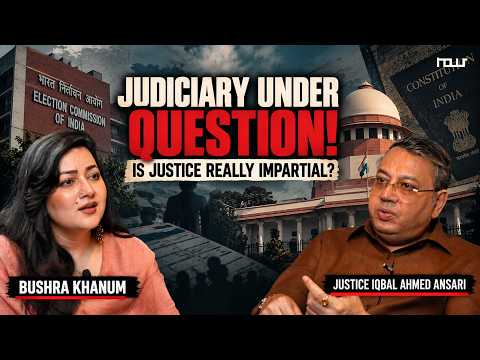
Speaking with Nous Podcast host Bushra Khanam Fahad, Mishra is candid about why he believes he, rather than someone else, is positioned to write it. Villagers in Dadri once surrounded him and asked why a Brahmin was pursuing this subject; at tea stalls, men are surprised he is still writing about a case many consider closed. His answer is that his own name affords him a shield others would not have. Because he is Dayashankar Mishra, he says, he can write this book — had a writer named Parvez Khan or Abdul attempted the same reporting, the scrutiny he would have faced would not have been about journalism at all. He describes the work not as an act of charity toward Muslims but as a citizen's constitutional entitlement to ask the questions no one else is asking, invoking the Hindi writer Premchand's line about not staying silent out of fear of consequences.
Not Akhlaq, But Mohsin Sheikh
The common narrative treats Mohammad Akhlaq, lynched in Dadri, Uttar Pradesh in 2015 over rumours of beef in his refrigerator, as the first lynching victim of the Modi era. Mishra's reporting corrects the record: the first person lynched after Narendra Modi's 2014 swearing-in was Mohsin Shaikh, a computer engineer in Pune, killed within a week of the new government taking office. Shaikh was stoned and beaten to death after leaving a mosque; his father died of a heart attack still waiting for justice, and most of the accused in the case were eventually acquitted amid what Mishra calls a failed police investigation. He and Fahad settle on a phrase for it in the book: identity is what killed him. Shaikh had chosen to live in Pune, wore a Pathani suit and a white cap, and, in Mishra's telling, simply did not sense the "hot wind" already blowing through the city's streets.
The book takes its title from Akhlaq rather than Shaikh, Mishra explains, because of what happened in November 2025: the Uttar Pradesh government filed a petition asking the local court to withdraw the murder case against all the accused in Akhlaq's killing. The judge hearing the case, Saurabh Dwivedi, rejected the petition — but Mishra calls the attempt itself unprecedented, a moment when a government publicly declared, in his words, that the country does not belong equally to everyone.
Redefining Lynching
Before he could report on lynching, Mishra says, he had to argue that India has never properly defined it. His book insists that mob lynching cannot be understood only as a crowd killing a single person. It should also include the bulldozing of homes at night without due process, the loss of jobs and opportunities on the basis of identity, and what he calls "zehni" or mental lynching — hatred lodged inside people's minds, including the minds of doctors, as later chapters of the book show. He connects the absence of a rigorous legal or academic definition to the broader hollowing-out of Indian institutions — universities being bulldozed in towns like Rampur, no new IITs or IIMs being built — arguing that without strong institutions, precise definitions of new forms of violence simply do not emerge.
The Weather of Hate Speech
Mishra reaches for a childhood memory to describe how hatred accumulates: his grandmother in Bhopal used to insist he cover himself at night against "sheet" — the dew or chill that settles imperceptibly as the night deepens, unseen but harmful. Hatred works the same way, he says: it is not a single-storey structure but a building with many winding staircases, and lynching is only the last step at the bottom. He is emphatic that mob lynching is "purely a political tool," a means of acquiring and retaining power — not, as officials described it after Akhlaq's killing, a spontaneous expression of public anger. He recalls the responses of the time: then home minister Rajnath Singh said the killing of a cow could not be accepted, and then culture minister Mahesh Sharma called Akhlaq's death "an accident." For Mishra, both statements evaded the real question — what fuels a crowd into becoming a lynch mob — and his answer is hate speech, which travels far faster than its victims are ever aware of. Mohsin Shaikh, he notes, had no idea any hate speech had circulated before he was attacked; he was simply leaving a mosque to collect his lunch.
A Reward System for Hatred
Mishra traces a shift in election rhetoric: the 2014 campaign was fought and won on the promise of development; by 2019 that language had receded, and between 2019 and 2024 the speeches of the ruling party's senior leaders came to routinely carry some form of hate speech. Voters were told repeatedly, he says, that their real enemy was not unemployment but Muslims — accused, among other things, of wanting to snatch women's mangalsutras, cows and buffaloes. He points to a senior BJP leader's call in Delhi to "shoot the traitors" as an example that drew no real consequence, and argues a reward system has taken hold: a councillor who makes an inflammatory speech and is handed an assembly ticket, then a ministerial post within six months, sends an unmistakable signal about the fastest route to advancement. He describes an escalating competition among chief ministers — of Uttar Pradesh, Maharashtra, Assam, Madhya Pradesh, Rajasthan — to out-do one another rhetorically, along with opposition-aligned Bengal leader Shubhendu Adhikari's remark invoking "Gaza-style treatment," which Mishra calls one of the gravest threats to Indian democracy: a system in which decades of quiet work are worth less, politically, than two minutes of hatred against Muslims.
When Childhood Friends Turn Killers
One of the book's central case studies is Noorul Shaikhlagar, from Pusesawali in Satara district, Maharashtra — a Muslim man who, unusually, headed the local Ganesh festival committee, a position Mishra notes would be almost unthinkable in his own home state of Uttar Pradesh. Noorul's closest friends, Rahul, Chinmay and Pankaj, were Hindu; the book records small, intimate proofs of that friendship, from an offer of a car for Noorul's wedding baraat to late-night food runs when his wife Ayesha craved something during her pregnancy — errands the friends made at two in the morning without complaint.
That closeness collapsed on 10 September 2023. Amid rising hate speech linked to a group associated with Hindutva figure Sambhaji Bhide and a procession passing through communally mixed neighbourhoods, tensions in the area spiked. Trying to protect visiting members of a religious congregation from harm and safeguard his village's reputation, Noorul pushed back against the crowd — which included his own three friends. He was killed that evening. Ayesha tells Mishra that police came to her house late at night without disclosing how serious the injury was; only at the hospital did she learn Noorul was dead. It was hours later that she and her family realised his own friends had been present, and were the assailants. Mishra says the account took him months to process and verify — he asked Ayesha more than once to double-check her facts — because it remained, in his words, difficult to believe that a person's closest friends could turn on him this way, with no attempt afterward to see the accused express remorse.
A Doctor's Verdict
A second case, from Udgir in Maharashtra, unsettled Mishra even more. In April 2021, during the second wave of COVID-19, a man named Daimi Azimuddin Gaisuddin and his wife both tested positive; she was on 14 litres of oxygen, a critical level at the time. A Hindu doctor named Shashikant was treating them and had been bringing them home-cooked food. During a phone call between doctors, put on speaker, a senior doctor overseeing the district's COVID response — also named Shashikant — is recorded berating the treating physician for helping Muslim patients, ordering him to deny hospital admission, and, Mishra says, telling him to let Daimi's wife die, accompanied by anti-Muslim abuse. Mishra emphasises the distinction between this and a mob in the street: a doctor, bound by professional duty and unable to physically join a crowd, still finds a way to enact the same instinct. Even the country's institutions of care, he argues, are not exempt from the mindset that produces lynching.
Children Raised Inside the Mob
The book also revisits the 1999 killing of Australian missionary Graham Staines, burned alive along with his young sons Philip and Timothy while sleeping in their vehicle outside a church in Odisha, months after the country's first RSS-linked prime minister took office. Staines had spent years running a leprosy mission, learning Odia and local dialects fluently. Only three men were convicted: Dara Singh, Mahendra Hembram, and a minor, Chenchu Hansda, who was around twelve years old at the time. Hembram was later released citing good conduct, and Mishra notes Dara Singh's own release process has since begun. Chenchu, an Adivasi, converted to Christianity after his release and told Mishra, through translators, that he now feels only remorse — describing how he had been drawn into believing that proximity to Dara Singh meant power and righteousness. He now works in farming and labour, and says he found peace only by turning away from what he did. Mishra uses the case to argue that Hindutva organisations have long placed "weapons" — ideological, not literal — into the hands of children of both sexes, training them not to ask questions about education or employment but to become part of a mob that carries out the agenda of adults.
Cinema and the Death of Dialogue
Mishra draws a historical parallel between the Rashtriya Swayamsevak Sangh and the American Ku Klux Klan. The RSS was founded in 1925, twenty-two years before independence — a period, he says, that groups like the RSS spent building a base inside the police and army rather than joining the freedom struggle, deliberately avoiding entanglement that might have led to a ban. He cites the Quit India-era correspondence of Bharatiya Jana Sangh founder Shyama Prasad Mukherjee as similarly equivocal. In the United States, he notes, the Klan responded to the constitutional promise of equality after emancipation by enforcing segregation in cinemas, washrooms and shops, reinforced culturally by blackface minstrel performances that mocked Black Americans and made that mockery socially normal.
He argues Indian cinema now performs a comparable function. Looking back over the past decade and more of Hindi films, he says, one finds that villains are disproportionately given Muslim-coded names — while real espionage cases involving India's defence and intelligence agencies have implicated officers with distinctly Hindu surnames who never appear as screen villains. He cites actor Naseeruddin Shah's own later regret over the film "A Wednesday," in which, Shah reportedly said, he wished he had questioned the script more closely rather than trusting the director. Mishra also laments the near-total collapse of public dialogue since 2014: he contrasts the sharper but civil scrutiny once practised by broadcasters like Vinod Dua and Karan Thapar with a climate in which disagreement with the ruling party is answered with being told to leave the country, and where even hospital administrators and newsroom editors, he says, now speak in the clipped, one-way register of the prime minister's own monologues. He invokes the Mahabharata's own dialogue between Krishna and Arjuna before the war began as evidence that debate, not silence, sits at the root of Indian tradition, even for those who invoke Sanatan identity today.
Courts That Stopped Speaking
Turning to the judiciary, Mishra points to the Supreme Court's 2018 guidelines on lynching, which obliged states to act against mob violence and allowed contempt petitions where they failed to. In 2026, he says, the Supreme Court dismissed such a contempt petition, warning that pursuing it further would "spread anarchy" — a ruling Mishra calls a surrender to majoritarian politics, and one that, he notes, only the newspaper The Hindu was willing to criticise editorially. He points to the continued incarceration of scholar Umar Khalid, known for his writing on Adivasi rights, who has been denied bail across roughly five or six Chief Justices of India and was once told by the court not to return for a year. Co-accused Sharjeel Imam remains jailed as well; others in the same case, Khalid Saifi and Gulfisha Fatima, eventually secured bail but, Mishra says, remain unable to speak to the media — freed from one jail, in his words, into another kind of confinement.
A Silence Shared by the Opposition
Mishra credits Rahul Gandhi, the subject of his earlier book, with real political courage — willing to name the RSS and BJP together, to describe an "ideological political war" against crony capitalism, and to have once campaigned on a message of love over hate. But he faults Gandhi, and opposition parties more broadly, for not taking an equally explicit, sustained stand specifically on the question of anti-Muslim violence, seemingly out of fear of alienating voters. He notes the irony that years of caution on this question have not spared the opposition from being branded anti-national regardless. For Mishra, ending mob lynching cannot be the isolated project of one writer, one party or one community; it requires what he calls collective responsibility, because a mechanism built to target Muslims, Christians, Dalits and Adivasis in turn will not stop with any one of them.
Organised Crime, Not Spontaneous Anger
Mishra's closing argument is a reframing: mob lynching, he insists, is not chaotic violence but organised crime — a deliberate means of disciplining minorities. He cites the killings of Aryan Mishra and police officer Subodh Singh, both Hindu, near Bulandshahr, as evidence that the underlying mechanism, once normalised, is not confined to a single community, even if Muslims bear its heaviest weight because, unlike Dalits, he argues, they lack political leverage of their own. In one of the book's more provocative claims, he describes lynching as functioning chiefly as a tool of "tushtikaran," or appeasement — not of Muslims, as the term is usually used in Indian politics, but of the Hindu majority, allowing governments to distract from failures on jobs, education and healthcare by manufacturing a permanent internal enemy.
He closes by pointing to a documentation gap: no government agency, including the National Crime Records Bureau, defines or separately tracks mob lynching, making it difficult to compile a reliable count of incidents, deaths and injuries since 2014. He calls this a responsibility the state has deliberately abandoned, comparing it to the way large-scale communal violence, like the 2020 Delhi riots, is still poorly documented years later. His final appeal to readers is blunt: if accounts like these do not disturb a reader, he says, it is worth asking whether the numbness has already spread too far — because the same silence, he warns, is what brought the country to this point in the first place.


Discussion
0Readers only · Comments are reviewed by the desk before they appear
The journalism is free for everyone — create a free account to join the discussion.