

The Vanishing Voters: Inside Bengal's Special Intensive Revision
A once-routine electoral roll cleanup has stripped roughly 91 lakh names from West Bengal's voter list ahead of the state's April 2026 election, and data analysts, a retired judge and a decorated Air Force officer say the deletions have fallen overwhelmingly on Muslim voters.
Contents · 7 sections
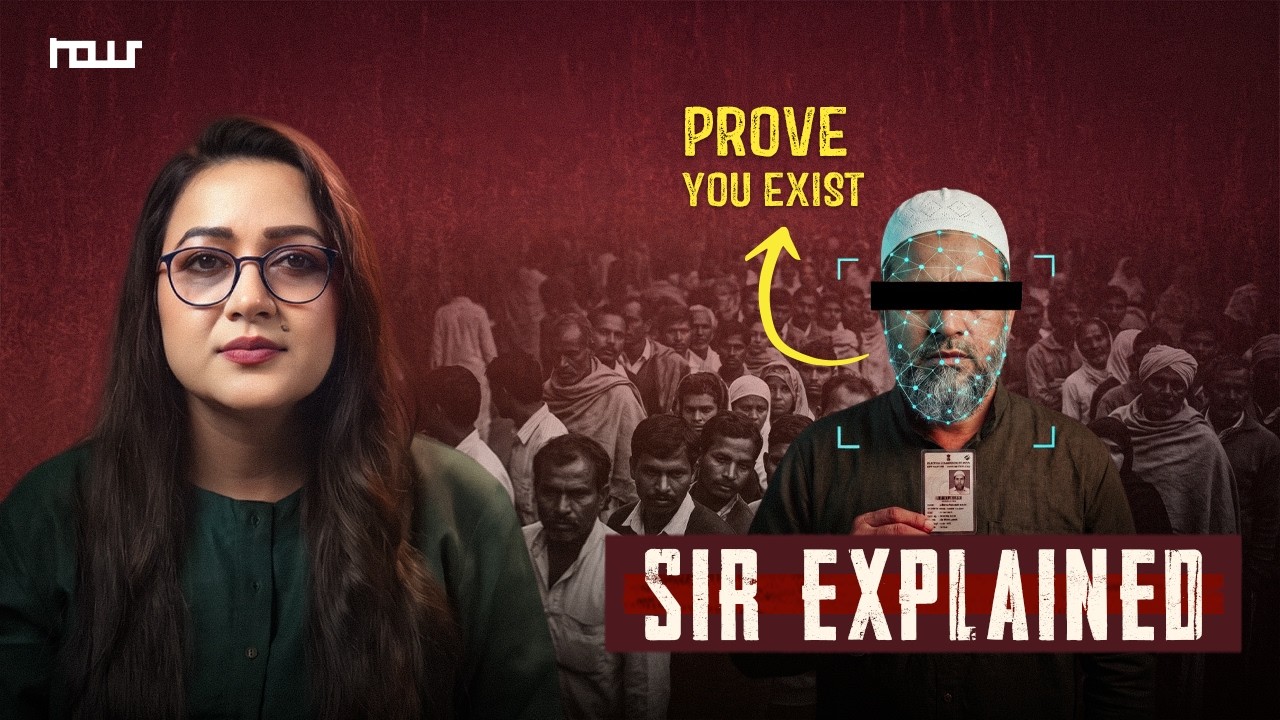
Waking Up Erased
Imagine waking up one morning to learn that the country you were born in, the constitution you trusted, the democracy you believed in, has quietly decided you do not exist. Not through any new law, but through a silent administrative process, your name simply disappears from the voter list. This is the reality facing an extraordinary number of people in West Bengal as the state's Special Intensive Revision, or SIR, of electoral rolls has removed close to 91 lakh names ahead of elections scheduled for 23 and 29 April 2026.
Of those removed, more than 7 lakh were marked "absent" or "deceased" and deleted outright. Another roughly 27 lakh people who had applied to have their names added or corrected were instead placed into a limbo category called "under adjudication," pending review by a tribunal. That list of the disenfranchised, reporting by Nous Explainers host Bushra Khanum notes, includes a retired High Court judge, artists who helped illustrate India's constitution, soldiers who fought in the Kargil war, and serving and retired government officials. In effect, all of them have had their basic democratic right to vote suspended, with a tribunal now left to decide whether it will be restored.
That tribunal process is moving at a crawl. Of roughly 27 lakh affected voters, only two cases had received a hearing by the time of reporting, even though close to 2 lakh people have filed applications. The practical result is that lakhs of eligible citizens will be unable to cast a ballot in the April elections, not because they are found to be non-citizens or criminals, but because a software system failed to match their records against the state's 2002 electoral rolls.
A Reversed Burden of Proof
Electoral rolls exist to establish who is eligible to vote in a given constituency, and they are periodically revised to remove duplicates, correct errors and confirm eligibility. Special Intensive Revisions have taken place multiple times since 1952, most recently in 2002 and 2004. Historically, the guiding principle behind these revisions has been "inclusion first, correction later": door-to-door verification, a public display of the draft rolls, and ample time for claims, objections and corrections, all designed to ensure no eligible voter is wrongly excluded.
The 2025-26 SIR breaks from that principle in one crucial way: it reverses the burden of proof. Previously, the onus was on the system to demonstrate that a voter was ineligible. Now, each voter must prove their own eligibility by matching their record against the 2002 electoral rolls (2003 or 2004 in some states). If the software cannot make that match, the voter is flagged, a new category that has no real precedent in India's electoral history.
On paper, a "logical discrepancy" is supposed to mean a genuine mismatch in name, age or other details. In practice, people have been flagged for trivial reasons: a name spelled "Mohammed" instead of "Muhammad," "Mondal" recorded as "Mandal," digitisation errors, poor-quality archival records, or documents lost in floods. Voters were flagged not because they were ineligible, but because the system could not parse variation it should have anticipated, and they alone have borne the consequences. The Election Commission maintains that anyone deleted can appeal, but cannot vote in this election; even if cleared later, they can only vote in the next one.
The Judge, the Officer, and the Limits of Documentation
Before examining the broader pattern, it is worth naming a few of the more prominent people swept up in this process, because their cases illustrate that the problem is not one of individual identity but of the system's basic reliability.
Justice Sahidullah Munshi served for seven years as a judge of the Calcutta High Court. He submitted all of his documents, including his passport, and deliberately did not disclose his judicial background because he wanted to be treated as an ordinary citizen. Despite this, his name was placed in the "not found" category, while his wife and son were placed under adjudication. His name was restored only after media coverage drew attention to the case, not because the process itself functioned correctly.
Wing Commander Mohammed Shamim Akhtar served 17 years in the Indian Air Force. His name had appeared on Bengal's voter rolls since 2002. During the SIR, it was first placed under adjudication, and then, on 28 March, deleted entirely, without a hearing, a notice, or any explanation, even as the rest of his family's names remained on the list. When he approached his Booth Level Officer, he was told to hire a lawyer and approach the tribunal. A man who spent 17 years in the country's uniform was left needing legal counsel to prove he exists. Beyond these visible cases lie the many more who have no media attention, no lawyer and no means of appeal.
Scale, Concentration and Clustering
Three features define West Bengal's SIR, and together they undercut the idea that this was a neutral administrative exercise. The first is sheer scale. An initial 32 lakh voters were left unmapped, and around 1.36 crore were placed on the logical-discrepancy list; the final tally of deletions came to roughly 90 lakh, the largest voter displacement in Bengal's electoral history.
The second is community concentration. According to analysis by the Sabir Institute, roughly 95 percent of deleted voters in Nandigram were Muslim, in a constituency where Muslims make up only about 25 percent of the population. Alt News, digitising more than 12.8 lakh voter records across six constituencies, found patterns too stark to explain through any neutral model. In Manikchak, where Hindu and Muslim voters are roughly evenly split, 97.4 percent of voters placed under adjudication were Muslim, meaning a Muslim voter there was roughly 42 times more likely to be flagged than a Hindu one. In Shamshergunj, where Muslims make up 82 percent of voters, 98.8 percent of adjudicated voters were Muslim. In Mothabari, 69.5 percent Muslim, the adjudicated figure was again 97.4 percent. Combined across the six constituencies, Alt News found that of roughly 3 lakh voters placed under adjudication, about 93 percent were Muslim, in areas where Muslims make up around 52 percent of the population, meaning roughly 42 of every 100 Muslim voters were flagged, against just three or four of every 100 Hindu voters. As the video puts it, a coin does not land on the same side 97 times out of 100 by chance, and similar imbalances recur in Muslim-majority constituencies and in seats where the BJP has historically underperformed, echoing patterns observed during Bihar's own SIR.
The third feature is clustering. Deletions were not scattered but concentrated by settlement. In Boro Gobra village in Basirhat, 358 villagers were placed under adjudication and 340 were deleted outright, all of them Muslim, all from the same polling booth, with neighbouring villages reporting similar outcomes. This matters because roughly 112 assembly seats in West Bengal, out of a state where Muslims make up about 27 percent of the population, are directly influenced by the Muslim vote, and have often decided which party forms the state government. Roughly 27 lakh adjudicated voters represent about 5 percent of the electorate, and in the previous election, some 36 seats were decided by margins narrower than 5 percent, with some analyses suggesting deleted-voter counts in certain constituencies exceed the winning margins from the last election.
The "Infiltrator" Narrative, and Why the Data Contradicts It
The SIR has been accompanied by a political narrative, amplified through memes, statements and even remarks attributed to senior leaders including the Prime Minister, that those removed from the rolls are Bangladeshi Muslims, "infiltrators," or fraudulent duplicate entries. But an SIR is not a citizenship test. It is an administrative record-matching exercise, and appearing on a "logical discrepancy" list does not mean a person crossed a border. Most flags trace back to spelling mismatches, unmatched records or digitisation errors, magnified in this cycle by a software system whose accuracy the Election Commission itself did not fully trust, and whose errors have caught a significant number of Hindu voters as well. Economist Parkala Prabhakar has called the exercise a "bloodless political genocide," while political activist Yogendra Yadav describes it as a "silent voter removal exercise" serving the ruling party's political agenda. As the case of Wing Commander Akhtar or Justice Munshi shows, if a decorated military officer and a former High Court judge can be flagged and deleted, the question is not about any individual's identity, but about whether the system itself can be trusted.
Opacity by Design
Part of what has made this process so hard to verify is how the Election Commission has released the data. Rather than publishing searchable spreadsheets or structured data files, it released the rolls as scanned image PDFs, pictures of printed pages that cannot be searched, analysed, or cross-referenced by any automated system, with "under adjudication" watermarks stamped diagonally across voters' names, making even manual reading difficult. The Commission has said this protects voter privacy, but in a country that runs a biometric database of over 100 crore people, a national DigiLocker system and hundreds of crores of daily UPI transactions, publishing a structured, searchable data file alongside the PDF is not a technological hurdle. That gap has fed questions about whether privacy is the only concern, or whether transparency and neutrality are also at stake.
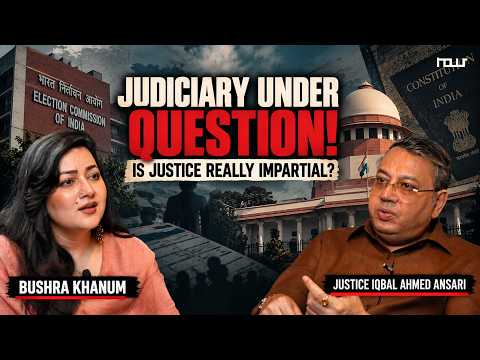
Those questions have reached Parliament. On 13 March 2026, 193 Members of Parliament signed an impeachment notice against Chief Election Commissioner Gyanesh Kumar, formally alleging partisan conduct. His own appointment was itself contested: a change in law removed the Chief Justice of India from the selection committee overseeing the post and replaced that seat with a cabinet minister, handing the ruling party a structural 2:1 majority over the appointment. With the Supreme Court declining to intervene on behalf of adjudicated voters or set a deadline before the election, and Commission officials increasingly sounding, to critics, like spokespersons for one political party, the institutional checks meant to guarantee impartiality look, to many observers, badly frayed. Outside government offices across Bengal, thousands of people now queue with old documents in hand, trying to prove they exist.
A Question Beyond Bengal
West Bengal's 2026 SIR leaves behind an uncomfortable question: are India's electoral processes being applied uniformly, or are their outcomes being shaped by political context and selective application? Bengal is not an isolated case. From Assam's National Register of Citizens to Special Intensive Revisions carried out in other states, a pattern is emerging of a system moving away from trusting its citizens and toward repeatedly, and selectively, demanding proof of their own existence. If the right to vote is meant to be a basic entitlement for every citizen, the burden of repeatedly proving that right should not fall disproportionately on Muslims, or on India's poorest and most powerless citizens.


Discussion
0Readers only · Comments are reviewed by the desk before they appear
The journalism is free for everyone — create a free account to join the discussion.