

When the State Itself Becomes the Rioter
Irfan Engineer, who has documented communal violence in India since 1993, argues that after 2014 the state stopped merely tolerating riots and started conducting them.
Contents · 6 sections

A shift from passive to active
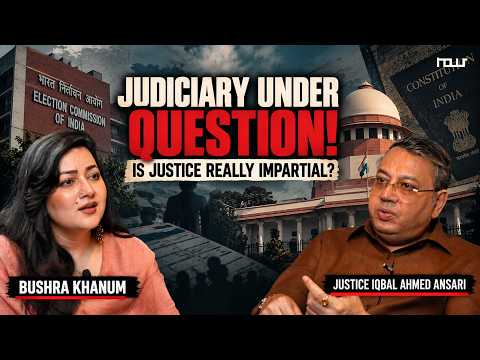
Irfan Engineer has spent more than three decades documenting communal violence in India as director of the Centre for Study of Society and Secularism (CSSS), which he has run since 1993. Speaking with host Bushra Khan Fahad on the Nous Podcast, he draws a sharp line between the riots of the pre-2014 period and what he sees happening now — not a difference of degree, he insists, but of kind.
Before 2014, Engineer says, communal violence followed rough cycles — a major riot every five, seven or ten years, with smaller flare-ups in between. The state's failure then was largely one of omission: it rarely prosecuted rioters effectively, and justice for victims was scarce. He points to the 1987 Maliana massacre, where a Provincial Armed Constabulary unit shot 27 men and threw their bodies into the Ganga canal — a case for which, despite a filed FIR and investigation, no conviction has ever followed. Even so, he stresses, "there were occasional police officers who participated in riots — not the state as such."
After 2014, he argues, that distinction has collapsed. "What rioters used to do, the state now does," he says. Where mobs once burned and demolished homes with whatever limited means they had, the state now arrives with bulldozers. In riot after riot, Engineer notes, 80 to 90 percent of victims are Muslim — and yet roughly 90 percent of those arrested afterward are also Muslim, typically daily-wage labourers picked up from poor neighbourhoods and charged under laws severe enough to keep them jailed for a decade or more, unable to make bail, their families meanwhile stripped of income and buried in legal costs. "It is an economic punishment delivered to an entire community," he says, pointing to Umar Khalid — held without bail for five years over the 2020 Delhi riots even as Kapil Mishra's on-camera warnings to police, ahead of the violence, went unprosecuted. A Supreme Court bench, Engineer notes, has since remarked that Khalid's bail was assessed by a "double standard."
Even Babri Masjid's demolition in 1992, he concedes, involved a degree of state complicity: then Uttar Pradesh chief minister Kalyan Singh had sworn an affidavit to the Supreme Court promising the mosque would be protected, only for the police presence on the ground to simply stand down as the structure was destroyed. Bombay's 1992-93 riots saw roughly 80 percent of victims killed in police firing were Muslim, despite Hindu mobs carrying out the violence — evidence, in his reading, of a "partisan role" for the police even then. The difference now, he argues, is that the state no longer merely fails to intervene — it "openly stands with Hindutva rioters."
Big riots give way to constant, smaller ones
Engineer identifies a second shift in pattern: large, visible riots on the scale of the 1984 anti-Sikh violence or the 1989 Bhagalpur riots have become rarer, replaced by frequent smaller, more controlled outbreaks — partly, he suggests, because the ruling party wants to preserve an image of law and order that reassures investors and keeps the economy running. Alongside this sits what he calls "attitudinal violence" — hate speech — which he argues has intensified sharply in both frequency and severity, citing the proliferation of invented "jihad" categories in Indian public discourse: love jihad, land jihad, corona jihad, even "thook jihad" (spit jihad), extending to accusations of infiltration into the civil services.
He traces the licence for this rhetoric to the top of government — invoking the Prime Minister's own language about people identifiable "by their clothes," or warnings that a religious minority would seize "your daughters," "your bread" and "your mangalsutra" — arguing that when such language comes from the Prime Minister, Home Minister and party leadership, it filters down as implicit permission: those who act on it come to see themselves not as committing violence but as performing a kind of patriotism, a substitute for the freedom struggle they missed.
Is "distraction" too small a word?
Pressed on whether framing this as a distraction from real issues — unemployment, inflation — understates the RSS's actual, longstanding ideological project, Engineer agrees the analysis has to start there. He cites M.S. Golwalkar's We, or Our Nationhood Defined, which explicitly names Muslims and Christians as foreign, second-class presences in India, and argues the RSS has never concealed its aim of building a "Hindu Rashtra" in which minorities exist without full citizenship rights, voting power included.
But he immediately complicates the term itself: nobody has actually defined "Hindu Rashtra." Taken to its logical territorial extent — an undivided Bharat encompassing Pakistan, Bangladesh, Nepal and Tibet — it becomes, in his words, "a project of permanent war," comparable to the expansionism of "Greater Israel" or Hitler's "Greater Germany." If instead the borders stay as they are, the project's only remaining logic is to demote existing minorities to second-class status, forced departure, or servitude within the current boundaries.
He also argues the constant churn of communal issues serves a second, quieter function: distracting Hindu citizens themselves from their own economic grievances. He compares this to a mother sprinkling water on an empty stovetop to convince hungry children that food is coming, until they fall asleep unfed — Hindutva pride, he suggests, functions as a similar palliative against unemployment and inflation, dulling scrutiny of India's slide from a projected top-five global economy to sixth place, a fact he says goes largely undiscussed while media attention turns instead to trivia like the provenance of "Meldi" jingles or comparisons of how gracefully rival heads of state descend staircases.
Is the Hindu Rashtra already here?
Asked whether an undeclared Hindu Rashtra already exists in practice, Engineer points to the Special Intensive Revision (SIR) of electoral rolls, which he says has disproportionately struck voters from marginalized communities and Muslims, and to detention centres being built across West Bengal districts for people branded, often without evidence, as Bangladeshi or Rohingya infiltrators — invoking West Bengal BJP leader Suvendu Adhikari's remarks that migrants should expect treatment like Israel's in Gaza. When courts, police and the state itself behave differently depending on a citizen's religion, Engineer argues, and when a community's votes are cast but effectively devalued, "a lower form of Hindu Rashtra has already arrived" — even without a formal declaration.
He is careful, though, to distinguish this from the death of Indian democracy outright. The BJP's fall from a claimed "400 paar" ambition in 2024 to a reduced majority of around 240 seats, he argues, shows the Constitution still carries real weight with voters, who by and large want it and democratic norms preserved. What has degraded instead, he says, is the quality of that democracy — citing V-Dem-style rankings that now describe India as an "electoral authoritarian" system, where elections occur but citizens' capacity to hold government accountable between them has withered. He invokes Bertolt Brecht's image of a government so dissatisfied with the people's verdict that it might prefer to "dissolve the people" — arguing that, functionally, voters are increasingly being chosen by the state (through processes like SIR) rather than the reverse.
What can be done
Engineer's prescription runs on two tracks. The first is structural: pushing for legal and institutional reforms — drafting policy proposals now so that a future, more receptive government has ready blueprints — and prioritizing justice for riot victims of every community, Hindu and Muslim and Christian, Dalit and upper-caste alike, within existing law even as that fight remains slow and difficult.
The second is what he calls ground-up social repair: reviving the ethical and devotional traditions common across faiths — the poetry of Tukaram, Ravidas and Kabir, the Sufi-inflected "Ganga-Jamuni tehzeeb" — as a shared cultural register rather than a specifically minority appeal. He argues Islamic, Hindu and Christian ethical values are not opposed but complementary: the Quranic injunction against sleeping with a full stomach while a neighbour goes hungry, the Biblical command to love one's neighbour, and Buddhist compassion all converge, in his account, on the same basic demand. He suggests language and regional culture — Tamil, Kannada, Marathi, Gujarati — can serve as unifying threads that cut across religious lines, since every linguistic community in India already contains multiple faiths.
He is candid, though, about the limits of this work. Organizations like his lack the platforms and resources that reach the scale at which Hindutva narratives now circulate through education, cinema and social media; efforts at interfaith dialogue draw praise from those who attend but rarely travel as far or as fast as the hate they are countering. He estimates the results so far as "very limited, insufficient" — while insisting that hatred, historically, carries what he calls an "expiry date," even if reaching it may come at a steep and uncertain cost.
Documentation as a weapon
Engineer closes by insisting that documentation — the unglamorous, granular recording of who was killed, arrested or displaced, and how — is not a secondary task but "the first step" toward any eventual justice. Governments fear it, he argues, precisely because it survives as evidence that outlasts news cycles and news cycles' tendency to bury a single Muslim death in the scroll of social media. He recounts his own experience in Assam, where Chief Minister Himanta Biswa Sarma publicly named him at a press conference, accusing him of "sedition" for interviewing families affected by citizenship exclusion drives — proof, in Engineer's reading, of how seriously state governments take even small, resource-strapped documentation efforts, because a durable record becomes "a black mark" that outlasts any single administration.
Asked about recent gestures from Muslim religious leadership — including a push, especially visible in West Bengal around Bakrid, for the cow to be formally declared India's national animal, alongside voluntary restraint from slaughtering older cows under a 1950s-era law — Engineer calls it a genuinely goodwill gesture, invoking Mahatma Gandhi's support for the Khilafat Movement between 1919 and 1922, during which, he says, cow slaughter effectively ceased across India entirely, achieved through empathy rather than legislation. He is candid, though, that for a section of Hindu nationalists, the cow functions less as genuine religious sentiment than as "a weapon" and "a politics" — an instrument for casting Muslims as villains rather than an object of shared reverence to be protected through mutual respect.


Discussion
0Readers only · Comments are reviewed by the desk before they appear
The journalism is free for everyone — create a free account to join the discussion.