

When the State Joins the Mob: Irfan Engineer on Communal Violence and the Long Road to Repair
The director of the Centre for Study of Society and Secularism argues that India's communal violence has changed in kind since 2014, and that rebuilding trust must begin with justice for every victim before it can move to hearts.
Contents · 9 sections

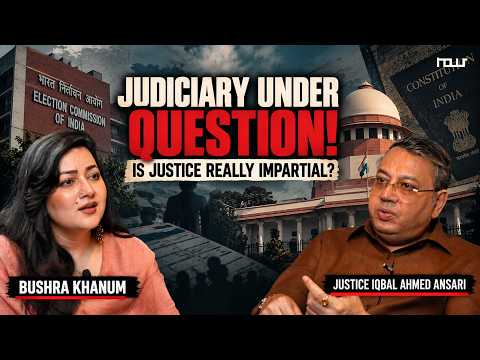
Around Eid al-Adha this year, a killing in Ghaziabad set off a familiar sequence. According to the host of this conversation, Bushra Khan Fahad of Now Network, a Hindu youth was murdered by Muslim men; the accused was shot dead by police in what was called an encounter, others were arrested, and a demolition notice was pasted on a family home. Hindutva groups then arrived in the area, she said, and demanded that Friday prayers not be allowed. She contrasted this with a killing of a Muslim man in Jahangirpuri and the murder of a Hindu athlete by another Hindu in Ghaziabad, which, in her telling, brought no encounter, no bulldozer notice and no protest.
Fahad put that pattern to her guest, Irfan Engineer, director of the Centre for Study of Society and Secularism (CSSS) in Mumbai, which has monitored and documented communal violence since 1993. Engineer is also convener of the Inter-Religious Solidarity Council, author of a book on the state of freedom of religion or belief in India since 2014, and co-author of a study on the weaponisation of Hindu festivals. What followed, in a little over an hour, was less a debate about one incident than an attempt to answer three larger questions. How has communal violence changed? Why does it persist? And what would it take, practically, to rebuild trust between communities?
From bystander to participant
Engineer's central claim is that a real break came in 2014. Before it, he said, riots ran in cycles, with a large one every five, seven or ten years and smaller ones in between, and the state's failing was largely one of omission. Police watched, curfews confined Muslims to their homes while rioters were on the street, and victims rarely got justice. He recalled the 1987 Maliyana killings in Uttar Pradesh, where he said 27 men were shot and thrown into a canal, and where no one has been punished even though the officer in charge of the district wrote up and pursued the case.
He was careful to say that the earlier state was never neutral. Police firing during the 1992-93 Bombay riots, he said, killed mostly Muslims even though the mobs were Hindu, because firing at the mob itself would have killed many more Hindus. Fahad, who said she fled her family home in a small Uttar Pradesh town after the Babri Masjid demolition, asked whether that was not already state complicity. Engineer agreed that Kalyan Singh's government, having promised the Supreme Court in an affidavit that it would prevent violence, let the police stand down, and called this the state as a passive participant.
The difference since 2014, in his account, is that the state has become an open and active one. Where rioters once burned and broke homes with limited means, he said, the state now sends bulldozers. Where arrests once followed rioting, they now follow protest, under harsh laws that keep young people in jail for years. He said that 80 to 90 percent of riot victims are Muslim and that roughly 90 percent of those arrested are Muslim too, and that the men taken are typically daily-wage workers from poor neighbourhoods, so that lost income and legal fees become an economic punishment for a whole community.
He cited the northeast Delhi violence of 2020, when a political leader publicly warned on camera, standing beside police, of trouble if protesting women did not leave, yet the person in jail on conspiracy charges five years on is Umar Khalid. Engineer described the process itself as the punishment: bail is denied court after court, and the legal machinery does what once only rioters did.
He also noted a change in scale and visibility. Large, cyclical riots on the pattern of Bhagalpur in 1989 or Gujarat are rarer now, which he attributed to a ruling party that wants an image of law and order and investment-friendly calm. In their place come many small incidents, and the harm is concentrated in controlled areas where state participation multiplies it.
Hate as violence in itself
Engineer insisted that hate speech should be counted as violence in its own right. CSSS covers what it calls attitudinal violence, he said, because every act of physical violence rests on an attitude that has already been built. On that measure he sees a sharp escalation in intensity and frequency, with a growing vocabulary of supposed jihads, from love jihad to spit jihad, applied to everything from courtship to the civil services.
His concern was less with the fringe than with the signal from above. Hate speech, he argued, now begins at the very top, so those lower down conclude that they can say and do the same without consequence. Fahad added that when the prime minister, in campaign speeches, warns that a community will take away mangalsutras and homes, he makes such claims believable to supporters and turns any Muslim neighbour or colleague into a suspect. Engineer's view was that this normalises violence, including lynchings on trains, and gives perpetrators the sense that they are performing a patriotic act. Christians, he added, are being targeted at scale too.
There is also, he suggested, an instrumental logic to a supposedly patriotic assault on minorities: it offers a way of showing loyalty to the nation that involves no criticism of government policy.
What 'Hindu Rashtra' is for
Fahad pushed on whether talk of diverting attention from real problems understates the ideology behind it. The RSS, she noted, has been at this for a century and has never hidden its aim. Engineer agreed that the root is Hindu nationalist ideology, and pointed to M. S. Golwalkar's book, which he said describes Muslims and Christians as foreigners who should be second-class citizens or absent. That, he argued, is the opposite of the inclusive nationalism of the freedom struggle and of the Constitution's promises of equality, dignity and fraternity.
Yet he also asked a pointed question: what is a Hindu Rashtra? Nobody, he said, has defined it. If it means an undivided Greater India spanning South Asia, it is an expansionist project and by implication a permanent war, like other far-right dreams of a greater state. If it means the present borders, then minorities inside them must either leave, live as labourers, or be denied full citizenship. In a weaker form, he said, a Hindu Rashtra may already exist wherever Muslims and Christians are made to feel like second-class citizens.
Engineer added that permanent communal tension serves a second purpose, which is to push the everyday hardships of Hindu citizens out of view. Inflation and unemployment, he said, are a pain the country is treating with a painkiller, Hindutva, rather than addressing the cause. He offered the image of a mother who sprinkles water on a hot pan so her hungry children believe food is cooking until they fall asleep. Fahad noted that most voters are Hindus and asked whether that pain simply subsides; his answer was that it is numbed, not removed, and that the media that should press these questions largely does not.
A democracy that still votes
Is an undeclared Hindu Rashtra already here? Fahad pointed to the special intensive revision of electoral rolls, to reports of Muslims being pushed across the border in West Bengal and to the pressure on minorities' voting rights. Engineer's answer was that democracy has several parts. Elections are still held, but he said their fairness is in question, citing what he described as the SIR figures, deletions of voters and additions of others in large numbers, and an Election Commission that stays silent. He described the current system as an electoral authoritarian one, and he referred to a democracy survey by researchers in the Scandinavian countries to support that label.
The deeper test, he said, is whether citizens can hold the government accountable and take part in day-to-day governance. Here he invoked Gandhi, who in 1946 argued that power should rest with the people whoever forms the government. By that standard, he said, India has moved backward, though the march has not ended.
He also drew hope from the 2024 general election. The ruling party campaigned on a 400-seat target and a claim that the Constitution would be changed, and finished at about 240. To Engineer that shows the Constitution still carries weight with ordinary people, and that a government cannot simply abolish democracy. The risk, he said, is gradual change within the constitutional shell, with citizenship quietly split between Hindus and Muslims. A poem attributed in the conversation to Brecht was recalled, about a government that dissolves the people when it loses their vote, to describe a state that seems to choose its voters, not the other way round.
Migration, demography and manufactured fear
The conversation then turned to the issues that keep placing Muslims at the centre of political debate: the electoral roll revision, a uniform civil code, delimitation and a committee on demographic change. Fahad's question was why a government in office for twelve years is only now alarmed by infiltration.
Engineer described the fear of illegal migrants as heavily exaggerated. In Assam, he said, the claim was that some 85 lakh to a crore illegal Bangladeshis lived in the state and that these were the Muslim population. The National Register of Citizens then left out 19 lakh people, and he said a very large share of them were Bengali Hindus who arrived as refugees and for whom the Citizenship Amendment Act was framed. Being excluded, he stressed, does not make someone a foreigner; many simply lacked documents. He noted that holding centres planned in West Bengal had, by his account, caught only about 500 people so far.
His larger point was on principle. The Indian state should be religiously neutral, so whether any community's numbers are rising should not concern a government at all. Speaking of the home minister's language on demographic change, he said the aim seems to be to keep people frightened, since the fear would remain even if the ruling party held power for fifty years, and that fear serves both votes and violence. When violence occurs, he added, laws can then be passed that move the country toward authoritarianism.
Justice first, hearts alongside
Fahad asked the question at the centre of the episode: what should be done, by Muslims and by Hindus who reject this politics? Engineer gave a two-level answer.
The first level is the state and the law. Every victim, whether Hindu, Muslim, Christian, Dalit, upper-caste, man or woman, must be able to get justice, and that requires reform. He said civil society groups are drafting policy proposals for a future government that wants them, but that too little effort goes into pursuing justice under existing law. His argument was that civil society's old approach, countering hate speech and lies with facts, has run out of road, because a mind primed to hate a community rejects facts that favour it. Reactive politics has to give way to proactive politics, and the aim is a structure, and a state, in which discrimination is impossible even for an individual official who wants to discriminate.
The second level is society. Engineer wants the ethical core of every tradition brought forward again: the compassion in the teaching of Tukaram, Ravidas and Kabir, the idea of the world as one family, the Islamic and Christian teachings about the hungry neighbour, and the compassion of Buddhism. He would give more weight to the composite Ganga-Jamuni culture in songs and performing arts, and he suggested using language as a bridge, since Tamil Muslims, Hindus and Christians share a language, as do Marathi, Kannada or Gujarati speakers, and a shared regional culture can connect people of different faiths.
He was frank about the limits. What his side does gets an appreciative hearing, including from some who sympathise with Hindu nationalism, but success on the ground is very limited and, in his word, insufficient. They lack resources and platforms, while educational institutions, which could carry a message of solidarity, are being turned into channels for hate. He also admitted to hate inside himself that he must keep fighting. Still, he said, hate has an expiry date, because hunger and reality eventually arrive. Fahad answered that history's dictators fell, but that the price of that end is what worries her.
Pressed for a shortlist of priorities, since the situation, she said, feels like an emergency in which mothers wonder whether a child will return home, Engineer's answer was again justice for victims and reform of state and law now, with the long work of building an inclusive society alongside.
Why documentation matters
The last substantive question was about record-keeping, given that a Muslim's death, Fahad said, barely becomes a headline any more. Engineer said the importance of documentation cannot be emphasised enough. It becomes tomorrow's truth for those who study this period, and it is the first step toward justice, reparations and compensation. It is also evidence: if a delegation tells the prime minister that violence is rising, it will be asked for proof.
Governments understand this, he said, which is why they try to draw a curtain over violence and keep courts and international human rights bodies from seeing what happens on the ground. For that reason, he argued, documentation is itself a weapon in this fight. He offered a personal example: while documenting evictions in Assam, he said, the chief minister named him at a press conference and called his conversations with those affected treason, threatening jail. He had not believed it when his driver told him. Engineer read the episode as a measure of how much the authorities fear even modest documentation, and said that more organisations doing the work would protect each other because no one could be singled out.
The cow, Gandhi and the ethics of sensitivity
Fahad closed with a recent gesture: religious organisations of Muslims, in the run-up to Eid, asked that the cow be declared a national animal, and in West Bengal clerics used the sermon to say that cows would not be slaughtered. The chief minister of Uttar Pradesh, she said, dismissed the message. Would such goodwill ever be answered?
Engineer called it a good initiative and said Muslims would honour it, but he did not think it would end cow slaughter, since India is diverse and Hindus in the northeast and in parts of the south eat beef, which is also a cheap protein. Even so, he said, whenever a section of Hindus reveres the cow, others should respect that belief and avoid hurting it. He recalled Gandhi's support for the Khilafat movement, arguing that Hindus should stand by Muslims when their religious feelings are hurt, and said that during the non-cooperation years of 1919 to 1922 he believed no cow was slaughtered, because there was reciprocal sympathy and no need for a law. Rights alone do not build a society, he argued; sacrifice and sensitivity do.
He added that for some Hindu nationalists the cow is not a matter of faith at all but a political weapon, a way to cast Muslims as villains and justify violence against them.
Bubbles and the ordinary Hindu
Fahad wondered why ordinary people feel emboldened to say that Muslims eat here, sing elsewhere and enjoy state benefits without voting for the ruling party. Engineer's view was that the belief that Muslims are outsiders or a threat is held by a small section of Hindus, not the average person, and that it is cultivated by pro-government media, films such as The Kerala Story and The Kashmir Files, textbooks and performing arts. Such repeated messaging, he said, makes a minority think of the nation as Hindu and of Muslims as guests.
He answered it with history and with the Constitution: the country, he said, was freed by the sacrifices of all its communities, and the Constitution makes it the country of every citizen. He also noted that the narrowing of who counts as one of us keeps cutting out others, from South India to the northeast, and pointed to Manipur. A united India, he said, must count all Indians as part of us.
Fahad ended with a caution about her own side. Progressive people, she said, live in bubbles, meeting like-minded people and consuming content that reassures them. Engineer agreed that the bubbles need breaking, and both stressed that the work of reforming institutions and reaching across communities cannot wait.


Discussion
0Readers only · Comments are reviewed by the desk before they appear
The journalism is free for everyone — create a free account to join the discussion.