

When the State Starts Doing the Rioters' Work: Irfan Engineer on India's Changed Communal Violence
Human rights researcher Irfan Engineer argues that since 2014, the Indian state itself — not rogue police officers or unchecked mobs — has become the primary actor in communal violence, and lays out what documentation, law and interfaith work can still do about it.
Contents · 7 sections

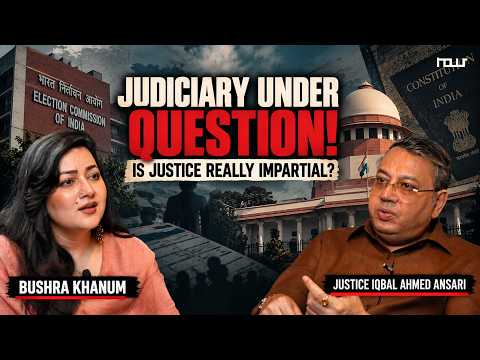
A Hindu man is killed by Muslim youths in Ghaziabad's Khoda area around Bakra Eid. Within hours, police kill the accused in an encounter, arrest the rest, and paste a bulldozer demolition notice on his family home. Hindutva organizations descend on the neighborhood declaring Muslims will not be allowed to hold Friday prayers there. Around the same time, in Jahangirpuri, a Muslim youth is killed by Hindu acquaintances — but there is no encounter, no bulldozer, no mobilization. In a third Ghaziabad case, a Hindu paramilitary athlete is killed by a Hindu friend, and it draws no protest at all. Put together for Nous Podcast host Bushra Khanam Fahad by Irfan Engineer — director of Mumbai's Centre for Study of Society and Secularism, who has documented communal violence in India since 1993 — the pattern raises an uncomfortable question: does a Hindu life only become a cause when a Muslim is the accused? Over an hour-long conversation, Engineer — who also convenes the Inter-Religious Solidarity Council, which recently organized a conclave of religious leaders in Mumbai — laid out how he believes the state's own conduct during communal incidents has fundamentally changed since 2014, why he thinks the underlying ideology has never truly hidden its aims, and what he sees as the narrow, difficult path back toward a more inclusive society.
From a passive state to a participating one
Engineer, author of "The States of Freedom of Religion and Belief in India Since 2014" and co-author of "Weaponisation of Hindu Festivals in India," draws a sharp line between the communal riots of decades past and those since 2014. Riots occurred before too — Bombay 1992-93, Bhagalpur 1989, the anti-Sikh violence of 1984, Maliana in 1987, where a PAC unit pulled 40 young Muslim men from their homes, shot 27 of them, and dumped the bodies in the Ganga canal. The superintendent of police at the time filed an honest FIR and pushed for investigation; no one has ever been convicted. But in Engineer's telling, the state in that era was a passive bystander at worst, occasionally represented by a rogue officer — never the primary actor. In the Bombay riots of 1992-93, he notes, 80% of those killed in police firing were Muslim, even though the mobs doing the rioting were predominantly Hindu — evidence, he argues, of institutional bias within a police force, but not the state programmatically executing the violence itself.
What has changed since 2014, in his account, is that the state has taken over the rioters' own role. Where mobs once burned and demolished homes with whatever limited means they had, bulldozers now arrive under government authority to do the job more thoroughly. And while 80-90% of riot victims remain Muslim, roughly 90% of those arrested after a riot are also Muslim — increasingly not on ordinary charges but under sedition and terrorism statutes that keep the accused, largely daily-wage laborers from poor neighborhoods, in jail for a decade or more without bail, draining what income and savings their families have on lawyers and lost wages. Engineer calls this a form of collective economic punishment against an entire community, deployed with full knowledge that most of those detained are innocent. He points to Umar Khalid, held for five years and repeatedly denied bail in the conspiracy case tied to the 2020 Delhi riots, even after a Supreme Court bench observed his case had been judged by a double standard — while Kapil Mishra, who was filmed openly threatening violence alongside police officers before the riots broke out, has faced no such consequence.
Hate speech as the precondition for physical violence
Engineer describes a second, less visible shift: what his organization tracks as "attitudinal violence" — the hate speech that precedes and legitimizes physical violence. He points to an explosion in coinages like "love jihad" and "corporate jihad," and to a normalization effect that runs from the top down: when the Prime Minister invokes imagery of mangalsutras being seized or daughters being taken in a campaign speech, or a Chief Minister singles out clerics by name over a religious dispute, it signals to sympathizers lower down that targeting Muslims — in speech or in the street — carries no consequence, and can even be framed as a patriotic act. "It's as if they couldn't take part in the freedom struggle," he says, "so this becomes their new one."
An undefined "Hindu Rashtra"
Asked whether describing all this as merely a distraction from unemployment and inflation understates the seriousness of an ideology that predates the BJP's electoral fortunes by a century, Engineer agrees the roots run deeper — into the RSS's own foundational texts. He cites M.S. Golwalkar's "We, or Our Nationhood Defined," which explicitly describes Muslims and Christians as foreign, second-class inhabitants of India. But he insists the concept of "Hindu Rashtra" itself has never been precisely defined by its proponents: pushed to its logical territorial conclusion — an "Akhand Bharat" encompassing Pakistan, Bangladesh, Nepal, Tibet and Sri Lanka — it becomes an expansionist project no different in structure from Hitler's Greater Germany or the project of a Greater Israel, implying, in his words, "permanent war." If instead its scope stays within India's current borders, its internal logic still requires reducing religious minorities to second-class status, stripped incrementally of constitutional protections — including, ultimately, the right to vote.
Hatred as a painkiller for economic pain
Engineer offers a pointed metaphor for why this serves the ruling party beyond ideology alone: like a mother sprinkling water on a dry pan to convince hungry children that dinner is coming so they fall asleep without eating, communal mobilization lets Hindu citizens absorb real economic pain — inflation, unemployment, an economy that slipped from the world's fourth-largest back to sixth without public debate — through the compensating pride of religious and cultural superiority. He points to the disproportionate media attention given to trivialities, like the discontinuation of a toffee brand or a Prime Minister's gait compared to a foreign counterpart's, as symptomatic of a media environment where almost no one is left asking the government hard questions — a role he says has fallen mostly to a handful of independent, alternative platforms.
Is it already here?
Pressed on whether an undeclared Hindu Rashtra already exists, Engineer points to West Bengal's ongoing Special Intensive Revision of electoral rolls, where he says voters are being purged en masse in districts from 24 Parganas to Malda, with residents branded Bangladeshi or Rohingya migrants — and to Suvendu Adhikari, an opposition leader in the state, publicly declaring that Bengal should treat such populations the way Israel has treated Gaza. He is skeptical of the scale of the underlying claim: exhaustive citizenship verification in Assam identified 1.9 million people, many of them Hindu Bengali refugees, whose paperwork could not confirm citizenship — a small fraction of the eight to ten million illegal Bangladeshi migrants that had been alleged beforehand, and West Bengal's newly built detention centers currently hold roughly 500 people against much larger claimed numbers. He argues demography should never be the concern of a state that claims religious neutrality, and that repeatedly invoking undocumented migration serves less to solve a real problem than to keep a climate of fear alive indefinitely — durable enough to justify authoritarian legislation regardless of who is actually in power.
Yet he resists the idea that the project is complete. The BJP's landslide in 2019 gave way, in 2024, to a party that had campaigned on winning more than 400 seats and instead fell to 240 — short of a majority on its own. For Engineer, that outcome shows India's constitutional order still carries real weight with voters who want it preserved, even as India's own democratic ranking has slipped, by his account, from a functioning electoral democracy toward what Scandinavian democracy indices now describe as "electoral authoritarianism" — a system where elections still occur, but where the ruling party increasingly appears to select its voters rather than the other way around, through mechanisms like the SIR rolls and irregularities alleged in state elections.
Ground zero: the case for ethics over law
Asked what should actually be done, Engineer resists offering a purely legal or political answer. His first instinct is toward what he calls ground-zero work in society itself: reviving the shared ethical core across religious traditions — the compassion of Kabir, Ravidas and Tukaram's devotional traditions, the Quranic and Biblical injunctions to feed one's hungry neighbor, the Buddhist principle of karuna — arguing these values are complementary across faiths rather than competing, and that India's composite Ganga-Jamuni culture needs deliberate reinforcement through music, performing arts and regional-language identity, which routinely unites Hindus, Muslims and Christians who share a mother tongue — Tamil, Kannada, Marathi, Gujarati — even when it fails to unite them across other lines.
He is candid that this work remains badly under-resourced against the scale and institutional reach of Hindutva messaging, and that interfaith platforms like his own reach only a fraction of the audience that hate-driven content commands. Alongside this cultural work, he argues for two more concrete priorities: pushing civil society's own draft proposals for legal and institutional reform, ready for whichever government is willing to adopt them, so that justice for riot victims — regardless of religion, caste or gender — no longer depends on which community holds power; and treating documentation of violence as, in his words, a weapon in its own right. He recounts being singled out by Assam Chief Minister Himanta Biswa Sarma in a press conference, accused of "sedition" simply for documenting the state's citizenship-verification detentions — proof, he argues, that the state fears written, evidence-based records of what it does far more than it fears public criticism, because documentation is what survives to be used in courts, human rights bodies and eventually in demands for reparations.
A cow, and a lesson from the Khilafat movement
Engineer closes on a recent episode he sees as instructive: Muslim religious leaders, particularly in West Bengal, publicly called for the cow to be declared India's national animal and pledged to forgo lawful cow slaughter under a 1950s-era exemption for animals over fourteen years old — a good-faith, unforced gesture of religious accommodation. Uttar Pradesh Chief Minister Yogi Adityanath dismissed it outright, saying clerics had no standing to tell Hindus what the cow means to them. Engineer argues the episode exposes how, for a section of Hindu nationalists, the cow functions less as a genuine object of devotion — India's own religious diversity includes states where Hindus themselves eat beef — than as a ready-made political weapon against Muslims. He invokes Gandhi's support for the Khilafat movement between 1919 and 1922, when, he says, cow slaughter virtually ceased across India — not through law, but because Muslims voluntarily reciprocated Hindu religious sentiment once Hindus had shown solidarity with a Muslim cause. "Society isn't built on asserting your rights," he says. "It's built on sacrifice, and on sensitivity to what hurts someone else." Whether Indian society finds its way back to that kind of reciprocity, he suggests, will matter more than any single election.


Discussion
0Readers only · Comments are reviewed by the desk before they appear
The journalism is free for everyone — create a free account to join the discussion.