

You Don't Exist: Inside Bengal's Voter Deletion Crisis
A special revision of West Bengal's electoral rolls has struck nearly 91 lakh names from the voter list ahead of the state's assembly election, and the pattern of who was struck off raises hard questions about whether the exercise was ever neutral.
Contents · 7 sections
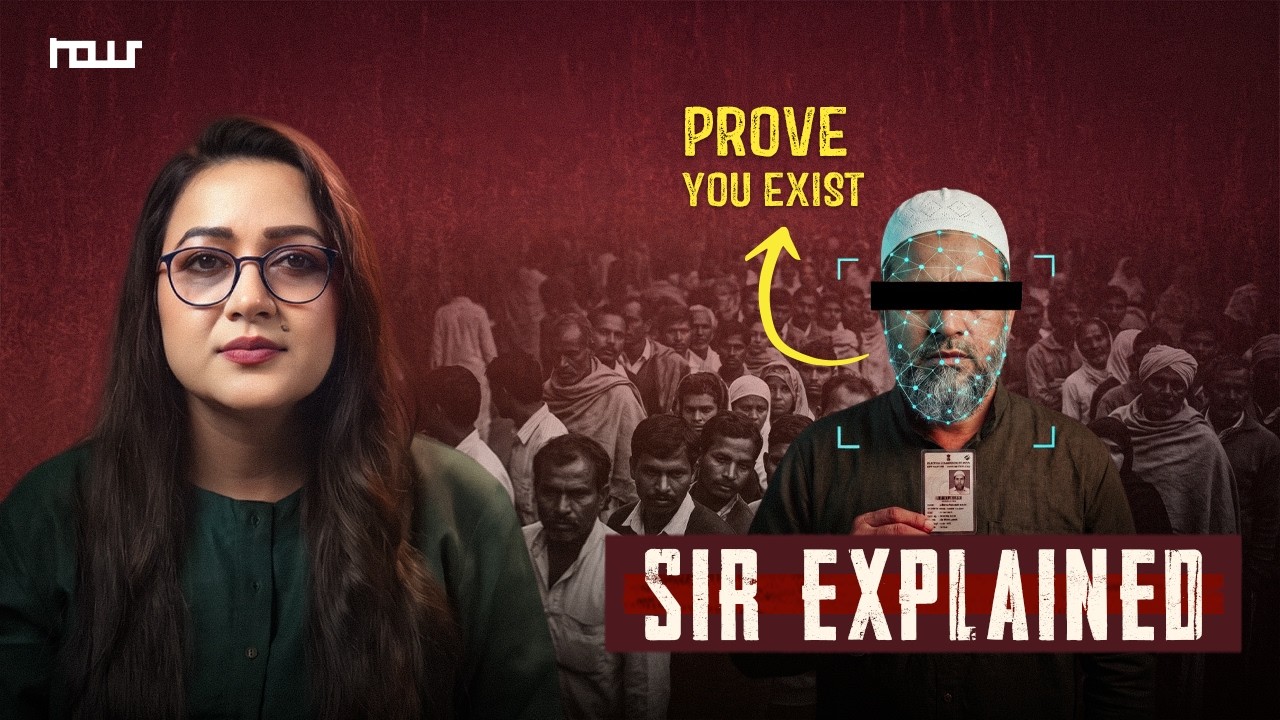
A Quiet Erasure
Imagine waking up one morning and being told, by the country you were born in and the constitution you trusted, that you simply do not exist. That is the situation now facing millions of voters in West Bengal after the Election Commission's Special Intensive Revision, or SIR, of the electoral rolls. No new law stripped anyone of citizenship. Instead, names were quietly removed from the list that determines who gets to vote.
The numbers are stark. Roughly 91 lakh voters have been deleted from West Bengal's rolls. Of these, more than 7 lakh were struck off as "absent" or "deceased." A further 27 lakh people who had applied to have their names added or corrected were instead placed in a limbo category called "under adjudication." The list of those affected, presented in the documentary by Bushra Khanum, includes retired judges, artists who helped design India's constitution, soldiers who fought in the Kargil war, and serving government officers. In effect, their basic democratic right to vote has been suspended while a tribunal decides whether they get it back.
That tribunal process is exceedingly slow. Of nearly 27 lakh affected voters, only two cases have received a hearing so far, even though close to 2 lakh applications have been filed. The practical result is that lakhs of people will be unable to vote in West Bengal's April 23 and 29 assembly election — not because they are criminals or non-citizens, but because a software system could not match their records to the 2002 electoral rolls.
How the Revision Rewrote the Rules
An electoral roll is simply the official list of who can vote in a given area. It is periodically updated to remove duplicates, correct errors and ensure only eligible voters remain on it — a process called Special Intensive Revision. India has carried out several SIRs since 1952, most recently in 2002 and 2004. Historically, the process involved door-to-door verification, public display of the draft roll, and ample time for claims, objections and corrections, all guided by one principle: inclusion first, correction after — the aim being that no eligible voter should lose their right by default.
The 2025-26 SIR departed from that principle in a fundamental way. For the first time, the burden of proof was reversed. Previously, the system had to establish that a person was ineligible before removing them. Now, every voter has had to prove their own eligibility by matching their record to the 2002 (or, in some states, 2003 or 2004) electoral roll. If the software failed to match a person's records, they were flagged — a category India's electoral history had never produced at this scale before.
On paper, a "logical discrepancy" meant a genuine mismatch in name, age or other details. In practice, people were flagged for trivial reasons: a spelling variation such as "Mohammed" rendered as "Muhammad," a surname like "Mondal" appearing as "Mandal," digitisation errors, poor-quality old records, or documents lost in floods. People were flagged because the system failed to recognise them, not because they were ineligible — and the errors were, crucially, ones the voter had no control over yet was made to bear the consequences of. The Election Commission maintains that deleted voters can appeal, but not in time to vote in this election; even if cleared later, they would only be able to vote in the next one.
When the Documented Fail
A few individual cases illustrate the scale of the problem. Justice Sahidullah Munshi served as a judge of the Calcutta High Court for seven years. He submitted all his documents, including his passport, and deliberately did not mention that he was a former judge because he wanted to be treated like any ordinary citizen. His name was still placed in the "not found" category, and his wife and son were marked "under adjudication." Their names were restored only after media coverage — not, as the documentary notes, because the process worked as intended.
Wing Commander Mohammed Shamim Akhtar served 17 years in the Indian Air Force. His name had been on the voter list since 2002. During the SIR he was placed under adjudication, and on 28 March he was deleted outright — without a hearing, without notice, without explanation. When his family contacted their booth-level officer, the response was to hire a lawyer and approach the tribunal. A man who served the country in uniform for 17 years was left needing legal counsel to prove he exists. And behind such prominent names are lakhs of ordinary people with no media access, no lawyer and no means of recourse at all.
Three Features of Bengal's SIR
The documentary identifies three characteristics that separate this revision from a routine administrative clean-up. The first is scale: an initial 32 lakh voters were left unmapped, roughly 1.36 crore people were placed on the logical-discrepancy list, and the final tally came to about 90 lakh deletions — the largest voter displacement in Bengal's electoral history.
The second is community concentration. According to an analysis by the Sabrang Institute, roughly 95% of deleted voters in Nandigram were Muslim, even though Muslims make up only about 25% of the constituency's population. Alt News digitised more than 12.8 lakh voter records across six constituencies and found patterns too consistent to be explained by any neutral model. In Manikchak, where Hindu and Muslim voters are roughly evenly split, 97.4% of those placed under adjudication were Muslim — meaning a Muslim voter there was roughly 42 times more likely to be flagged than a Hindu one. In Shamshergunj, where 82% of voters are Muslim, 98.8% of adjudicated voters were Muslim. In Mothabari, 69.5% Muslim, the adjudicated share was again 97.4% Muslim. Aggregated across the six constituencies Alt News examined, about 3 lakh voters were placed under adjudication, 93% of them Muslim, even though Muslims made up only about 52% of the population there — roughly 42 out of every 100 Muslims flagged, against three or four out of every 100 Hindus. As the documentary puts it, a coin tossed a hundred times does not land the same way 97 times by chance.
The third feature is cluster-based flagging. Deletions were not scattered randomly; entire settlements with large Muslim populations were flagged together. In Boro Gobra village in Bashirhat, 358 villagers were placed under adjudication and 340 of them deleted — all Muslim, all registered at the same polling booth. Nearby villages tell similar stories. West Bengal has roughly 112 assembly seats where the Muslim vote directly shapes outcomes, in a state where Muslims make up about 27% of the population and where narrow margins have repeatedly decided who forms the government — which is why a pattern this concentrated, in a state this politically competitive, raises the question of whether the exercise carries political consequences beyond its administrative purpose.
The "Infiltrator" Narrative and What the Data Shows
A parallel narrative has circulated to justify the deletions: that those removed were Bangladeshi Muslims and illegal infiltrators. This framing was amplified through memes, political statements, and — the documentary notes — by senior leaders including the Prime Minister, alongside claims from BJP figures that the SIR was clearing out fake, duplicate, and "infiltrator" entries from the Trinamool Congress's vote bank.
Set against the data, this claim does not hold up. SIR is not a citizenship test; it is an administrative record-matching exercise. Landing on the logical-discrepancy list does not mean someone crossed a border — it usually reflects a spelling mismatch, an unmatched record or a digitisation error, and this round of SIR produced an unusually high number of such mismatches because it relied on software whose accuracy the Election Commission itself did not fully trust. Nor were Muslims alone in being caught by these errors; a substantial number of Hindu voters were affected too. And the same process that struck off Wing Commander Shamim Akhtar, 17 years in the Air Force, and disrupted the family of a former Calcutta High Court judge, undercuts the infiltrator framing on its own terms: if such documented, verified citizens can fail the system, the reliability of the system itself — not the identity of the individuals caught in it — is the real question.
Opacity, Oversight, and an Institution Under Question
Part of why these patterns were so hard to verify is how the rolls were published. Rather than releasing final voter rolls as searchable spreadsheets or data files, the Election Commission issued them as scanned image PDFs — images of printed pages that cannot be searched or automatically cross-referenced, with an "under adjudication" watermark stamped diagonally across voters' names, making even manual reading difficult. The Commission has cited voter privacy, but in a country with an Aadhaar database covering over a billion people, a functioning DigiLocker system and daily UPI transactions in the crores, publishing a structured, searchable data file is not a technological obstacle — which raises the question of whether privacy was the real concern, or whether opacity served transparency and neutrality poorly by design.
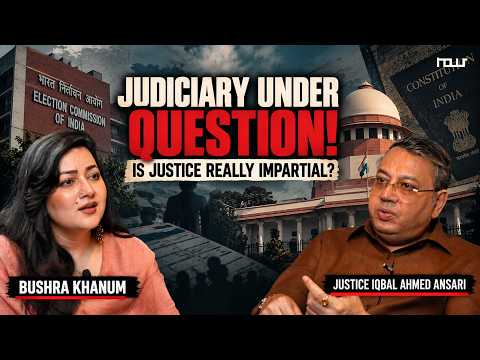
The institution overseeing the process has itself come under formal challenge. On 13 March 2026, 193 Members of Parliament signed an impeachment notice against Chief Election Commissioner Gyanesh Kumar, alleging partisan conduct. His own appointment was controversial: a new law removed the Chief Justice of India from the selection committee and replaced that seat with a cabinet minister, giving the ruling party a structural 2:1 majority over the appointment process. When the body that selects the Election Commission is itself decided by a 2:1 ruling-party majority, when its officers' public statements begin to resemble those of party spokespeople, and when the Supreme Court — ordinarily the last recourse — declines to intervene on behalf of lakhs of adjudicated voters or set any deadline just before the election, the credibility of these institutions comes into question, along with their claim to impartiality. It is against this backdrop that thousands of people have been gathering outside government offices across Bengal, old documents in hand, simply trying to prove they exist.
A Question Bengal Leaves Behind
The 2026 West Bengal SIR leaves behind a basic question: are India's electoral processes applied uniformly, or are their outcomes shaped by political context and selective application? West Bengal is not an isolated case. From Assam's NRC to SIR exercises in other states, the documentary argues, a clear shift is visible — away from a system that trusted its citizens by default, and toward one that repeatedly, and selectively, asks specific groups to prove their own existence. If voting is meant to be the basic right of every citizen of this country, the film asks, why has the burden of repeatedly proving that right fallen disproportionately on Muslims and on the country's poorest and most powerless citizens?


Discussion
0Readers only · Comments are reviewed by the desk before they appear
The journalism is free for everyone — create a free account to join the discussion.