


Interview
Why ‘Uniform’ Is Not the Same as ‘Equal’
Eight years into researching India’s Uniform Civil Code, legal philosopher Sania Ismailee argues that the debate has confused sameness with justice — and that the confusion is doing real damage.
275 PIECES · PAGE 1 OF 16
Eight years into researching India’s Uniform Civil Code, legal philosopher Sania Ismailee argues that the debate has confused sameness with justice — and that the confusion is doing real damage.
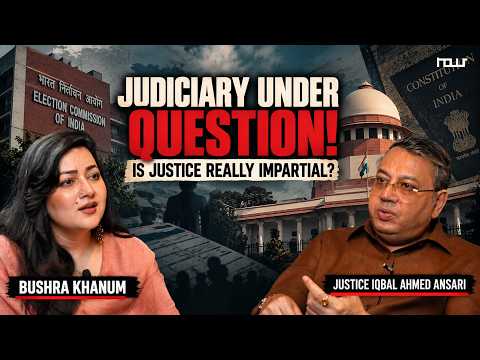
Justice Iqbal Ahmed Ansari, former Chief Justice of the Patna High Court, argues that judges are not always pressured into unjust rulings — many simply become too frightened to rule justly, and Muslims have learned to predict which way a case will go before it is even heard.

In conversation with political scientist Harish S. Wankhede, a history of caste, cinema and political strategy explains why Indian screens produced Dalit victims for decades before they allowed a Dalit hero.

In a wide-ranging conversation, the Islamic scholar Waris Mazhari argues that Muslim intellectual tradition was never as frozen as its critics and defenders alike assume, and that reviving ijtihad from within it, not importing ready-made secular frameworks, is the way out of the crisis facing contemporary Muslim thought.

Days after a mosque inside the Saharanpur Collectorate was bulldozed, the local MP says revenue records still name two private owners for the land, and that the real fight now moves to the Allahabad High Court.

A new critical report on the 2019 Babri Masjid judgment argues the Supreme Court didn't just decide one disputed plot of land — it wrote a template now being used against mosques across India.
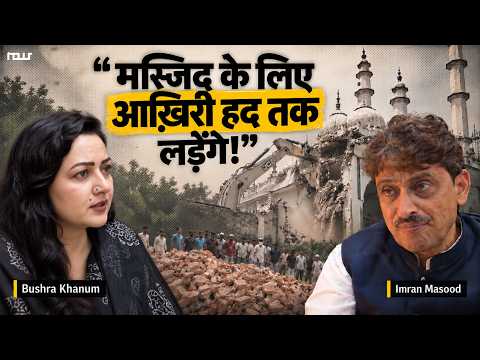
As the collectorate mosque comes down in a disputed overnight demolition, Saharanpur's Congress MP lays out the land records he says prove the drive was illegal — and appeals to Muslims to fight it in court, not the street.

A century-old mosque inside Saharanpur's district collectorate was bulldozed before dawn, and the paper trail its defenders cite raises hard questions about how the demolition was carried out.

Shaheen Khan and Nafeesa Khan say officers at a Delhi police station stripped them of their phone, dragged them upstairs and beat them with a baton after spotting a caller ID that read Mohammad Khan — and three days later, still no FIR has been filed.

Author and former Amnesty International India chair Aakar Patel argues that a leaderless Gen Z revolt, a forced ministerial resignation, and the demographic impossibility of a legally declared Hindu Rashtra together mark the most vulnerable moment of Narendra Modi's twelve years in power — even as he accuses the opposition of failing to give India's Muslims any political voice of their own.

Journalist Dayashankar Mishra's self-published book argues mob lynching in India runs on hate speech as fuel and impunity as reward, and that the silence around it now implicates courts, cinema and the opposition alike.

Historian Javed Gaya argues that the electoral and migration evidence long cited for a Muslim mandate for Partition is far too thin to support the claim — and that treating it as settled has let India avoid a harder reckoning ever since.

Historian Imran Mulla's forgotten history of the alliance between the last Ottoman caliph and Hyderabad's Nizam shows how a 1931 royal marriage became a bid to relocate the caliphate to India — and what it reveals about a more interconnected Islamic world.

From reforming the Haj bureaucracy to writing Waqf reform into the Sachar Committee's report, Dr Syed Zafar Mahmood argues India's Muslims already have the resources to lift themselves — if only the community organised to use them.

Asked why some Muslims did not back Partition, a historian speaking to Nous flips the question onto the RSS and Hindu Mahasabha, asking what role they played in the freedom struggle at all.

Historian Shamsul Islam argues the two-nation theory was pioneered by Hindu nationalist leaders decades before Jinnah, and that the Muslim League's 1946 mandate came from barely five percent of Muslims who could even vote — a history erased along with the mass movement that opposed Partition.

Long before Nehru, a Bhopal-born scholar served as prime minister of India's first government-in-exile, while a Bihar bidi worker built one of the country's earliest movements for weavers and the poor — and both men are being quietly erased from public memory even as India marks another Independence Day.

Anthropologist Irfan Ahmad argues that "terrorism" was never a neutral description of violence — it was built, definition by definition, to mean Islam.